Vitrimer and recyclable resin systems are the most promising answer to the composite industry's end-of-life problem. Carbon fiber composites are valued for their strength-to-weight ratio, but the thermoset matrices that give them structural integrity are permanently crosslinked — once c
Introduction
Vitrimer and recyclable resin systems are the most promising answer to the composite industry's end-of-life problem. Carbon fiber composites are valued for their strength-to-weight ratio, but the thermoset matrices that give them structural integrity are permanently crosslinked — once cured, they cannot be melted, re-formed, or easily separated from the fiber. As wind turbine blades reach the end of their design life and aerospace programs face tightening circularity regulation, the industry is under real pressure to make composites recyclable without sacrificing performance.
This article explains the chemistry behind vitrimers and chemically recyclable resins, reviews the commercial milestones that made 2026 a turning point, and outlines what engineers and buyers should verify before specifying a recyclable matrix system.
What Are Vitrimers?
Vitrimers are a class of polymer introduced in 2011 that combines the mechanical performance of a thermoset with the reprocessability of a thermoplastic. The key is the crosslink chemistry: instead of permanent covalent bonds, vitrimers use exchangeable covalent bonds that can rearrange while maintaining the total crosslink count. When heated above a characteristic temperature, the network can flow and be reshaped, welded, or re-molded, yet it retains thermoset-like stiffness, strength, and solvent resistance at service temperature. Practical consequences for composites include:
- Healing of cracks and delamination by heat treatment.
- Welding of composite parts without adhesives.
- Re-molding of offcuts and end-of-life parts into new components.
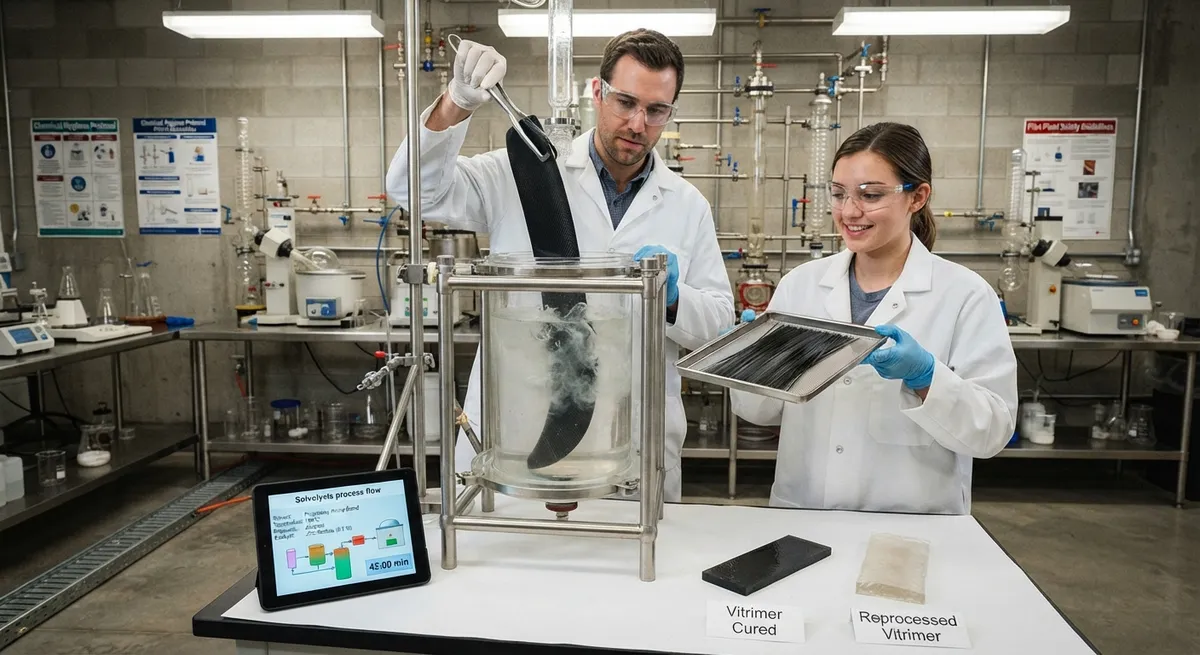
- Dissolution of the matrix in a suitable solvent, freeing the fibers for reuse.
Vitrimer vs. Epoxy vs. Thermoplastic
The table below compares the three matrix families from the perspective of a composite buyer:
| Property | Thermoset Epoxy | Vitrimer Resin | Thermoplastic |
|---|---|---|---|
| Crosslink type | Permanent | Exchangeable, reversible | None (entangled chains) |
| Recycling route | Shredding, energy recovery | Solvolysis + re-molding | Melting and re-forming |
| Reprocessing temperature | Not possible | 80-250°C depending on system | 250-400°C |
| Mechanical performance | High, well-documented | Comparable, data still maturing | Good, lower stiffness in some systems |
| Process compatibility | Autoclave, infusion, RTM | Emerging infusion-compatible grades | AFP/ATL, stamping, overmolding |
| Market maturity (2026) | Mature | Emerging, pilot scale | Commercial in selected programs |
Vitrimers sit between the two established families: thermoset performance with an end-of-life path that thermosets lack, without the high processing temperatures that make thermoplastics challenging in large, thick structures like wind blades.
2026 Milestones in Recyclable Composite Resins
Several developments converged in 2025-2026 to move recyclable resin systems from the laboratory into industrial programs:
| Initiative | Focus | Status (2026) |
|---|---|---|
| ZEBRA consortium | 100% recyclable wind turbine blades | Full-scale prototype blades produced; recycling loops demonstrated with partners |
| Low-temperature vitrimer epoxies | Recyclable resins active near 80°C | Developers including Techstorm reporting lab and pilot demonstrations |
| Elium thermoplastic infusion resin | Recyclable infusion resin for blades | Commercial resin, blade recycling partnerships active |
| Solvolysis programs for aerospace | Fiber and resin recovery from cured parts | Pilot scale; recovered fiber reuse under evaluation |
The ZEBRA project is the flagship demonstration: a consortium of material suppliers and blade manufacturers built full-scale turbine blades from recyclable resin and proved that the blades can be broken down to recover both the fiber and the resin, closing the loop that conventional blades lack.
How Chemical Recycling Works
Chemical recycling of a vitrimer or recyclable-thermoset composite follows three stages:
- Depolymerization: The part is immersed in a solvent or mild chemical bath, often with heat and a catalyst, which breaks the exchangeable bonds and dissolves the matrix.
- Fiber recovery: The dissolved matrix is filtered away, leaving clean carbon or glass fibers that can be re-spun, re-woven, or chopped for re-use in new composites.
- Resin recovery or disposal: The dissolved resin stream can be re-polymerized into new resin, or processed for energy, depending on the system and economics.
Compared with mechanical recycling — which grinds composites into low-value filler — chemical recycling preserves fiber length and properties far better. Recovered carbon fibers from solvolysis can retain 80-95% of virgin tensile properties, which is the difference between downcycling and a genuine circular material loop.
Where Recyclable Resins Are Headed
The clearest adoption path is in wind energy, where blade size growth has made end-of-life disposal a strategic problem, and in sectors with explicit circularity targets. Aerospace interest is driven by regulation and OEM sustainability commitments, but qualification cycles are long. Current application directions:
- Wind blades: Infusion-compatible recyclable resins for spar caps and skins; recycling infrastructure growing in Europe and Asia.
- Aerospace interiors: Secondary structure and cabin parts, where qualification requirements are less demanding than primary structure.
- Automotive and sporting goods: High-volume parts where offcut re-use reduces waste and material cost.
- Tooling: Reusable tooling materials that can be re-molded when the program ends.
What Buyers Should Evaluate
Before specifying a vitrimer or recyclable resin, verify the following rather than relying on marketing claims:
- Mechanical property data generated by recognized test standards, not single-point lab results.
- Recycling demonstration at meaningful scale — a coupon in a beaker is not proof of a blade recycling loop.
- Recovered fiber property retention, measured by standardized fiber testing, not assumption.
- Process compatibility with your actual manufacturing method, including infusion and cure cycles.
- Lifecycle and cost data covering the full loop, including collection, logistics, and recycling energy.
Frequently Asked Questions
How does recycling of a vitrimer composite actually work in practice?
In practice, a cured vitrimer part is placed in a solvent bath, typically with mild heating and a catalyst, and the exchangeable crosslinks dissociate so the matrix dissolves. The fibers are then separated by filtration, washed, and recovered as re-usable fiber. The dissolved resin can be re-polymerized or used for energy. For a wind blade, this means the structure is cut into manageable sections and processed in industrial solvent reactors, as demonstrated by the ZEBRA consortium's recycling loop. The recovered fiber retains most of its tensile properties, which makes the process economically meaningful rather than a laboratory curiosity.
Do vitrimer composites match traditional epoxy performance?
Early vitrimer systems showed good but somewhat lower mechanical performance than aerospace-grade epoxies, mainly in matrix-dominated properties such as compressive and interlaminar shear strength. Later systems, including low-temperature vitrimer epoxies demonstrated in 2025-2026, report properties comparable to standard epoxy systems while adding recyclability. Because data is still maturing, buyers should require standardized test results — ASTM D30 or equivalent — for the specific grade under consideration and compare like for like against the epoxy baseline they currently use.
What is the cost premium of recyclable resin systems in 2026?
Recyclable resins currently carry a premium over commodity epoxy, and published pricing is scarce because most grades are sold through direct technical engagement rather than catalog pricing. Expect the premium to be meaningful at the resin level, but consider the full economics: reduced waste disposal costs, recovered fiber value, and compliance with circularity regulation that is already tightening in the EU for wind blades and in aerospace sustainability frameworks. As production volumes grow, the premium is expected to compress, following the pattern seen with thermoplastic infusion resins in wind.
Conclusion
Vitrimer and recyclable resin systems turn the composite industry's biggest environmental weakness into a solvable engineering problem. Exchangeable crosslinks deliver thermoset performance with an end-of-life path — solvolysis recovers clean fiber at 80-95% of virgin properties, and 2026 milestones from the ZEBRA consortium and low-temperature vitrimer developers have moved the technology from the lab into industrial demonstration. For wind blade and aerospace buyers, the message is clear: recyclable matrices are no longer theoretical, but they must be evaluated on standardized data, scaled recycling evidence, and full lifecycle cost.
If you are exploring recyclable composite systems for wind or aerospace programs, review our carbon fiber product range and contact our engineering team to discuss material selection and recycling compatibility for your application.
Part of topic
Related Articles
- Carbon Fibre Sheet Supplier UK: Sourcing Options and Specification Checklist
- Carbon Fiber Sheets Near Me Suppliers: Local Stock vs Factory Direct
- Filament Wound Epoxy Tubes: Industry Standards and Compliance Requirements
- Carbon Fiber Dealers Near Me: What a Good Dealer Actually Adds
- Carbon Fiber Supplies Near Me: Local Sourcing Without Compromising Spec
- Carbon Fiber for Sale: Online Platforms and Direct Sales Channel Comparison
Interested in Our Products?
Contact our team for competitive pricing and technical specifications.
Get a QuoteRelated Products
Carbon Fiber Plate — 3K Twill T700 1.5mm
Thin 1.5mm carbon fiber plate with 3K twill weave surface. Lightweight and stiff, commonly used for covers, panels, drone bodies, and applications requiring a premium aesthetic appearance.
Custom Carbon Fiber Medical Device Components
Medical-grade carbon fiber components manufactured for imaging equipment, surgical instruments, and patient support systems. Carbon fiber's radiolucency (X-ray transparency) and high strength-to-weight ratio make it ideal for CT scanner beds, wheelchair frames, surgical robot arms, and MRI-compatible accessories. Biocompatible resin systems available.
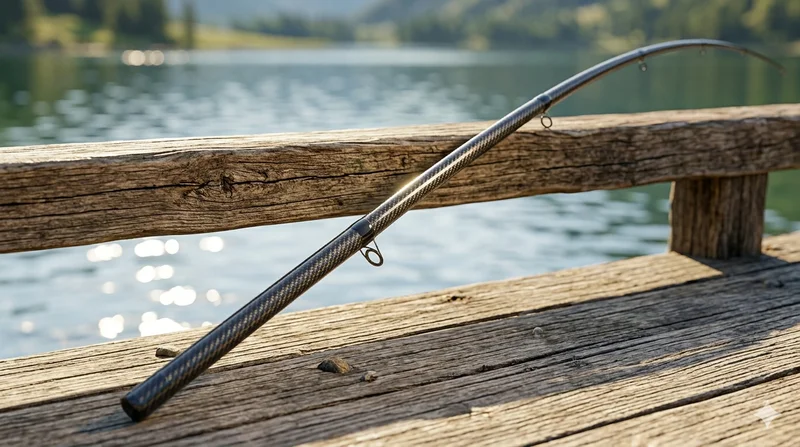
Carbon Fiber Fishing Rod Blank
High-quality carbon fiber fishing rod blank manufactured from multiple grades of Toray carbon fiber cloth. Available in a wide range of lengths, powers, and actions for freshwater and saltwater applications. Suitable for OEM rod building.
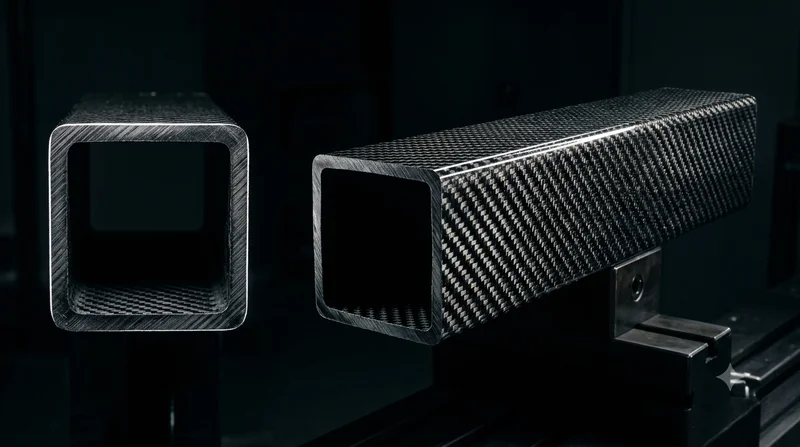
Square Carbon Fiber Tube — 3K Twill T700
Square cross-section carbon fiber tube manufactured with 3K twill weave for torsional strength. Preferred for structural frames, trusses, and support columns where rectangular geometry offers design flexibility.
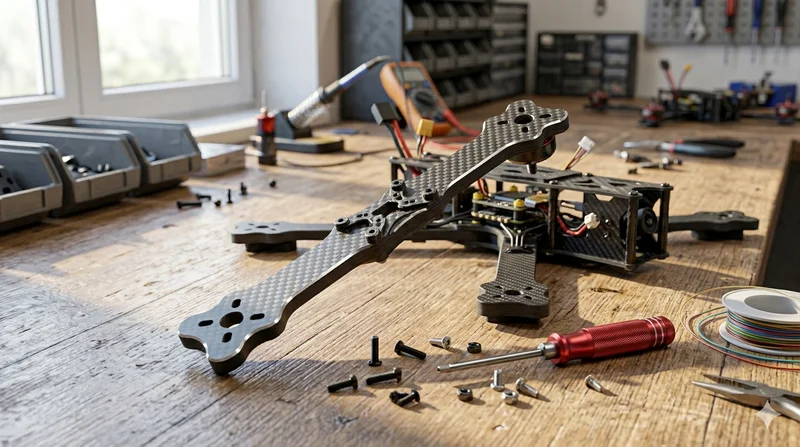
Carbon Fiber Drone Arm
Precision-molded carbon fiber drone arm combining unidirectional fiber for stiffness and woven layers for torsional strength. Designed for FPV, photography, and industrial drone platforms. Each arm is CNC-machined to exact specifications.