
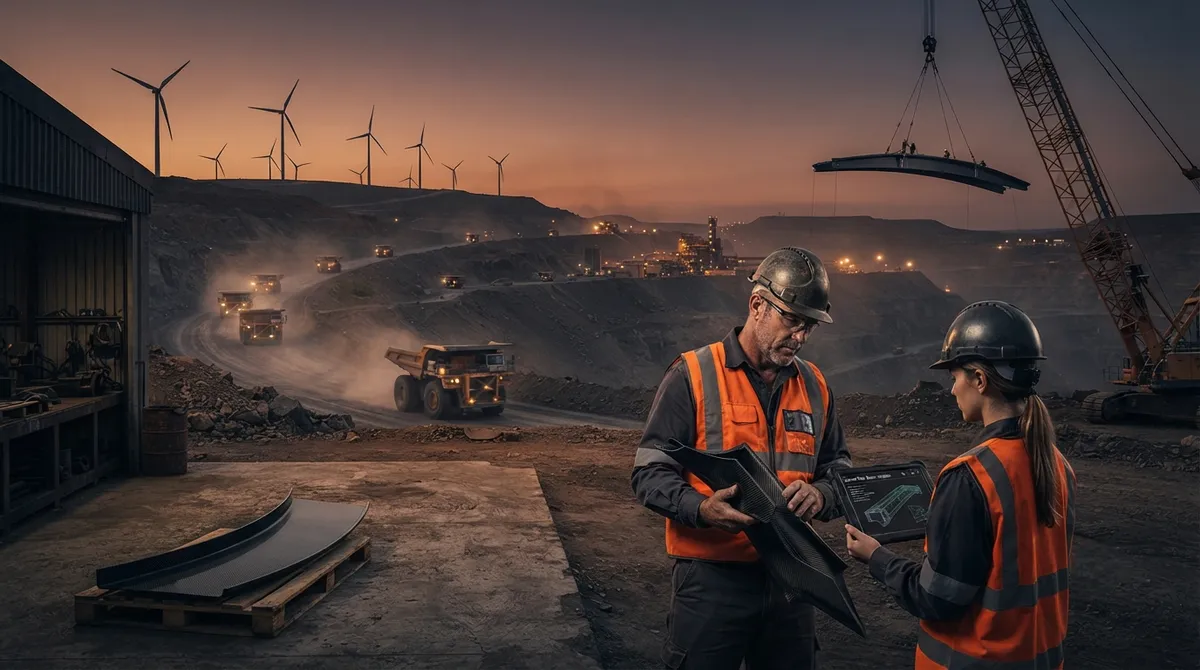
South Africa holds a distinctive position in the global carbon fiber market. As the continent's most industrialized economy, it operates the deepest mining sector in Africa, the largest electricity grid south of the Sahara, and one of the most capable defense industrial bases on the con
Introduction
South Africa holds a distinctive position in the global carbon fiber market. As the continent's most industrialized economy, it operates the deepest mining sector in Africa, the largest electricity grid south of the Sahara, and one of the most capable defense industrial bases on the continent. These three pillars — mining, energy, and defense — generate different carbon fiber demands, from abrasion-resistant wear parts for crushing and conveying circuits to large wind turbine blades and to strict-aerospace-grade laminates for military platforms. Reported in 2026 industry data, South Africa continues to import the overwhelming majority of its carbon fiber raw material because domestic production capacity remains minimal, making the country primarily a consuming and converting market rather than a producing one.
This article breaks down the three demand drivers, examines how each segment consumes carbon fiber, and outlines what B2B suppliers should prepare for when serving South African buyers in 2026.
Africa's Largest Industrial Economy: The Scale Behind the Market
South Africa accounts for the largest share of sub-Saharan Africa's industrial output, with a manufacturing base spanning mining equipment, automotive assembly, chemicals, and energy infrastructure. Reported in 2026 industry data, the country's industrial output and mining exports remain the backbone of its economy, and this industrial depth is exactly what attracts carbon fiber adoption. Local composite fabricators, concentrated around Gauteng and the coastal industrial hubs of KwaZulu-Natal and the Western Cape, serve both mining houses and industrial customers with filament winding, pultrusion, vacuum infusion, and hand layup capability.
For imported carbon fiber materials, the South African market follows a clear pattern: European and Asian producers supply most of the raw fiber, fabrics, and prepregs, while local converters transform them into end-use components. This makes logistics reliability, batch consistency, and documentation quality decisive competitive factors for overseas suppliers.
Mining Equipment: Wear Parts, Liners, and Lightweight Structures
Mining is where South Africa's carbon fiber demand is most distinctive. The country operates deep-level gold mines, the world's largest platinum and PGM (platinum group metals) reserves around the Bushveld complex, and substantial chrome, manganese, and coal operations. All of these create demand for equipment that survives extreme abrasion, corrosion, and heavy service loads.
Carbon fiber composite components appear in mining equipment in several roles. Structural lightweighting lets manufacturers build larger baskets, booms, and access platforms for the same crane or shaft capacity. Corrosion-resistant components — cable trays, walkways, and covers — outlast steel in the aggressive chemical environments of mineral processing. And engineered wear components use composite or hybrid constructions where mass reduction at the end of a long boom or conveyor dramatically improves payload efficiency.
| Application | Why Carbon Fiber Is Used | Typical Composite Format |
|---|---|---|
| Conveyor and crusher wear parts | Abrasion resistance with lower replacement mass | Hybrid fabric laminates, ceramic-faced composites |
| Boom and platform structures | Mass reduction for higher payload at reach | Filament-wound and laminated profiles |
| Processing plant corrosion parts | Chemical resistance in acid and slurry service | Pultruded and infused panels, cable trays |
| Explosive-atmosphere safety equipment | Non-sparking, non-conductive characteristics | Glass-carbon hybrid laminates |
| Underground transport components | Weight saving for haulage and ventilation systems | Sandwich panels, lightweight gratings |
The mining segment is price-sensitive but loyal: once a component design is qualified in a mine's maintenance regime, repeat orders follow for years. Suppliers who deliver consistent material properties batch after batch, with documentation that supports engineering sign-off, win and hold these accounts.
Wind Energy Transition: New Rotor, Nacelle, and Infrastructure Demand
South Africa's wind energy program is the second and fastest-growing driver. Under the Renewable Energy Independent Power Producer Procurement Programme (REIPPPP), the country has built gigawatts of onshore wind capacity, and reported in 2026 industry data the pipeline continues to expand as Eskom — the national utility — and private power producers push new projects toward grid connection. Wind turbines are heavy consumers of composite materials: each modern rotor blade is a large carbon-glass hybrid structure, and carbon fiber is increasingly specified in the spar caps of longer blades to control mass and fatigue.
Beyond the blades themselves, the wind segment creates carbon fiber demand in nacelle components, hub fairings, access ladders, and service structures, plus the growing maintenance, repair, and overhaul (MRO) market as early wind farms age. Local blade repair teams use prepreg and infusion materials on site, and blade manufacturers servicing the South African market value suppliers with established quality systems and stable supply lines.
For exporters, the wind sector rewards capability over price: certification-grade documentation, traceable material batches, and technical support for qualification are the differentiators that secure recurring contracts with turbine OEMs and EPC contractors working in the country.
Defense Modernization: Strict-Grade Composites for Military Platforms
The third driver is defense modernization. South Africa's arms industry — built around state-owned and private aerospace and land-systems manufacturers — has long used carbon fiber in missile housings, unmanned aerial vehicles, radomes, and armored vehicle components. Reported in 2026 industry data, defense procurement and regional security commitments continue to support modernization budgets, and with them a steady appetite for aerospace-grade carbon fiber fabric and prepreg.
Defense buyers operate under export control and certification regimes that most commercial suppliers never encounter: they require material traceability, ITAR-adjacent documentation discipline, and consistent mechanical performance verified by third-party testing. This is a demanding but high-value segment, and it favors suppliers who already serve aerospace markets.
Key drivers across all three segments are summarized below:
- Mining: deep-level gold and PGM operations that need corrosion-resistant, lightweight structural and wear components.
- Energy: wind capacity additions and the aging-fleet MRO market driving blade and composite infrastructure demand.
- Defense: modernization programs specifying certified aerospace-grade carbon fiber laminates.
- Infrastructure: water, chemical, and transport projects adopting composite gratings, tanks, and structural profiles.
- Import reliance: minimal local carbon fiber production, so nearly all raw material is imported, favoring reliable international suppliers.
Frequently Asked Questions
Does South Africa produce carbon fiber locally?
Commercial-scale carbon fiber production in South Africa remains minimal as of 2026. The market operates primarily as a converter and end-user: local fabricators import raw fiber, fabric, and prepreg and transform them into components for mining, energy, defense, and industrial applications. This import reliance is why consistent supply chains and batch documentation from overseas suppliers carry such weight in the market.
Which South African industries buy the most carbon fiber?
Mining equipment is the most distinctive buyer, driven by gold, platinum, chrome, and manganese operations that need abrasion- and corrosion-resistant lightweight components. Wind energy is the fastest-growing buyer as capacity expands, and defense is the most specification-demanding buyer, requiring aerospace-grade certified materials. Industrial and infrastructure applications form a steady base demand.
How do carbon fiber components benefit mining equipment?
They reduce component mass — improving payload and reach on booms and platforms — resist corrosion in the aggressive chemical environments of mineral processing, offer non-sparking behavior for explosive atmospheres, and reduce replacement mass for wear parts. These benefits translate into lower energy consumption, longer service intervals, and safer underground operations.
What does a supplier need to serve the South African market in 2026?
Reliable shipping and customs documentation, consistent material quality verified batch by batch, certificates that satisfy local engineering sign-off, and technical support for qualification testing. In the defense segment, exporters must additionally meet export-control and certification documentation requirements. Price matters, but supply security and documented quality decide long-term contracts.
Is the wind energy sector in South Africa growing?
Yes. Reported in 2026 industry data, wind capacity continues to expand under renewable energy procurement programs and private power purchase agreements, while Eskom's grid transition and the maturing installed fleet also create growing maintenance and blade-repair demand. Both factors support sustained composite consumption in the sector.
Conclusion
South Africa's carbon fiber market in 2026 is defined by three parallel demand streams: mining equipment that values durable, lightweight composites, a wind energy transition that consumes large-format blade and infrastructure materials, and defense modernization that demands certified aerospace-grade quality. Each segment buys differently, but all three share the same supplier requirements — consistent, traceable material, dependable import logistics, and documentation that supports engineering and certification review.
For suppliers who can meet those requirements, South Africa is a dependable, long-cycle B2B market with loyal customers across mining, energy, and defense. Explore our carbon fiber products for consistent, documented materials suitable for mining, wind, and defense applications, or contact our engineering team to discuss specifications for your South African program.
Part of topic
Related Articles
- Carbon Fibre Sheet Supplier UK: Sourcing Options and Specification Checklist
- Carbon Fiber Sheets Near Me Suppliers: Local Stock vs Factory Direct
- Filament Wound Epoxy Tubes: Industry Standards and Compliance Requirements
- Carbon Fiber Dealers Near Me: What a Good Dealer Actually Adds
- Carbon Fiber Supplies Near Me: Local Sourcing Without Compromising Spec
- Carbon Fiber for Sale: Online Platforms and Direct Sales Channel Comparison
Interested in Our Products?
Contact our team for competitive pricing and technical specifications.
Get a QuoteRelated Products
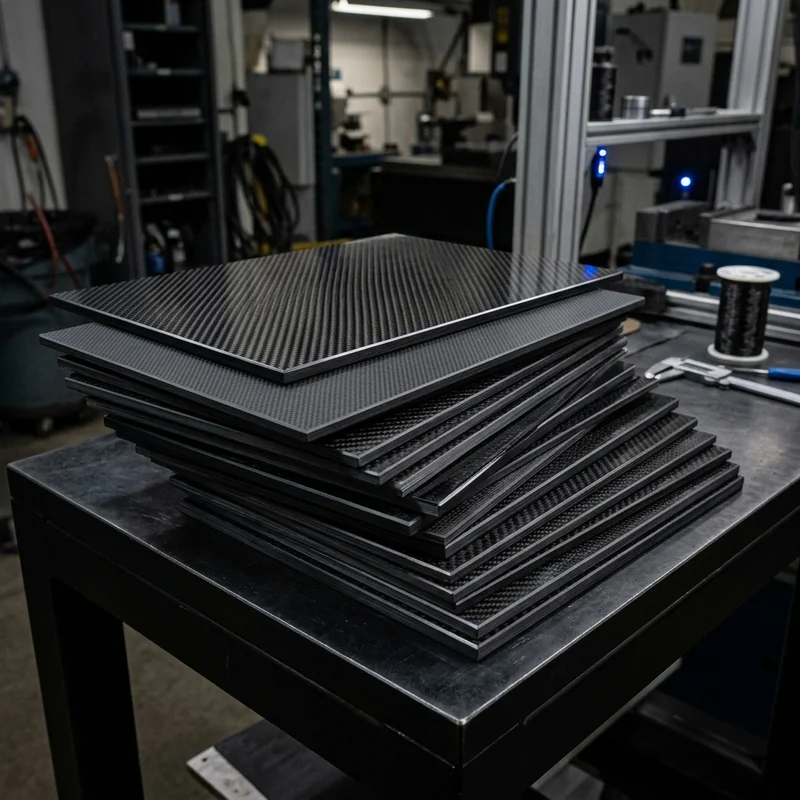
Carbon fiber standard plate-3k stripe
Lightweight, ultra-rigid standard sheets for drone fuselages, robot housings, facades and structural applications.
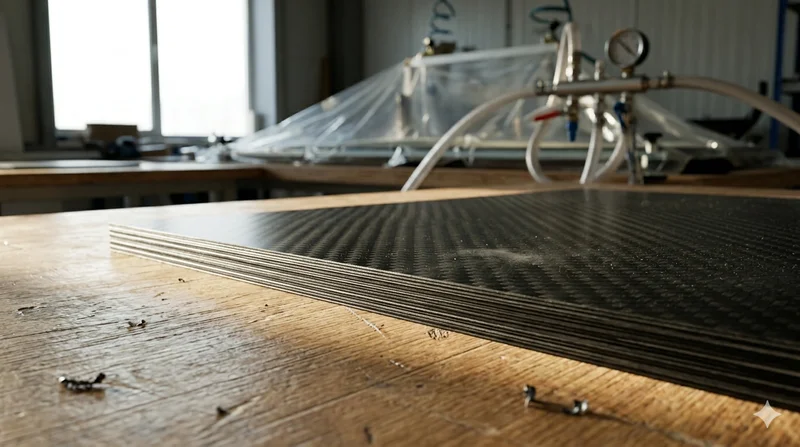
Carbon Fiber Plate — 3K Twill T700 3.0mm
Medium-thickness 3.0mm carbon fiber plate offering significantly higher load capacity while maintaining attractive 3K twill finish. Suitable for structural brackets, reinforcement plates, and load-bearing panels.
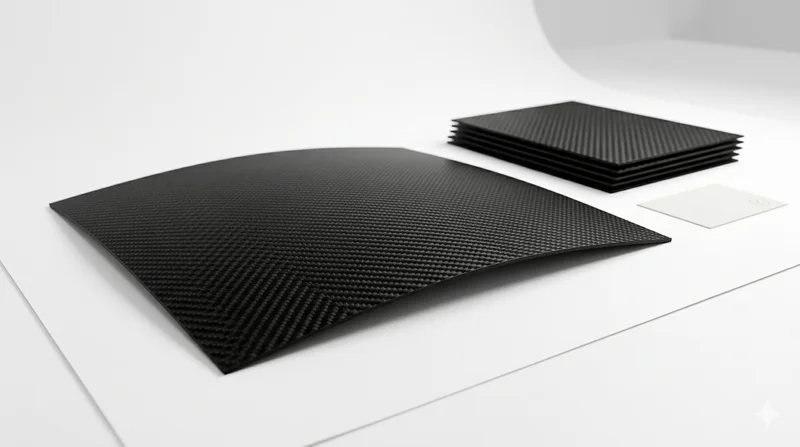
Carbon Fiber Plate — 3K Twill T700 1.5mm
Thin 1.5mm carbon fiber plate with 3K twill weave surface. Lightweight and stiff, commonly used for covers, panels, drone bodies, and applications requiring a premium aesthetic appearance.
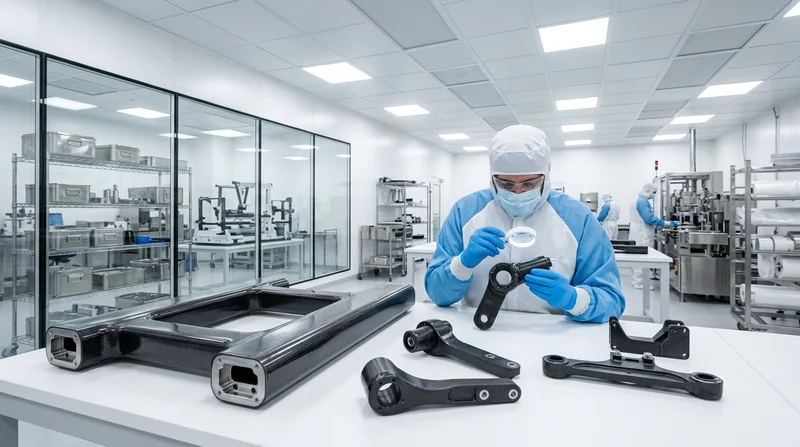
Custom Carbon Fiber Medical Device Components
Medical-grade carbon fiber components manufactured for imaging equipment, surgical instruments, and patient support systems. Carbon fiber's radiolucency (X-ray transparency) and high strength-to-weight ratio make it ideal for CT scanner beds, wheelchair frames, surgical robot arms, and MRI-compatible accessories. Biocompatible resin systems available.
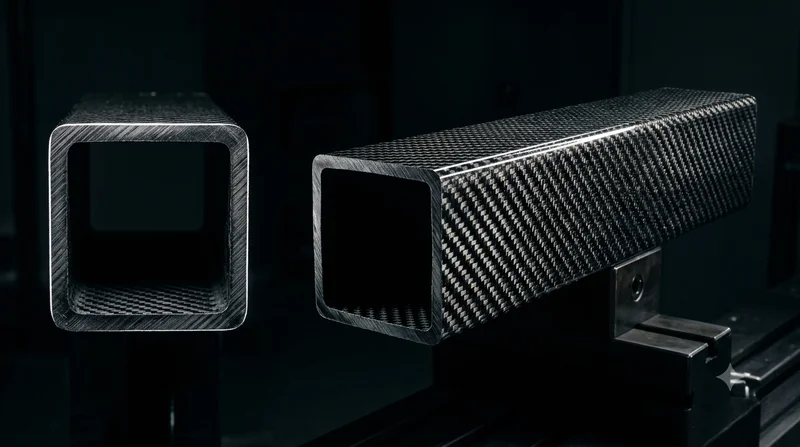
Square Carbon Fiber Tube — 3K Twill T700
Square cross-section carbon fiber tube manufactured with 3K twill weave for torsional strength. Preferred for structural frames, trusses, and support columns where rectangular geometry offers design flexibility.