
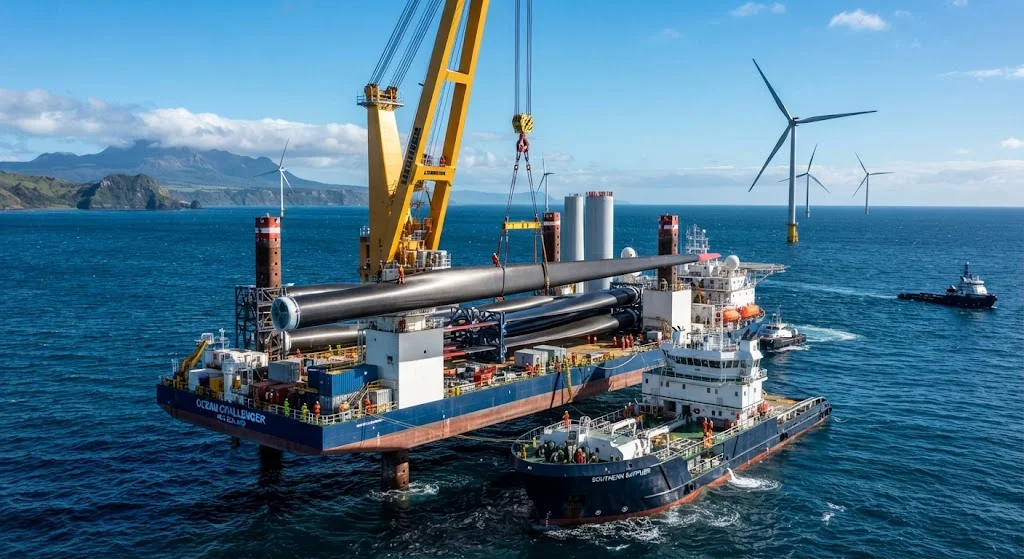
Most conversations about carbon fiber demand begin with China, Germany or the United States, and for good reason: those markets consume volume. New Zealand consumes almost none by comparison, yet it offers a market profile that B2B composite suppliers increasingly covet — low volume, hi
Introduction
Most conversations about carbon fiber demand begin with China, Germany or the United States, and for good reason: those markets consume volume. New Zealand consumes almost none by comparison, yet it offers a market profile that B2B composite suppliers increasingly covet — low volume, high specification, and a customer base that buys on demonstrated performance rather than on commodity price. The country's renewable electricity position, its world-class sailing-engineering cluster, and its geothermal energy sector each pull composite demand in different but overlapping directions, and together they create a surprisingly coherent procurement landscape for advanced materials.
This article maps those three demand pillars. We look at how the wind push changes the composite import picture, why the America's Cup makes Auckland a genuine center of carbon fiber engineering rather than a footnote, how geothermal energy extends composite demand into a less visible maintenance-driven niche, and what the combination means for suppliers considering entry into this market of small orders and exacting standards.
Three Demand Pillars, One Material
The table below summarizes how New Zealand's three growth engines translate into composite demand:
| Demand pillar | Market driver | Composite application | Local capability |
|---|---|---|---|
| Wind energy | Renewables at roughly 85 percent of generation; new onshore farms and offshore groundwork | Imported blades, nacelles and tower internals; local O&M tooling and repair services | Service and maintenance strength; no domestic blade manufacturing |
| Marine (America's Cup) | AC75 foiling monohulls; superyacht construction cluster | Carbon hulls, foils, masts and rigs in high-modulus fiber | World-class: Auckland cluster, Southern Spars, specialist build yards |
| Geothermal energy | About 18 percent of electricity; mature field operations | Composite pipe liners, high-temperature tooling, inspection aids | Shared know-how with marine and wind maintenance sectors |
The three pillars differ in scale but share a pattern: each is a niche that values material performance and engineering integrity more than price per kilogram, which is precisely the environment in which advanced composite suppliers thrive.
The Wind Push and the Import Ledger
New Zealand's electricity mix is dominated by hydroelectric generation, with geothermal the second pillar and wind the fastest-growing renewable. Wind's share of generation has climbed steadily and is set to continue rising as new onshore projects come online and as the regulatory groundwork for offshore development advances. The consequence for composite suppliers is straightforward: New Zealand has no domestic blade or nacelle manufacturing base, so every major wind asset in the country arrives with its composite content already embedded, and the local market for composite materials is defined by what happens after installation.
That aftermarket is real and growing. Blade inspection, erosion repair, and leading-edge protection are labor-intensive composite services that must be performed on-site, and the crews performing them consume repair kits, prepreg patches and surface materials from suppliers. Tower internals, platform gratings and service tooling add a steady trickle of demand. For a supplier, New Zealand wind is less a volume opportunity than a service-led, specification-heavy market that rewards qualification and rapid response — a profile that plays to specialist distributors rather than commodity traders.
Auckland: The America's Cup Composite Laboratory
The most distinctive feature of New Zealand's composite market is the marine cluster that grew around the America's Cup. Every campaign cycle, Emirates Team New Zealand and its challengers design and build foiling monohulls that push carbon fiber engineering to the edge of what the material can do — ultra-thin hull skins, heavily loaded foil arms and rudder systems, and rigs that must survive extreme cyclic loading in saltwater. The teams work with specialist build yards and suppliers in and around Auckland, and the technology transfers outward: the same yards that build Cup boats build superyachts, and the same engineering practices filter into commercial marine and industrial work.
The result is a local ecosystem with an unusual concentration of advanced skills. Carbon masts for racing yachts and superyachts are produced in New Zealand by specialists whose work is specified on boats built all over the world. High-modulus fiber, aerospace-grade non-destructive testing and precision cure control are routine capabilities in a market whose total volume would barely register in a Chinese or German production statistic. For a fiber or material supplier, the strategic value of this cluster lies less in tonnage than in reference: a material confirmed on an America's Cup boat or a superyacht rig carries credibility that sells in much larger markets afterward.
Geothermal Synergies: Maintenance-Driven Demand
New Zealand's geothermal fields — among the largest and longest-operated in the world — add a third, less glamorous pillar. Geothermal plants run hot, corrosive and continuously; their surface piping, separators and reinjection systems face an environment that attacks metals and rewards materials that resist both temperature and chemical attack. Composite pipe liners, high-temperature tooling and corrosion-resistant components have found a home in this sector, often supplied by companies that also serve the marine cluster, because the manufacturing methods overlap.
The synergy works in both directions. Filament winding and resin-transfer skills developed for marine and industrial tube work transfer almost directly to geothermal liner production, and the maintenance-focused procurement habits of the geothermal sector — buy once, specify well, replace rarely — match the preferences of composite suppliers who would rather sell a qualified long-life product than chase commodity replacement orders. For suppliers, the geothermal niche is smaller than wind but steadier, and it rewards the same engineering rigor that the marine cluster demands.
Entering the New Zealand Market
For a B2B composite supplier, New Zealand demands a different entry logic than a volume market. The practical path typically looks like this:
- Target the marine reference first: a superyacht or racing-boat project is the highest-visibility, most demanding application a supplier can win, and it opens doors across the cluster.
- Build through specialist distributors: small, technically literate local distributors handle qualification, stocking and technical support better than direct import logistics.
- Qualify for wind service work: blade repair materials and O&M consumables create repeat, service-led demand that commodity prices cannot defend against.
- Serve geothermal with engineered products: liner and high-temperature components sell on qualification data, warranty and reliability rather than price.
- Expect low volume, high service intensity: order sizes are small, lead-time expectations are high, and responsiveness is the differentiator.
None of these routes promises quick tonnage. What they offer is a low-volume, high-margin beachhead where a supplier's technical credibility — and the reference value of working with world-class users — compounds over time.
Frequently Asked Questions
Does New Zealand manufacture carbon fiber domestically?
No. New Zealand has no domestic PAN precursor or carbon fiber production, and no immediate plans for it. All fiber, tow and prepreg are imported, and the local industry concentrates on downstream engineering — winding, layup, cure and inspection — where its niche capability is genuinely world-class. For suppliers, this means selling into a country that is expert in using carbon fiber but entirely dependent on imports for the material itself.
Is offshore wind real near-term demand for New Zealand composites?
Onshore wind is the current growth engine, and offshore development has advanced through regulatory groundwork rather than installed capacity. When offshore projects move to construction, the blade, nacelle and monopile content will arrive with the turbines, so the local composite opportunity follows the same aftermarket pattern as onshore: O&M, repair and service tooling rather than manufacturing participation. The demand signal is real but service-shaped rather than manufacturing-shaped.
Why does the America's Cup create global relevance for such a small market?
Because the Cup's engineering is among the most demanding in the world and the Auckland cluster turns that demand into transferable capability. Materials and processes proven on Cup boats migrate to superyachts, aerospace and industrial applications, and the reference value for a supplier is global even though the tonnage is local. A fiber or fabric qualified in this environment carries evidence of performance under extreme loading that sells in much larger markets.
How realistic is geothermal as a sustainable composite demand niche?
Very realistic, because it is maintenance-driven and mature. New Zealand's fields have operated for decades and face continuous corrosion and temperature challenges, creating steady demand for composite liners, high-temperature components and inspection tooling. Volumes are modest but recurring, the products are qualification-based and long-life, and the technical overlap with marine manufacturing makes it a natural adjacency for existing composite suppliers.
Conclusion
New Zealand is the rare composite market where volume ambitions need to be set aside in favor of specification ambitions. The wind sector imports its composites and buys services around them, the America's Cup marine cluster consumes advanced materials at world-leading standards and exports the engineering credibility, and the geothermal industry provides a steady, maintenance-driven demand for engineered products. For suppliers willing to serve small orders with high technical intensity, the country offers a low-tonnage, high-margin entry point whose reference value — in high-modulus marine engineering especially — vastly exceeds its market size.
To explore how your material portfolio fits New Zealand's marine, wind and geothermal applications, review our carbon fiber product range, or contact our team to discuss qualification support and distribution options in the region.
Part of topic
Related Articles
- Recycled Carbon Fiber Market Forecast 2030: Technology Maturity and Commercialization Path
- South Korea Carbon Fiber Market 2026: Hydrogen Economy and Shipbuilding Innovation
- Wind Turbine Blade Leading Edge Protection 2026: Polyurethane, Tape, and Metallic Shield Solutions
- China Carbon Fiber Overcapacity 2026: Price War Impact and Industry Consolidation
- India Carbon Fiber Market 2026: Wind Energy, Aerospace, and Defense Expansion
- PAN Precursor Market 2026: Acrylonitrile Supply and Carbon Fiber Cost Structure
Interested in Custom Carbon Fiber Products?
Contact our team for competitive pricing and technical specifications.
Get a QuoteRelated Products
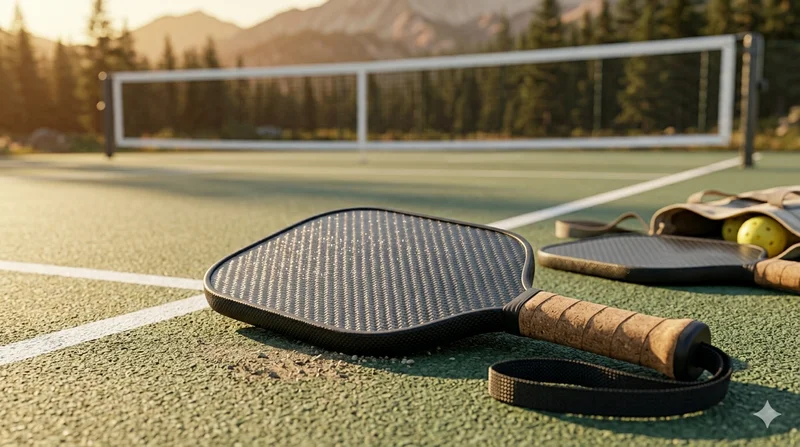
Carbon Fiber Pickleball Paddle
High-performance pickleball paddle with Toray T700 carbon fiber face and polypropylene honeycomb core. Delivers excellent power-to-weight ratio, spin generation, and vibration dampening for competitive play.
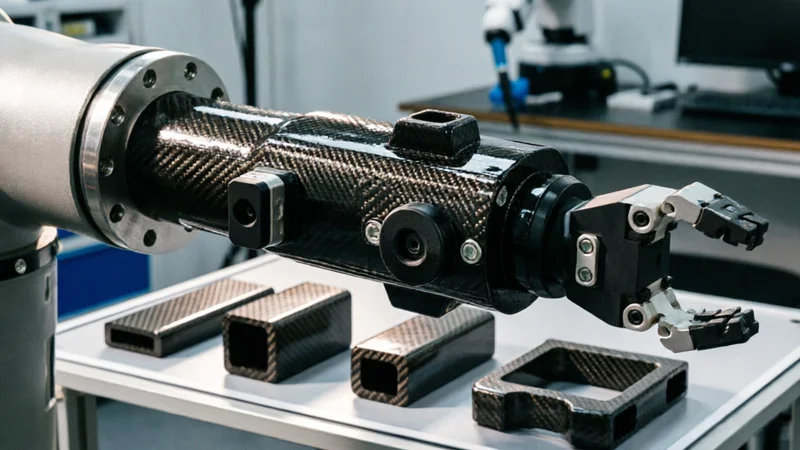
Carbon Fiber Robot End Effector Link — Custom Shape & Sensor Integration
Custom-shaped carbon fiber end effector links for robotic arms. Designed for automation integrators and research labs requiring lightweight, rigid connections between the robot wrist and gripper/tool. Can incorporate sensor mounting bosses, cable routing channels, and quick-change interfaces.

Custom Carbon Fiber Musical Instrument Parts
Carbon fiber components for musical instrument manufacturing offering superior dimensional stability, low weight, and consistent acoustic properties. We produce carbon fiber bows, guitar necks, violin chin rests, drum shells, and wind instrument bodies. Carbon fiber instruments are immune to humidity changes and temperature fluctuations that affect wooden instruments.
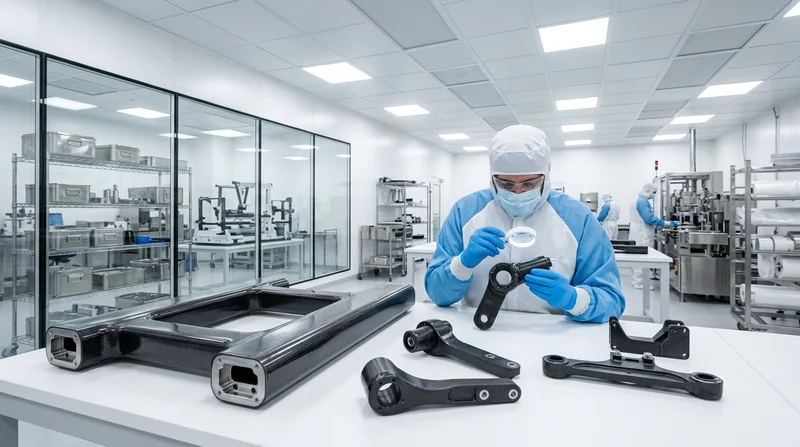
Custom Carbon Fiber Medical Device Components
Medical-grade carbon fiber components manufactured for imaging equipment, surgical instruments, and patient support systems. Carbon fiber's radiolucency (X-ray transparency) and high strength-to-weight ratio make it ideal for CT scanner beds, wheelchair frames, surgical robot arms, and MRI-compatible accessories. Biocompatible resin systems available.
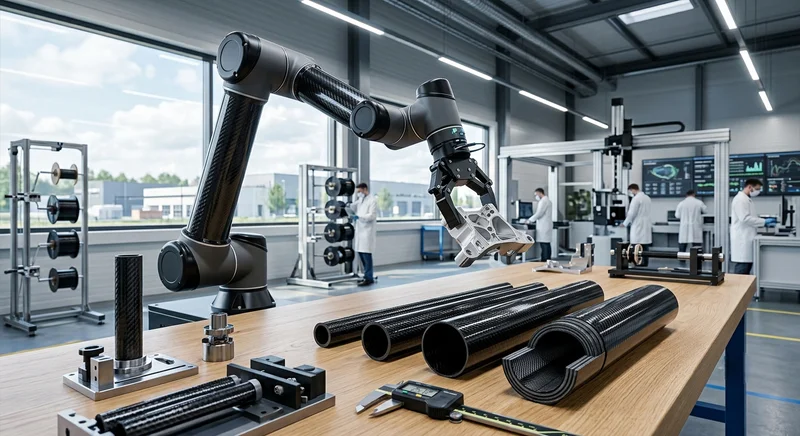
Carbon Fiber Robotic Arm Tube — High-Stiffness Lightweight Replacement
Precision-wound carbon fiber tubes for robotic arm links, replacing steel or aluminum in collaborative robots (cobots) and industrial manipulators. Achieve 3× the specific stiffness of aluminum with significant weight reduction, enabling faster acceleration and higher payload capacity.