
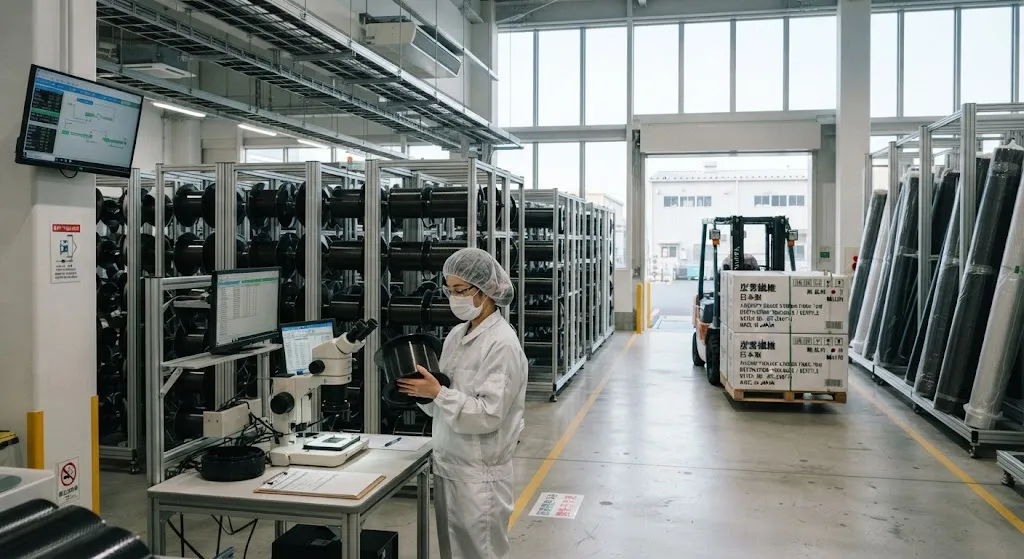
Japan has defined the world's carbon fiber industry for more than five decades. Toray, Teijin and Mitsubishi Chemical — the three domestic producers — hold the bulk of global capacity for high-performance aerospace-grade fiber, and their brand names (TORAYCA, Tenax, and the Dialead fami
Introduction
Japan has defined the world's carbon fiber industry for more than five decades. Toray, Teijin and Mitsubishi Chemical — the three domestic producers — hold the bulk of global capacity for high-performance aerospace-grade fiber, and their brand names (TORAYCA, Tenax, and the Dialead family) still anchor most certified material specifications in the aerospace and space industries. Yet the export landscape of 2026 looks very different from the one that built those brands. Chinese producers have commoditized standard-modulus grades, Japan's domestic market is comparatively small, and the strategic question for Tokyo is no longer simply how much fiber to export, but which grades to export, to whom, and under what technology-transfer constraints.
This article is written for procurement directors and technical buyers who source carbon fiber internationally and need to understand where Japanese grades still justify a premium, where Chinese and other Asian suppliers are interchangeable, and how supplier strategy will shape availability and pricing through 2026. We will look at the three producers' positioning, the structural shifts in export flows, and the grade-level matrix that separates premium aerospace fiber from the commodity market that China now dominates.
The Three Producers and Their Export Focus
While all three Japanese majors sell globally, their strategies diverge sharply by market:
| Producer | Main brand | Flagship grades | Export focus |
|---|---|---|---|
| Toray | TORAYCA | T700S, T800H, T1100G, M-series | Aerospace (Boeing, Airbus programs), pressure vessels, high-performance sports |
| Teijin | Tenax | Tenax E/XS, Tenax IMS-class | Automotive (BMW i-series supply), aerospace via subsidiaries, industrial |
| Mitsubishi Chemical | Dialead | Pyrofil PAN grades, Dialead pitch-based | Pitch-based and specialty PAN for space, thermal, niche industrial |
Toray remains the volume and prestige leader, anchored by its long-running supply agreements for Boeing 787 primary structure and Airbus A350 parts. Its export posture is one of contract reservation: the highest-margin aerospace capacity is committed years in advance under long-term agreements, while industrial-grade T700-type fiber is sold internationally where demand justifies logistics. Teijin made the most deliberate bet on automotive and industrial, supplying thermoplastic and thermoset carbon for vehicle structures through its composites division, though its aerospace exposure persists through subsidiaries in Europe. Mitsubishi Chemical plays the specialty card: it is a leading producer of pitch-based carbon fiber, which hardly any other manufacturer matches, and its PAN-based Dialead grades serve space, sporting goods, and thermal-management applications where certified consistency matters more than price.
Export Flows Are Reshaping
The geography of Japanese carbon fiber exports has shifted over the past decade in three visible ways:
- Commodity T300/T700-class fiber has moved down-market: Toray and others still sell standard-modulus fiber abroad, but volume in open markets now competes directly with Chinese material at prices Chinese producers can undercut — a segment where Japanese suppliers now win on brand and consistency rather than price.
- Aerospace-grade exports remain captive to program supply agreements: certified fiber for primary structures is sold under multi-year agreements with OEMs and tier-one aerostructures suppliers, not through open spot markets. This reservation is the core of Japanese export strategy: protect the product pipeline that carries the highest certification and margin value.
- Specialty and space-grade fiber is the growth export: high-modulus and pitch-based grades for satellites, thermal management, and precision structures face no true commodity substitute, and demand from space programs across Asia and Europe has made this the deliberate growth axis for 2026.
The practical consequence for international buyers is a two-tier market: open-market standard modulus where overcapacity keeps prices aggressive, and reserved or specialty grades where Japanese suppliers control allocation. A buyer who treats both tiers as one commodity market will mis-forecast lead times.
Where Japanese Grades Still Justify a Premium
The price gap between Japanese and Chinese fiber has narrowed on standard modulus, but it persists strongly in specific performance envelopes. Four areas remain defensible premium positions:
- Certified aerospace fiber (T800/T1100 class): qualification data, lot consistency, and decades of flight history lock high-modulus and high-tensile grades into aircraft programs that cannot simply re-qualify a new supplier.
- High-modulus and ultra-high-modulus grades (M40J-M60J class): produced at low volumes to exacting tolerances, used in space structures and precision instruments where modulus and thermal stability command prices far above commodity levels.
- Pitch-based fiber: Mitsubishi Chemical's Dialead K-family holds a market that competitors have largely abandoned; applications in electronics thermal management and satellite structural parts pay premium pricing.
- Consistency and traceability for quality-critical industry: pressure-vessel and sports equipment makers still pay for Japanese lot-to-lot consistency, because a stored-energy or fatigue failure traced to fiber variability carries liability costs far above the fiber price delta.
Grade-Level Positioning Matrix
The table below summarizes where each grade family sits in the 2026 market structure. Elastic modulus ranges are representative for the grade classes named:
| Grade class | Typical modulus-spec range | Typical tensile strength | Market posture 2026 |
|---|---|---|---|
| T300/T700 (standard modulus) | 230 GPa class | 3.5-4.9 GPa | Commoditized; Chinese supply sets the price |
| T800/T1100 (intermediate-high strength) | 294-324 GPa class | 5.9-7.0 GPa | Program-reserved aerospace; premium intact |
| M40J-M60J (high modulus) | 377-588 GPa class | 4.0-4.4 GPa | Specialty, low-volume, space-driven demand |
| Pitch-based (Dialead K) | 600-900 GPa class | 3.0-3.7 GPa | Near-monopoly specialty; highest margins |
Two observations follow from this matrix. First, the intermediate class — high-strength intermediate-modulus fiber of the T800 type — is the competitive hinge: Chinese and other Asian producers are qualifying into this space, and Japanese suppliers defend it with certification depth and program lock-in rather than price. Second, the highest-modulus classes have no meaningful competing supply at scale, which is exactly why Japanese specialty positioning, rather than volume expansion, drives the export strategy narrative into 2026.
Technology-Transfer Constraints and Trade Policy
Japanese export policy layers technology considerations over commercial ones. Carbon fiber production is classified among controlled advanced materials, so exports of high-end grades and associated process technology face review under export-control regulations; sales to certain customers or regions require licensing and end-use confirmation. For international buyers this adds two practical realities. One, qualification programs should assume license lead times for aerospace and space grades, and procurement planning must include that regulatory latency. Two, Japanese suppliers will generally not transfer process know-how in connection with supply agreements — partnerships are structured as material supply, not technology licensing, and buyers planning local production should not expect Japanese partners to provide the manufacturing core.
The Competitive Challenge from Chinese Capacity
No discussion of Japanese export strategy in 2026 is complete without the Chinese capacity wave. China has expanded from dependence on imports to the world's largest rated carbon fiber capacity in under a decade, driven by state-backed producers such as Zhongfu Shenying, Guangwei Composites, and Jilin-based groups. Chinese standard-modulus fiber now meets international quality bands for many industrial and structural uses at substantially lower prices, and Chinese intermediate-modulus programs (T700/T800-class equivalents) are qualifying into wind energy, automotive, and aerospace-adjacent markets. The Japanese response is not price competition but escalation into certification, specialty grades, and supply security: Japanese suppliers emphasize documented traceability, aerospace heritage, and reliability under long-term programs — arguments that hold in safety-critical industries despite the price gap.
Frequently Asked Questions
Is Japanese carbon fiber still worth the premium over Chinese fiber in 2026?
For standard-modulus industrial applications where a certified specification is not required, Chinese fiber is often fully acceptable at significantly lower cost, and qualifying multiple suppliers is a sound risk practice. For programs that require certified aerospace allowables, high-modulus or pitch-based grades, or tight lot-to-lot consistency with traceability, Japanese suppliers still justify their premium — the delta buys qualification data, decades of flight and production history, and consistency whose failure cost would dwarf the fiber price savings.
Why is T800-class aerospace fiber not freely available on the open market?
Aerospace-grade fiber is committed under multi-year supply agreements with OEMs and tier-one aerostructures suppliers, and production is planned against those commitments rather than spot demand. Certification adds another layer: every aircraft program carries qualified material specifications, and changing the fiber source requires re-qualification that typically takes years. Between contract reservation and certification lock-in, T800-class fiber effectively operates in a program-allocated market, so open-market availability is limited to surplus or program-adjacent volumes.
What should a buyer plan for when sourcing Japanese aerospace or space grades?
Plan for regulatory lead time. High-end grades are subject to export-control review, so include license processing time in the schedule, and be prepared to document end use. Expect allocation rather than open-market pricing for program grades. For space-grade high-modulus fiber, discuss volumes and lead times directly with the producer early, because low-volume specialty production is scheduled against committed programs. Finally, structure the supply agreement around material, not technology: Japanese producers will supply fiber and data, but not process know-how.
Conclusion
Japan's 2026 carbon fiber export strategy is best understood as defense of the high-value tiers: reserve certified aerospace capacity for long-term programs, push growth through specialty and space-grade fiber where no commodity substitute exists, and accept that standard-modulus commodity business is now contested by Chinese capacity on price. For buyers, the strategic takeaway is to match the grade to the market structure: commodity grades benefit from competitive multi-sourcing, while aerospace and specialty grades require early engagement, allocation expectations, and regulatory lead-time planning.
Whether your program sources standard-modulus industrial fiber or needs guidance on grade selection for a quality-critical application, review our carbon fiber product range or contact our team to discuss fiber specifications, qualification support, and supply strategy.
Part of topic
Related Articles
- Recycled Carbon Fiber Market Forecast 2030: Technology Maturity and Commercialization Path
- South Korea Carbon Fiber Market 2026: Hydrogen Economy and Shipbuilding Innovation
- Wind Turbine Blade Leading Edge Protection 2026: Polyurethane, Tape, and Metallic Shield Solutions
- China Carbon Fiber Overcapacity 2026: Price War Impact and Industry Consolidation
- India Carbon Fiber Market 2026: Wind Energy, Aerospace, and Defense Expansion
- PAN Precursor Market 2026: Acrylonitrile Supply and Carbon Fiber Cost Structure
Interested in Our Products?
Contact our team for competitive pricing and technical specifications.
Get a QuoteRelated Products
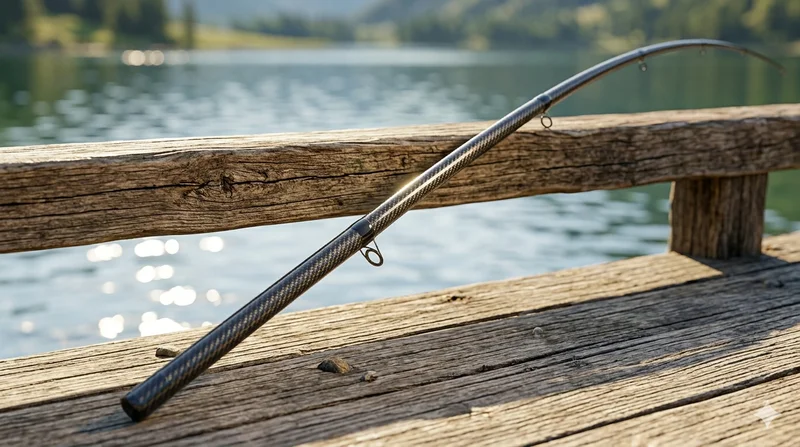
Carbon Fiber Fishing Rod Blank
High-quality carbon fiber fishing rod blank manufactured from multiple grades of Toray carbon fiber cloth. Available in a wide range of lengths, powers, and actions for freshwater and saltwater applications. Suitable for OEM rod building.
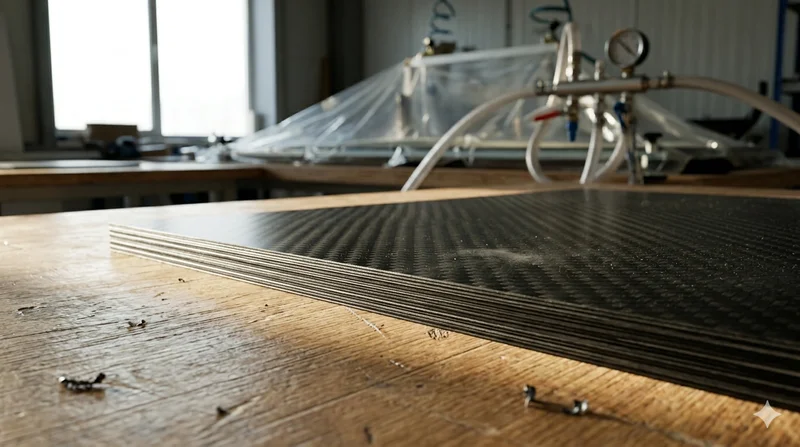
Carbon Fiber Plate — 3K Twill T700 3.0mm
Medium-thickness 3.0mm carbon fiber plate offering significantly higher load capacity while maintaining attractive 3K twill finish. Suitable for structural brackets, reinforcement plates, and load-bearing panels.
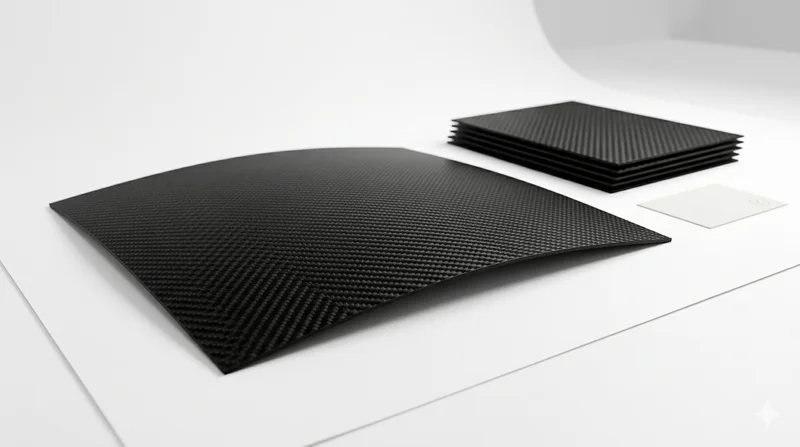
Carbon Fiber Plate — 3K Twill T700 1.5mm
Thin 1.5mm carbon fiber plate with 3K twill weave surface. Lightweight and stiff, commonly used for covers, panels, drone bodies, and applications requiring a premium aesthetic appearance.
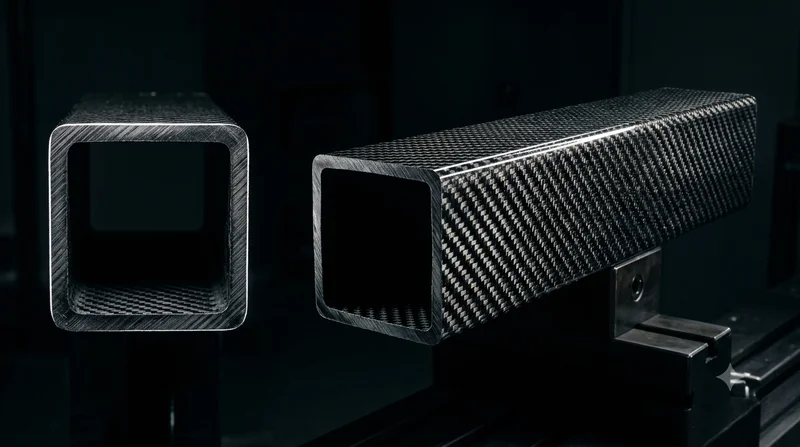
Square Carbon Fiber Tube — 3K Twill T700
Square cross-section carbon fiber tube manufactured with 3K twill weave for torsional strength. Preferred for structural frames, trusses, and support columns where rectangular geometry offers design flexibility.

Carbon Fiber Drone Arm
Precision-molded carbon fiber drone arm combining unidirectional fiber for stiffness and woven layers for torsional strength. Designed for FPV, photography, and industrial drone platforms. Each arm is CNC-machined to exact specifications.