
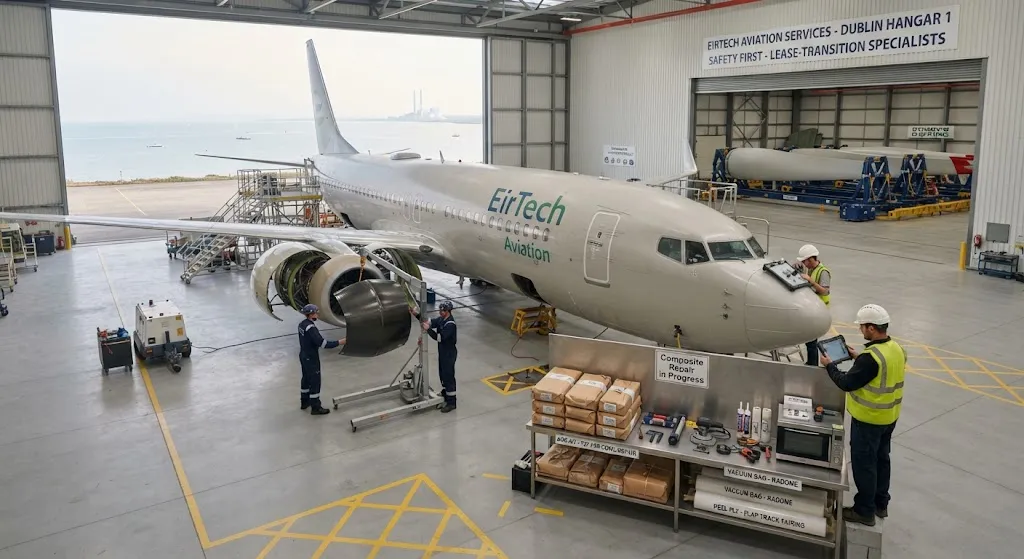
Ireland sits between two of Europe's densest composite clusters — the United Kingdom's aerospace industry and the offshore wind supply chain of the North Sea — yet it is usually treated as a footnote in market studies. That position is misleading. The country operates the world's larges
Introduction
Ireland sits between two of Europe's densest composite clusters — the United Kingdom's aerospace industry and the offshore wind supply chain of the North Sea — yet it is usually treated as a footnote in market studies. That position is misleading. The country operates the world's largest aircraft leasing hub, has published one of the most explicit offshore wind roadmaps in Europe, and offers an R&D tax regime that routinely lands near the top of global comparisons. For a component fabricator, repair shop, or materials distributor, these three pillars translate into unusually concrete pipelines of demand, at a time when other Western European markets are consolidating around a handful of established suppliers.
This article looks at each pillar in turn: how the leasing cluster generates repeat demand for lightweight cabin, nacelle, and flight-control composites; where the offshore wind roadmap places Ireland relative to its neighbours; and how the tax and grant environment lowers the cost of building a local engineering presence. The common thread is that Ireland does not manufacture carbon fiber — but it decides, finances, and certifies a large share of the parts made from it.
The Aviation Leasing Anchor
Dublin is the undisputed center of global aircraft leasing. The majority of the world's leased commercial fleet is owned or managed from Ireland, and the city hosts more than forty lessors and their engineering teams. Because a lease event is also a modification event — cabin reconfiguration, retrofits, return-condition repairs — the local ecosystem generates steady work for composite repair, interior refurbishment, and lightweight structural modification suppliers.
| Metric | Ireland scale | Composite demand created |
|---|---|---|
| Global leased fleet share | Around two-thirds owned or managed from Ireland | Repair and return-condition work on fairings, radomes, flight controls |
| Avolon fleet | Approximately 1,000 aircraft | Cabin liner and galley refurbishment cycles |
| SMBC Aviation Capital fleet | Approximately 800 aircraft | Lease-transition structural inspections |
| AerCap operations | World's largest lessor with a major Dublin base | Through-life modification programs, composite patch repairs |
| Regional and eVTOL leasing | Early lessor commitments to electric and regional aircraft | Battery enclosures, composite airframe subassemblies |
For suppliers, the leasing anchor matters because it is decision-driven rather than production-driven. A lessor that owns a hundred narrowbody aircraft needs approved suppliers for fan cowls, radomes, flap track fairings, and cabin composites every time a frame enters or exits a lease. That is repair and retrofit volume that recurs regardless of new aircraft delivery rates, which makes it a more stable base than assembly-line work for a mid-size fabricator entering the European market.
Airlines and lessors rarely repair composite structures directly; the work flows to a network of Part-145 repair stations and design organizations, several of which operate inside the Dublin cluster or partner with it. A lease transition that touches a radome, a fan cowl, or a flap track fairing triggers a specific procurement — approved repair schemes, replacement panels, and fasteners, sourced through the same short supply chains the lessors already use. For a composite supplier, winning one of those schemes creates a repeatable revenue line that renews with every return-condition check.
Offshore Wind Roadmap
The second pillar is wind. Ireland's Climate Action Plan commits the country to 20 GW of offshore wind capacity by 2040, and the first auction round (ORESS 1) in 2023 already cleared roughly 3.3 GW across four fixed-bottom projects in the Irish Sea. Unlike the North Sea giants, the Irish Sea fleet will initially be built and served from ports on the east coast, close to the established UK supply chain, which lowers the logistics barrier for a new entrant.
| Program | Status | Composite relevance |
|---|---|---|
| ORESS 1 (2023) | Awarded approximately 3.3 GW across four projects | Blades around 100 m, nacelle covers, leading-edge protection |
| ORESS 2.1 and 2.2 | Second auction rounds in progress with additional fixed and floating sites | Foundations and transition-piece tooling, buoyancy modules for floating |
| 2040 offshore target | 20 GW, roughly half fixed-bottom in the Irish Sea | Blade O&M, erosion shield refurbishment, spare-part stock |
| Celtic Sea floating projects | Early development ahead of area-based auctions | Floating substructure composites, inter-array cable protection |
Ireland has no domestic blade or nacelle manufacturing at scale, which is precisely the opening. Operators and maintenance contractors on Irish Sea projects must source leading-edge shields, erosion repairs, and replacement semi-structural parts from short logistics chains; a supplier based in Ireland competes with the UK on landed cost rather than on freight distance. The same gap applies to composite tooling for foundation segment casting and to the growing O&M stock of consumables.
R&D Incentives and the Emerging Industrial Base
The third pillar lowers the cost of acting on the first two. Ireland offers a 25 percent R&D tax credit — among the most generous in the EU — alongside capital grants through IDA Ireland, and the exemptions on equipment and consumables for qualifying R&D activities are well documented. The country already hosts a deep engineering base in medical device composites around Galway and a growing automation and robotics cluster, both of which supply the same skills a composite component operation needs.
- Component manufacturing: establish a repair and retrofit line for lease transitions and wind blade O&M, using Irish grants to offset equipment cost.
- Materials distribution: position Ireland as the import gateway for prepreg, fabrics, and cores serving both the leasing and wind pipelines from one bonded warehouse.
- Engineering services: monetize the 25 percent R&D credit with qualification testing, structural analysis, and automated inspection services sold to lessors and wind operators.
The tax arithmetic is the fastest route to a positive business case. A mid-size operation spending one million euros per year on qualifying R&D in Ireland collects roughly 250,000 euros back through the credit, on top of corporation tax that remains competitive even after OECD Pillar Two. Those numbers explain why the country has quietly become a European base for aerospace suppliers that sell largely to customers outside Ireland.
Frequently Asked Questions
Who buys composite components in Ireland today?
The largest buyers are aircraft lessors and their MRO partners, who purchase repair materials, replacement fairings, and cabin composite parts through lease-transition cycles; wind farm operators procuring blade O&M consumables; and a network of aerospace and medical device manufacturers that subcontract qualified fiber work. None of these groups requires large local material production, and all of them buy through short supply chains, which keeps the commercial cycle fast for an established supplier.
How does the 25 percent R&D tax credit actually work?
Qualifying expenditure on research and development — salaries, subcontracting, and consumables used directly in R&D activities — earns a 25 percent credit against corporation tax, with unused credit carried forward or, in some cases, payable. For a supplier running qualification testing, process automation, or wind-blade repair development, the credit effectively prices engineering hours below the neighboring UK and continental rates, which is the practical reason most new entrants structure their technical base in Ireland.
Is offshore wind demand real while Ireland has no blade factory?
Yes, and the absence of a blade factory is the opportunity rather than the problem. ORESS 1 projects must source leading-edge protection, erosion repairs, and replacement parts from wherever is logistically closest, and Ireland competes well on landed cost for its own projects. As ORESS 2 rounds add capacity into the 2030s, the O&M stock grows every year, giving a local supplier a compounding base of recurring work without requiring a single factory investment in primary structure.
Conclusion
Ireland's composite opportunity is real precisely because the country builds almost no primary carbon structure. The aircraft leasing hub generates decision-driven repair and retrofit demand that is immune to aircraft delivery cycles; the 20 GW offshore wind roadmap opens a blade O&M and semi-structural gap that is currently served from abroad; and the 25 percent R&D credit makes the business case of a local engineering base unusually easy to defend. Together, the three pillars reward suppliers who can move fast and qualify quickly.
For fabricators and distributors evaluating a Western European entry point, review our fabric and prepreg range for aerospace and wind applications, or contact our team to discuss material supply and qualification support for an Irish operation.
Part of topic
Related Articles
- Recycled Carbon Fiber Market Forecast 2030: Technology Maturity and Commercialization Path
- South Korea Carbon Fiber Market 2026: Hydrogen Economy and Shipbuilding Innovation
- Wind Turbine Blade Leading Edge Protection 2026: Polyurethane, Tape, and Metallic Shield Solutions
- China Carbon Fiber Overcapacity 2026: Price War Impact and Industry Consolidation
- India Carbon Fiber Market 2026: Wind Energy, Aerospace, and Defense Expansion
- PAN Precursor Market 2026: Acrylonitrile Supply and Carbon Fiber Cost Structure
Interested in Custom Carbon Fiber Products?
Contact our team for competitive pricing and technical specifications.
Get a QuoteRelated Products
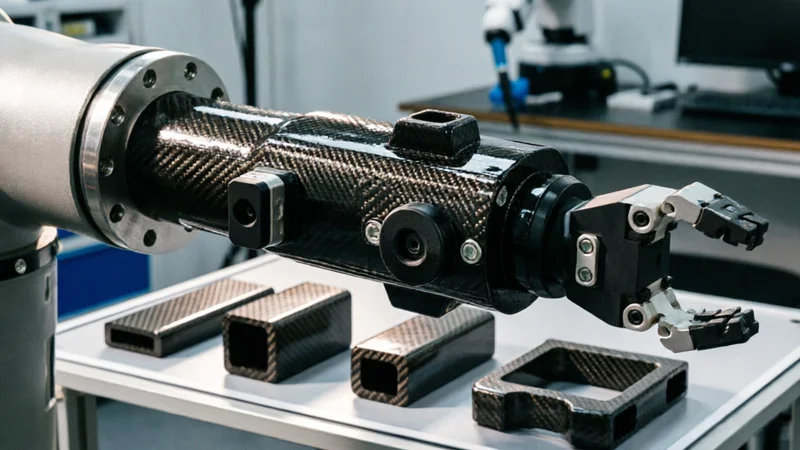
Carbon Fiber Robot End Effector Link — Custom Shape & Sensor Integration
Custom-shaped carbon fiber end effector links for robotic arms. Designed for automation integrators and research labs requiring lightweight, rigid connections between the robot wrist and gripper/tool. Can incorporate sensor mounting bosses, cable routing channels, and quick-change interfaces.
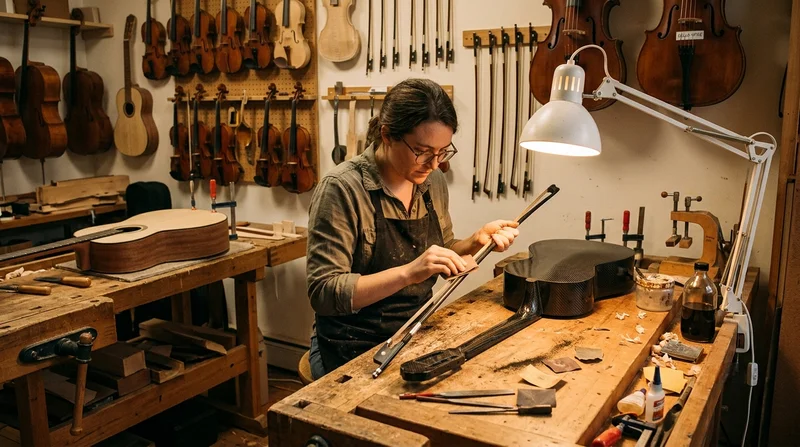
Custom Carbon Fiber Musical Instrument Parts
Carbon fiber components for musical instrument manufacturing offering superior dimensional stability, low weight, and consistent acoustic properties. We produce carbon fiber bows, guitar necks, violin chin rests, drum shells, and wind instrument bodies. Carbon fiber instruments are immune to humidity changes and temperature fluctuations that affect wooden instruments.
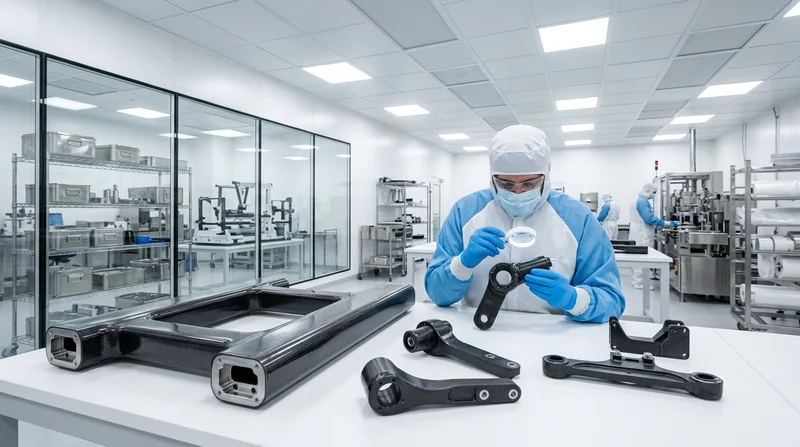
Custom Carbon Fiber Medical Device Components
Medical-grade carbon fiber components manufactured for imaging equipment, surgical instruments, and patient support systems. Carbon fiber's radiolucency (X-ray transparency) and high strength-to-weight ratio make it ideal for CT scanner beds, wheelchair frames, surgical robot arms, and MRI-compatible accessories. Biocompatible resin systems available.
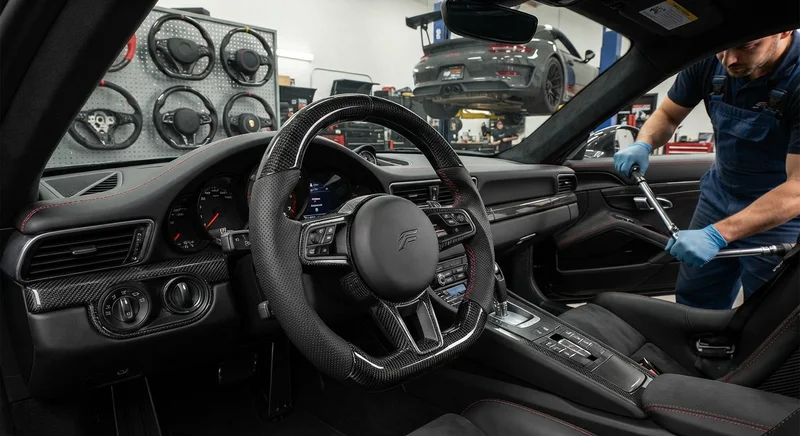
Carbon Fiber Steering Wheel — Custom Leather-Wrapped with CF Inlay
Custom carbon fiber steering wheel with genuine leather wrapping and carbon fiber inlay sections. Molded from T700 3K prepreg for maximum rigidity with a 30% weight reduction over OEM wheels. Available in D-shape (flat bottom) and round profiles. Direct bolt-on fitment for popular sports car and performance vehicle models. Custom stitching color and leather grade available.
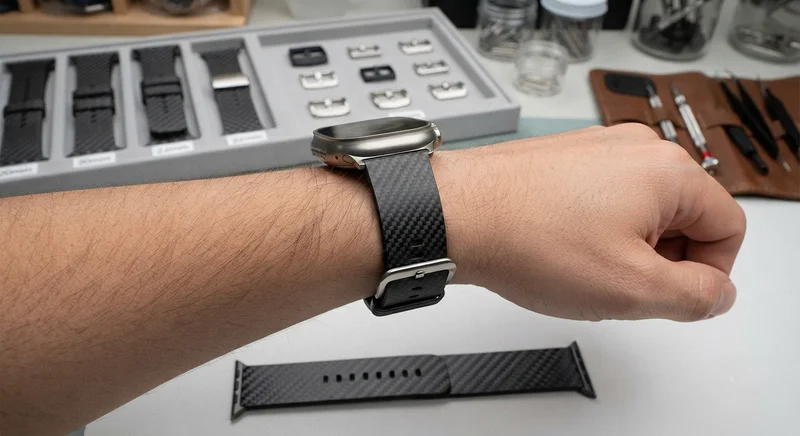
Carbon Fiber Watch Strap — 20mm/22mm Quick-Release
Premium carbon fiber watch strap with quick-release spring bars. Woven from T700 3K twill prepreg with a flexible resin system that conforms to the wrist. Available in 20mm and 22mm lug widths, compatible with Apple Watch, Samsung Galaxy Watch, Garmin, and traditional mechanical watches. Features a stainless steel buckle and carbon fiber keepers. The natural weave pattern makes each strap unique.