
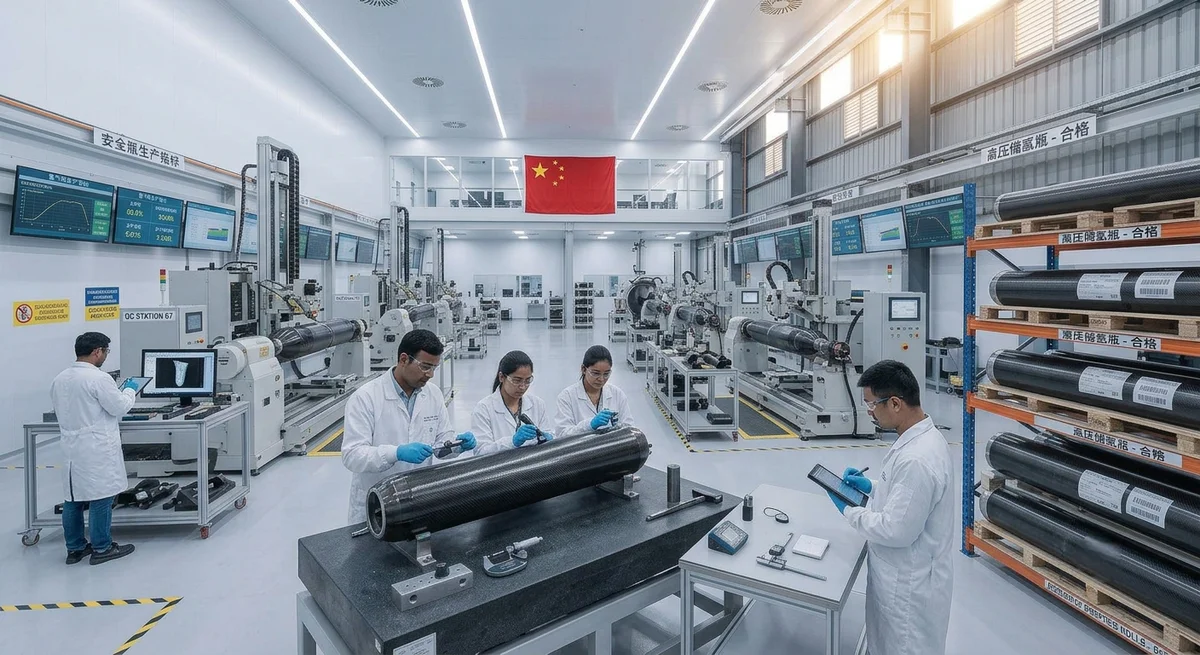
India's carbon fiber market is experiencing unprecedented growth in 2026, driven by defense indigenization initiatives, aerospace manufacturing expansion, and renewable energy infr
Defense Indigenization: The Primary Growth Engine
India's Ministry of Defence has accelerated its "Atmanirbhar Bharat" (Self-Reliant India) initiative, mandating domestic manufacturing of critical defense components. Carbon fiber composites are central to this strategy, with applications spanning aircraft structures, unmanned aerial vehicles (UAVs), armored vehicle components, and naval vessel superstructures.
The Indian Air Force's Light Combat Aircraft (LCA) Tejas program has been a major catalyst. The Mk1A variant, now entering full-rate production, incorporates approximately 45% composite materials by structural weight, up from 30% in the original Mk1. Primary carbon fiber structures include wingskins, fin, rudder, and control surfaces manufactured from intermediate-modulus (IM7-grade) prepreg systems.
Beyond aerospace, the Defence Research and Development Organisation (DRDO) is developing carbon fiber composite hulls for next-generation frigates and corvettes. These programs require large-format biaxial and triaxial carbon fiber fabrics, creating demand for 12K and 24K tow materials at an estimated 80-100 metric tons annually by 2027.
| Program | Sector | Carbon Fiber Type | Annual Volume (est.) | Status |
|---|---|---|---|---|
| LCA Tejas Mk1A | Aerospace | IM7 Prepreg | 40-50 MT | Full production |
| HAL Advanced Medium Combat Aircraft (AMCA) | Aerospace | IM8/High-modulus | 60-80 MT | Development |
| DRDO Naval Frigates | Naval | 12K/24K Fabrics | 80-100 MT | Prototyping |
| UAV Programs (Tapas, Archer) | Defense | 3K/6K Fabrics | 20-30 MT | Production |
| Armored Vehicle Components | Land systems | S-2 Glass/Carbon Hybrid | 15-25 MT | Field trials |
Aerospace Commercial Manufacturing Expansion
India's commercial aerospace sector has undergone significant transformation. Companies like Hindustan Aeronautics Limited (HAL), Dynamatic Technologies, and Aequs are now established Tier 1 and Tier 2 suppliers to global OEMs including Boeing, Airbus, and Safran.
Boeing's 737 and 787 supply chains now source composite floor beams, interior panels, and wing components from Indian facilities. The upcoming Tata-Airbus C-295 transport aircraft final assembly line in Vadodara is expected to generate additional demand for secondary composite structures. Current estimates place India's aerospace-grade carbon fiber consumption at 150-200 metric tons in 2026, representing approximately 12-15% of total Asian aerospace composite demand outside China.
Key material specifications required by Indian aerospace suppliers include:
- Prepreg materials: 177°C (350°F) curing epoxy systems with IM7/IM8 carbon fiber
- Non-crimp fabrics (NCFs): Biaxial and quadraxial orientations for primary structures
- Honeycomb core materials: Nomex and aluminum cores for sandwich panels
- Film adhesives: 177°C and 121°C curing systems for structural bonding
Renewable Energy: Wind and Hydrogen
India's renewable energy targets — 500 GW installed capacity by 2030 — are driving substantial carbon fiber demand in wind energy and hydrogen storage.
Wind Energy Blades
Wind turbine manufacturers in India are transitioning from glass fiber to carbon fiber hybrid blades for larger rotor diameters. Suzlon and LM Wind Power (India operations) are now producing blades exceeding 80 meters in length, requiring carbon fiber spar caps and shear webs. Vestas' Indian facilities have also begun incorporating pultruded carbon fiber profiles in their newest blade designs. Industry analysts estimate Indian wind energy carbon fiber consumption at approximately 200-250 metric tons in 2026, growing to 400+ metric tons by 2028.
Hydrogen Storage
India's National Green Hydrogen Mission targets 5 million metric tons of green hydrogen production annually by 2030. This has spurred investment in Type IV composite hydrogen storage cylinders — high-pressure vessels manufactured from carbon fiber filament winding over a polymer liner. Companies like Reliance Industries, L&T, and EverSource Capital are establishing manufacturing capacity for these cylinders, creating demand for high-tensile-strength carbon fiber tow in the 40-60 metric ton range for 2026, with exponential growth projected.
Domestic Carbon Fiber Production Capacity
India currently has limited domestic PAN-based carbon fiber production. Kemrock Industries and Kineco Group operate small-scale facilities, but combined capacity remains under 500 metric tons annually — insufficient to meet the estimated demand of 800-1,000 metric tons in 2026. The gap is filled by imports, primarily from Japan (Toray, Teijin), Europe (SGL Carbon), and China.
However, several initiatives are underway to build domestic capacity:
- CSIR-National Aerospace Laboratories (NAL): Developing an indigenous PAN precursor and carbon fiber manufacturing pilot line with 20 MT/year capacity
- Adani Group: Announced plans for a 2,000 MT/year carbon fiber facility in Gujarat, expected to commence production in 2028
- Government incentives: Production-Linked Incentive (PLI) scheme for specialty steel and advanced composites, offering 8-12% financial incentives on incremental production
Import Tariffs and B2B Procurement Considerations
India's import tariff structure for carbon fiber products is tiered:
| Product Form | HS Code | Basic Customs Duty | Total Landed Cost Premium |
|---|---|---|---|
| Carbon fiber tow (raw) | 6815.11 | 7.5% | Base + 12-15% |
| Prepreg materials | 3921.90 | 10% | Base + 15-18% |
| Finished composite parts | 8803.30 | 15% | Base + 22-25% |
B2B suppliers looking to enter the Indian market should establish relationships with Special Economic Zone (SEZ)-based importers to reduce duty burdens. Additionally, providing technical support and certification documentation aligned with Indian standard IS 16013:2012 for carbon fiber reinforced plastics will facilitate smoother procurement processes.
Market Outlook and Strategic Recommendations
The Indian carbon fiber market in 2026 presents a high-growth, import-dependent landscape with clear opportunities:
1. Near-term (2026-2027): Focus on defense and aerospace supply opportunities through joint ventures with Indian defense PSUs
2. Medium-term (2027-2028): Wind energy carbon fiber demand will accelerate as blade lengths increase
3. Long-term (2028-2030): Domestic production capacity will begin to reduce import dependence; early market entrants will have established relationships
International suppliers who offer comprehensive technical support, adapted material specifications for Indian climate conditions (high humidity, temperature variations), and flexible procurement terms will be best positioned to capture this growing market.
FAQ
What is the current size of India's carbon fiber market?
India's carbon fiber market is estimated at 800-1,000 metric tons in 2026, with a CAGR of 18-22% projected through 2030. The market is primarily import-dependent, with domestic production capacity under 500 metric tons annually.
Which sectors drive carbon fiber demand in India?
The three primary sectors are defense indigenization (LCA Tejas, UAVs, naval vessels), commercial aerospace manufacturing (Boeing, Airbus supply chains), and renewable energy (wind turbine blades and hydrogen storage cylinders).
What are the import duties on carbon fiber products in India?
Basic customs duties range from 7.5% for raw carbon fiber tow (HS 6815.11) to 15% for finished composite parts (HS 8803.30). SEZ-based importing can reduce total landed costs. Total cost premiums including duties, handling, and logistics range from 12-25% depending on product form.
Part of topic
Related Articles
- Recycled Carbon Fiber Market Forecast 2030: Technology Maturity and Commercialization Path
- South Korea Carbon Fiber Market 2026: Hydrogen Economy and Shipbuilding Innovation
- Wind Turbine Blade Leading Edge Protection 2026: Polyurethane, Tape, and Metallic Shield Solutions
- China Carbon Fiber Overcapacity 2026: Price War Impact and Industry Consolidation
- India Carbon Fiber Market 2026: Wind Energy, Aerospace, and Defense Expansion
- PAN Precursor Market 2026: Acrylonitrile Supply and Carbon Fiber Cost Structure
Interested in Custom Carbon Fiber Products?
Contact our team for competitive pricing and technical specifications.
Get a QuoteRelated Products
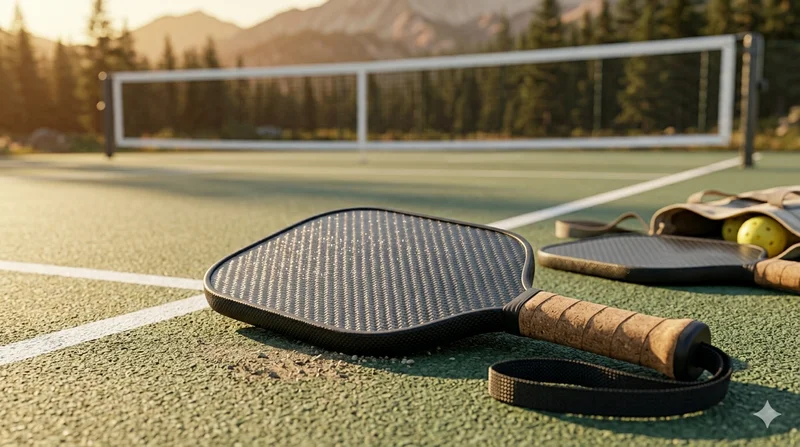
Carbon Fiber Pickleball Paddle
High-performance pickleball paddle with Toray T700 carbon fiber face and polypropylene honeycomb core. Delivers excellent power-to-weight ratio, spin generation, and vibration dampening for competitive play.
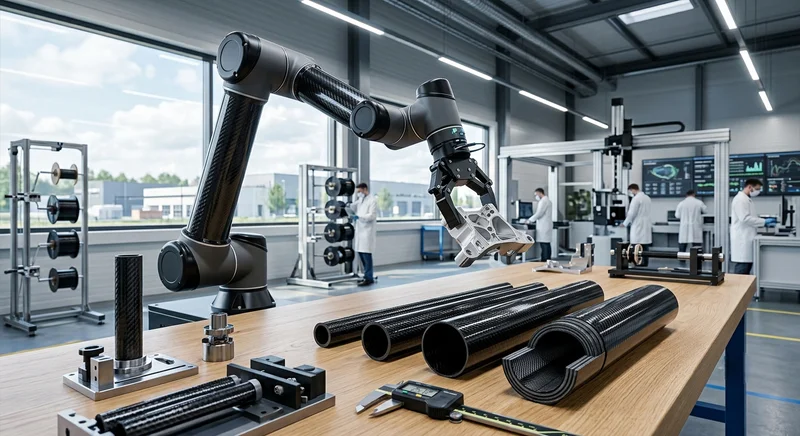
Carbon Fiber Robotic Arm Tube — High-Stiffness Lightweight Replacement
Precision-wound carbon fiber tubes for robotic arm links, replacing steel or aluminum in collaborative robots (cobots) and industrial manipulators. Achieve 3× the specific stiffness of aluminum with significant weight reduction, enabling faster acceleration and higher payload capacity.
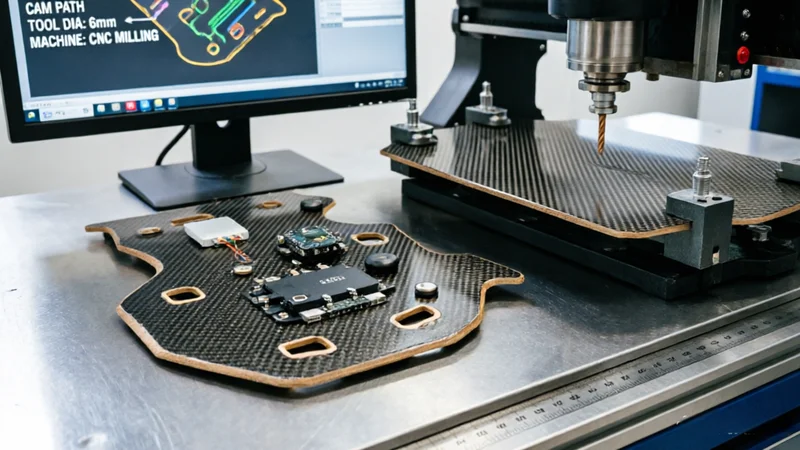
Carbon Fiber Drone Frame Base Plate — 3K Twill T700
CNC-machined carbon fiber base plates for drone frame assemblies. Cut from 3K twill weave T700 prepreg with precision CNC routing. Pre-drilled mounting patterns compatible with common flight controller and power distribution board layouts. Available in 1.5mm to 5mm thickness.
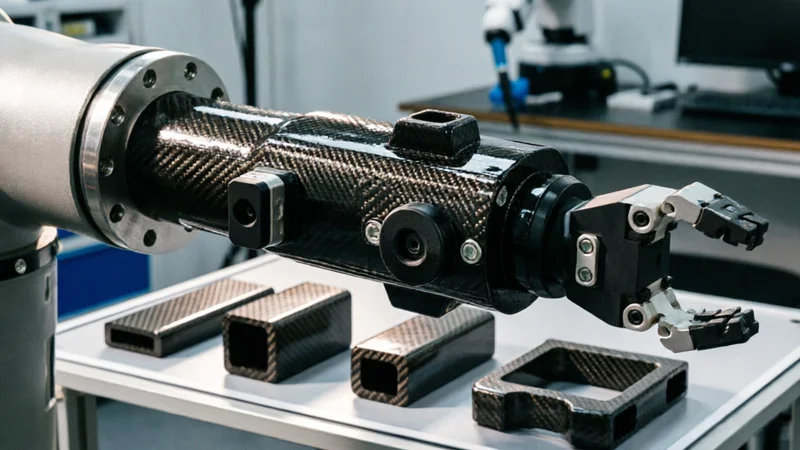
Carbon Fiber Robot End Effector Link — Custom Shape & Sensor Integration
Custom-shaped carbon fiber end effector links for robotic arms. Designed for automation integrators and research labs requiring lightweight, rigid connections between the robot wrist and gripper/tool. Can incorporate sensor mounting bosses, cable routing channels, and quick-change interfaces.
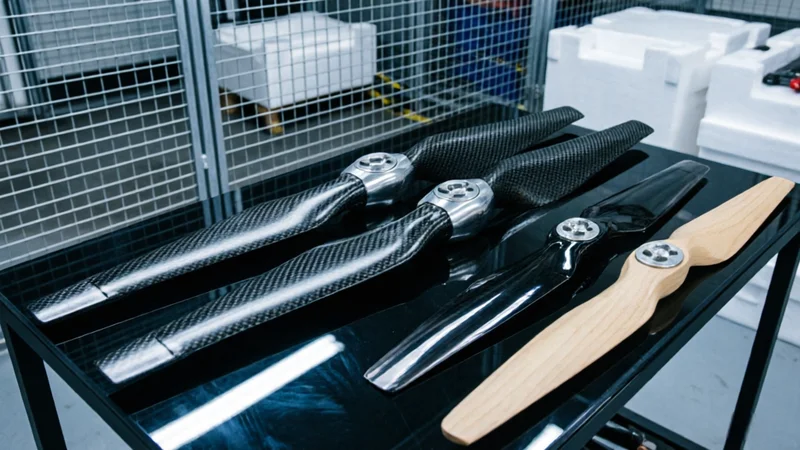
Carbon Fiber Drone Propeller — High-Performance Prepreg Molded
Prepreg-molded carbon fiber propellers for industrial and racing drones. Optimized airfoil design with balanced blade geometry for maximum thrust efficiency. 3-5× stiffer than nylon/plastic props, reducing blade flutter and improving flight stability. Available in common sizes or custom diameter/pitch.