
China's carbon fiber industry has long been concentrated in the eastern and northeastern coastal provinces — Jiangsu, Jilin, and Shandong host the largest producers, including Zhongfu Shenying, Sinopec, and Jilin-based manufacturers. The northwest, despite its enormous wind resources an
Introduction
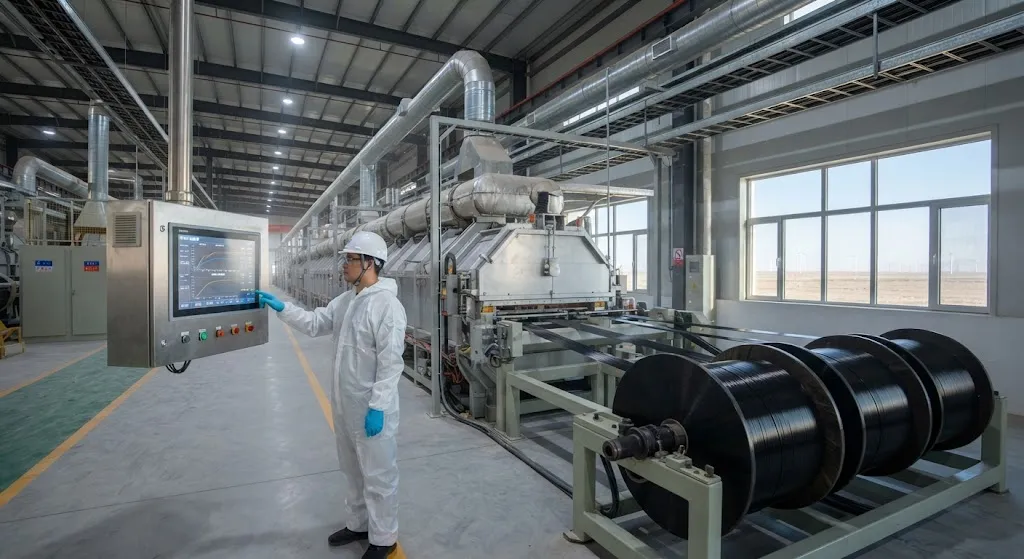
China's carbon fiber industry has long been concentrated in the eastern and northeastern coastal provinces — Jiangsu, Jilin, and Shandong host the largest producers, including Zhongfu Shenying, Sinopec, and Jilin-based manufacturers. The northwest, despite its enormous wind resources and cheap energy, has remained a net importer of carbon fiber from the rest of the country. That is changing with the arrival of Gansu Nata, a joint venture between Guangdong Mengtai and Shanghai Electric Wind Power, which is building a carbon fiber production base in Zhangye, Gansu province. The project's first phase is designed for 10,000 tonnes per year, with total design capacity reaching 24,000 tonnes per year and a total investment of 2.77 billion yuan.
The Gansu Nata project matters beyond its headline numbers. It is one of the first large-scale carbon fiber plants in northwest China, and it is explicitly oriented toward the large-tow segment that serves wind blade spar caps, hydrogen pressure vessels, and automotive lightweighting. For wind power original equipment manufacturers in the region and for the broader Chinese composites supply chain, the project represents a structural shift: production capacity moving closer to the demand base and to cheap renewable electricity. This article examines the project's economics, the drivers behind its location, and what it means for the large-tow carbon fiber supply balance in 2026 and beyond.
Project Anatomy: Scale, Investment, and Phasing
The Gansu Nata project is among the largest announced carbon fiber investments in China during the current capacity expansion cycle. The table below summarizes its key parameters:
| Parameter | Phase 1 | Full Design |
|---|---|---|
| Location | Zhangye, Gansu | Zhangye, Gansu |
| Annual capacity | 10,000 tonnes | 24,000 tonnes |
| Focus segments | Wind, hydrogen, automotive | Wind, hydrogen, automotive, industrial |
| Investment (total) | 2.77 billion yuan | |
| Ownership | Guangdong Mengtai + Shanghai Electric Wind Power JV | |
| Completion basis | Staged, 2026 onward | Staged over subsequent years |
The ownership structure is notable. Guangdong Mengtai brings chemical and fiber production experience, while Shanghai Electric Wind Power is one of China's leading wind turbine manufacturers with deep knowledge of turbine and blade requirements. This vertical linkage means the plant's output has a natural anchor customer in wind power, reducing the market risk that pure-play carbon fiber producers face. The phased approach — 10,000 tonnes first, expanding toward 24,000 tonnes — also lets the joint venture validate process economics and demand before committing the full investment.
Why Northwest China: Energy, Wind Demand, and Logistics
The choice of Zhangye illustrates how energy cost, demand proximity, and logistics now shape carbon fiber plant location decisions in China. Carbon fiber production is energy-intensive — oxidation and carbonization furnaces consume large amounts of electricity — so the cost of power is a first-order factor in production economics. Gansu province has among the lowest industrial electricity tariffs in China, supported by abundant hydro, solar, and wind generation. In a market where large-tow carbon fiber pricing is under sustained pressure, a plant powered by cheap northwest electricity enjoys a structural cost advantage over coastal producers buying grid power at higher rates.
Demand proximity is the second driver. Northwest China hosts the country's largest wind energy bases — the Gobi Desert corridor across Gansu, Inner Mongolia, and Xinjiang accounts for a large share of national wind installations, and blade manufacturers have established plants in the region to serve these bases. Wind blade spar caps are the largest single application for large-tow carbon fiber, so producing fiber in the same region as the blades shortens logistics, cuts carbon footprint, and insulates buyers from cross-country freight variability. The plant also positions Gansu Nata near hydrogen storage and transportation projects emerging across the northwest, where Type IV composite pressure vessels are being deployed for tube trailer and station storage applications.
Filling the Large-Tow Supply Gap
The large-tow segment is where the Gansu Nata project targets its most immediate impact. Large-tow carbon fiber — typically 48K and larger — is the workhorse for wind blade spar caps and increasingly for hydrogen pressure vessel liners and automotive structural parts, because larger tow counts lower production cost per kilogram. Chinese producers have aggressively expanded large-tow capacity, but supply has remained concentrated in eastern and northeastern provinces, creating a regional imbalance that northwest wind OEMs have had to absorb through longer supply chains. The Gansu Nata plant directly addresses this gap: its 10,000 tonne first phase is comparable in scale to several leading individual lines in China's large-tow segment, and its wind-focused ownership guarantees demand alignment with the region's blade manufacturing base.
Beyond wind, the second-order effects of the project stretch across the composites industry:
- Hydrogen storage: Type IV vessels for storage and transport are a fast-growing application for large-tow fiber, and northwest China's hydrogen projects provide a natural regional market.
- Automotive lightweighting: Bus, truck, and passenger-vehicle structural parts are adopting carbon fiber in cost-sensitive configurations, a segment where northwest-manufactured fiber at competitive prices is attractive.
- Price benchmark shift: New large-scale capacity in a low-cost energy region puts downward pressure on large-tow pricing nationally, benefiting buyers while testing the margins of higher-cost producers.
- Supply security: Regional production reduces dependence on long-haul domestic logistics and buffers buyers against the freight and pricing shocks that historically accompanied cross-country supply.
Strategic Implications for the Carbon Fiber Market
The Gansu Nata project is a signal of how China's carbon fiber industry is reorganizing around end-use demand and energy economics. Four implications stand out for 2026 and beyond:
- Regional rebalancing: The northwest is emerging as a second carbon fiber production pole alongside the eastern coastal cluster, a shift driven by energy cost and wind demand proximity rather than historical industrial heritage.
- Vertical integration: The turbine-manufacturer joint venture model — a fiber producer paired with a wind OEM — aligns output with anchor demand and may be replicated by other producers seeking stable offtake.
- Large-tow competition: As capacity scales toward 24,000 tonnes, large-tow supply becomes more competitive, accelerating the substitution of carbon for glass in spar caps where design permits.
- Hydrogen adjacency: The plant's location positions it to serve the emerging northwest hydrogen economy, potentially making Gansu a dual-market hub for both wind and hydrogen composites.
Execution risk should not be underestimated. Carbon fiber plants face long commissioning cycles, and polymer-to-carbon conversion yields must be proven before full capacity is reached. The phased approach mitigates this risk, but buyers should treat the 24,000 tonne design capacity as an ambition to be reached over time rather than an immediate supply reality. What is already clear is strategic direction: northwest China is being deliberately built into the large-tow carbon fiber map, and the Gansu Nata project is the leading instance.
Frequently Asked Questions
What is the Gansu Nata carbon fiber project?
Gansu Nata is a joint venture between Guangdong Mengtai and Shanghai Electric Wind Power building a carbon fiber production base in Zhangye, Gansu province, northwest China. The first phase is designed for 10,000 tonnes per year, with total design capacity of 24,000 tonnes per year and total investment of 2.77 billion yuan. The project targets wind blade spar caps, hydrogen pressure vessels, and automotive lightweighting applications.
Why is the project located in Gansu province?
Gansu offers among the lowest industrial electricity tariffs in China, which matters because carbon fiber production is energy-intensive, and the province sits within the largest wind energy base corridor in the country, close to blade manufacturers that consume large-tow fiber. Cheap renewable power and demand proximity combine to give the plant a structural cost and logistics advantage over coastal producers.
How does the project affect the large-tow carbon fiber supply balance?
Large-tow carbon fiber production has historically been concentrated in eastern and northeastern China, leaving northwest wind OEMs dependent on long supply chains. The Gansu Nata plant's 10,000 tonne first phase, scaling toward 24,000 tonnes, adds meaningfully to regional supply, puts downward pressure on large-tow pricing, and improves supply security for northwest blade manufacturing.
What are the risks to the project's timeline?
Carbon fiber plants face long commissioning cycles, and polymer-to-carbon conversion yields must be proven before full capacity is reached. The phased 10,000-to-24,000 tonne approach mitigates execution risk, but buyers should treat the full design capacity as a multi-year ambition rather than immediate supply. Wind and hydrogen demand growth will also influence how quickly subsequent phases are commissioned.
Conclusion
The Gansu Nata project marks a structural turning point for China's carbon fiber industry: the first major large-tow production base in the northwest, anchored by a wind turbine manufacturer and powered by cheap regional electricity. Its 10,000 tonne first phase and 24,000 tonne design capacity address the regional supply gap that has long left northwest wind OEMs dependent on eastern producers, while its hydrogen and automotive focus broadens the application base. As commissioning proceeds, the project will test whether energy economics and demand proximity can sustain a new production pole — and if it succeeds, the Gansu model is likely to be replicated across other Chinese renewable-energy regions.
For wind turbine manufacturers, blade builders, and hydrogen storage developers evaluating large-tow carbon fiber supply, the northwest supply shift is a development worth tracking closely. Explore our carbon fiber product range or contact our team to discuss large-tow material specifications and supply strategies for wind and hydrogen applications.
Part of topic
Related Articles
- Recycled Carbon Fiber Market Forecast 2030: Technology Maturity and Commercialization Path
- South Korea Carbon Fiber Market 2026: Hydrogen Economy and Shipbuilding Innovation
- Wind Turbine Blade Leading Edge Protection 2026: Polyurethane, Tape, and Metallic Shield Solutions
- China Carbon Fiber Overcapacity 2026: Price War Impact and Industry Consolidation
- India Carbon Fiber Market 2026: Wind Energy, Aerospace, and Defense Expansion
- PAN Precursor Market 2026: Acrylonitrile Supply and Carbon Fiber Cost Structure
Interested in Our Products?
Contact our team for competitive pricing and technical specifications.
Get a QuoteRelated Products
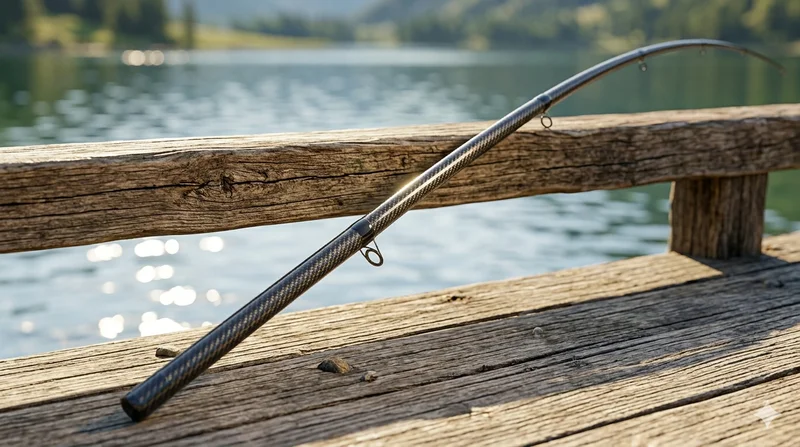
Carbon Fiber Fishing Rod Blank
High-quality carbon fiber fishing rod blank manufactured from multiple grades of Toray carbon fiber cloth. Available in a wide range of lengths, powers, and actions for freshwater and saltwater applications. Suitable for OEM rod building.

Carbon Fiber Plate — 3K Twill T700 3.0mm
Medium-thickness 3.0mm carbon fiber plate offering significantly higher load capacity while maintaining attractive 3K twill finish. Suitable for structural brackets, reinforcement plates, and load-bearing panels.

Carbon Fiber Plate — 3K Twill T700 1.5mm
Thin 1.5mm carbon fiber plate with 3K twill weave surface. Lightweight and stiff, commonly used for covers, panels, drone bodies, and applications requiring a premium aesthetic appearance.

Square Carbon Fiber Tube — 3K Twill T700
Square cross-section carbon fiber tube manufactured with 3K twill weave for torsional strength. Preferred for structural frames, trusses, and support columns where rectangular geometry offers design flexibility.
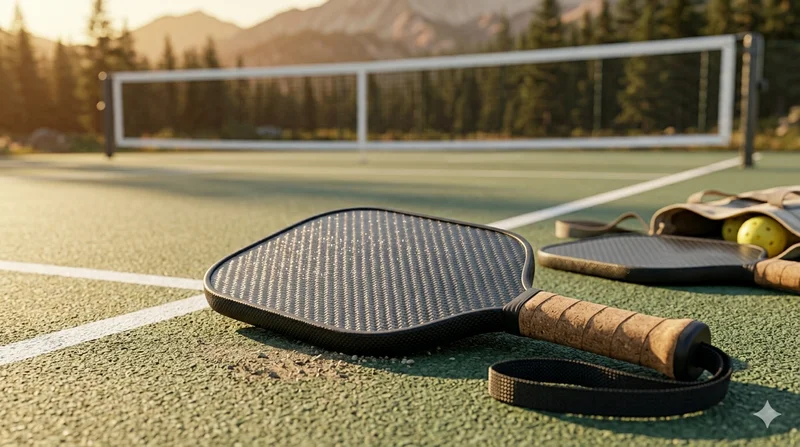
Carbon Fiber Pickleball Paddle
High-performance pickleball paddle with Toray T700 carbon fiber face and polypropylene honeycomb core. Delivers excellent power-to-weight ratio, spin generation, and vibration dampening for competitive play.