
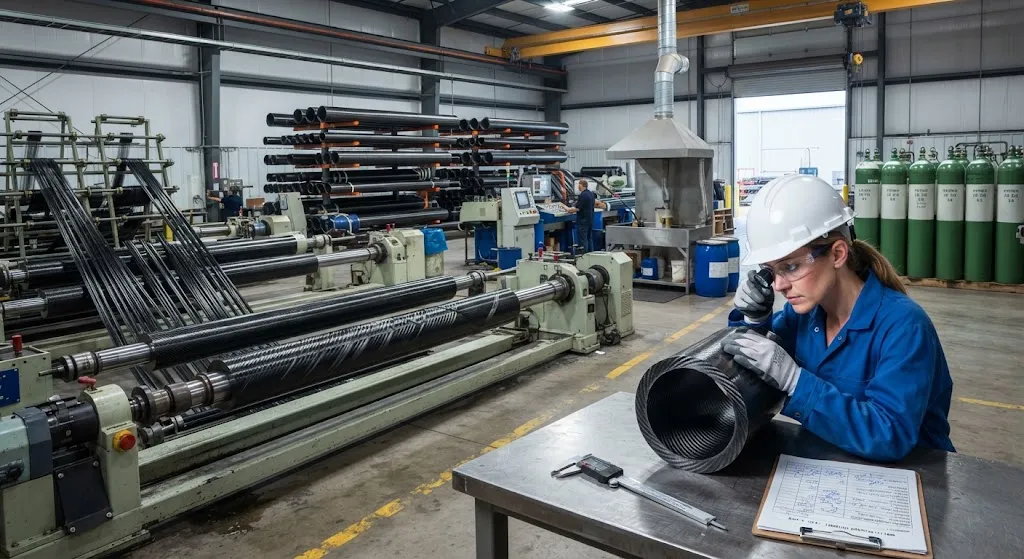
Filament wound epoxy tubes applications have expanded far beyond the pressure pipe market where the technology was born. The reason is simple: filament winding places continuous fibers at precisely controlled angles, so the resulting tube can be engineered with different strength in the axial and ho
Introduction
Filament wound epoxy tubes applications have expanded far beyond the pressure pipe market where the technology was born. The reason is simple: filament winding places continuous fibers at precisely controlled angles, so the resulting tube can be engineered with different strength in the axial and hoop directions to match a specific load case. Epoxy resin adds high mechanical properties, fatigue resistance, and service temperatures that commodity polyester systems cannot reach. Together they produce tubes that carry pressure, transmit torque, resist corrosion, or carry axial loads — often several of these at once.
This article surveys the main industrial applications of filament wound epoxy tubes, from the hydrocarbon and aerospace sectors that drove early adoption to the automotive, robotics, and infrastructure uses now growing fastest. For each sector we outline the load case, the tube architecture that answers it, and the specification points that matter. We close with a practical guide to matching tube design to application requirements.
Filament Wound Epoxy Tubes Applications in Oil and Gas
Oil and gas remains the largest single market for filament wound epoxy tubes, driven by the need to replace corroding steel in flowlines, water injection, and chemical service. Glass fiber with epoxy resin is the standard combination because it combines corrosion resistance with mechanical strength at a cost that suits long pipeline runs. Epoxy systems are preferred over vinyl ester where higher temperatures or more aggressive fluids are present.
- Downhole tubing and casing: Filament wound epoxy tubes serve as corrosion-resistant liners and spoolable tubing in wells where produced fluids attack carbon steel. Low weight reduces rig handling loads.
- Flowlines and gathering lines: Surface pipelines carrying produced water, CO2, or hydrogen sulfide benefit from epoxy tubes that eliminate corrosion allowance and internal coating maintenance.
- Chemical injection lines: Small-diameter epoxy tubes deliver corrosion inhibitors and methanol to wellheads at pressures up to 20-40 MPa, where steel would fail from pitting.
The governing specification for oil and gas tubulars is API 15HR for high-pressure fiberglass line pipe, which sets burst, axial load, and cyclic pressure requirements. Filament wound epoxy tubes meeting API 15HR are qualified with a pressure rating that is derated for temperature and for the specific service environment, so the stated rating is only valid for the fluid and temperature it was qualified against.
Composite Tube Use Cases in Aerospace and Defense
Aerospace uses filament wound epoxy tubes where stiffness and weight dominate: drive shafts, struts, actuator rods, and ducting on aircraft, helicopters, and spacecraft. Carbon fiber is the default reinforcement because its modulus-to-weight ratio exceeds metal alternatives by a wide margin. A filament wound carbon-epoxy drive shaft can be up to 60% lighter than a steel shaft of equal torque capacity, which is why helicopter tail-rotor drive shafts and turboprop accessory shafts are now routinely wound rather than machined.
Defense applications add the need for consistent ballistic and fatigue performance. Missile and rocket motor cases are filament wound with carbon or aramid fiber and epoxy, exploiting the hoop-dominated winding pattern that the pressure vessel load case demands. Mortar tubes and launch tubes use the same logic: an axial-helical layup carries handling and launch loads while the hoop layers contain the internal pressure of launch.
| Application | Fiber | Typical Winding Pattern | Key Requirement |
|---|---|---|---|
| Driveshaft (helicopter, marine) | Carbon (T700 class) | ±45° + hoop | Torque, fatigue, low weight |
| Actuator / push rod | Carbon high-modulus | 0° axial dominance | Axial stiffness, buckling |
| Rocket / motor case | Carbon or aramid | Helical + high-angle hoop | Burst strength, mass ratio |
| Subsea riser | Glass | ±54° + hoop layers | Pressure, axial load, fatigue |
Aerospace tubes are almost always autoclave-cured to reach the fiber volume fraction and void control that flight hardware demands, and every tube is traceable to a batch record. The cost is justified where the weight saved translates directly into payload, range, or fuel burn.
Epoxy Tube Industrial Use in Automotive, Robotics and Infrastructure
The fastest-growing segment for filament wound epoxy tubes is industrial machinery, where the combination of high specific stiffness and corrosion resistance solves problems that steel and aluminum cannot. Robotics is a notable example: a carbon-epoxy filament wound tube used as a robot arm segment delivers the same stiffness as an aluminum tube at roughly half the weight, which lets the robot move faster with smaller motors while maintaining positioning accuracy. The same reasoning drives adoption in material handling, gantry systems, and automated guided vehicles.
Infrastructure adds another set of applications where epoxy tubes replace materials that corrode or degrade:
- Piling and fender systems: Filament wound epoxy tubes form corrosion-free piles and fenders for ports and docks, with a service life measured in decades in splash-zone exposure.
- Bridge and building struts: High-modulus carbon tubes carry compressive and bending loads in cable-stayed structures, temporary works, and lightweight roof systems.
- Rehabilitation liners: Epoxy tubes are pulled through or inserted into deteriorated steel and concrete pipe to restore pressure capacity without excavation.
Automotive uses are more specialized but growing: torque tubes, propeller shafts for sports cars, and structural cross-members. Here the filament winding process competes with braiding and roll wrapping, winning where the load case is clearly tubular and the production volume justifies dedicated winding tooling.
FW Tube Applications: How to Select the Right Architecture
Every filament wound epoxy tube application reduces to a small set of design decisions that can be made before any winding begins. The winding angle determines the ratio of axial to hoop strength. A 54-degree helix produces a balanced tube where axial and hoop strength are equal, suited to pressure vessels and general-purpose piping. Angles below 54 degrees shift strength toward the axial direction, matching drive shafts, struts, and push rods. Angles above 54 degrees favor hoop strength for containment-dominated loads.
Fiber selection then fixes the stiffness ceiling: E-glass gives the lowest cost, S-glass raises strength, standard-modulus carbon (230-240 GPa) gives the best balance for structural use, and intermediate and high-modulus grades (290-440 GPa) serve stiffness-critical applications such as robotic arms and aerospace struts. Resin selection is the third decision, balancing service temperature, chemical resistance, and cost. The table below summarizes the property trade-offs for the three most common fiber types.
| Fiber | Tensile Strength | Modulus | Relative Cost | Best Fit |
|---|---|---|---|---|
| E-glass | 2,400-3,500 MPa | 70-80 GPa | 1x | Piping, corrosion service |
| S-glass | 3,500-4,800 MPa | 85-90 GPa | 3-5x | Pressure vessels, armor |
| Carbon T700 class | 4,900 MPa | 230 GPa | 8-15x | Driveshafts, struts, robotics |
Finally, verify the application loads against the tube's qualification data rather than assuming a generic rating. A tube qualified for static pressure may not be suitable for cyclic loading, impact, or elevated temperature, so the qualification report must match the intended service.
Frequently Asked Questions
Can filament wound epoxy tubes replace steel pipes in corrosive service?
Yes, and this is one of the oldest applications of the technology. Glass-epoxy filament wound tubes qualified to API 15HR or ISO 14692 are routinely used for produced water, chemical injection, and corrosive flowlines where steel would need expensive corrosion allowance and maintenance. The replacement is not one-for-one in dimensions: the composite tube wall is thicker because the modulus is lower, and fittings must be bonded or flanged rather than threaded or welded. The economic case is strongest where the steel alternative requires coatings, cathodic protection, or frequent replacement.
What is the temperature limit of a filament wound epoxy tube?
Standard bisphenol epoxy systems are rated for continuous service up to roughly 90-120°C depending on the specific formulation and the wet environment. High-temperature epoxy systems extend this to about 150-180°C, and advanced systems with higher glass transition temperatures can reach beyond that for short-term peaks. Above these limits the resin softens and the tube loses both strength and stiffness. For high-temperature service, specify the resin system and its glass transition temperature explicitly, and derate the pressure rating according to the manufacturer's data.
How do I choose between carbon and glass fiber for a filament wound tube?
Start with the load case and the stiffness requirement. If the application is corrosion service at moderate loads and temperature, glass fiber with epoxy is almost always the economical choice. If weight or stiffness dominates — drive shafts, robotic arms, aerospace struts — carbon fiber earns its higher cost because the weight saving translates into performance. A useful rule of thumb: carbon is justified when the tube's weight or its axial stiffness directly affects system performance, such as payload capacity, acceleration, or positioning accuracy. In purely static, cost-sensitive applications, glass remains the rational default.
Conclusion
Filament wound epoxy tubes applications now cover nearly every industry where a tubular component must carry load, resist corrosion, or save weight. The technology's defining advantage is design freedom: winding angle, fiber type, resin system, and layer sequence can all be tuned to the specific load case, so the tube is engineered rather than selected from a catalog. Oil and gas, aerospace, robotics, automotive, and infrastructure each use the process in a way that plays to its strengths.
When selecting a tube for a new application, define the load case, choose the winding architecture that matches it, and require qualification data that covers the actual service conditions. Browse our filament wound tube and composite product range for standard options, or contact our engineering team to discuss custom winding angles, fiber grades, and qualification testing for your application.
Part of topic
Related Articles
- Carbon Fiber Tube for Sale: Comparing Listings and Avoiding Bad Specs
- Carbon Fiber Engine Parts: High-Temperature Performance for Racing and Performance Vehicles
- Carbon Fiber Body Parts: Automotive Exterior Panels and Structural Components
- Carbon Fiber Drone Body Manufacturing: Monocoque Design and Production Methods
- Carbon Fiber Drone Parts Supplier: FPV Frames, Arms and Structural Components
- Carbon Fiber Rod Near Me: Stock Sizes, Tolerances and Local Availability
Interested in Our Products?
Contact our team for competitive pricing and technical specifications.
Get a QuoteRelated Products

Carbon Fiber Plate — 3K Twill T700 1.5mm
Thin 1.5mm carbon fiber plate with 3K twill weave surface. Lightweight and stiff, commonly used for covers, panels, drone bodies, and applications requiring a premium aesthetic appearance.
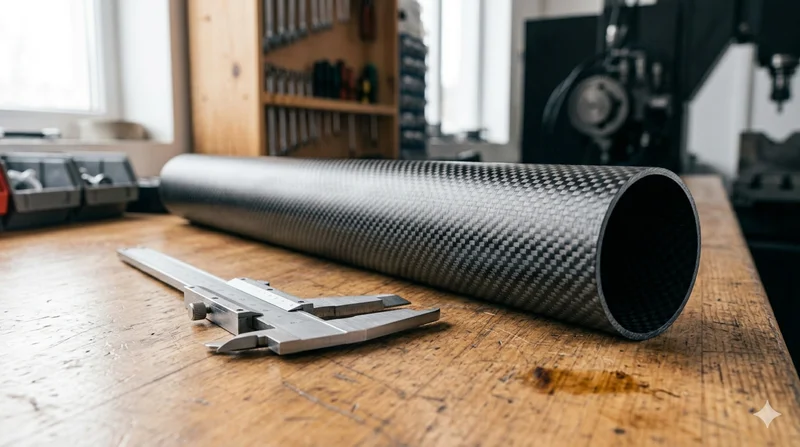
Round Carbon Fiber Tube — 3K Plain Weave T700
Standard round carbon fiber tube manufactured from Toray T700 grade fiber with 3K plain weave. Offers balanced strength and stiffness for general industrial applications including robotics, automation, sports equipment, and aerospace structures.
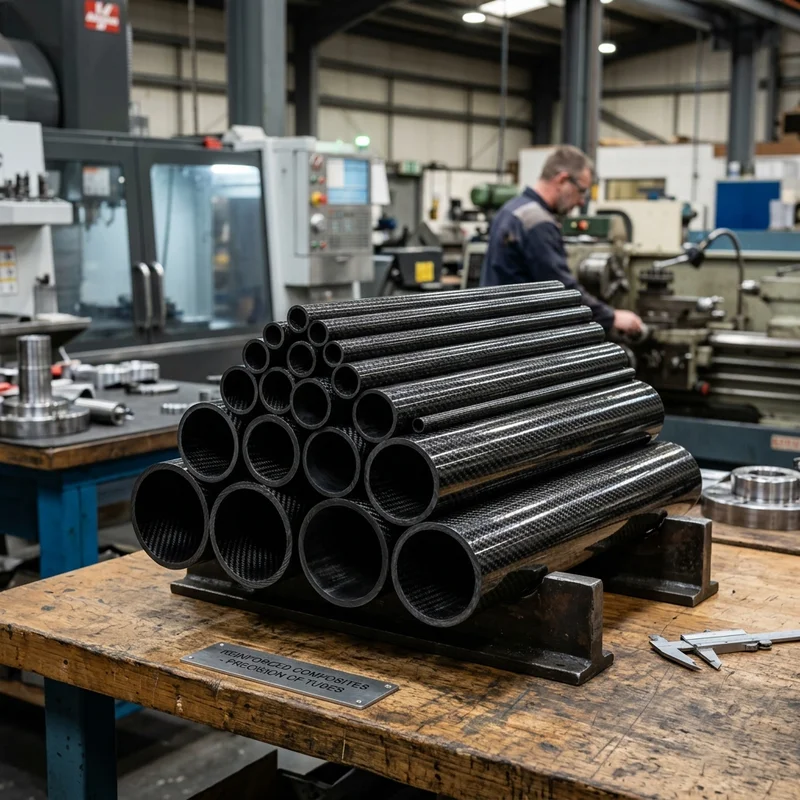
Round Carbon Fiber Tube — 3K Twill
Lightweight and ultra-stiff round tubes ideal for drone frames, robotics, and structural applications.
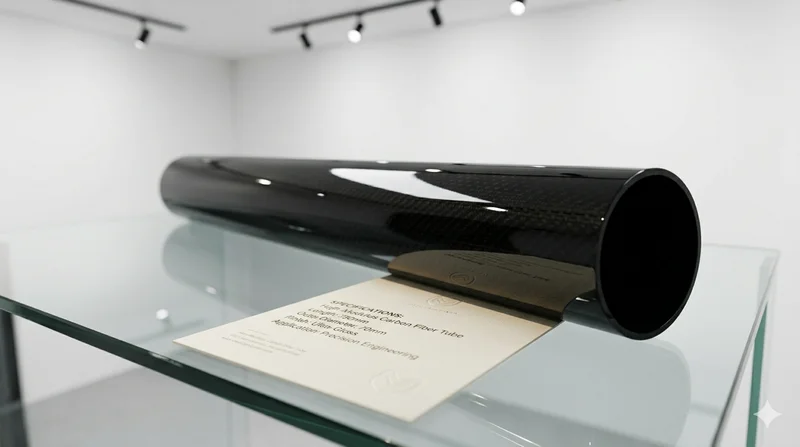
High Modulus Round Carbon Fiber Tube — M40
High modulus round tube manufactured with M40 grade fiber (tensile modulus 400 GPa). Designed for applications where maximum stiffness-to-weight ratio is critical, such as optical systems, precision machinery, and aerospace structures.