The European Union's Net Zero Industry Act, which entered into force in mid-2024, is the regulatory backbone of the bloc's clean technology manufacturing strategy. Among its most consequential elements for the composites industry, the NZIA identifies wind energy as a strategic net-zero
Introduction
The European Union's Net Zero Industry Act, which entered into force in mid-2024, is the regulatory backbone of the bloc's clean technology manufacturing strategy. Among its most consequential elements for the composites industry, the NZIA identifies wind energy as a strategic net-zero technology and sets a target for the EU to manufacture at least 36 GW of wind capacity per year by 2030 — up from a European manufacturing base that delivered roughly 15-20 GW of new turbines per year in recent years. The target is deliberately ambitious: the EU wants to reduce its dependence on Chinese components for wind turbines while simultaneously accelerating the deployment that its climate goals require.
For the composites industry, the NZIA is a demand-side policy as much as a trade policy. Every gigawatt of wind capacity needs blades, and blades are among the most material-intensive composite structures manufactured at industrial scale. This article explains what the 36 GW target means in practice, quantifies the implied demand for blade materials — resin, core, glass fiber, and carbon fiber — and examines how blade manufacturers are responding with localized composite capacity across Europe.
What the NZIA Actually Requires
The Net Zero Industry Act works through several mechanisms that collectively reshape the demand outlook for blade manufacturing:
- Strategic technology list: Wind energy is designated a strategic net-zero technology, giving it access to streamlined permitting, public procurement preference, and state-aid flexibility.
- 36 GW manufacturing benchmark: The act sets a benchmark for EU manufacturing capacity of strategic net-zero technologies, including a 36 GW per year wind manufacturing capacity target by 2030, backed by the broader goal that EU manufacturers supply at least 40% of the bloc's annual deployment needs.
- Net-Zero Strategic Projects: Blade, tower, and nacelle manufacturing projects can be classified as strategic projects, unlocking faster permitting and access to EU funding and financing.
- Resilience and anti-dumping signals: The act and its companion policies push EU buyers toward domestic and near-shore suppliers, with measures that make it harder for subsidized imports to displace local manufacturing.
The 36 GW figure is a manufacturing capacity target, not a deployment forecast. In practice, it means European plants must be able to produce the blades, towers, nacelles, and other components for 36 GW of turbines in a single year — roughly double the recent output of the European supply chain. Blade manufacturing, as the composite-heavy bottleneck, is the most demanding part of that capacity build-out.
Blade Material Demand at 36 GW Scale
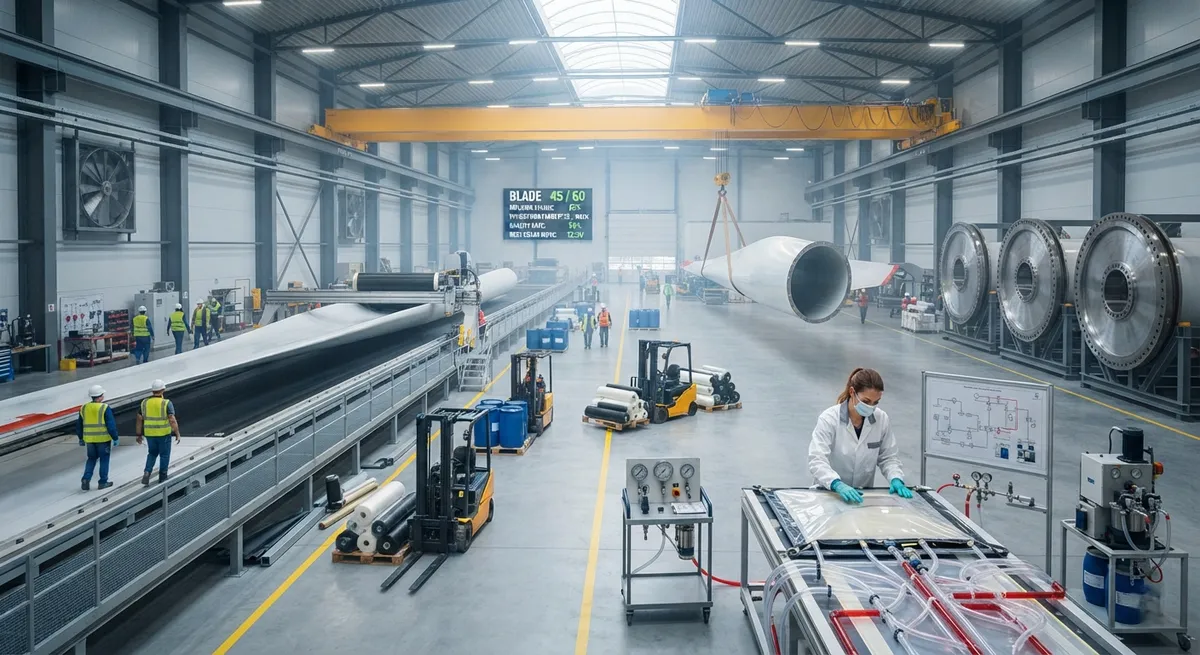
Blades are the single largest composite structure in the wind turbine, accounting for the majority of the composite material in a modern machine. Industry estimates for a modern multi-megawatt blade put the material content of a typical 15 MW class blade set at roughly 55-65 tonnes per blade, dominated by glass and carbon fiber reinforcement, epoxy resin, and structural core. Scaling that to the NZIA's 36 GW annual manufacturing target implies an additional demand of tens of thousands of tonnes of blade composites per year compared with today's European output.
| Blade Material | Share of Blade Weight (typical) | Implied Demand at 36 GW/yr (approx.) | Localization Pressure |
|---|---|---|---|
| Epoxy resin | 25-35% | ~70,000 tonnes/yr | High — EU resin capacity exists |
| Structural core (balsa/PET/foam) | 8-12% | ~22,000 tonnes/yr | High — import dependence on balsa |
| Glass fiber reinforcement | 40-55% | ~90,000 tonnes/yr | High — EU glass capacity active |
| Carbon fiber (large-tow, spar caps) | 3-8% (growing) | ~15,000-25,000 tonnes/yr | Very high — limited EU production |
These figures are order-of-magnitude estimates based on typical modern blade designs, not official NZIA accounting, but they illustrate the scale of the supply-chain question. The resin and glass fiber demand can be met substantially by existing European producers such as Sika, Hexion (resin) and the European glass fiber makers. The carbon fiber row is the structural pressure point: as blades grow past 100 meters, carbon spar caps become standard, and Europe's domestic carbon fiber capacity is far smaller than the implied demand, which is why the NZIA's localization logic points to new European carbon fiber and prepreg investment.
How Blade Manufacturers Are Localizing Composite Capacity
Blade manufacturing in Europe is anchored by the major OEMs and their supply chains, which are now expanding and reshoring in response to the NZIA and the market signal it sends:
- Vestas: Operating blade factories across Denmark, Spain, Portugal, and Poland, with continued investment in offshore blade capacity and carbon spar cap production for its largest turbines.
- Siemens Gamesa: Blade plants in Spain, Denmark, and France, with an active program to localize blade and nacelle supply for offshore platforms, including carbon-reinforced spar caps.
- Nordex: Expanding its Rostock (Germany) and other European blade facilities as part of a broader European capacity build-out.
- LM Wind Power (GE Vernova): The largest independent blade maker, with European plants in Spain, Poland, and Denmark, and growing carbon blade capability for 15 MW+ offshore turbines.
- New entrants and sub-tier suppliers: Independent blade manufacturers, rotor blade repair and service firms, and composite material suppliers are all positioning for a market where European content is a procurement requirement.
Alongside the OEMs, the material supply chain is localizing. European prepreg and pultrusion suppliers are expanding carbon spar cap production, core material suppliers are securing balsa alternatives such as PET foam, and resin producers are investing in wind-grade epoxy capacity. The composite sector's response to the NZIA is a textbook example of industrial policy pulling a supply chain — the question for European producers is whether capacity and qualification can be brought online before the 2030 benchmark arrives.
Challenges and Bottlenecks
The localization drive is not without friction. Three bottlenecks stand out. First, blade manufacturing capacity takes years to build and qualify: a new blade factory requires 18-30 months from ground-breaking to first serial blade, and qualified production of a new blade design takes longer. Second, carbon fiber remains the structural bottleneck — European carbon fiber capacity for wind-grade large-tow material is limited, and European producers of aerospace-grade fiber are not positioned for the cost-competitive wind market, which relies on lower-cost industrial grades. Third, the supply chain is concentrated in specific regions with labor and logistics constraints, and reshoring must contend with the lower cost structure of Asian competitors that the NZIA is explicitly designed to counterbalance.
None of these bottlenecks invalidate the target, but they shape how it will be met. The realistic path is a mix of expanded European blade factories, new carbon and glass fiber capacity, deeper automation in blade manufacturing, and selective imports for materials where European capacity cannot scale quickly enough. For composite suppliers, the strategic question is which part of that mix to serve.
Frequently Asked Questions
Is the 36 GW NZIA target a deployment target or a manufacturing target?
It is a manufacturing capacity target. The Net Zero Industry Act sets a benchmark that the EU should have the capacity to manufacture 36 GW of wind energy per year by 2030, tied to the broader goal that EU-made products cover at least 40% of the bloc's deployment needs. Deployment is expected to grow alongside it, but the NZIA specifically measures and supports manufacturing capacity — the blade, tower, nacelle, and component production that the EU wants to retain and expand domestically.
Why does blade manufacturing require so much composite material per gigawatt?
A modern 15 MW offshore turbine carries three blades, each roughly 110-120 meters long and weighing around 55-65 tonnes. The blade is a hollow composite structure optimized for aerodynamic efficiency and fatigue resistance, and almost all of its weight is composite material: glass and carbon fiber reinforcement, epoxy resin, and structural core. Because blades are so large and so composite-intensive, wind energy is one of the largest consumers of fiberglass in the world and a rapidly growing consumer of carbon fiber. Every gigawatt of added capacity therefore translates directly into tens of thousands of tonnes of composite material demand.
What does the NZIA mean for non-EU composite and blade suppliers?
The NZIA creates a clear preference for EU and near-shore suppliers in public procurement and EU-funded projects, which means non-EU suppliers face a more competitive landscape for European wind projects. It does not ban imports, and the EU's capacity build-out is unlikely to be fully self-sufficient by 2030, so there remains a role for international suppliers — particularly in materials like carbon fiber where European capacity is limited. However, suppliers that want a durable position in the EU market are increasingly expected to localize at least part of their value chain, whether through European production, joint ventures, or partnerships with EU manufacturers.
Conclusion
The EU Net Zero Industry Act transforms wind energy from a deployment-led market into a manufacturing-led one. The 36 GW annual manufacturing target by 2030 implies a near-doubling of European blade output and tens of thousands of tonnes of additional composite material demand per year — with resin, core, glass fiber, and especially carbon fiber at the center of the supply-chain question. For blade manufacturers and material suppliers, the direction is clear: localize capacity, qualify products against European wind standards, and scale before the benchmark year arrives.
For material selection in wind blade applications, explore our carbon fiber range for wind energy, or contact our engineering team to discuss large-tow carbon fiber, spar cap materials, and supply options for blade manufacturing programs.
Part of topic
Related Articles
- Carbon Fibre Sheet Supplier UK: Sourcing Options and Specification Checklist
- Carbon Fiber Sheets Near Me Suppliers: Local Stock vs Factory Direct
- Filament Wound Epoxy Tubes: Industry Standards and Compliance Requirements
- Carbon Fiber Dealers Near Me: What a Good Dealer Actually Adds
- Carbon Fiber Supplies Near Me: Local Sourcing Without Compromising Spec
- Carbon Fiber for Sale: Online Platforms and Direct Sales Channel Comparison
Interested in Custom Carbon Fiber Products?
Contact our team for competitive pricing and technical specifications.
Get a QuoteRelated Products
Custom Carbon Fiber Medical Device Components
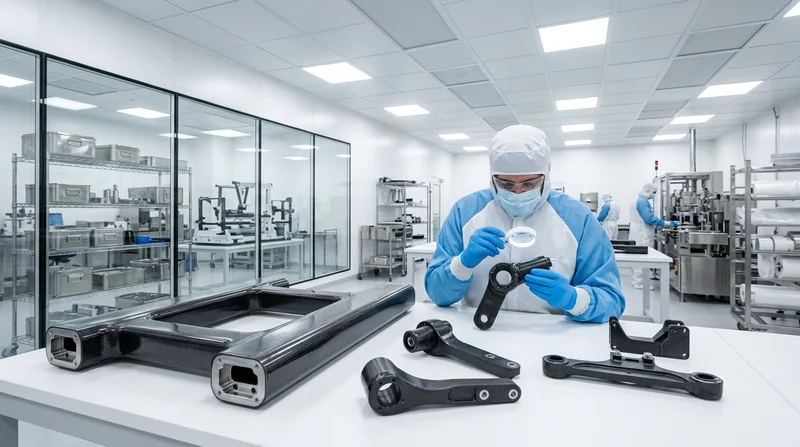
Medical-grade carbon fiber components manufactured for imaging equipment, surgical instruments, and patient support systems. Carbon fiber's radiolucency (X-ray transparency) and high strength-to-weight ratio make it ideal for CT scanner beds, wheelchair frames, surgical robot arms, and MRI-compatible accessories. Biocompatible resin systems available.
Carbon Fiber Robot End Effector Link — Custom Shape & Sensor Integration
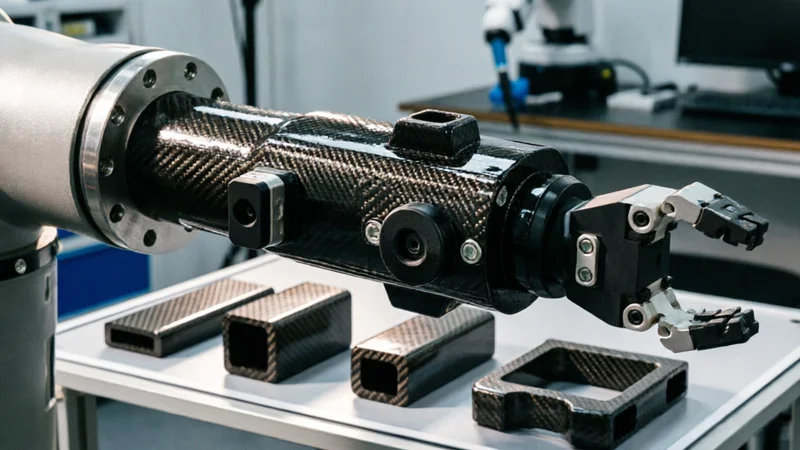
Custom-shaped carbon fiber end effector links for robotic arms. Designed for automation integrators and research labs requiring lightweight, rigid connections between the robot wrist and gripper/tool. Can incorporate sensor mounting bosses, cable routing channels, and quick-change interfaces.
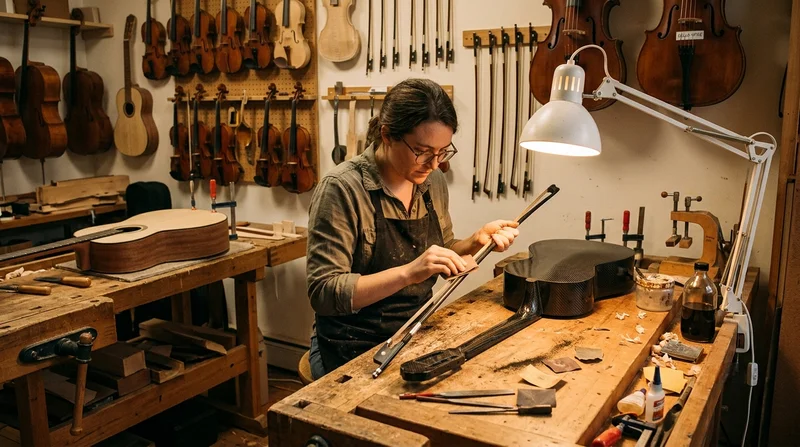
Custom Carbon Fiber Musical Instrument Parts
Carbon fiber components for musical instrument manufacturing offering superior dimensional stability, low weight, and consistent acoustic properties. We produce carbon fiber bows, guitar necks, violin chin rests, drum shells, and wind instrument bodies. Carbon fiber instruments are immune to humidity changes and temperature fluctuations that affect wooden instruments.
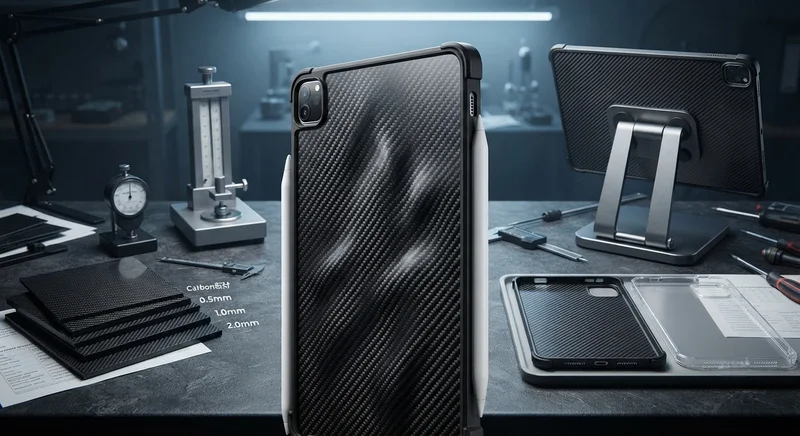
Carbon Fiber Tablet Case — Ultra-Light Protective Shell
Lightweight carbon fiber protective case for tablets and iPads. Molded from T700 3K prepreg with reinforced corner protection. Adds minimal weight while providing superior rigidity and drop protection compared to polycarbonate or silicone cases. Ideal for field workers, enterprise deployments, and professionals requiring durable tablet protection.
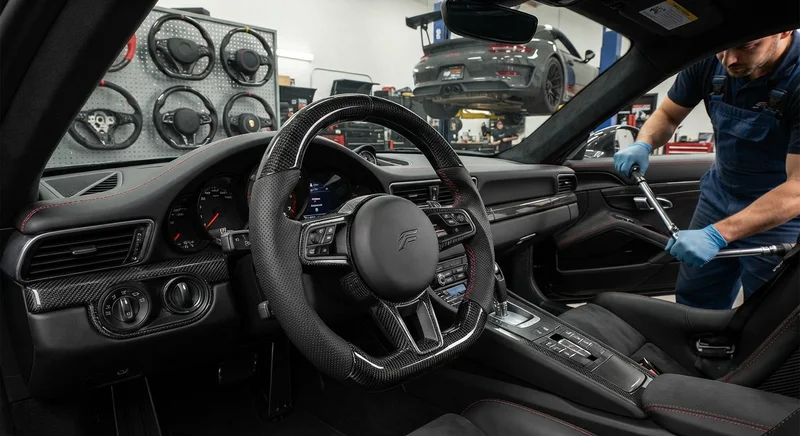
Carbon Fiber Steering Wheel — Custom Leather-Wrapped with CF Inlay
Custom carbon fiber steering wheel with genuine leather wrapping and carbon fiber inlay sections. Molded from T700 3K prepreg for maximum rigidity with a 30% weight reduction over OEM wheels. Available in D-shape (flat bottom) and round profiles. Direct bolt-on fitment for popular sports car and performance vehicle models. Custom stitching color and leather grade available.