

The European Union's Carbon Border Adjustment Mechanism represents the most significant regulatory shift in international carbon fiber trade since the introduction of emissions trading schemes. CBAM, which began its transitional phase in October 2023, enters full implementation on Janua
Introduction
The European Union's Carbon Border Adjustment Mechanism represents the most significant regulatory shift in international carbon fiber trade since the introduction of emissions trading schemes. CBAM, which began its transitional phase in October 2023, enters full implementation on January 1, 2026, requiring importers of carbon fiber and composite products to purchase carbon certificates equivalent to the embedded emissions in their goods. This mechanism is designed to prevent carbon leakage — the relocation of production to jurisdictions with less stringent climate policies — and to ensure that imported goods bear the same carbon costs as those produced within the EU.
For carbon fiber exporters, particularly those in China, India, Japan, and the United States, CBAM creates both compliance obligations and competitive dynamics. The cost of carbon certificates, currently aligned with EU Emissions Trading System (EU ETS) prices of approximately €65-80 per tonne of CO2 equivalent, will directly impact the landed cost of carbon fiber products in the EU market. Understanding the mechanics of CBAM, the reporting requirements, and the verification process is essential for exporters seeking to maintain market access and competitive pricing.
CBAM Scope and Carbon Fiber Classification
CBAM covers specific goods categories defined in Annex I of the regulation. Carbon fiber products fall under several categories depending on their form and processing stage:
| Product Category | CBAM Code | Included Products | Embedded Emissions Basis |
|---|---|---|---|
| Carbon fibers | 2811 19 00 | PAN-based carbon fibers (uncarbonized or carbonized) | Direct + indirect emissions from precursor to fiber |
| Carbon fiber fabrics | 6815 10 00 | Woven or non-woven carbon fiber textiles | Direct emissions from fiber to fabric |
| CFRP prepregs | 3914 00 00 | Carbon fiber reinforced polymer prepregs | Direct + indirect from fiber to prepreg |
| CFRP composites | Various | Finished composite parts and semi-finished products | Full lifecycle from fiber to part |
The embedded emissions calculation includes both direct emissions (from the production process itself) and indirect emissions (from electricity consumed during production). For carbon fiber manufacturing, the primary emission sources are the PAN precursor synthesis, stabilization, carbonization, and surface treatment processes, with electricity consumption during carbonization being the largest indirect emission contributor.
Emissions Reporting Requirements
During the transitional phase (October 2023 - December 2025), importers have been required to submit quarterly CBAM reports declaring the embedded emissions in their imported goods. From January 1, 2026, the definitive regime requires:
- Annual CBAM declarations: Importers must submit annual declarations of embedded emissions by May 31 of the following year, covering all CBAM goods imported during the preceding calendar year.
- Carbon certificate purchase: Importers must surrender CBAM certificates to cover the declared embedded emissions. Certificates are purchased from the European Commission at a price equal to the weekly average EU ETS auction price.
- Installation-level reporting: Emissions data must be reported at the level of the specific production installation (factory), not at the company or national level. This requires detailed emissions tracking for each production facility exporting to the EU.
- Verification by accredited bodies: Emissions data must be verified by a CBAM-accredited verification body in the exporting country. Verification follows ISO 14064-3 or equivalent standards.
The reporting format uses the CBAM Registry, an electronic system managed by the European Commission. Exporters must provide their EU importers with the necessary emissions data, including production process details, energy consumption, and emissions intensity metrics.
Carbon Cost Impact Analysis
The cost impact of CBAM on carbon fiber exports depends on the emissions intensity of the production process and the EU ETS carbon price. A typical analysis for a Chinese carbon fiber exporter:
| Parameter | Standard Production | Low-Carbon Production | Notes |
|---|---|---|---|
| Emissions intensity | 25-30 tCO2e/tonne CF | 15-18 tCO2e/tonne CF | Lower with renewable electricity |
| EU ETS price (assumed) | €70/tCO2e | €70/tCO2e | Current market range |
| CBAM cost per tonne CF | €1,750-2,100 | €1,050-1,260 | Direct carbon cost |
| Fiber selling price | €15-25/kg | €15-25/kg | Market dependent |
| CBAM as % of selling price | 7-14% | 4-8% | Significant cost addition |
For composite products with higher value-add, the CBAM cost as a percentage of selling price is lower, but the absolute cost remains significant for high-volume applications. The transition to full carbon pricing in 2026 eliminates the free allowances that were available under the EU ETS, potentially doubling the CBAM cost compared to the transitional period.
Supply Chain Adaptation Strategies
Carbon fiber exporters can pursue several strategies to manage CBAM compliance and maintain competitiveness:
- Green energy transition: Shifting production to renewable electricity sources (solar, wind, hydro) reduces indirect emissions and the associated CBAM cost. Chinese manufacturers in regions with high renewable penetration have a natural advantage.
- Process optimization: Improving energy efficiency in carbonization and stabilization processes reduces direct emissions. Waste heat recovery, advanced furnace designs, and process intensification can reduce emissions intensity by 15-25%.
- Precursor innovation: Developing lower-emission precursor production routes, including bio-based PAN precursors, addresses the upstream emissions embedded in carbon fiber production.
- Supply chain transparency: Implementing robust emissions tracking systems that provide installation-level data to EU importers. This includes carbon accounting software, IoT-based energy monitoring, and third-party verification readiness.
- Product differentiation: Positioning low-carbon carbon fiber products as premium offerings with verified environmental credentials, potentially commanding price premiums that offset CBAM costs.
Verification and Documentation Requirements
The verification process for CBAM compliance requires exporters to maintain comprehensive documentation:
- Installation identification: Unique identifier for each production facility, including location, production processes, and capacity.
- Methodology documentation: Detailed description of the emissions calculation methodology, including data sources, emission factors, and allocation methods for multi-product facilities.
- Data collection records: Evidence of continuous emissions monitoring, including meter calibration records, energy purchase agreements, and raw material consumption data.
- Verification reports: Annual verification statements from accredited CBAM verifiers, confirming the accuracy and completeness of reported emissions data.
Exporters must also maintain records for at least five years to support any subsequent audits or investigations by EU authorities.
Timeline and Implementation Milestones
The CBAM implementation follows a clear timeline that exporters must track:
- October 2023 - December 2025: Transitional phase with quarterly reporting obligations. No financial payments required, but data collection and verification systems must be established.
- January 1, 2026: Definitive regime begins. CBAM certificates must be purchased to cover embedded emissions. Free allowances under EU ETS are phased out for CBAM sectors.
- January 1, 2027: Full enforcement with penalties for non-compliance. Penalties mirror EU ETS: €100 per tonne of CO2 equivalent for unreported emissions, adjusted for inflation.
- 2026-2034: Gradual phase-out of free allowances for EU producers, increasing the competitive pressure from CBAM on imports.
Frequently Asked Questions
When does CBAM fully apply to carbon fiber exports?
CBAM entered its transitional phase in October 2023, requiring quarterly emissions reports but no financial payments. The definitive regime begins on January 1, 2026, when importers must purchase CBAM certificates to cover embedded emissions. Full enforcement with penalties begins January 1, 2027. Exporters should have their emissions tracking and verification systems operational well before the 2026 deadline.
How is the CBAM cost calculated for carbon fiber products?
CBAM cost equals the embedded emissions (in tonnes of CO2 equivalent) multiplied by the CBAM certificate price (aligned with EU ETS auction prices, currently approximately €65-80/tCO2e). Embedded emissions include both direct process emissions and indirect emissions from electricity consumption. For carbon fiber, typical emissions intensity ranges from 15-30 tCO2e per tonne of fiber, depending on the production process and energy sources.
What documentation must carbon fiber exporters maintain for CBAM compliance?
Exporters must maintain installation-level emissions data, methodology documentation, continuous monitoring records, and annual verification statements from accredited CBAM verifiers. Records must be retained for at least five years. The data must be provided to EU importers for inclusion in their annual CBAM declarations and certificate purchases.
Conclusion
The EU CBAM represents a fundamental shift in the cost structure of carbon fiber exports to Europe. Starting January 1, 2026, embedded emissions in carbon fiber products will carry a direct financial cost aligned with EU carbon pricing. Exporters who proactively reduce emissions intensity through green energy adoption, process optimization, and supply chain transparency will maintain competitive pricing. Those who delay adaptation face increasing cost pressure as free allowances phase out and enforcement tightens. The key to successful CBAM compliance lies in accurate emissions measurement, robust verification systems, and strategic positioning of low-carbon products as market differentiators.
YongXian supports carbon fiber exporters navigating CBAM compliance with comprehensive product documentation and emissions data for our fiber and fabric product lines. Explore our carbon fiber products or contact our team to discuss compliance support for your EU export program.
Part of topic
Related Articles
- Recycled Carbon Fiber Market Forecast 2030: Technology Maturity and Commercialization Path
- South Korea Carbon Fiber Market 2026: Hydrogen Economy and Shipbuilding Innovation
- Wind Turbine Blade Leading Edge Protection 2026: Polyurethane, Tape, and Metallic Shield Solutions
- China Carbon Fiber Overcapacity 2026: Price War Impact and Industry Consolidation
- India Carbon Fiber Market 2026: Wind Energy, Aerospace, and Defense Expansion
- PAN Precursor Market 2026: Acrylonitrile Supply and Carbon Fiber Cost Structure
Interested in Our Products?
Contact our team for competitive pricing and technical specifications.
Get a QuoteRelated Products
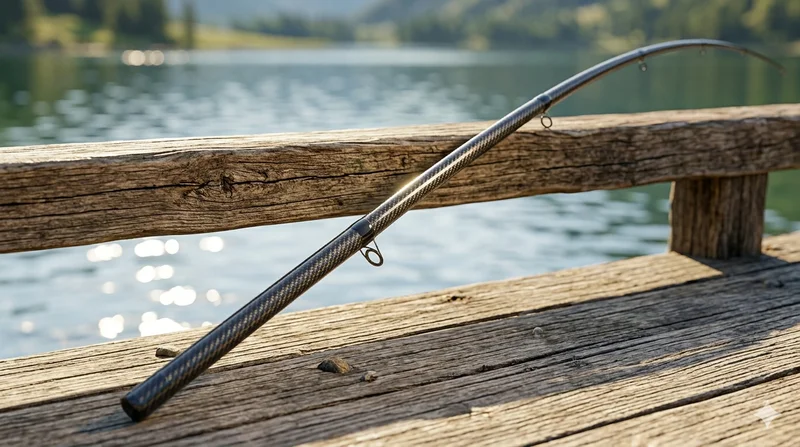
Carbon Fiber Fishing Rod Blank
High-quality carbon fiber fishing rod blank manufactured from multiple grades of Toray carbon fiber cloth. Available in a wide range of lengths, powers, and actions for freshwater and saltwater applications. Suitable for OEM rod building.

Carbon Fiber Plate — 3K Twill T700 3.0mm
Medium-thickness 3.0mm carbon fiber plate offering significantly higher load capacity while maintaining attractive 3K twill finish. Suitable for structural brackets, reinforcement plates, and load-bearing panels.

Carbon Fiber Plate — 3K Twill T700 1.5mm
Thin 1.5mm carbon fiber plate with 3K twill weave surface. Lightweight and stiff, commonly used for covers, panels, drone bodies, and applications requiring a premium aesthetic appearance.
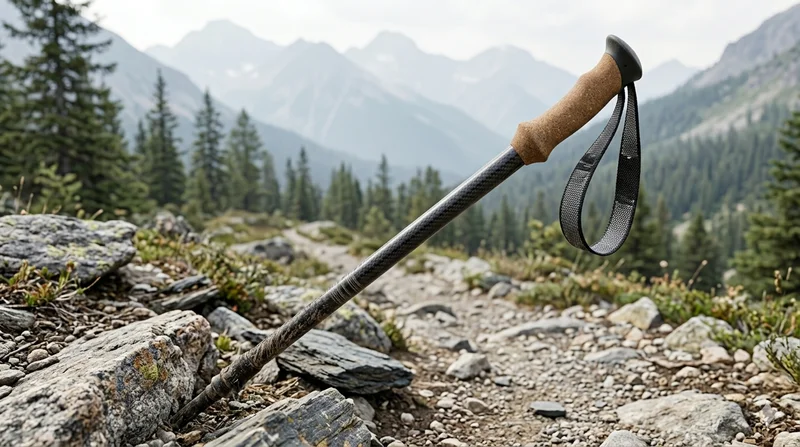
Carbon Fiber Trekking Pole
Lightweight carbon fiber trekking pole manufactured from high-grade carbon fiber tube. Weighs only 160g per pole while providing superior shock absorption and durability for hiking, trail running, and backpacking.

Square Carbon Fiber Tube — 3K Twill T700
Square cross-section carbon fiber tube manufactured with 3K twill weave for torsional strength. Preferred for structural frames, trusses, and support columns where rectangular geometry offers design flexibility.