
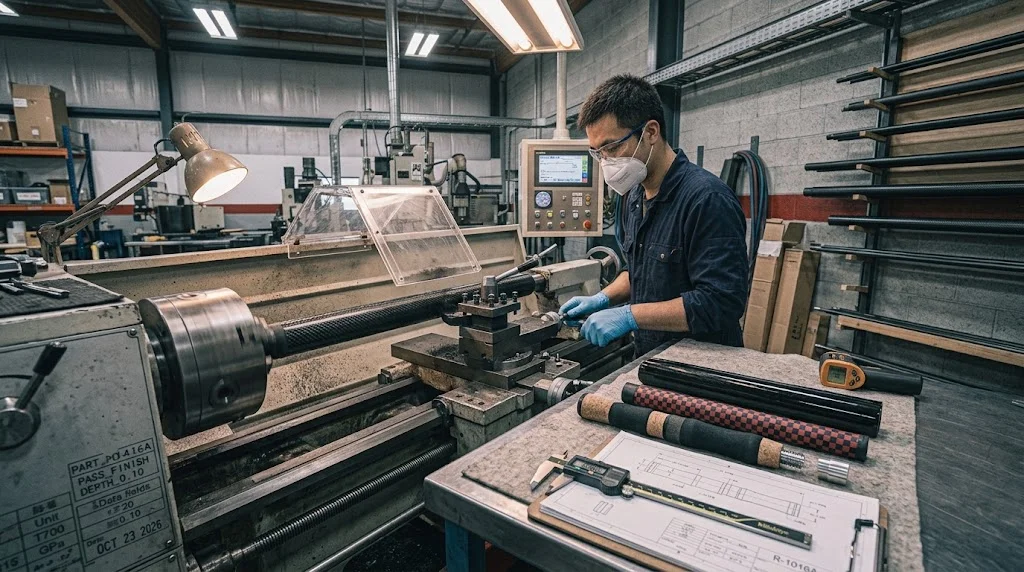
Custom carbon fiber rod grips sit at the intersection of two markets: rod builders who want a grip that transmits bite signal and sheds weight behind the reel seat, and tool brands who want a handle that looks technical, resists corrosion and stays cool in the sun. A carbon grip is not a machined al
Introduction
Custom carbon fiber rod grips sit at the intersection of two markets: rod builders who want a grip that transmits bite signal and sheds weight behind the reel seat, and tool brands who want a handle that looks technical, resists corrosion and stays cool in the sun. A carbon grip is not a machined aluminum handle with a logo; it is a turned tube section, typically cut from roll-wrapped or pultruded carbon tube, finished with a surface that either stays bare for maximum feel or gets wrapped in EVA, cork or shrink texture for wet-hand security. Get the inside diameter wrong and the grip spins on the blank under torque; get the wall too thin and it crushes under a fighting butt load; get the surface wrong and it slips in the rain.
This guide covers grip styles for fishing rods, grip designs for tools and hardware, the dimensional specs that decide whether a custom grip actually fits, and how to order from a factory without ending up with a box of pretty parts that do not seat.
Custom Carbon Fiber Rod Grips for Fishing Rods
Fishing rod grips come in a few established styles, and the choice is driven by balance point and feel more than by fashion. A full grip runs from the reel seat all the way to the butt cap and suits heavier saltwater and casting rods where the hand needs a long purchase. A split grip leaves a section of bare blank exposed between the rear grip and the butt, cutting weight and letting the angler's forearm contact carbon directly for sensitivity; it dominates modern bass and inshore spinning rods. A fighting butt adds a short rear extension with a rubber or carbon cap for boatside fish handling. Grip cores are usually carbon tube turned to a target outside diameter, then either left bare with a piano finish, wrapped in shrink tube with checkering, or capped with EVA and cork collars at each end. The table below maps styles to typical builds.
| Grip style | Core | Typical OD range | Best for | Weight penalty vs bare carbon |
|---|---|---|---|---|
| Full rear grip | carbon tube, turned | 22-30 mm | saltwater, casting, heavy spinning | moderate (EVA or cork wrap) |
| Split grip | carbon tube, two sections | 20-26 mm rear, 14-18 mm front | bass spinning, inshore, finesse | low to moderate |
| Machined carbon butt only | solid or thick-wall tube | 18-24 mm | ice, ultralight, custom blanks | near zero if bare |
| Fighting butt extension | tube plus rubber cap | 20-28 mm | boat-side fish handling | moderate |
| Cork or EVA collar over carbon core | carbon tube with natural wrap | 24-32 mm | traditional feel, wet grip security | higher |
For custom carbon fiber rod grips on a production rod program, the inside diameter tolerance is the spec that matters most: a ±0.1 mm hold on ID means the grip slides on with light adhesive and does not spin; a loose fit means epoxy shim and a warranty claim. Outside diameter and length are comfort specs and can vary a little; ID cannot.
Carbon Fiber Rod Grips for Tools and Hardware
Beyond fishing, carbon tube grips show up on hiking pole handles, diving fin bolts, camera rig handles, kayak paddle grips, and specialty hand tools where weight near the hand changes the tool's balance. The design rules shift: tool grips often want a thicker wall for crush resistance under clamp loads, a matte or rubberized surface for oily hands, and a metal or threaded insert at the working end instead of a bare tube. Turned carbon grips can be pressed into aluminum ferrules, bonded into socket handles, or threaded with a steel insert bonded into the core. Where the tool sees repeated impact, specify a higher wall fraction of plus-or-minus 45 degree plies so the grip does not split along the 0-degree fiber lines under point loads. For wet or marine tools, seal the cut ends with epoxy or a cap; unsealed carbon tube wicks water along the fibers and delaminates at the cut face over seasons.
- Specify wall thickness by load: thin-wall tube for pure feel (fishing), medium wall for general tools, thick wall or solid rod stock for clamp and impact duty.
- Choose surface by environment: piano finish for display and dry use, checkered shrink or EVA for wet grip, rubberized paint or knurl for oily mechanical work.
- Plan the interface first: adhesive bond, threaded insert, or press fit into a ferrule; the interface drives the ID tolerance more than the outside look does.
How Factories Make Custom Grips
Custom grips are almost never molded to shape; they are machined from tube or solid stock. The factory starts with roll-wrapped or pultruded carbon tube in an oversize diameter, faces the ends square, turns the OD and ID on a CNC lathe to the drawing tolerances, drills or presses inserts if the drawing calls for them, and seals and finishes the surface. Turning carbon is abrasive work: tooling wears fast, dust extraction is mandatory, and edge quality depends on sharp tools and a slow finishing pass. That is why grip unit price drops steeply between a 20-piece prototype run and a 500-piece program: the CNC programming and fixture cost is fixed, and the per-piece cutting time is small once the bar stock is loaded. Lead times for turned grips run 2 to 3 weeks after drawing approval; anodized aluminum trim rings or custom printed graphics add a week.
Ordering Custom Carbon Fiber Rod Grips
A clean order package has five items: a dimensioned drawing with ID, OD, length and any chamfers; a wall thickness or tube spec; a surface finish callout (bare, shrink, EVA, cork, rubberized); the insert detail if any; and the annual volume band. Factories quote per piece against that package; asking for a price without dimensions gets a range that is wide enough to be useless. If you are building a fishing rod line, send the blank taper at the grip station so the factory matches ID to the actual blank, not to a nominal number. If you are building tools, send the mating ferrule or insert part so fit is verified before the run. Most suppliers will do a paid 5 to 10 piece sample set before a volume commitment; take it, assemble one full rod or tool, and only then release the batch.
Frequently Asked Questions
What inside diameter tolerance do custom carbon fiber rod grips need?
For a bonded fishing rod grip, plus or minus 0.1 mm on ID is the practical target; that gives a light press with adhesive and prevents spin under torque. For press-fit tool interfaces, tighter tolerances may be required, so specify the fit class on the drawing rather than assuming a generic tolerance.
Can you leave a carbon fiber grip bare, or does it always need a wrap?
Bare carbon grips with a sealed piano finish are legitimate for display rods and dry-use tools, and they transmit the most feel. For wet-hand fishing and oily mechanical work, a shrink-tube, EVA or rubberized surface is safer; bare carbon gets slick when wet and shows fingerprints on high-gloss finish.
What is the minimum order for custom carbon fiber rod grips?
Turned grips typically start at 20 to 50 pieces for a prototype run and 100 to 500 pieces for production pricing, depending on whether inserts and custom finishes are involved. Ask for a sample set first and validate fit on a real blank or ferrule before committing to the full batch.
Conclusion
Custom carbon fiber rod grips reward a spec-first approach: fix the inside diameter and interface first, choose the wall thickness for the load, pick a surface that matches the hand environment, then let the factory turn the rest from tube stock. A grip that seats correctly and stays put under torque is worth more than one that merely looks like carbon.
YongXian turns custom carbon grips from roll-wrapped and pultruded tube, with CNC ID and OD control, insert bonding and surface finishing in-house. Browse our carbon fiber tube and rod range or send your grip drawings for a quote.
Part of topic
Related Articles
- Carbon Fiber Fishing Rods: Blank Types, Actions, and Buying Checks
- Custom Carbon Fiber Parts for Cars: From Trim to Structural Upgrades
- Custom Carbon Fiber Parts for Motorcycle Builds: Fit, Finish and Sourcing
- Carbon Fiber Robot Arms: Lightweight Design Tradeoffs
- Carbon Fiber License Plate Custom Guide: Frames That Fit and Last
- Building Carbon Fiber Drone Frames: Layout and Fastening
Interested in Our Products?
Contact our team for competitive pricing and technical specifications.
Get a QuoteRelated Products

Round Carbon Fiber Tube — 3K Plain Weave T700
Standard round carbon fiber tube manufactured from Toray T700 grade fiber with 3K plain weave. Offers balanced strength and stiffness for general industrial applications including robotics, automation, sports equipment, and aerospace structures.

Square Carbon Fiber Tube — 3K Twill T700
Square cross-section carbon fiber tube manufactured with 3K twill weave for torsional strength. Preferred for structural frames, trusses, and support columns where rectangular geometry offers design flexibility.

Round Carbon Fiber Tube — 3K Twill
Lightweight and ultra-stiff round tubes ideal for drone frames, robotics, and structural applications.
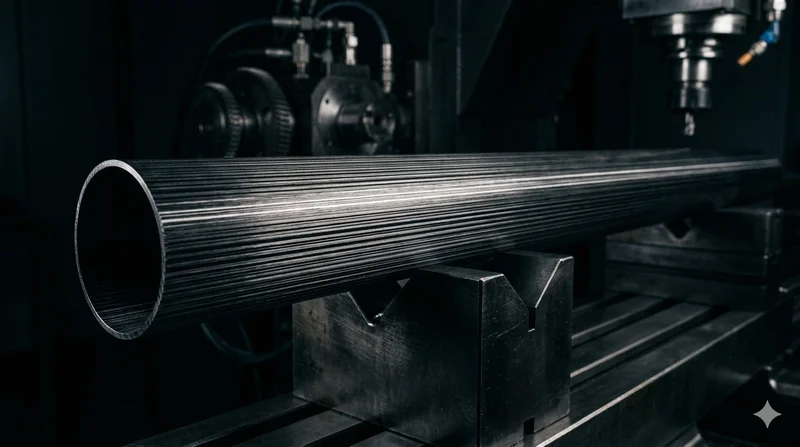
Round Carbon Fiber Tube — UD Unidirectional T700
Unidirectional (UD) round tube with all fibers aligned axially for maximum longitudinal stiffness. Ideal for applications requiring high bending rigidity with minimal weight, such as shafts, struts, and structural reinforcements.
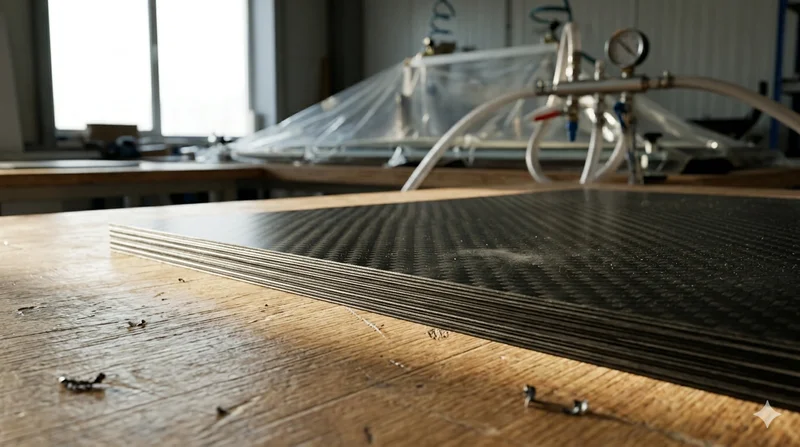
Carbon Fiber Plate — 3K Twill T700 3.0mm
Medium-thickness 3.0mm carbon fiber plate offering significantly higher load capacity while maintaining attractive 3K twill finish. Suitable for structural brackets, reinforcement plates, and load-bearing panels.