
Modern carbon fiber fishing rods are the default in almost every freshwater and offshore category, and the reason is simple physics: a carbon blank delivers tip sensitivity and recovery speed that glass cannot match at the same weight. A typical 7-foot spinning blank in high-modulus carbon weighs 60
Introduction
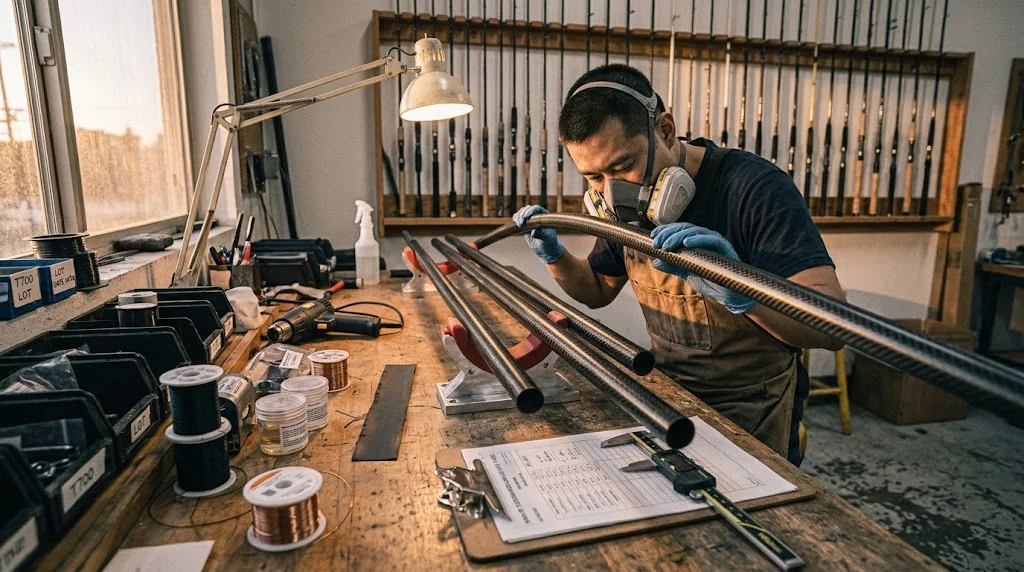
Modern carbon fiber fishing rods are the default in almost every freshwater and offshore category, and the reason is simple physics: a carbon blank delivers tip sensitivity and recovery speed that glass cannot match at the same weight. A typical 7-foot spinning blank in high-modulus carbon weighs 60-90 grams before guides, while a comparable fiberglass blank runs 120-180 grams and dulls the signal from a light bite. That weight gap is why tournament anglers, charter captains and rod-building brands all start from carbon, but not all carbon blanks are equal, and the differences that matter are construction, action, and fiber grade rather than paint or grip color.
This guide breaks down how carbon fiber fishing rods are actually built, how blank construction changes feel and failure mode, how to read modulus and tonnage claims on a spec sheet, and what to check before buying either finished rods or bare blanks from a factory.
Carbon Fiber Fishing Rod Blank Types: Solid, Tubular, and Hybrid
Blanks fall into three construction families. Tubular blanks dominate because they win the stiffness-to-weight race: a thin wall of unidirectional carbon with a scrim or two of cross-weave resists ovalization while keeping the air core that makes the blank light and resonant. Solid blanks, mostly for ice rods, ultralight trout rods and some surf popper sticks, trade weight for brute toughness: they cannot kink, and a solid tip survives being sat on. Hybrid blanks put a solid tip section into a tubular butt, capturing most of the sensitivity with a tip that resists crush damage.
| Construction | Typical weight (7 ft spinning blank) | Sensitivity | Durability profile | Common use |
|---|---|---|---|---|
| Tubular, high modulus | 60-90 g | very high | brittle in overload, kinks if dry-pressed | bass, trout, finesse spinning |
| Tubular, standard modulus (T700 class) | 85-120 g | high | good all-round, forgiving of cross-loading | inshore, surf, general purpose |
| Hybrid (tubular butt, solid tip) | 95-130 g | high at the tip | tip crush-resistant | jigging, heavy soft-plastic work |
| Solid carbon | 140-220 g | moderate | very tough, no kink mode | ice rods, ultralight, popping sticks |
| Carbon-glass blend | 110-160 g | moderate | flexible, chip-resistant finish | rental fleets, entry rods, kids rods |
Wall thickness usually sits between 0.6 and 1.2 mm on mainstream spinning blanks; the thinnest walls feel the best until the first gunwale crush. A reputable factory will publish the layout, for example 70 percent unidirectional 0-degree carbon with a 2x2 twill scrim, rather than only a fiber brand name.
Action and Power: How the Blank Layup Sets the Bend
Action describes where the blank bends; power describes how much force it takes. Fast action blanks keep most of the bend in the top third and load quickly for single-hook techniques like jerkbaits and tube baits. Moderate action blanks bend through the middle, which stretches the hook-set window and suits treble-bait cranks. Slow or parabolic blanks bend from the butt and excel at absorbing head shakes on light line. Power runs ultra-light through extra-heavy and should be matched to line class and lure weight rather than fish size alone.
- Fast action: choose for jerkbaits, drop-shot, Ned rigs and any technique where a sensitive tip and quick recovery matter more than shock absorption.
- Moderate action: choose for crankbaits, jerkbaits with trebles and treble topwater; the mid-flex keeps fish pinned on light hooks.
- Slow or parabolic: choose for ultralight trout streams, light inshore plastics and fight-with-the-drag situations on thin braid.
- Extra-fast with heavy power: choose for flipping and pitching into cover where a stiff backbone drives a single hook home instantly.
Two blanks with identical length and power can fish completely differently if the layup differs: a higher percentage of 0-degree unidirectional carbon in the butt section stiffens the lower blank and speeds recovery, while more plus-or-minus 45 degree bias plies add torsional stability and a softer feel. When comparing blanks for a build, flex the butt against a wall and watch where the curve starts; that tells you more than the printed action label.
Best Carbon Fiber Rod Blanks by Technique and Species
The best carbon fiber rod blanks are the ones whose action curve matches the lure, not the ones with the highest modulus number. Finesse bass work wants a fast extra-light blank with a tip soft enough to throw a 1/16-ounce jig yet sensitive enough to feel a worm drag on gravel. Inshore redfish and snook want standard-modulus tubular blanks in the 7 to 8 foot range with enough butt power to turn a fish away from dock pilings. Surf casting pushes into longer 9 to 12 foot blanks where the butt loads against the hip, so wall thickness and ferrule quality matter more than tip crispness. Ice and ultralight trout niches reward solid or hybrid blanks that shrug off tip crashes in a sled. Match the blank to the technique first, then choose fiber grade within that action class.
Modulus, Tonnage, and Resin: Reading the Spec Sheet Honestly
Marketing often collapses three separate variables into one word. Fiber tonnage, such as T300, T700 or T800, is a proxy for tensile strength class; higher grades like T700 allow thinner walls at the same strength. Modulus, standard, intermediate or high, measures stiffness per gram: high-modulus carbon feels crisp and light but has lower strain-to-failure, so blanks built entirely from high-modulus fiber chip and crack at crush points more readily. The best blanks mix grades: high modulus in the tip for sensitivity, standard modulus in the butt for toughness, and a resin system with enough elongation to survive a shoulder jam. Ask for the fiber grade, the resin glass transition temperature (a good blank resin cures around 120 to 150 degrees Celsius), and the curing pressure method. Autoclave or press-cured blanks come out with fewer voids than vacuum-bag-only layups at the same wall thickness.
Buying Carbon Fiber Fishing Rods and Blanks: Pre-Purchase Checks
Whether you are buying finished rods retail or bare blanks from a factory, the same checks apply. Sight down the blank for spine straightness and guide alignment; roll it on a flat bench to detect a set; flex through the tip section looking for flat spots where the curve jumps. Inspect the finish for resin-starved white patches and check that the reel seat threads engage fully. If you are sourcing blanks for a rod brand, ask for a sample batch before committing: measure blank weight tolerance, since a good factory holds plus or minus 3 grams per blank, check the inside diameter consistency at the ferrule seats, and request the actual layup sheet. Minimum order quantities for custom carbon fiber rod blanks typically start around 50 to 100 pieces, with tooling amortized into the unit price above that.
Frequently Asked Questions
Do carbon fiber fishing rods break more easily than fiberglass?
Differently, not necessarily more. Carbon blanks fail in compression: a kink, a crushed tip or a high-stick bend. Glass blanks fail by tearing after prolonged overload. A carbon blank treated with basic care, never dry-pressed, racked properly and not high-sticked boat-side, usually outlasts the season that would permanently set a fiberglass blank.
What modulus should a first carbon rod be?
Standard or intermediate modulus in the T700 strength class is the sensible starting point. It gives most of the weight savings over glass with a strain margin that forgives imperfect technique; pure high-modulus blanks are better reserved for experienced anglers who fish them within their rated line and lure classes.
Can a factory build a custom carbon fiber rod blank to my specification?
Yes. Length, butt diameter, tip diameter, action curve and even guide spacing can be specified on a custom program. Expect a tooling charge for the first order, a 4 to 6 week lead, and minimums in the 50 to 100 blank range depending on the mandrel sizes involved.
Conclusion
Carbon fiber fishing rods earned their place through weight, sensitivity and recovery speed, but the differences that matter sit inside the blank: construction family, action curve, fiber grade mix and resin quality. Flex before you buy, ask for the layup sheet, and match modulus to how you fish rather than to the catalog adjective.
YongXian manufactures carbon fiber rod blanks, tubes and custom profiles for rod builders and outdoor brands. Browse our carbon fiber range or send your blank specifications to our engineering team.
Part of topic
Related Articles
- Custom Carbon Fiber Rod Grips: Fishing Rods, Tool Handles, and Ordering Specs
- Custom Carbon Fiber Parts for Cars: From Trim to Structural Upgrades
- Custom Carbon Fiber Parts for Motorcycle Builds: Fit, Finish and Sourcing
- Carbon Fiber Robot Arms: Lightweight Design Tradeoffs
- Carbon Fiber License Plate Custom Guide: Frames That Fit and Last
- Building Carbon Fiber Drone Frames: Layout and Fastening
Interested in Our Products?
Contact our team for competitive pricing and technical specifications.
Get a QuoteRelated Products

Round Carbon Fiber Tube — 3K Plain Weave T700
Standard round carbon fiber tube manufactured from Toray T700 grade fiber with 3K plain weave. Offers balanced strength and stiffness for general industrial applications including robotics, automation, sports equipment, and aerospace structures.

Square Carbon Fiber Tube — 3K Twill T700
Square cross-section carbon fiber tube manufactured with 3K twill weave for torsional strength. Preferred for structural frames, trusses, and support columns where rectangular geometry offers design flexibility.

Round Carbon Fiber Tube — 3K Twill
Lightweight and ultra-stiff round tubes ideal for drone frames, robotics, and structural applications.
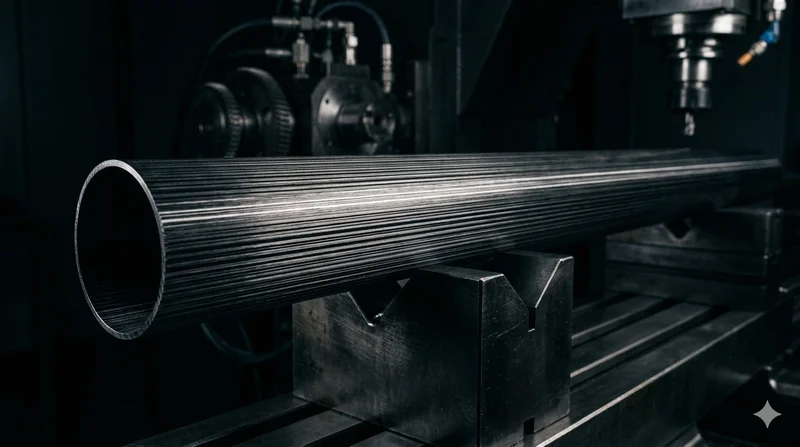
Round Carbon Fiber Tube — UD Unidirectional T700
Unidirectional (UD) round tube with all fibers aligned axially for maximum longitudinal stiffness. Ideal for applications requiring high bending rigidity with minimal weight, such as shafts, struts, and structural reinforcements.
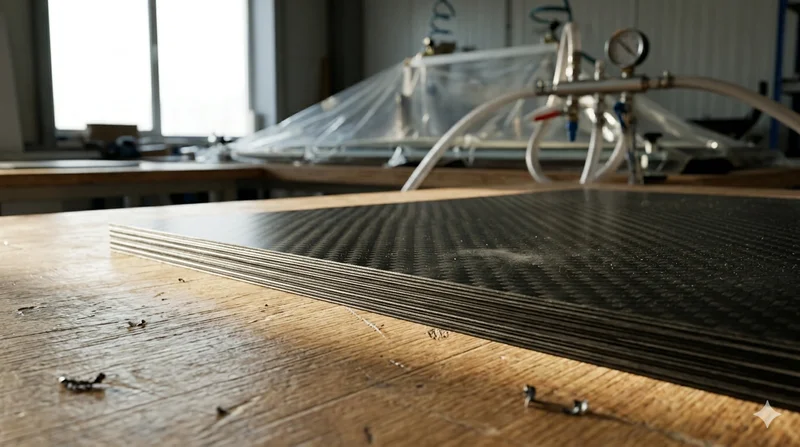
Carbon Fiber Plate — 3K Twill T700 3.0mm
Medium-thickness 3.0mm carbon fiber plate offering significantly higher load capacity while maintaining attractive 3K twill finish. Suitable for structural brackets, reinforcement plates, and load-bearing panels.