
Custom carbon fiber fabrication covers a broad workflow: a customer arrives with a requirement, and a single service provider carries the part from design for manufacturing through tooling, prototyping, production, finishing, and delivery. For engineering teams without in-house composite capability,
Introduction
Custom carbon fiber fabrication covers a broad workflow: a customer arrives with a requirement, and a single service provider carries the part from design for manufacturing through tooling, prototyping, production, finishing, and delivery. For engineering teams without in-house composite capability, choosing a custom carbon fiber fabrication partner is one of the highest-leverage procurement decisions they make, because the partner's process choices determine the part's cost, weight, surface quality, and delivery risk for the life of the program. This article maps the fabrication workflow stage by stage, compares the process options available at each stage, and lists the specific questions a custom CFRP fabrication quotation should answer.
The core principle is simple: composite parts are defined by their process as much as by their material. Two parts with the same fiber and resin can differ in cost by a factor of several times depending on whether they are laid up by hand, molded under pressure, or cured in an autoclave. Understanding the workflow makes those differences legible.
The Custom Carbon Fiber Fabrication Workflow
A professional fabrication service runs a defined sequence of stages, and each stage has process options that affect cost and performance. The table below summarizes the standard workflow and the choices available at each stage:
| Stage | What Happens | Typical Options | Cost Impact |
|---|---|---|---|
| Design for manufacturing | Review of the part geometry for composite manufacturability | Draft angle, ply drops, radius, core selection | High: geometry fixes are cheap now, expensive later |
| Tooling | Building the mold that defines the part surface | Aluminum, invar, composite tooling, printed tools | Medium: tooling is often the largest single line item for low volumes |
| Prototyping | Producing early parts for fit, function, and surface approval | Same-process prototype or rapid prototype route | Medium: a same-process prototype is the only reliable predictor |
| Production layup | Placing material into the tool | Hand layup, prepreg autoclave, RTM, compression molding, bladder molding | High: labor and cycle time scale directly with process |
| Curing | Consolidating and curing the laminate | Autoclave, oven, press, out-of-autoclave | High: cycle time and energy dominate recurring cost |
| Finishing | Trimming, machining, surface treatment | CNC trimming, waterjet, painting, clear coat | Medium: surface grade drives finishing hours |
| Inspection and delivery | Verifying dimensions, voids, and surface against the drawing | CMM, ultrasonic, visual standards, batch records | Low: required in every serious program |
Each stage is a decision point. A customer who understands the workflow can steer cost toward the stages that matter and away from the stages that do not, instead of accepting a single opaque quotation.
Process Selection in Custom CFRP Fabrication
Process selection is the heart of custom CFRP fabrication, and it follows a consistent logic. High-performance aerospace-grade parts with demanding mechanical and surface requirements are normally made from prepreg cured in an autoclave, which delivers the best fiber volume fraction and void control. Medium-volume structural parts favor resin transfer molding or compression molding, which reduce labor and cycle time while holding good dimensional accuracy. Out-of-autoclave prepreg and vacuum-bag processing suit parts with moderate performance requirements where capital cost matters. Hollow parts, such as ducts and frames, use bladder molding or filament winding to consolidate from the inside. Prototype and low-volume parts can be made by wet layup with the understanding that fiber volume and void content will be less controlled.
For a custom carbon fiber fabrication quotation to be comparable, it must state the process. If the process is not disclosed, the price cannot be evaluated against another supplier's price, because labor and cycle time differ by multiples between processes. Buyers should request the process, the cure cycle, and the expected fiber volume fraction in the quotation itself.
What Drives the Cost of Custom Carbon Fiber Fabrication
Three cost drivers dominate custom carbon fiber fabrication, and they explain most of the price variation between suppliers. The first is tooling, which for low and medium volumes is often the largest single line item; a composite tool is cheaper than an invar tool but has a shorter life, and the choice depends on expected quantity. The second is labor and cycle time, which scale directly with the process: hand layup and autoclave curing are slow, while compression molding and RTM are faster at the price of higher tooling and equipment cost. The third is material choice, where aerospace prepreg, fast-cure systems, and specialty fibers each command different prices and lead times.
Buyers should separate these drivers when comparing quotations:
- Tooling cost and ownership: who owns the tool, and how is its cost amortized across the part price?
- Process and cycle time: what process is quoted, and what is the expected cycle time per part?
- Material specification: which fiber grade, resin system, and fiber volume fraction are assumed?
- Surface finish grade: is the quoted surface acceptable for the application, or does it require post-mold paint or clear coat?
- Lead time breakdown: how much of the quoted lead time is tooling, prototyping, and production respectively?
Quality Control and Documentation
Quality control separates a fabrication service from a shop. A mature custom carbon fiber fabrication provider documents every part through batch records that include the material lot, layup sequence, cure cycle data, and inspection results. Dimensional checks against the drawing, ultrasonic inspection for voids where the application demands it, and a clear visual surface standard are the minimum for structural parts. For regulated industries, buyers should confirm AS9100 or ISO 9001 certification and, where relevant, Nadcap approval for composite processes. The documentation burden is not overhead: it is what makes a field failure investigable and a repeat order reproducible.
A final consideration is the difference between a custom carbon fiber service and a catalog supplier. A catalog supplier sells standard sheets, tubes, and profiles in fixed sizes, which is efficient when the geometry fits the range. A custom carbon fiber fabrication service exists to handle geometries that do not fit, and its value lies in the engineering judgment applied before any material is cut. That judgment covers bespoke composite manufacturing decisions: whether a part should be molded in one piece or assembled from subcomponents, whether a core is needed to stabilize thin sections, and where ply drops belong so that the layup does not create stress concentrations. Buyers who bring a clear load case and boundary conditions to the discussion get the full benefit of that judgment; buyers who withhold them receive a quotation built on assumptions that may not match the real application.
Frequently Asked Questions
What does custom carbon fiber fabrication include?
A full-service fabrication provider takes a part from design review through tooling, prototyping, production, finishing, and inspection to delivery. The scope can be narrowed to a single stage, but the value of one-stop service is that a single accountable partner manages process choices, quality, and schedule across the whole workflow.
Which process is best for my custom CFRP part?
It depends on performance requirements, volume, and budget. Autoclave-cured prepreg gives the best mechanical properties and surface quality; RTM and compression molding suit medium volumes with good accuracy; out-of-autoclave prepreg and wet layup suit lower-cost or prototype parts. A serious fabrication partner will recommend the process from the requirements, not from a single preferred method.
Why is tooling often the largest cost in custom carbon fiber fabrication?
Tooling defines the part surface and must be built before any part exists. For low and medium volumes, the tool cost is spread over relatively few parts, making it the dominant line item. Choosing a composite or printed tool over an invar tool can reduce that cost when quantities do not justify the longer tool life.
What documentation should a custom carbon fiber fabrication service provide?
Batch records covering material lots, layup sequence, cure cycle data, and inspection results, plus dimensional reports and any ultrasonic inspection required by the application. For regulated work, expect AS9100 or ISO 9001 certification and, where relevant, Nadcap approval for composite processes.
Conclusion
Custom carbon fiber fabrication rewards buyers who evaluate the workflow, not just the price. The process determines cost, weight, surface quality, and delivery risk, and the partner who can explain the workflow and document every part is the partner who can be trusted across the life of the program. By separating tooling, process, material, and finish decisions, an engineering team can turn custom CFRP fabrication from a black box into a manageable procurement.
YongXian provides custom carbon fiber fabrication services covering design for manufacturing, tooling, prototyping, production, and finishing, with full engineering support. Explore our carbon fiber product range or contact our engineering team to discuss your part requirement and receive a process recommendation.
Part of topic
Related Articles
- Carbon Fiber Near Me Suppliers: Global Local Supplier Directory for Quick Procurement
- Custom Carbon Fiber Shop Services: From Prototype to Mass Production Workflow
- Carbon Fiber High-Speed Train Brake Discs: Thermal Stability and Wear Resistance
- Carbon Fiber Composite Rebar for Corrosive Environments: Marine and Chemical Plant Applications
- Carbon Fiber Helicopter Rotor Blade Spar Design: Fatigue Life and Erosion Protection
- Carbon Fiber Automotive Side Panels: High-Gloss Class-A Surface Finish for Premium Vehicles
Interested in Our Products?
Contact our team for competitive pricing and technical specifications.
Get a QuoteRelated Products

Carbon Fiber Plate — 3K Twill T700 1.5mm
Thin 1.5mm carbon fiber plate with 3K twill weave surface. Lightweight and stiff, commonly used for covers, panels, drone bodies, and applications requiring a premium aesthetic appearance.

Carbon Fiber Plate — 3K Twill T700 3.0mm
Medium-thickness 3.0mm carbon fiber plate offering significantly higher load capacity while maintaining attractive 3K twill finish. Suitable for structural brackets, reinforcement plates, and load-bearing panels.

Square Carbon Fiber Tube — 3K Twill T700
Square cross-section carbon fiber tube manufactured with 3K twill weave for torsional strength. Preferred for structural frames, trusses, and support columns where rectangular geometry offers design flexibility.
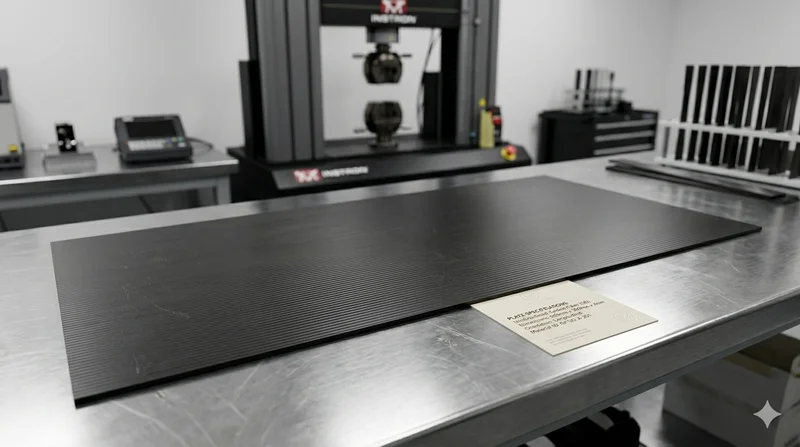
Carbon Fiber Plate — UD Unidirectional T700
Unidirectional carbon fiber plate with all fibers oriented in a single direction for maximum strength along the fiber axis. Essential for structural reinforcements, splints, and applications where load direction is predictable.
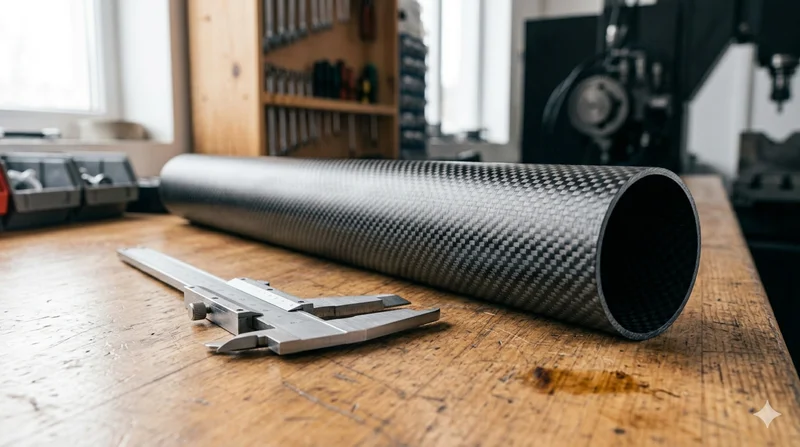
Round Carbon Fiber Tube — 3K Plain Weave T700
Standard round carbon fiber tube manufactured from Toray T700 grade fiber with 3K plain weave. Offers balanced strength and stiffness for general industrial applications including robotics, automation, sports equipment, and aerospace structures.