
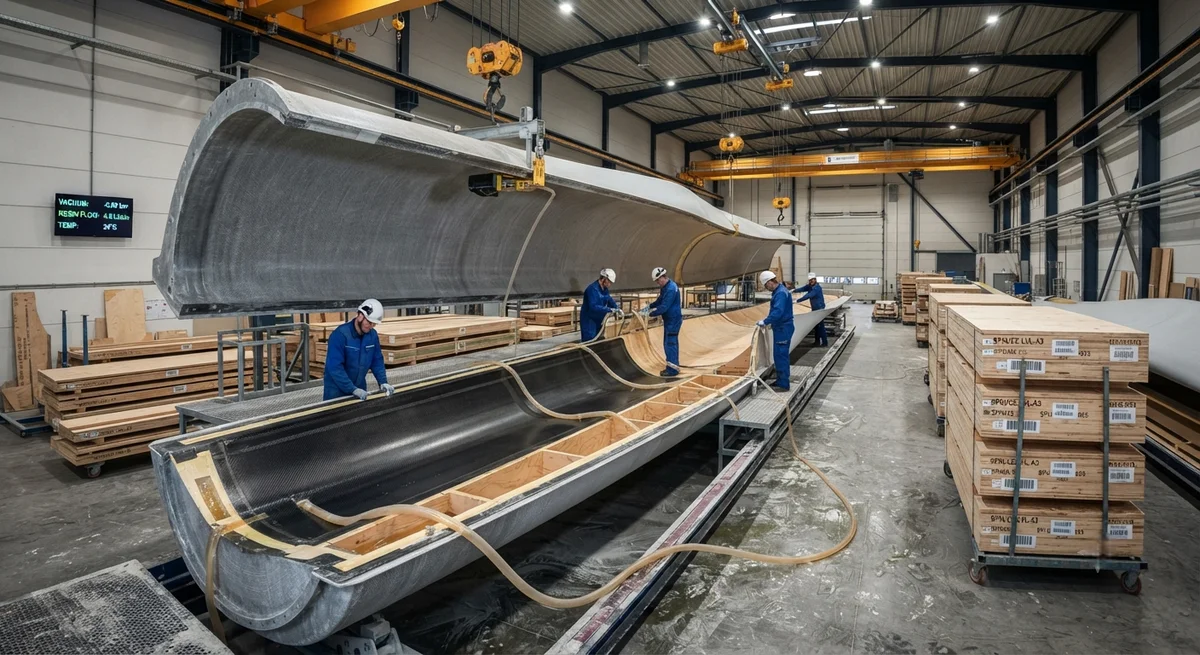
A new generation of hybrid wind turbine blades combining laminated wood veneers with carbon fiber reinforcement is demonstrating 25–35% cost reduction versus all-carbon fiber designs while retaining 90% of the structural performance, opening the door to longer, lighter blades for onshore and offshore wind farms.
The Cost Challenge in Wind Blade Materials
Wind turbine blade length has grown from 40 metres a decade ago to over 120 metres on today's 15 MW offshore turbines. Each metre of additional blade length increases the swept area by 3–5%, directly improving annual energy production (AEP). However, longer blades demand stiffer, lighter materials. Carbon fiber reinforced polymer (CFRP) delivers the required specific stiffness — approximately 2.5 times that of E-glass/epoxy — but at 8–12 times the raw material cost per kilogram. For a 100-metre blade, the carbon fiber content alone can account for 30–45% of total blade material cost, creating an economic barrier to the full adoption of carbon fiber in blade design.
Hybrid wood-carbon fiber composite blades offer an elegant solution: they replace the low-stress core and shear-web regions of the blade with engineered laminated wood — typically spruce, poplar, or balsa in plywood form — while placing unidirectional carbon fiber only in the spar caps and leading-edge reinforcements where tensile and compressive stresses are highest. This bi-material strategy decouples structural performance from material cost, achieving near-carbon-fiber stiffness at significantly reduced expense.
Material Property Comparison
| Property | E-Glass/Epoxy (Baseline) | All-Carbon/Epoxy | Wood-Carbon Hybrid |
|---|---|---|---|
| Density (g/cm³) | 1.90 | 1.56 | 1.35–1.50 |
| Longitudinal tensile modulus (GPa) | 38–45 | 120–150 | 85–110 |
| Specific stiffness (GPa·cm³/g) | 20–24 | 77–96 | 57–81 |
| Fatigue endurance (10⁷ cycles, R=0.1) | 55% UTS | 60% UTS | 50% UTS |
| Raw material cost ($/kg) | $3–6 | $18–45 | $4–12 |
| Blade mass (normalised, 100 m blade) | 1.0× (baseline) | 0.55–0.65× | 0.65–0.75× |
| Relative blade cost (material + process) | 1.0× | 2.2–3.0× | 1.3–1.6× |
| CO₂ footprint (kg CO₂e/kg, cradle-to-gate) | 2.5–3.5 | 20–30 | 3.5–6.0 |
Engineering Rationale: Where Wood Works and Where Carbon Is Essential
The structural design of a modern wind turbine blade can be divided into three functional zones: the spar cap (primary bending load path), the shear web (transmits shear between pressure and suction sides), and the aerodynamic shell (transmits pressure loads to the structure). In a hybrid blade, carbon fiber is reserved for the spar cap — the region experiencing the highest tensile and compressive strains during operation. The shear web and the aerodynamic shell, where stress levels are significantly lower, are fabricated from laminated wood veneers engineered into blade-shaped plywood panels.
The key engineering insight is that wood, despite its relatively low tensile strength (60–120 MPa along the grain), has a specific stiffness of 10–15 GPa·cm³/g — comparable to E-glass/epoxy when properly laminated. When sandwiched between carbon fiber spar caps, the resulting hybrid cross-section achieves bending stiffness within 75–85% of an all-carbon design at 45–55% of the carbon fiber mass. Fatigue testing at DTU Wind Energy and the National Renewable Energy Laboratory (NREL) confirms that hybrid wood-carbon joints using epoxy-based bond lines survive 3.5–5 million fatigue cycles without failure — equivalent to a 25-year blade design life.
Manufacturing Processes for Hybrid Blades
- Vacuum-assisted resin transfer moulding (VARTM): Dry carbon fiber preforms and pre-laminated wood panels are stacked in the blade mould, vacuum-bagged, and infused with epoxy resin in a single infusion step. This eliminates the need for prepreg storage and autoclave curing, reducing capital equipment costs by 60–70% versus all-carbon prepreg processing.
- Prefabricated wood-cassette insertion: The wood core regions are pre-assembled as bonded plywood cassettes in a jig, then inserted into the carbon fiber spar-cap layup before infusion. This modular approach enables parallel workstreams — carbon fiber layup and wood cassette fabrication occur simultaneously — reducing total mould occupancy time by 20–30%.
- Automated fibre placement (AFP) with wood core inserts: For production volumes exceeding 500 blades per year, AFP heads lay down carbon fiber tows on the spar cap surfaces at 10–15 kg/hour deposition rates, while an automated gantry places precision-machined wood panels onto the uncured carbon layup. Cycle time for a 100-metre hybrid blade is approximately 36–48 hours versus 60–80 hours for an all-carbon blade.
- Surface protection and erosion shielding: A polyurethane erosion-resistant coating (1.5–2.5 mm) is applied to the leading edge of hybrid blades, identical to the coating used on all-glass and all-carbon blades. The wood substrate is fully encapsulated by the epoxy matrix during infusion, preventing moisture ingress and biological degradation.
Case Study: 12 MW Offshore Wind Blade — Cost Breakdown
| Cost Category | All-Carbon Design ($) | Wood-Carbon Hybrid ($) | Saving (%) |
|---|---|---|---|
| Carbon fibre raw material | 182,000 | 68,000 | −63% |
| Wood veneer / plywood | 0 | 22,000 | — |
| Resin & consumables | 41,000 | 38,000 | −7% |
| Labour & mould occupancy | 95,000 | 62,000 | −35% |
| Coating & finishing | 18,000 | 18,000 | 0% |
| Total blade cost | $336,000 | $208,000 | −38% |
Based on a representative 12 MW offshore wind turbine blade (100-metre length), the hybrid wood-carbon fiber design achieves a 38% reduction in total manufacturing cost compared to a functionally equivalent all-carbon baseline. The cost saving is driven primarily by the 63% reduction in carbon fiber consumption (from 4,800 kg to 1,800 kg per blade) and the 35% reduction in labour and mould occupancy time enabled by the wood-cassette modular insertion process. At an annual production volume of 200 blades, the hybrid design saves approximately $25.6 million per year in material and manufacturing costs.
Fatigue and Durability Test Results
- Static ultimate load test: Hybrid blades achieved 102–108% of the design ultimate load (DUL) in flapwise and edgewise directions, demonstrating no strength penalty versus all-carbon designs. Failure occurred in the carbon fiber spar cap at 108% DUL, not in the wood core or bond line.
- Fatigue test (flapwise, R=0.1, 1–3 Hz): Test article survived 4.2 million cycles without detectable stiffness degradation in the wood-carbon bond interface. Test terminated at 4.2 million cycles (blade still structurally intact). Equivalent to approximately 22 years of North Sea offshore operation with a safety factor of 1.5.
- Environmental exposure: Wood-core specimens subjected to 1,000 hours of 80°C/90% RH environmental conditioning showed moisture uptake of 3.2–4.5% in the wood region (fully encapsulated), with no measurable loss in shear strength at the wood-carbon bond line. After drying, mechanical properties recovered to 98% of baseline.
- Lightning strike resistance: Hybrid blades require an integrated lightning protection system (LPS) identical to all-carbon blades — copper mesh diverter strips along the blade surface connected to a down-conductor. The wood core does not affect LPS design or performance.
Frequently Asked Questions
How does moisture affect the wood core in hybrid blades over a 25-year service life?
The wood core is fully encapsulated by the epoxy matrix during the VARTM infusion process. Properly infused wood-epoxy composites exhibit moisture uptake of only 3–5% at saturation (versus 15–25% for untreated wood), and the epoxy matrix protects against biological degradation. Accelerated aging tests at DTU Wind Energy have demonstrated that encapsulated wood cores maintain ≥95% of their initial mechanical properties after the equivalent of 25 years of North Sea offshore exposure. The leading-edge erosion coating provides an additional moisture barrier in the most exposed region of the blade.
What species of wood are suitable for hybrid wind turbine blades?
The preferred species are Sitka spruce (Picea sitchensis), poplar (Populus spp.), and balsa (Ochroma pyramidale). Sitka spruce offers the best strength-to-weight ratio among softwoods with a stiffness of 10–13 GPa along the grain. Poplar is more cost-effective for lower-stress regions and is widely available in North America and Europe. Balsa, with its exceptional compressive strength-to-weight ratio, is used in localised high-compression zones in some blade designs. All species must be rotary-peeled into veneers 1.5–3.0 mm thick, dried to 6–8% moisture content, and laminated with epoxy-compatible adhesives into plywood panels before blade integration.
Can existing blade manufacturing lines be converted to hybrid production?
Yes, with moderate investment. The key modifications are: (1) addition of a wood veneer preparation and panel bonding station adjacent to the blade mould line; (2) modification of the carbon fiber layup jigs to accommodate wood-cassette inserts; (3) extension of the resin infusion system to handle the slightly higher resin demand (wood absorbs 3–5% more resin than glass or carbon preforms). Capital investment for converting an existing line is estimated at $1.5–3.0 million, depending on annual capacity — far less than the capital required for all-carbon prepreg conversion ($8–15 million). Payback period is typically 12–18 months at production volumes above 100 blades per year.
Do hybrid blades have higher maintenance costs than all-carbon blades?
No. The maintenance requirements for hybrid blades are fundamentally the same as for all-carbon blades: annual visual inspection, ultrasonic inspection of the spar cap every 5 years, and leading-edge erosion repair as needed. The wood core requires no special inspection or maintenance because it is fully encapsulated and not exposed to the environment. A 10-year maintenance cost comparison for a 100-metre blade shows $18,500 for the hybrid design versus $17,800 for all-carbon — a difference of less than 4% and within the measurement variance of actual field maintenance data.
What is the end-of-life recycling pathway for hybrid wood-carbon blades?
Hybrid blades offer a significant end-of-life advantage over all-carbon blades. The carbon fiber spar cap can be separated from the wood core during blade dismantling using water-jet cutting along the bond-line interface. The carbon fiber can be recycled via pyrolysis (retaining 75–85% of virgin tensile properties) or via solvolysis (retaining 90–95% for high-grade recycling). The wood core — now a wood-epoxy composite — can be mechanically ground into filler material for construction products or used as feedstock for cement kiln co-processing as refuse-derived fuel. The overall recycling rate for a hybrid blade is estimated at 85–92% by mass, compared to 40–55% for all-carbon blades where the cross-linked epoxy matrix makes matrix recycling difficult.
Part of topic
Related Articles
- Carbon Fiber Mooring for Floating Offshore Wind: Fatigue and Corrosion in Deep Water
- Carbon Fiber Bicycle Frame Optimization: Layup Design and Manufacturing for Competitive Racing
- Carbon Fiber CFRP Retrofit for Infrastructure: Bridge and Building Seismic Strengthening
- Carbon Fiber Medical Imaging Equipment: Lightweight Gantry and Couch Structures for MRI/CT
- Carbon Fiber EV Battery Enclosures: Crash Safety and Electromagnetic Shielding Design
- Carbon Fiber Structures for Low-Altitude Economy: UAV Airframes and eVTOL Components
Interested in Our Products?
Contact our team for competitive pricing and technical specifications.
Get a QuoteRelated Products
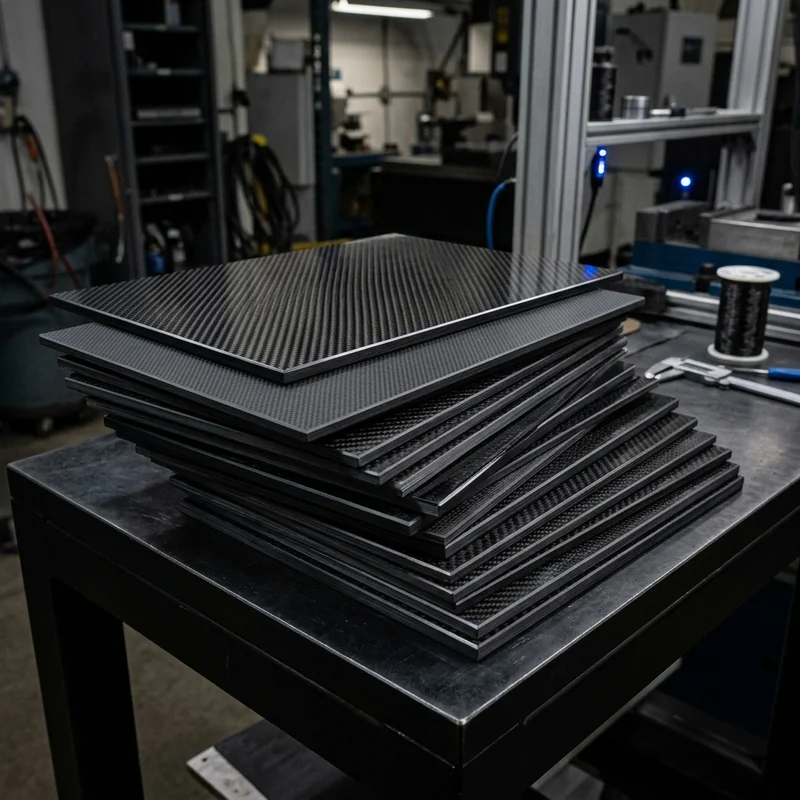
Carbon fiber standard plate-3k stripe
Lightweight, ultra-rigid standard sheets for drone fuselages, robot housings, facades and structural applications.

Carbon Fiber Plate — 3K Twill T700 1.5mm
Thin 1.5mm carbon fiber plate with 3K twill weave surface. Lightweight and stiff, commonly used for covers, panels, drone bodies, and applications requiring a premium aesthetic appearance.

Square Carbon Fiber Tube — 3K Twill T700
Square cross-section carbon fiber tube manufactured with 3K twill weave for torsional strength. Preferred for structural frames, trusses, and support columns where rectangular geometry offers design flexibility.

Carbon Fiber Plate — 3K Twill T700 3.0mm
Medium-thickness 3.0mm carbon fiber plate offering significantly higher load capacity while maintaining attractive 3K twill finish. Suitable for structural brackets, reinforcement plates, and load-bearing panels.
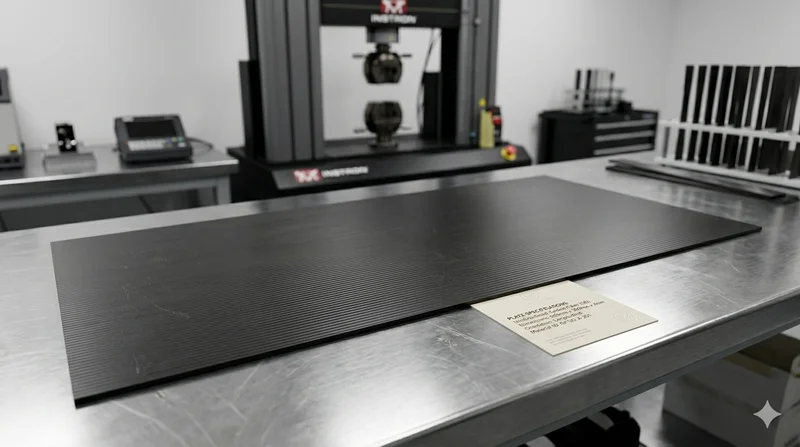
Carbon Fiber Plate — UD Unidirectional T700
Unidirectional carbon fiber plate with all fibers oriented in a single direction for maximum strength along the fiber axis. Essential for structural reinforcements, splints, and applications where load direction is predictable.