
When a Western defense program selects a carbon fiber supplier, the decisive document is rarely a technical datasheet. It is the acquisition regulation that governs where the material can come from. The United States and its allies operate layers of domestic-preference and security rule
Introduction
When a Western defense program selects a carbon fiber supplier, the decisive document is rarely a technical datasheet. It is the acquisition regulation that governs where the material can come from. The United States and its allies operate layers of domestic-preference and security rules — the Buy American Act, Berry Amendment constraints, ITAR-controlled technical data, and national security review of foreign investment — that together define a qualification moat around military-grade carbon fiber supply chains.
The practical consequence is stark. Chinese carbon fiber producers, including the largest export-oriented manufacturers, are effectively excluded from Western military qualification not because of fiber quality but because of the institutional and political context around the supply chain. In their place, Japanese producers have become the default choice: Toray's selection as the carbon fiber supplier for the Future Long-Range Assault Aircraft (FLRAA) program is the most visible recent confirmation of a pattern that has held for decades. This article examines the rule landscape in detail and explains what the preference structure means for program offices and upstream suppliers alike.
The Rule Landscape
Defense sourcing rules form a stack, each layer narrowing the eligible supplier base. The table below summarizes the principal mechanisms and their effect on carbon fiber procurement:
| Mechanism | Jurisdiction | What it does | Effect on carbon fiber sourcing |
|---|---|---|---|
| Buy American Act (BAA) | US federal | Requires domestic end products; foreign offers face price penalties | Imported fiber must clear preference tests or pay the penalty |
| Domestic price preference | US federal | Adds 6-15 percent to foreign offers for evaluation | Non-allied foreign fiber loses on price even before quality |
| Berry Amendment | US DoD | Mandates US-made fibers and textiles in uniformed items | Directly excludes non-US fiber from apparel and sub-systems |
| DFARS restrictions and ITAR | US DoD | Restricts controlled technical data and foreign participation | Qualification data cannot flow to excluded-country suppliers |
| National security review (CFIUS) | US | Screens foreign investment and acquisitions | Blocks supply-chain consolidation into excluded-country control |
The layers reinforce each other. BAA sets the price structure, the Berry Amendment removes whole product categories, ITAR blocks the data transfer that qualification requires, and CFIUS prevents the ownership workaround. Winning any one layer is pointless if another still blocks the entry.
How the 15 Percent Preference Works in Practice
The domestic price preference is the mechanism that most directly shapes day-to-day procurement. Under the Buy American Act, a domestic offer is evaluated with a price advantage — commonly the 6 percent threshold used for the lowest-priced domestic offer, rising to 12-15 percent in specific preference classes — against offers from non-qualifying foreign sources. On a defense fiber contract worth millions of dollars, a 15 percent handicap is decisive: the foreign supplier must not merely match the incumbent but undercut it by an amount that rarely survives either cost analysis or political scrutiny.
The same logic extends to allies through reciprocal trade regimes, which is precisely why Japanese and, in specific programs, South Korean and European fiber can still sell into US and allied programs. Preference rules are not autarky; they are a ranking. Domestic first, treaty allies second, everyone else pays the penalty. Chinese fiber sits in the third bucket by institutional design, and no improvement in manufacturing capability changes that classification.
Qualification as a Separate Barrier
Even a supplier inside the preferred circle must pass qualification, and for excluded suppliers the qualification burden is what makes entry effectively impossible. Military carbon fiber qualification typically requires:
- Material qualification: full mechanical, thermal, and chemical characterization against a military specification or the prime contractor's internal spec, a process that extends over years.
- Process control: NADCAP or equivalent accreditation for the tow production line, with continuous audit and lot traceability.
- Controlled-data handling: access to ITAR or equivalent technical data that defines the expected properties and applications, which excluded-country manufacturers cannot legally receive.
Each step is sequential and gated. Without the right to receive controlled datasheets, a manufacturer cannot even define the acceptance tests, so the qualification pipeline is closed before it starts. Chinese producers can supply commercial aerospace-grade fiber to civil programs in quantity, but the military pipeline is structurally shut.
The time dimension reinforces the moat. Qualification campaigns for a new fiber source on an active platform routinely span three to five years from first datasheet to flight release, and they require access to program-level test data that excluded suppliers cannot obtain. Once a fiber is qualified, primes rarely re-qualify a second source absent a supply failure, because re-qualification consumes engineering budget and schedule margin that programs prefer to spend on capability. The result is structural incumbency: the qualified allied-nation supplier holds the position until an explicit supply risk materializes, and even then the replacement candidate must still run the full qualification gauntlet. This inertia is why the default-choice framing is accurate — the rules make switching expensive enough to be the exception rather than the rule.
The FLRAA Precedent
Toray's role in the FLRAA program is the clearest modern illustration of the pattern. When Bell's V-280 Valor won the Future Long-Range Assault Aircraft competition in 2022, the airframe's advanced composite structure relied on Toray aerospace-grade carbon fiber — a choice that reflected both technical qualification history and the rules described above. Japanese fiber had the deep qualification records accumulated over decades of co-development with Western airframers, plus the institutional status of a treaty ally under the preference structure.
The FLRAA choice did not break a new threshold; it confirmed an existing equilibrium. Program offices choose the supplier that is qualified, allowed by regulation, and stable under export-control review. That combination, for medium- and high-modulus aerospace tow, is the Japanese supply base today. The equipment primes make the fiber selection, but the rule stack makes it for them.
Frequently Asked Questions
Does the Buy American preference actually apply to carbon fiber, or only to final weapon systems?
It applies at the level of the procured end item and flows down through subcontracts. When a prime contracts composite structures, the acquisition regulations, including domestic-preference requirements, are flowed to the structure supplier and onward to the fiber supplier. In practice program offices document the domestic or treaty-aligned content of the fiber supply chain as part of the acquisition compliance baseline, so the preference reaches the tow level even though the government contract nominally covers the airframe.
Could Chinese carbon fiber qualify for Western defense programs through joint ventures or local production?
Not through the ownership or data pathways in current rules. CFIUS review blocks acquisition of US suppliers by excluded-country entities; ITAR restricts the technical data that qualification testing requires; and the qualification records themselves are tied to the supply chain history. A joint venture would still face the controlled-data restriction at the core of qualification. The barriers are institutional and cumulative, which is why the excluded classification is described as effective for structural reasons rather than performance comparisons.
Does the same preference logic apply to European or allied programs?
Formally no single rule mirrors the US stack, but the practical effect is comparable. European programs apply national security exclusions, offset requirements, and increasingly defense-industrial policy preferences that favor domestic and allied supply. NATO-operated and major European sovereign programs routinely designate preferred sourcing countries, and the qualification record requirement works the same way: suppliers without cleared access to the program's technical data cannot participate. Japanese fiber's allied status therefore opens the same default position in European defense programs that it holds in the United States.
Conclusion
Western defense carbon fiber sourcing is a rule-driven market before it is a technology market. Buy-American clauses, the 15 percent domestic price preference, ITAR-controlled data, and CFIUS review combine into a qualification moat that excludes Chinese fiber for institutional reasons and consolidates the default supply position with Japanese producers. The FLRAA precedent confirms rather than creates the pattern. For program offices the message is procedural — document the preference compliance and the qualified supply base early; for upstream material buyers it is strategic: allied-status, qualification-complete supply chains are the only ones that can reach the defense market.
For suppliers assessing defense-adjacent commercial programs, review our aerospace-grade carbon fiber fabric range and qualification documentation, or contact our engineering team to discuss material specification for export-controlled applications.
Part of topic
Related Articles
- Recycled Carbon Fiber Market Forecast 2030: Technology Maturity and Commercialization Path
- South Korea Carbon Fiber Market 2026: Hydrogen Economy and Shipbuilding Innovation
- Wind Turbine Blade Leading Edge Protection 2026: Polyurethane, Tape, and Metallic Shield Solutions
- China Carbon Fiber Overcapacity 2026: Price War Impact and Industry Consolidation
- India Carbon Fiber Market 2026: Wind Energy, Aerospace, and Defense Expansion
- PAN Precursor Market 2026: Acrylonitrile Supply and Carbon Fiber Cost Structure
Interested in Our Products?
Contact our team for competitive pricing and technical specifications.
Get a QuoteRelated Products

Carbon Fiber Fishing Rod Blank
High-quality carbon fiber fishing rod blank manufactured from multiple grades of Toray carbon fiber cloth. Available in a wide range of lengths, powers, and actions for freshwater and saltwater applications. Suitable for OEM rod building.

Carbon Fiber Plate — 3K Twill T700 3.0mm
Medium-thickness 3.0mm carbon fiber plate offering significantly higher load capacity while maintaining attractive 3K twill finish. Suitable for structural brackets, reinforcement plates, and load-bearing panels.
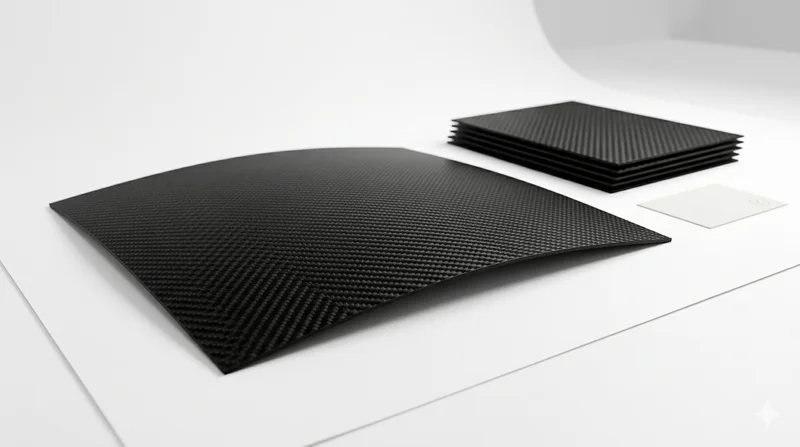
Carbon Fiber Plate — 3K Twill T700 1.5mm
Thin 1.5mm carbon fiber plate with 3K twill weave surface. Lightweight and stiff, commonly used for covers, panels, drone bodies, and applications requiring a premium aesthetic appearance.

Square Carbon Fiber Tube — 3K Twill T700
Square cross-section carbon fiber tube manufactured with 3K twill weave for torsional strength. Preferred for structural frames, trusses, and support columns where rectangular geometry offers design flexibility.
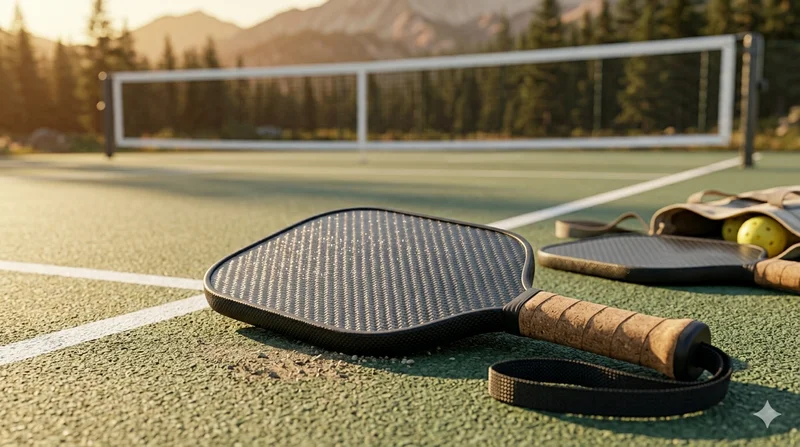
Carbon Fiber Pickleball Paddle
High-performance pickleball paddle with Toray T700 carbon fiber face and polypropylene honeycomb core. Delivers excellent power-to-weight ratio, spin generation, and vibration dampening for competitive play.