
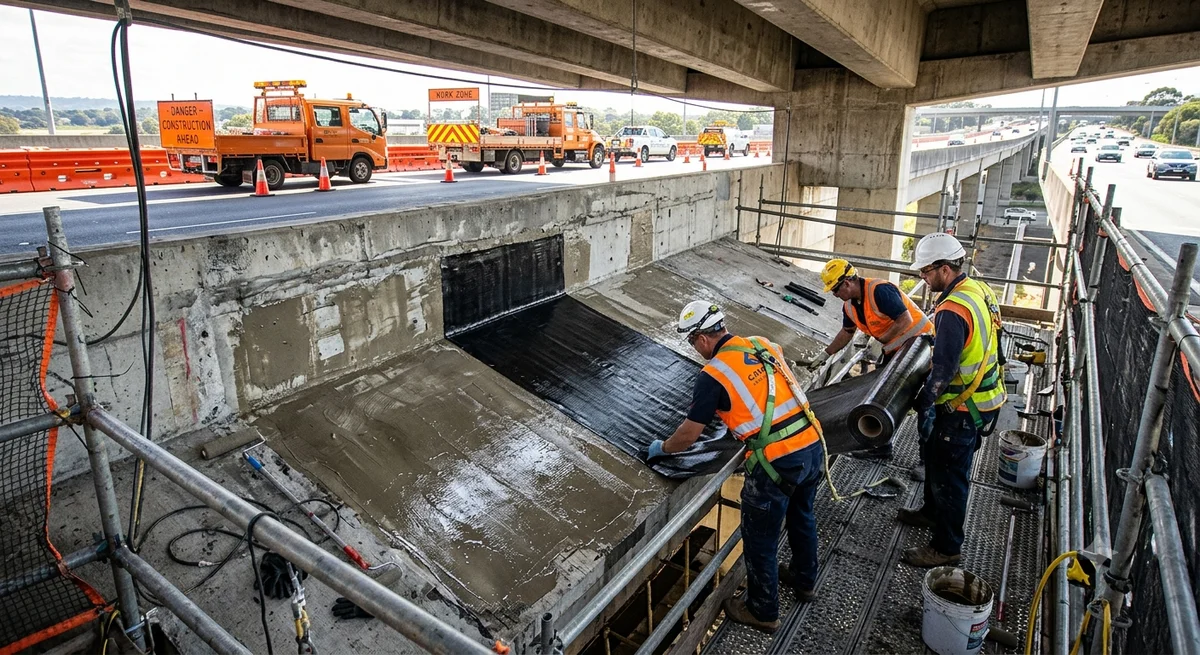
Compare carbon fiber FRP and steel for bridge rehabilitation: installation cost, load capacity gain, corrosion resistance, lifecycle cost, and long-term maintenance savings.
Introduction
Bridge rehabilitation is a growing global infrastructure priority. In the United States alone, over 46,000 bridges are classified as structurally deficient, requiring repair or replacement at an estimated cost of $164 billion. Traditional steel plate bonding has been the standard strengthening method for decades, but externally bonded carbon fiber-reinforced polymer (CFRP) systems have emerged as a compelling alternative. This article presents a side-by-side cost-benefit analysis of carbon fiber FRP versus steel for bridge column wrapping, beam strengthening, and deck rehabilitation, based on 2026 material and labor costs.
Direct Cost Comparison
| Cost Item | Steel Plate Bonding | CFRP Wrap System | Savings with CFRP |
|---|---|---|---|
| Material cost per m² | $120–180 | $85–140 | 20–30% |
| Installation labor (per m²) | $200–350 | $80–150 | 55–60% |
| Scaffolding & access | $40–80 | $20–40 | 50% |
| Corrosion protection coating | $30–60 | $0 (inherent) | 100% |
| Traffic management (lane closure days) | 15–30 days | 3–7 days | 75–80% |
| Total installed cost per m² | $390–670 | $185–330 | 45–55% |
| Long-term maintenance (20-year) | $80–150/m² | $10–25/m² | 80–85% |
Structural Performance Comparison
Beyond cost, the structural performance characteristics of CFRP and steel differ significantly:
- Strength-to-weight ratio — Carbon fiber has a tensile strength of 3,500–4,900 MPa (T700 grade) at a density of 1.6 g/cm³, compared to structural steel at 250–550 MPa strength and 7.85 g/cm³ density. CFRP wrap adds negligible dead load (0.5–1.5 kg/m² per ply) versus steel plates (30–80 kg/m²).
- Corrosion resistance — CFRP is inherently corrosion-resistant and unaffected by de-icing salts, marine environments, or acidic runoff. Steel requires regular repainting and cathodic protection, adding $80–150/m² over a 20-year service life.
- Fatigue performance — CFRP composites exhibit excellent fatigue resistance, sustaining 10⁷+ cycles at 60–70% of ultimate tensile strength. Steel plates are prone to fatigue crack initiation at welded connections and bolt holes, particularly under variable amplitude traffic loading.
- Seismic performance — Column wrapping with CFRP provides significant ductility enhancement, increasing displacement ductility by 3–5x compared to unwrapped columns. This is particularly valuable for seismic retrofit projects in earthquake-prone regions.
Installation Considerations
CFRP wrap installation offers several practical advantages for bridge rehabilitation projects:
- Reduced traffic disruption — CFRP wrap typically cures in 24–72 hours at ambient temperature, allowing lane reopening within 3–7 days. Steel plate bonding requires 15–30 days for welding, bolting, grouting, and coating. For high-traffic urban bridges, the social cost of lane closures can exceed $10,000 per day.
- No heavy equipment required — CFRP installation uses lightweight hand tools, rollers, and mixers. Steel plate installation requires cranes, welding machines, bolting equipment, and abrasive blasting, increasing mobilization costs by $5,000–15,000.
- Adaptability to complex geometries — Carbon fiber fabric conforms to curved surfaces, irregular column shapes, and confined spaces where steel plates cannot be practically installed. This is especially relevant for bridge pier retrofit with architectural detailing.
Lifecycle Cost Analysis (25-Year Horizon)
A 25-year lifecycle cost comparison for a typical 100 m² bridge column strengthening project shows:
- Steel plate: Initial $55,000 + inspection $15,000 + repainting $18,000 + cathodic protection $12,000 = $100,000 total
- CFRP wrap: Initial $28,000 + inspection $8,000 + minor repairs $3,000 = $39,000 total
- Total savings with CFRP: $61,000 (61%) over 25 years
These savings increase further when accounting for reduced traffic disruption costs and extended service life beyond 25 years.
Frequently Asked Questions
What is the design life of a CFRP bridge strengthening system?
Properly installed CFRP systems designed per ACI 440.2R guidelines have a service life of 40–75 years, depending on environmental exposure. UV-resistant topcoats extend life in direct sunlight. Accelerated aging tests (ASTM D5229 for moisture, ASTM G154 for UV) show less than 5% tensile strength degradation after 20 years of simulated outdoor exposure.
Can CFRP be applied to wet or cold bridge surfaces?
Most epoxy resins used in CFRP systems require surface temperatures above 5°C and no standing water for proper cure. Low-temperature cure epoxy systems (curing down to 2°C) are available but require extended cure times. For underwater bridge pier applications, specially formulated wet-cure epoxy systems are available that cure underwater with reduced peel strength (typically 80–90% of dry-cure strength).
How do fire protection requirements differ between CFRP and steel?
CFRP loses structural strength above 300°C (glass transition temperature of standard epoxy). For bridge applications where fire is a concern (e.g., fuel tanker incidents), passive fire protection such as intumescent coatings or cementitious vermiculite board is required. Steel retains strength up to 500°C but then loses 50% of capacity at 600°C. Fire protection add-on cost for CFRP is $30–60/m²; for steel it is typically already included in the corrosion protection coating.
Conclusion
For bridge rehabilitation projects, carbon fiber FRP wrap systems offer compelling advantages over traditional steel plate bonding: 45–55% lower installed cost, 80% less traffic disruption, inherent corrosion resistance, and superior fatigue performance. Civil engineers evaluating strengthening solutions should consider CFRP as the primary option for column wrapping, beam flexural strengthening, and seismic retrofit applications. YongXian CarbonFiber supplies CFRP wrap systems with full ACI 440.2R design support. Visit www.yongxian.co for technical data sheets and project references.
Part of topic
Related Articles
- Carbon Fiber Mooring for Floating Offshore Wind: Fatigue and Corrosion in Deep Water
- Carbon Fiber Bicycle Frame Optimization: Layup Design and Manufacturing for Competitive Racing
- Carbon Fiber CFRP Retrofit for Infrastructure: Bridge and Building Seismic Strengthening
- Carbon Fiber Medical Imaging Equipment: Lightweight Gantry and Couch Structures for MRI/CT
- Carbon Fiber EV Battery Enclosures: Crash Safety and Electromagnetic Shielding Design
- Carbon Fiber Structures for Low-Altitude Economy: UAV Airframes and eVTOL Components
Interested in Our Products?
Contact our team for competitive pricing and technical specifications.
Get a QuoteRelated Products
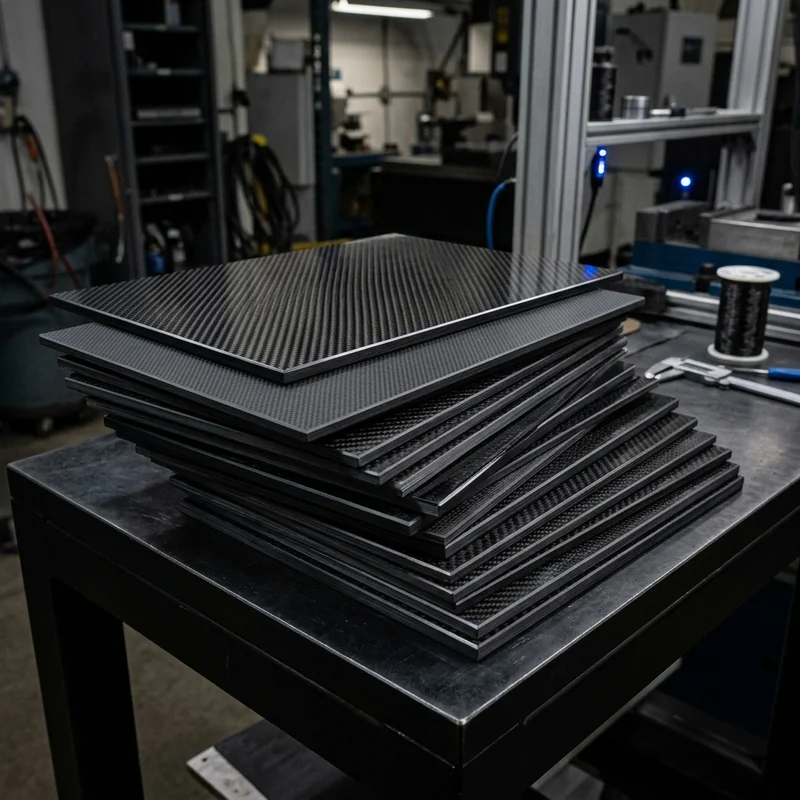
Carbon fiber standard plate-3k stripe
Lightweight, ultra-rigid standard sheets for drone fuselages, robot housings, facades and structural applications.

Carbon Fiber Plate — 3K Twill T700 1.5mm
Thin 1.5mm carbon fiber plate with 3K twill weave surface. Lightweight and stiff, commonly used for covers, panels, drone bodies, and applications requiring a premium aesthetic appearance.

Square Carbon Fiber Tube — 3K Twill T700
Square cross-section carbon fiber tube manufactured with 3K twill weave for torsional strength. Preferred for structural frames, trusses, and support columns where rectangular geometry offers design flexibility.

Carbon Fiber Plate — 3K Twill T700 3.0mm
Medium-thickness 3.0mm carbon fiber plate offering significantly higher load capacity while maintaining attractive 3K twill finish. Suitable for structural brackets, reinforcement plates, and load-bearing panels.
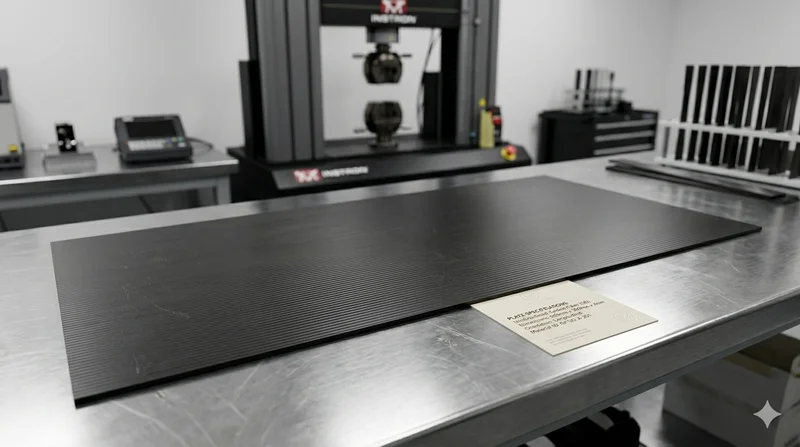
Carbon Fiber Plate — UD Unidirectional T700
Unidirectional carbon fiber plate with all fibers oriented in a single direction for maximum strength along the fiber axis. Essential for structural reinforcements, splints, and applications where load direction is predictable.