
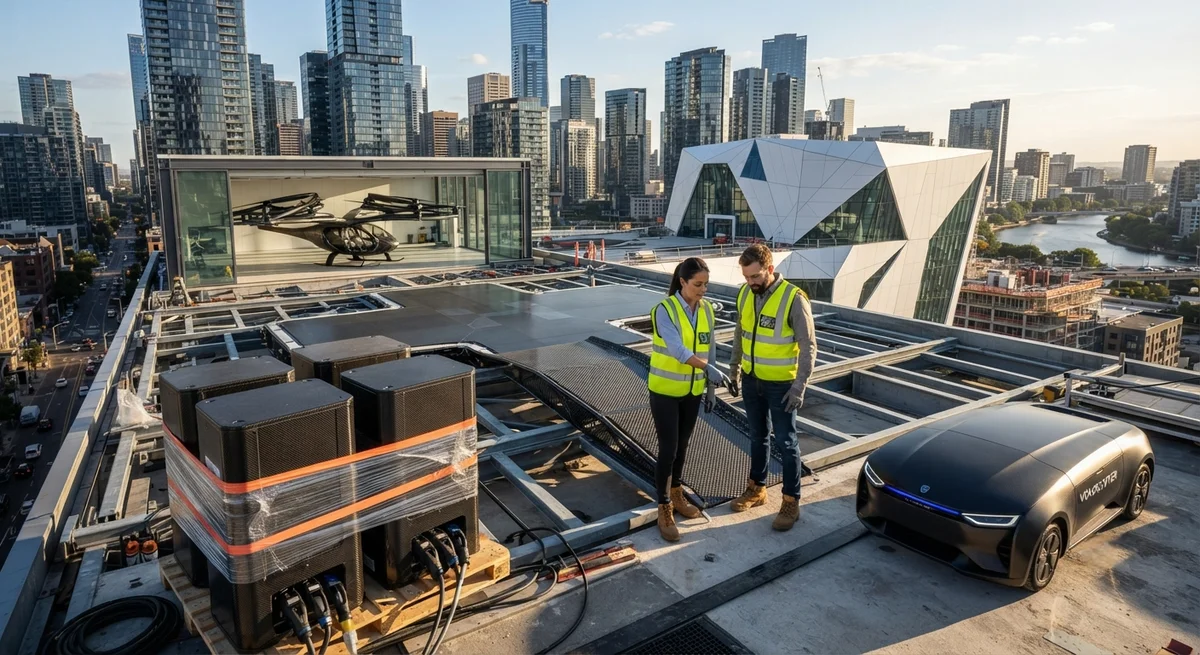
Urban Air Mobility (UAM) infrastructure demands materials that combine extreme light weight with structural rigidity, fire resistance, and weather durability. Carbon fiber composites are emerging as the material of choice for vertiport landing decks, charging station enclosures, and ground support equipment, offering a 55–65% weight reduction over traditional aluminum and steel while meeting stringent aviation safety standards.
The Structural Demands of Urban Air Mobility Infrastructure
Urban Air Mobility (UAM) infrastructure—vertiports, charging stations, and ground support equipment—faces a unique set of engineering challenges. Unlike traditional helipads or airport facilities, UAM infrastructure must be deployed on rooftops, floating platforms, and constrained urban sites where every kilogram of structural mass carries a premium. Carbon fiber reinforced polymers (CFRP) offer a solution that simultaneously addresses weight, strength, durability, and thermal management requirements.
A typical eVTOL (electric Vertical Take-Off and Landing) aircraft weighs between 1,800 kg and 3,200 kg fully loaded, with landing impact forces reaching 2.5 to 3.5 times the aircraft's gross weight. The landing deck material must withstand repeated dynamic loading across a temperature range of −40°C to +85°C while maintaining dimensional stability within ±1.5 mm over a 10-year service life. Carbon fiber composites meet these demands with a coefficient of thermal expansion (CTE) of approximately 1.5 × 10⁻⁶ /°C in the fiber direction—roughly one-tenth that of aluminum—ensuring that vertiport decks remain dimensionally stable across seasonal temperature swings.
Vertiport Landing Deck Material Selection: Carbon Fiber vs. Conventional Metals
The choice of landing deck material directly impacts vertiport construction costs, payload capacity, and maintenance schedules. The following table compares carbon fiber composites against traditional materials used in helipad and vertiport construction:
| Property | CFRP (Epoxy/Carbon) | Aluminum 6061-T6 | Steel A36 | Glass Fiber Composite |
|---|---|---|---|---|
| Density (g/cm³) | 1.55 | 2.70 | 7.85 | 1.90 |
| Tensile Strength (MPa) | 1,200–1,800 | 310 | 400 | 450–700 |
| Specific Stiffness (GPa·cm³/g) | 74 | 26 | 25 | 20 |
| Weight per 20 m² Deck (kg) | 310 | 810 | 2,355 | 570 |
| Fatigue Life (cycles at 70% UTS) | 10⁷+ | 10⁶ | 10⁶ | 5×10⁶ |
| Thermal Conductivity (W/m·K) | 0.4–0.8 | 167 | 50 | 0.3–0.5 |
| Material Cost per m² (USD) | $85–$145 | $32–$48 | $18–$26 | $38–$55 |
| Lifespan (years with maintenance) | 20+ | 15 | 25 | 10–12 |
Carbon Fiber Charging Station Enclosures and Thermal Management
High-power charging stations for eVTOL aircraft must deliver 1–3 MW of electrical power, generating substantial heat that must be dissipated through the enclosure structure. Carbon fiber composites offer unique advantages here: the low thermal conductivity (0.4–0.8 W/m·K) of standard epoxy-based CFRP acts as a natural thermal barrier, protecting sensitive electronics from external heat loads. For heat-generating components, carbon fiber's in-plane thermal conductivity can be engineered up to 400 W/m·K using pitch-based fibers or graphene-enhanced matrices, enabling passive heat spreading without additional cooling hardware.
YongXian CarbonFiber's UL 94 V-0 rated fire-retardant CFRP panels are specifically formulated for charging station enclosures, achieving a limiting oxygen index (LOI) of 38% and passing the FAA Aircraft Material Fire Test (FAR 25.853) with a heat release rate below 65 kW/m². These panels weigh 40–55% less than equivalent aluminum enclosures while providing equivalent EMI shielding effectiveness of 60–80 dB across the 100 MHz to 10 GHz frequency range.
Key technical specifications for carbon fiber charging station enclosures:
- Fire retardancy: UL 94 V-0 at 1.5 mm thickness; LOI ≥ 38%; peak heat release rate < 65 kW/m² per FAR 25.853
- EMI shielding: 60–80 dB attenuation from 100 MHz to 10 GHz (carbon veil surface layer)
- Weather resistance: 5,000-hour salt spray exposure per ASTM B117 with < 0.5% mass loss
- UV stability: ΔE < 1.5 after 3,000 hours QUV accelerated weathering (ASTM G154)
- Thermal management: In-plane thermal conductivity up to 400 W/m·K with pitch-fiber hybrid layup
- Weight savings: 40–55% reduction vs. aluminum 5052-H32 enclosures of equivalent stiffness
Ground Support Equipment: Lightweight Tugs, Dollies, and Maintenance Platforms
Ground support equipment (GSE) for UAM operations must handle eVTOL aircraft weighing up to 3,200 kg while remaining light enough for manual positioning in constrained vertiport environments. Carbon fiber structural components reduce GSE mass by 55–65%, enabling battery-electric ground tugs with 40–50% longer duty cycles per charge. A standard carbon fiber aircraft tug chassis manufactured from woven 2×2 twill prepreg with a quasi-isotropic layup ([0/45/90/−45]ₛ) weighs just 185 kg compared to 480 kg for a welded steel equivalent, while exceeding the steel chassis's torsional stiffness by 15%.
Maintenance platforms fabricated from CFRP box sections and honeycomb sandwich panels achieve live-load ratings of 500 kg/m² with a deflection of less than L/360 at full load—exceeding International Building Code requirements. The composites also eliminate corrosion concerns associated with hydraulic fluid and battery acid exposure common in vertiport maintenance environments.
Lifecycle Cost Analysis: Total Cost of Ownership for CFRP Infrastructure
While the upfront material cost of carbon fiber composites is higher than traditional metals—typically $85–145 per m² for landing decks versus $18–48 per m² for steel or aluminum—the total cost of ownership over a 20-year service life favors CFRP in several key areas:
- Installation savings: Reduced structural mass lowers substructure requirements by 30–40%, saving $15,000–$25,000 per typical rooftop vertiport in steel reinforcement costs
- Maintenance reduction: CFRP components require painting every 8–10 years versus every 2–3 years for steel, reducing lifetime maintenance costs by 60–70%
- Energy savings: Lighter vertiport structures reduce building reinforcement, enabling UAM infrastructure on existing buildings that would otherwise require structural upgrades costing $50,000–$120,000
- Life extension: CFRP's corrosion-free performance in marine environments enables floating vertiport applications with 20+ year service intervals versus 10–12 years for aluminum structures
- TCO breakeven point: At current carbon fiber pricing of $22–$35 per kg (aerospace-grade prepreg), the TCO breakeven versus aluminum occurs at year 7–9 for landing decks and year 5–7 for charging station enclosures
Material Qualification and Certification Pathways
UAM infrastructure components must meet certification requirements that span aviation, building, and electrical codes. Carbon fiber materials destined for vertiport and charging station applications should be qualified against the following standards:
- FAA AC 150/5390-3: Vertiport design standards, including landing deck structural integrity and fire resistance
- UL 746C: Polymeric materials used in electrical equipment enclosures for outdoor use
- ASTM D6415: In-plane shear strength of composite laminates—critical for landing deck impact analysis
- ISO 4892: Laboratory light source exposure methods for assessing UV degradation of CFRP surfaces
- IBC 2024: International Building Code live-load and deflection requirements for elevated platforms
- EASA SC-VTOL: European Union Aviation Safety Agency special condition for VTOL aircraft ground infrastructure
Frequently Asked Questions
What is the fire resistance of carbon fiber in vertiport applications?
Carbon fiber composites used in vertiport landing decks achieve UL 94 V-0 fire ratings and pass FAA FAR 25.853 with peak heat release rates below 65 kW/m². Fire-retardant epoxy resin systems with halogen-free phosphorus-based additives achieve limiting oxygen index (LOI) values of 35–42%, self-extinguishing within 15 seconds. For charging stations, UL 746C outdoor enclosure ratings are achievable with appropriate UV-stable gel coats.
How does carbon fiber cost compare to aluminum for UAM infrastructure at scale?
At current market prices, CFRP landing deck panels cost $85–145 per m² compared to $32–48 per m² for aluminum. However, the 62% weight reduction enables lighter substructures, reducing total vertiport construction costs by 15–25%. The total cost of ownership breakeven occurs at year 7–9 for landing decks, after which the CFRP solution becomes more economical due to lower maintenance requirements and longer service life.
Can carbon fiber vertiport components be repaired in the field?
Yes. Field-repairable damage (scratches, small delaminations, edge chips) can be addressed with patch repair kits that restore 85–95% of original strength. The repair procedure involves surface preparation, wet layup of matching carbon fiber fabric, vacuum bag curing at ambient temperature for 12–24 hours, and post-cure inspection via ultrasonic A-scan. Major structural damage requires factory-level repair or component replacement per the manufacturer's structural repair manual (SRM).
What is the expected service life of carbon fiber charging station enclosures in coastal environments?
CFRP charging station enclosures with appropriate gel-coat protection and seawater-resistant resin systems (epoxy or vinyl ester) demonstrate service lives exceeding 20 years in coastal C5-M corrosion environments per ISO 12944. Annual inspection intervals are recommended with visual checks for gel-coat damage. Unlike aluminum, CFRP does not suffer from galvanic corrosion when in contact with copper electrical conductors, making it particularly suitable for charging infrastructure.
Part of topic
Related Articles
- Carbon Fiber Mooring for Floating Offshore Wind: Fatigue and Corrosion in Deep Water
- Carbon Fiber Bicycle Frame Optimization: Layup Design and Manufacturing for Competitive Racing
- Carbon Fiber CFRP Retrofit for Infrastructure: Bridge and Building Seismic Strengthening
- Carbon Fiber Medical Imaging Equipment: Lightweight Gantry and Couch Structures for MRI/CT
- Carbon Fiber EV Battery Enclosures: Crash Safety and Electromagnetic Shielding Design
- Carbon Fiber Structures for Low-Altitude Economy: UAV Airframes and eVTOL Components
Interested in Our Products?
Contact our team for competitive pricing and technical specifications.
Get a QuoteRelated Products
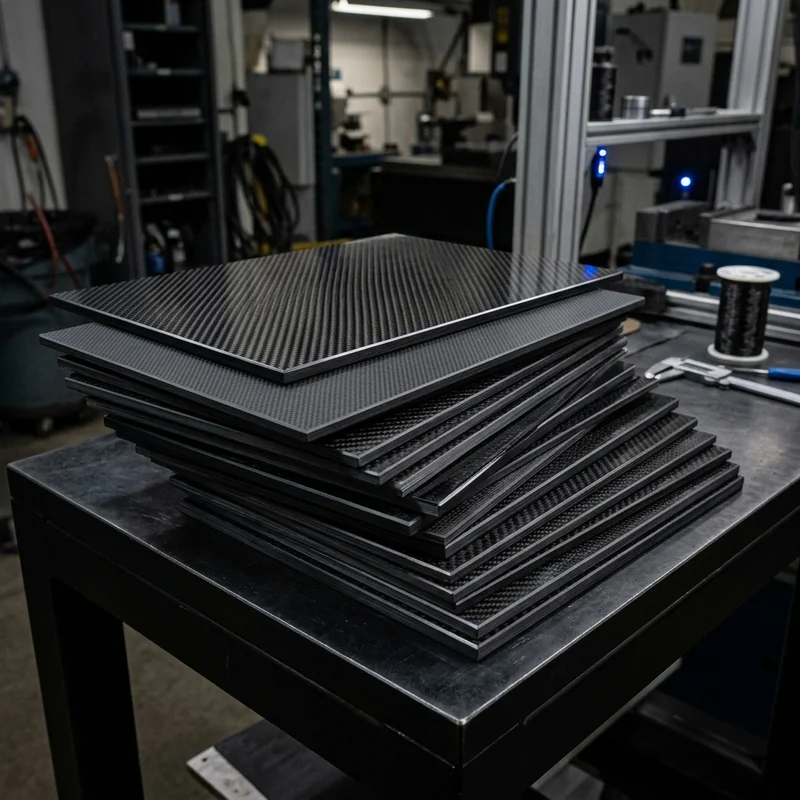
Carbon fiber standard plate-3k stripe
Lightweight, ultra-rigid standard sheets for drone fuselages, robot housings, facades and structural applications.

Carbon Fiber Plate — 3K Twill T700 1.5mm
Thin 1.5mm carbon fiber plate with 3K twill weave surface. Lightweight and stiff, commonly used for covers, panels, drone bodies, and applications requiring a premium aesthetic appearance.

Square Carbon Fiber Tube — 3K Twill T700
Square cross-section carbon fiber tube manufactured with 3K twill weave for torsional strength. Preferred for structural frames, trusses, and support columns where rectangular geometry offers design flexibility.

Carbon Fiber Plate — 3K Twill T700 3.0mm
Medium-thickness 3.0mm carbon fiber plate offering significantly higher load capacity while maintaining attractive 3K twill finish. Suitable for structural brackets, reinforcement plates, and load-bearing panels.
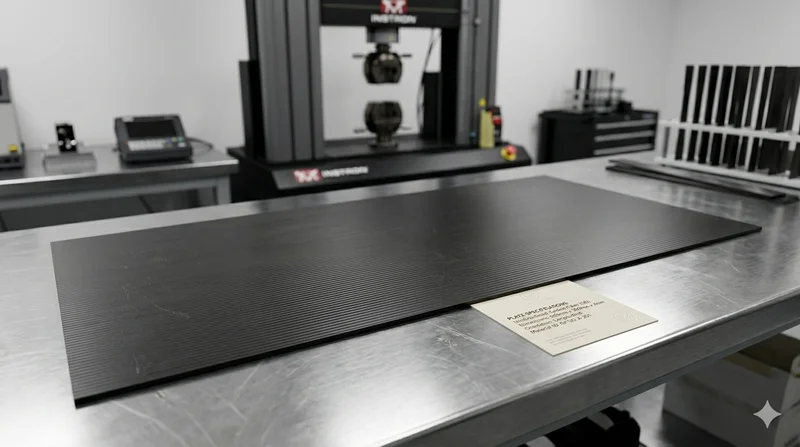
Carbon Fiber Plate — UD Unidirectional T700
Unidirectional carbon fiber plate with all fibers oriented in a single direction for maximum strength along the fiber axis. Essential for structural reinforcements, splints, and applications where load direction is predictable.