
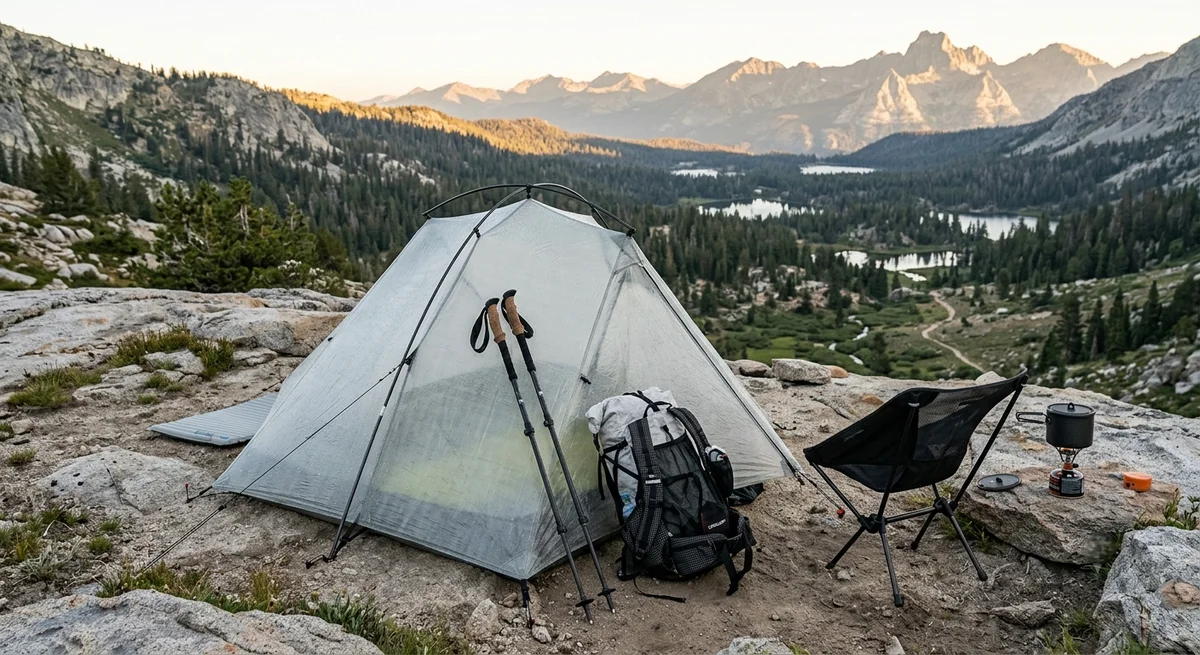
Carbon fiber is revolutionizing the ultralight camping industry — from 800 g trekking poles to sub-1 kg tents. This article analyzes material specs, weight savings, durability data, and cost comparisons across 6 outdoor gear categories for OEM buyers and product designers.
The Ultralight Revolution: Carbon Fiber in Outdoor Gear
The ultralight backpacking movement has driven an unprecedented demand for carbon fiber outdoor gear. Every gram saved on a multi-day trek translates directly to reduced fatigue, faster pace, and greater enjoyment — and no material delivers the stiffness-to-weight ratio of carbon fiber. From trekking poles weighing just 800 g per pair to tent pole sets under 300 g, carbon fiber components have become the defining technology of premium outdoor equipment. This article provides OEM buyers, product designers, and outdoor brand procurement professionals with the material performance data, cost analysis, and durability benchmarks needed to specify carbon fiber components for camping gear.
Carbon Fiber vs Traditional Materials in Camping Gear
| Gear Category | Component | Material Options | CF Weight | Aluminum Weight | Steel / Other Weight | CF Weight Savings | CF Cost Premium |
|---|---|---|---|---|---|---|---|
| Trekking poles | Pair of poles (adjustable) | CF / 7075 Al / 6061 Al | 280–340 g each | 350–420 g each | 450–550 g each (steel) | 20–33% | 2–3× vs Al |
| Tent poles | 3-person dome set | CF / DAC Featherlite / 7001 Al | 380–480 g | 520–680 g | 850–1100 g (fiberglass) | 27–40% | 2.5–4× vs Al |
| Camp chair | Frame only | CF tube / 6061 Al / Steel | 250–350 g | 400–550 g | 700–900 g | 36–50% | 3–5× vs Al |
| Cookware | Pot (1.3 L) | CF composite / Ti / Hard-anodized Al | 85–110 g | 120–150 g (Ti) | 180–230 g (Al) | 25–50% | 2–3× vs Ti |
| Backpack frame | Frame sheet + stays | CF laminate / 7075 Al frame / HDPE | 150–220 g | 250–350 g | 400–550 g (HDPE) | 37–50% | 3–5× vs Al |
| Stove/pot stand | Folding support | CF tubes / Ti / Stainless | 25–35 g | 40–55 g (Ti) | 80–120 g (SS) | 36–55% | 2–3× vs Ti |
Material Properties for Outdoor Gear Applications
| Property | Carbon Fiber (1K/3K prepreg tube) | 7075-T6 Aluminum | Grade 5 Titanium | 6061-T6 Aluminum | Fiberglass (E-glass) |
|---|---|---|---|---|---|
| Tensile strength (MPa) | 1,200–2,000 (axial) | 572 | 1,000 | 310 | 500–800 |
| Specific modulus (GPa/(g/cm³)) | 125–135 | 26 | 24 | 26 | 28 |
| Fatigue endurance limit (% UTS) | 60–70% | 30–40% | 50–60% | 25–35% | 25–35% |
| Thermal conductivity (W/m·K) | 8–17 (axial) | 130 | 7.2 | 167 | 1.0 |
| Corrosion resistance | Excellent (inert) | Moderate (anodize needed) | Excellent | Moderate (anodize needed) | Good |
| UV resistance | Good (with UV coating) | Excellent | Excellent | Excellent | Moderate (yellowing) |
| Thermal feel in cold | Warm (low conductivity) | Very cold (high cond.) | Cold (moderate) | Very cold | Neutral |
| Density (g/cm³) | 1.55–1.65 (composite) | 2.81 | 4.43 | 2.70 | 2.55 |
Key Application Deep Dives
Trekking Poles
Carbon fiber trekking poles have become the fastest-growing segment in the $450 million global trekking pole market (2025). The material migration from aluminum to CF is driven by three factors: vibration damping (CF absorbs 40–60% more trail shock vs aluminum, reducing wrist and elbow fatigue on long descents), weight (a pair of CF poles saves 140–240 g vs aluminum, which at 50,000 steps/day over a 7-day trek translates to 3.5–6.0 tonne-steps of cumulative load reduction), and fatigue life (CF poles tested to 200,000+ flex cycles at 80% rated load vs 80,000–120,000 cycles for 7075 aluminum). Key design consideration: CF poles require reinforced ferrule joints (typically 7075 Al inserts) because carbon's poor shear strength at threaded connections can cause splitting. Leading OEM specifications: 1K or 3K prepreg, unidirectional 0° orientation with ±45° wrap, 12–14 mm OD × 1.0–1.2 mm wall thickness for upper sections, 10–11 mm OD for lower sections.
Tent Poles
The tent pole market is undergoing a material transition as brands target sub-1 kg 2-person tents. DAC Featherlite aluminum (the current industry standard at 0.9–1.2 g/cm² per pole section) is being challenged by CF tube sets weighing 0.55–0.75 g/cm² — a 35–40% weight reduction. Key challenges for CF tent poles: (1) Bending failure mode — CF fails catastrophically (snaps) at 150–200% of rated load, while aluminum yields gradually. Brands mitigate this with over-specification (CF poles rated to 3.0× expected max wind load vs 1.5–2.0× for Al) and hybrid designs (CF main arch, aluminum ridge pole). (2) Cold-weather performance — epoxy matrix becomes brittle below −20°C (Tg of standard epoxy is 80–120°C; cold-impact strength drops 30–40% at −30°C). Arctic-grade epoxies (Tg >150°C with −40°C impact modifiers) are recommended for winter camping applications. (3) Connection systems — CF poles use internal sleeve joints (10–12 cm long) with bonded CF ferrules, adding 8–12 g per joint vs 5–7 g for aluminum press-fit ferrules.
Camp Chairs
Ultralight camp chairs (300–500 g total) represent one of the most demanding applications for CF. The chair frame must support 120–150 kg static load while folding to 30 cm length. Current market leaders use hybrid 3K CF / 7075 Al frames: CF for the long-span main tubes (12 mm OD × 1.2 mm wall, 130+ GPa modulus) and Al for the folding hub and leg tips. Frame weight: 250–350 g. Cost: OEM pricing $18–35 per frame (CF-Al hybrid) vs $8–15 for all-aluminum. Durability: CF hybrid frames tested to 15,000+ deployment cycles (opening/closing) before 5% stiffness degradation, compared to 8,000–12,000 for all-Al frames. The weight savings of 150–250 g per chair (vs Al) at a cost premium of $10–20 is acceptable for premium brands retailing above $100.
Cookware
CF composite cookware is a niche but growing category offering the lightest pots and pans available: an 85 g 1.3 L pot vs 130 g for titanium and 200 g for hard-anodized aluminum. The construction is a CF/epoxy laminate (0.5–0.8 mm wall thickness) with an internal food-safe coating (PFA or ceramic sol-gel). Thermal performance: CF's low thermal conductivity (8–17 W/m·K axial, 0.5–1.5 W/m·K through-thickness) means slower heat spread vs Al (167 W/m·K) or Ti (7.2 W/m·K). Pots require an aluminum or copper base layer (0.3–0.5 mm) bonded to the CF laminate for even heat distribution. Maximum safe temperature: 220°C (limited by epoxy matrix vs Ti's 800°C). Suitable for boiling and simmering only — not for frying or searing. Market data: CF cookware accounts for approximately 2% of the $350M camping cookware market (2025), growing at 18% CAGR, with highest adoption in the $100+ per-pot segment.
Carbon Fiber Grade Selection Guide for Outdoor Gear
| Application | Recommended Fiber | Tow Size | Resin System | Modulus | Typical Tube OD |
|---|---|---|---|---|---|
| Trekking poles (upper section) | Toray T700S / T800S | 3K or 12K spread | Standard epoxy (Tg 100°C) | 230 GPa | 12–14 mm |
| Trekking poles (lower section) | Toray T700S / T800S | 3K | Standard epoxy | 230 GPa | 10–11 mm |
| Tent poles (main arch) | Toray T700S / Mitsubishi MR60H | 3K | Arctic-grade (Tg 150°C) | 230–240 GPa | 8–10 mm |
| Camp chair (main tube) | Toray T800S (IM grade) | 3K or 12K | Toughened epoxy (IZOD >80 J/m) | 294 GPa | 12 mm |
| Backpack frame stays | Toray T700S / Zoltek PX35 | 12K–50K | Standard epoxy | 230 GPa | 6–10 mm solid rod |
| Cookware laminate | Toray T300 / Zoltek Panex 35 | 3K fabric | Food-grade epoxy (FDA 21 CFR 175.300) | 230 GPa | 0.5–0.8 mm wall |
| Stove / pot stand | Toray T700S | 1K–3K | Standard epoxy | 230 GPa | 5–8 mm |
Durability and Failure Mode Analysis
- Impact damage: CF gear is vulnerable to sharp impacts (rock strikes, drops). A 10 J impact (equivalent to dropping a 1 kg trekking pole from 1 m onto rock) can reduce CF tube compressive strength by 40–60%. Mitigation: UV-resistant outer coating (urethane acrylic, 0.05–0.10 mm), impact-resistant epoxy formulations (core-shell rubber toughened), and over-wrapping with aramid scrim in impact-prone zones.
- Fatigue in flexure: CF trekking poles and tent poles see cyclic bending loads. Lab testing shows CF poles maintain 90%+ stiffness after 100,000 cycles at 70% ultimate flexural load, compared to 75–85% for 7075 Al at equivalent loads. Failure mode: matrix micro-cracking initiates at 30,000–50,000 cycles, but structural integrity is maintained until 150,000+ cycles where fiber buckling begins.
- UV degradation: Outdoor gear is exposed to direct sunlight. Unprotected CF epoxy loses 25–40% of flexural strength after 2,000 hours of UV exposure (equivalent to ~6 months of continuous sun). UV-stabilized coatings (0.05 mm clear urethane) reduce degradation to <5% over the same period. All CF outdoor gear should specify UV coating per ASTM G154 cycle 1.
- Creep under sustained load: CF composite shows minimal creep (0.02–0.05% strain over 10 years at 50% UTS) compared to aluminum (0.10–0.20% over same period). This makes CF ideal for backpack frame stays and tent pole arches that remain under tension during setup.
- Water and chemical resistance: Epoxy resin absorbs 0.5–2.0% moisture by weight. In wet camping conditions, this can add 5–10 g to a full tent pole set. More critically, freeze-thaw cycling (water ingress ↔ freezing ↔ expansion) can cause delamination. Solution: epoxy formulations with <0.5% water absorption (hydrophobic systems) and sealed end fittings.
Cost Analysis for OEM Buyers: CF vs Metal Components
| Component | CF OEM Cost (per unit) | Al/Ti OEM Cost (per unit) | CF Premium | Retail Price (CF version) | Annual Volume for MOQ |
|---|---|---|---|---|---|
| Trekking pole pair (3K CF) | $18–32 | $8–15 (7075 Al) | 2.0–2.3× | $100–180 | 5,000 pairs |
| Tent pole set (3P dome, CF) | $35–65 | $12–25 (DAC Al) | 2.5–2.9× | $200–400 | 3,000 sets |
| Camp chair frame (CF-Al hybrid) | $18–35 | $8–15 (all Al) | 2.2–2.5× | $80–150 | 2,000 units |
| Cookware pot 1.3 L (CF) | $12–22 | $6–12 (Ti) | 1.8–2.0× | $60–100 | 3,000 units |
| Backpack frame (CF laminate) | $22–40 | $10–18 (Al) | 2.0–2.4× | $100–200 | 2,000 units |
| Stove/pot stand (CF tubes) | $4–8 | $2–4 (Ti) | 2.0× | $25–45 | 5,000 units |
FAQ
Q: How does carbon fiber gear perform in extreme cold (−30°C to −40°C)?
A: Standard epoxy-based CF composites become brittle below their glass transition temperature (Tg), typically 80–120°C for outdoor-grade epoxies. However, the issue at low temperatures is not the Tg (which is well above ambient) but the reduced matrix ductility. At −30°C, the impact strength of standard CF-epoxy drops 30–40% compared to room temperature. For winter camping applications, we recommend: (1) Arctic-grade epoxy formulations with Tg >150°C and cryogenic tougheners (CTBN rubber modifiers) that maintain >80% of room-temperature impact strength at −40°C. (2) Over-design factor of 1.5× on CF tent pole and trekking pole rated loads in cold conditions. (3) Avoid dropping or striking CF gear at low temperatures — the brittle matrix is more susceptible to micro-cracking. By comparison, 7075 aluminum retains 85–90% of its toughness at −40°C and is generally preferred for extreme cold expeditions unless weight savings are critical.
Q: Can carbon fiber camping gear be repaired in the field?
A: Field repair of CF gear is more challenging than metal but possible with the right kit. For CF tent poles and trekking poles: (1) A CF splint kit (4–6 cm CF tube sleeves, pre-preg patches, and two-part epoxy putty) weighs approximately 80 g and can repair mid-shaft fractures temporarily. Apply the splint sleeve over the break with epoxy putty, secure with Vectran or Dyneema cord wrap. This restores 50–70% of bending strength — sufficient to finish a trek. (2) For delamination (common at joints), inject thin epoxy (West System G/flex 655) into the gap and clamp for 1 hour. (3) For cosmetic cracks in non-structural areas, cyanoacrylate (superglue) provides adequate sealing against moisture ingress. Leading outdoor brands (Leki, Black Diamond, MSR) include CF repair sleeves in their premium trekking pole and tent kits. Repair success rate in field conditions: approximately 75% for pole fractures, 90% for joint delamination. Permanent repair requires factory re-wrapping or section replacement.
Q: What are the minimum order quantities (MOQ) for custom CF outdoor gear components?
A: MOQs vary significantly by manufacturing method: (1) Roll-wrapped CF tubes (most common for poles): MOQ 3,000–5,000 pieces per diameter/wall combination per order. Lead time: 8–12 weeks from tooling approval (first article inspection included). Per-unit cost drops 25–35% at 10,000+ pieces. (2) Pultruded CF tubes (for tent poles): MOQ 10,000 m of continuous tube (typically 800–1,200 pole sets). Lower cost per meter but limited to constant cross-sections. (3) Compression-molded CF parts (chair hubs, connectors): MOQ 2,000–5,000 pieces per cavity. Tooling cost: $8,000–25,000 per cavity. (4) Prepreg layup (custom laminates): MOQ 500–1,000 sheets (1.0 m × 1.27 m). For startups and small brands, several Asian OEMs (Taiwan-based GVR, Yuen Som, and Chinese suppliers in Xiamen and Dongguan) offer shared-production MOQ of 500–1,000 pieces by combining orders from multiple brands. Minimum order value typically $10,000–25,000 per PO.
Q: What are the sustainability considerations for CF outdoor gear?
A: Carbon fiber production is energy-intensive (200–300 MJ/kg for virgin CF, compared to 150–200 MJ/kg for aluminum and 400–500 MJ/kg for titanium). However, the use-phase energy savings from reduced weight are significant — especially for backpacking where every kg carried over 1,000 km of trail consumes approximately 200–250 MJ of human metabolic energy. Lifecycle analysis shows that CF trekking poles break even on total energy at approximately 600 km of use vs Al poles. End-of-life considerations: (1) CF gear is difficult to recycle because tubes contain metal ferrules, coatings, and adhesive bonds that are labor-intensive to separate. (2) Several outdoor brands (Patagonia, The North Face) are piloting CF gear take-back programs, sending returned poles to ELG Carbon Fibre for pyrolysis recycling (recovered fiber retains 85–95% of virgin modulus). (3) Bio-based epoxy resins (30–50% bio-content from lignin/plant oil) are entering the outdoor gear market, reducing CF composite cradle-to-gate carbon footprint by 15–25%. By 2028, expect 30%+ of premium CF outdoor gear to use partially bio-based resin systems.
Supplier Landscape for CF Outdoor Gear Components
| Component Type | Key Suppliers | Location | Lead Time | Certifications |
|---|---|---|---|---|
| CF tubes (rolling) | Rock West Composites, DragonPlate, CST Composites | USA, China, Taiwan | 6–10 weeks | ISO 9001, ASTM D3039 |
| CF tubes (pultrusion) | Exel Composites, Bedford Reinforced Plastics | Finland, USA | 8–14 weeks | ISO 9001, AAMA |
| Finished trekking poles | Leki (brand), Black Diamond, Komperdell (OEM) | Taiwan, China, Austria | 10–16 weeks | ISO 9001, TÜV GS |
| Finished tent poles | DAC (Al), Easton (CF), MSR (brand) | Taiwan, USA | 12–18 weeks | ASTM F2153 |
| CF cookware | GSI Outdoors, Toaks (Ti), Asian OEMs | China, Taiwan | 10–14 weeks | FDA, LFGB |
Market Outlook (2026–2028)
The global market for CF outdoor gear components is projected to grow from $380 million (2025) to $650 million by 2028, a CAGR of 19%. Key drivers: (1) The mainstreaming of ultralight backpacking — social media and thru-hiking content (AT, PCT, CDT) has driven a 40% increase in ultralight gear purchases since 2022. (2) Price compression — CF tube OEM pricing has dropped 15–20% since 2022 as Chinese and Taiwanese CF tube capacity expanded. (3) Design innovation — Automated tow placement and near-net-shape molding are reducing CF component waste from 25–30% (scrap from tube roll-wrapping) to 8–12%, improving cost competitiveness. (4) Brand expansion — Outdoor brands historically focused on apparel (Patagonia, Arc'teryx, Mammut) are investing in CF hardgoods categories, creating OEM demand for CF poles, frames, and cookware.
Source: weekly-topics.json | Category: applicationsRelated Articles
- Carbon Fiber Mooring for Floating Offshore Wind: Fatigue and Corrosion in Deep Water
- Carbon Fiber Bicycle Frame Optimization: Layup Design and Manufacturing for Competitive Racing
- Carbon Fiber CFRP Retrofit for Infrastructure: Bridge and Building Seismic Strengthening
- Carbon Fiber Medical Imaging Equipment: Lightweight Gantry and Couch Structures for MRI/CT
- Carbon Fiber EV Battery Enclosures: Crash Safety and Electromagnetic Shielding Design
- Carbon Fiber Structures for Low-Altitude Economy: UAV Airframes and eVTOL Components
Interested in Our Products?
Contact our team for competitive pricing and technical specifications.
Get a QuoteRelated Products
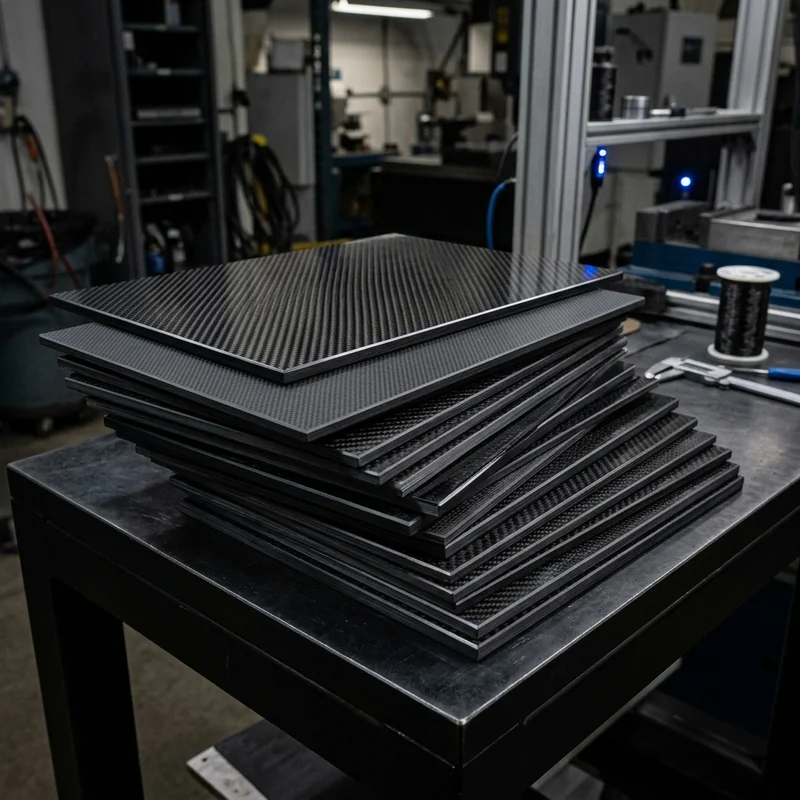
Carbon fiber standard plate-3k stripe
Lightweight, ultra-rigid standard sheets for drone fuselages, robot housings, facades and structural applications.

Carbon Fiber Plate — 3K Twill T700 1.5mm
Thin 1.5mm carbon fiber plate with 3K twill weave surface. Lightweight and stiff, commonly used for covers, panels, drone bodies, and applications requiring a premium aesthetic appearance.

Square Carbon Fiber Tube — 3K Twill T700
Square cross-section carbon fiber tube manufactured with 3K twill weave for torsional strength. Preferred for structural frames, trusses, and support columns where rectangular geometry offers design flexibility.

Carbon Fiber Plate — 3K Twill T700 3.0mm
Medium-thickness 3.0mm carbon fiber plate offering significantly higher load capacity while maintaining attractive 3K twill finish. Suitable for structural brackets, reinforcement plates, and load-bearing panels.
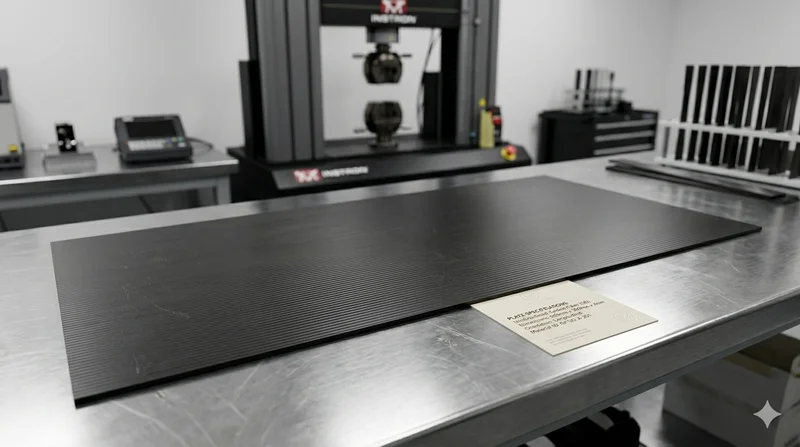
Carbon Fiber Plate — UD Unidirectional T700
Unidirectional carbon fiber plate with all fibers oriented in a single direction for maximum strength along the fiber axis. Essential for structural reinforcements, splints, and applications where load direction is predictable.