
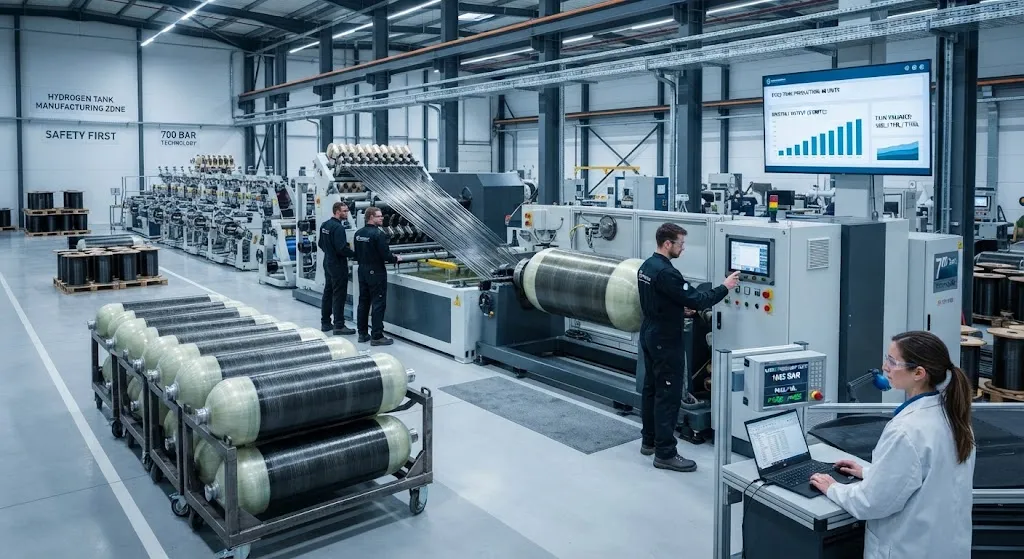
Hydrogen storage is the quiet bottleneck of the hydrogen economy. Electrolyzers, fuel cells and compressors attract attention because they are new subsystems with dramatic cost curves, but every hydrogen vehicle, refueling station and mobile power unit still needs a pressurized vessel,
Introduction
Hydrogen storage is the quiet bottleneck of the hydrogen economy. Electrolyzers, fuel cells and compressors attract attention because they are new subsystems with dramatic cost curves, but every hydrogen vehicle, refueling station and mobile power unit still needs a pressurized vessel, and that vessel is overwhelmingly a composite one. The market for composite Type IV and Type V hydrogen tanks reflects this reality: analysts put the segment at roughly USD 1.1 billion in 2025, expanding to USD 7.7 billion by 2035 at a compound annual growth rate of 20.9 percent.
Two structural facts dominate the numbers. First, Type IV tanks — polymer liner, carbon fiber reinforced overwrap — account for about 97 percent of the composite tank market, and designs that pair a non-metallic liner with carbon fiber reinforcement represent roughly 88 percent of that share. Second, the competitive field is consolidating around a small group of suppliers with industrialized fiber winding capacity: Hexagon Purus, FORVIA, ILJIN Hysolus and OPmobility. This article examines the data behind both facts and what they mean for buyers evaluating tank suppliers and for the carbon fiber supply chain feeding them.
Market Size and Growth Trajectory
The headline growth rate is high but not uniform across segments. The table below summarizes the market structure through 2035 across the two composite tank types and the applications that drive them:
| Segment | 2025 Value | 2035 Value | Share of Growth | Primary Demand Driver |
|---|---|---|---|---|
| Type IV tanks | ~$1.07B | ~$7.5B | ~97% | Fuel cell vehicles, fleet trucks, buses |
| Type V tanks | ~$30M | ~$200M | ~3% | Aerospace, zero-loss storage trials |
| CFRP-enhanced designs | ~88% of total | ~88-90% of total | — | Weight per stored kg of hydrogen |
| Stationary + mobile storage | split | shift toward mobile | — | Heavy-duty transport decarbonization |
Three dynamics explain the 20.9 percent compound growth. Heavy-duty transport is the largest pull: a Class 8 fuel cell truck typically carries eight to ten Type IV tanks at 350 bar, and fleet programs in Europe, China and North America are converting pilot volumes into serial production. Refueling infrastructure adds a secondary stream, since hydrogen stations buffer 500-900 kg of storage in composite vessels rather than managing cryogenic boil-off. Finally, the tank itself is becoming the design constraint for vehicle architecture, so automakers and truck OEMs are assigning earlier engineering cycles to storage integration than they did five years ago.
Why Type IV Holds a 97 Percent Share
The share concentration is an economics story more than a technology story. Type IV construction combines a high-density polyethylene liner with a fully composite load-bearing shell — carbon fiber wound over a polymer liner that can reach 700 bar service pressure. The cost per kilogram of stored hydrogen favors this configuration because the carbon fiber content is the dominant material cost and Type IV designs use the fiber in the hoop and helical layers where it contributes directly to pressure containment, with the liner providing a lightweight permeation barrier rather than structural support.
Type V tanks — linerless, fully composite — are the engineering frontier rather than the volume product. Removing the liner eliminates permeation channels at the boss interface and cuts roughly 10-15 percent of the system weight, which is attractive for aerospace and for applications where every gram counts. But linerless manufacturing requires a mandrel that must be removed from a fully closed vessel, and the certification trail for linerless designs is only beginning to accumulate. The market therefore shows a clear division: Type IV owns the volume, while Type V is a high-value niche growing from a small base, which is why its 2035 value remains under USD 200 million even in an otherwise explosive market.
Competitive Landscape and Supplier Strategies
The four leading suppliers illustrate the different routes to a defensible position in this market:
- Hexagon Purus builds its position on scaled Type IV production for heavy-duty trucks and buses, with manufacturing lines in Scandinavia and North America and a vertical integration into carbon fiber supply agreements that protect margin when volumes scale.
- FORVIA approaches storage as a systems play, combining Type IV vessels with hydrogen management components so that OEM customers buy a storage subsystem rather than a bare tank.
- ILJIN Hysolus brings Korean fuel cell vehicle experience and high-volume winding capacity that has been de-risked across passenger and commercial programs.
- OPmobility (formerly Plastic Omnium) leverages legacy plastic fuel-system manufacturing to industrialize polymer liner and tank assembly at automotive cost structures.
The strategic pattern across all four is the same: lock in carbon fiber supply, industrialize winding capacity, and bundle the tank into a larger vehicle or station package. New entrants can still win niche positions — Type V, very high-pressure terrestrial storage above 700 bar, or lightweight tanks for aerospace — but the volume share will keep concentrating in suppliers that can guarantee fiber allocations and defect-free winding at automotive scale.
Supply Chain Implications for Carbon Fiber Producers
The growth curve translates into a direct carbon fiber demand signal. A typical 350-bar Type IV truck tank uses 40-60 kg of carbon fiber, and a 700-bar passenger vehicle tank uses 30-45 kg; at the projected 2035 volumes, the segment will consume tens of thousands of tonnes of grade-appropriate fiber per year, mostly intermediate-modulus grades tuned for burst-strength efficiency. This is a materially different demand profile from aerospace: hydrogen tanks buy on cost per stored kilogram and cycle-life consistency rather than on premium modulus, which is why the same fiber producers that serve aerospace are now developing dedicated products for pressure vessel applications, and why Chinese producers with expanding high-volume capacity are well positioned for the storage segment's growth.
Frequently Asked Questions
Why is Type IV the dominant configuration in the composite hydrogen tank market?
Type IV dominates because it delivers the best balance of cost, weight and certification maturity. The polymer liner is cheap to produce, the carbon fiber overwrap carries the pressure load efficiently, and Type IV designs have accumulated decades of field and certification data across vehicle and stationary applications. Type V linerless tanks offer lower weight and were developed to remove permeation paths at the liner interface, but the manufacturing and certification base is much smaller, so Type V remains a high-value niche rather than a volume configuration.
Which companies lead the Type IV hydrogen tank market?
The leading suppliers are Hexagon Purus, FORVIA, ILJIN Hysolus and OPmobility. Hexagon Purus is strong in heavy-duty truck and bus storage with vertically integrated carbon fiber supply, FORVIA sells storage as a systems package, ILJIN Hysolus brings Korean fuel cell vehicle production experience, and OPmobility industrializes polymer liner production at automotive cost levels. Regional suppliers in China and Europe hold meaningful shares in their home markets, and consolidation through partnerships is expected as volumes scale.
How much carbon fiber does a composite hydrogen tank use?
A 350-bar Type IV tank for a heavy-duty truck typically uses 40-60 kg of carbon fiber, while a 700-bar passenger vehicle tank uses 30-45 kg. The fiber is usually an intermediate-modulus grade optimized for burst strength and cycle life rather than for maximum stiffness. Because the tank market buys on cost per stored kilogram, it represents a demand profile distinct from aerospace, with large-volume, price-sensitive procurement that suits expanding high-capacity fiber production.
Conclusion
The composite hydrogen tank market is growing from USD 1.1 billion to USD 7.7 billion over a decade, with Type IV holding the volume and CFRP-enhanced designs defining the weight economics of hydrogen storage. For buyers, the practical implications are clear: qualification data, guaranteed fiber supply and industrialized winding capacity matter more than headline numbers, and the four leading suppliers have all built their positions on exactly those three pillars. For the carbon fiber supply chain, the segment is a fast-growing industrial demand pool that rewards cost-efficient, cycle-consistent fiber over premium grades.
Companies evaluating hydrogen storage programs need material partners who understand both tank economics and fiber qualification. Review our carbon fiber product range for pressure vessel applications, or contact our engineering team to discuss fiber selection, qualification documentation and supply agreements for your storage program.
Part of topic
Related Articles
- Recycled Carbon Fiber Market Forecast 2030: Technology Maturity and Commercialization Path
- South Korea Carbon Fiber Market 2026: Hydrogen Economy and Shipbuilding Innovation
- Wind Turbine Blade Leading Edge Protection 2026: Polyurethane, Tape, and Metallic Shield Solutions
- China Carbon Fiber Overcapacity 2026: Price War Impact and Industry Consolidation
- India Carbon Fiber Market 2026: Wind Energy, Aerospace, and Defense Expansion
- PAN Precursor Market 2026: Acrylonitrile Supply and Carbon Fiber Cost Structure
Interested in Custom Carbon Fiber Products?
Contact our team for competitive pricing and technical specifications.
Get a QuoteRelated Products
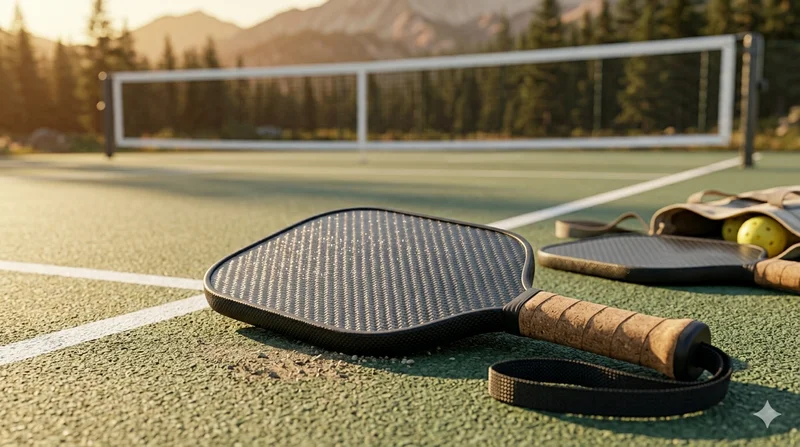
Carbon Fiber Pickleball Paddle
High-performance pickleball paddle with Toray T700 carbon fiber face and polypropylene honeycomb core. Delivers excellent power-to-weight ratio, spin generation, and vibration dampening for competitive play.
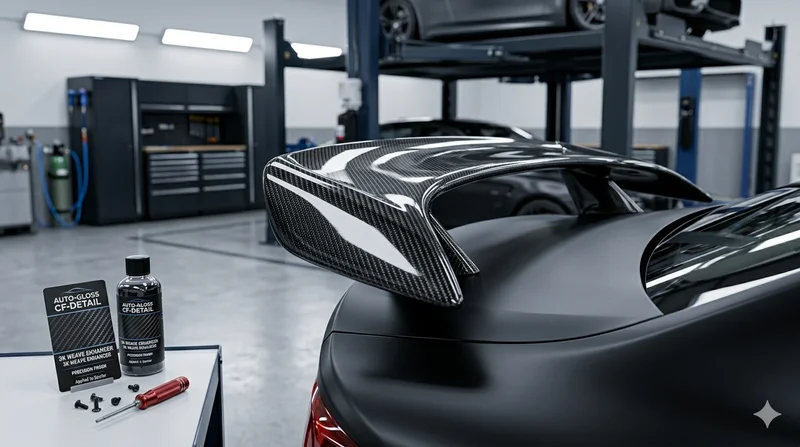
Carbon Fiber Automotive Spoiler
Automotive-grade carbon fiber spoiler manufactured using autoclave-cured pre-preg technology. Each spoiler is vacuum-bagged and oven-cured for optimal fiber-to-resin ratio, strength, and a flawless cosmetic finish.
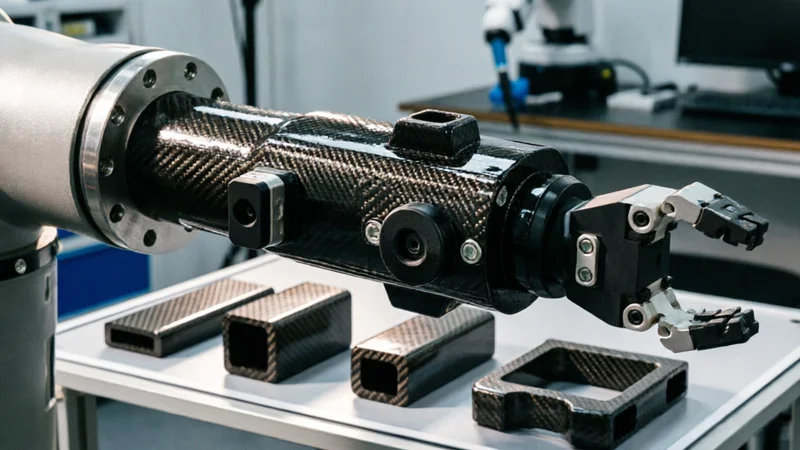
Carbon Fiber Robot End Effector Link — Custom Shape & Sensor Integration
Custom-shaped carbon fiber end effector links for robotic arms. Designed for automation integrators and research labs requiring lightweight, rigid connections between the robot wrist and gripper/tool. Can incorporate sensor mounting bosses, cable routing channels, and quick-change interfaces.

Custom Carbon Fiber Musical Instrument Parts
Carbon fiber components for musical instrument manufacturing offering superior dimensional stability, low weight, and consistent acoustic properties. We produce carbon fiber bows, guitar necks, violin chin rests, drum shells, and wind instrument bodies. Carbon fiber instruments are immune to humidity changes and temperature fluctuations that affect wooden instruments.
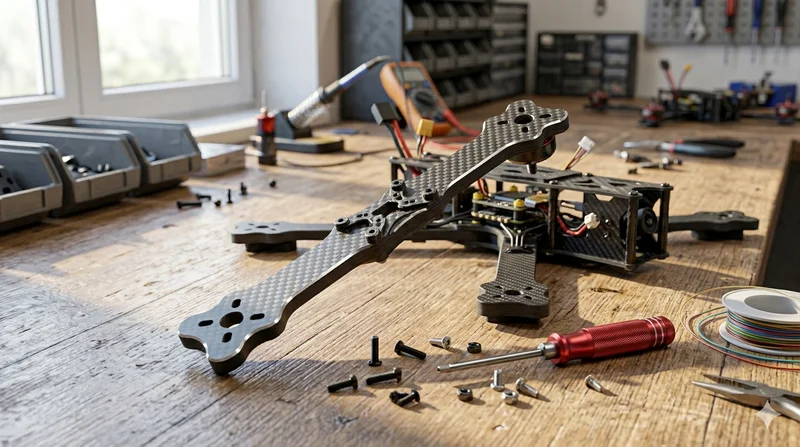
Carbon Fiber Drone Arm
Precision-molded carbon fiber drone arm combining unidirectional fiber for stiffness and woven layers for torsional strength. Designed for FPV, photography, and industrial drone platforms. Each arm is CNC-machined to exact specifications.