

For most of the past decade, European buyers of aerospace-grade carbon fiber treated the material almost like a commodity. Orders were placed against published price lists, lead times were measured in weeks, and multiple suppliers were kept in competition precisely so that no single mil
Introduction
For most of the past decade, European buyers of aerospace-grade carbon fiber treated the material almost like a commodity. Orders were placed against published price lists, lead times were measured in weeks, and multiple suppliers were kept in competition precisely so that no single mill could dictate terms. Two announcements in early 2026 suggest this era is ending. In January, Toray and Syensqo signed a five-year supply agreement covering aerospace-grade carbon fiber for European and North American composite applications. In March, Toray Carbon Fibers Europe confirmed a further capacity expansion at its Abidos production site in south-west France. Read separately, each announcement is incremental; read together, they describe a market reorganizing around committed capacity rather than spot availability.
This shift matters well beyond the two companies involved. Aerospace programs plan material requirements five to ten years out, and their supply-chain risk reviews increasingly treat fiber availability as a first-order constraint. A market where capacity is locked into long-term agreements changes what every buyer — from an airframer to a mid-size parts maker — can assume about price, allocation, and qualification stability. This article examines what the Toray and Syensqo moves actually do, and why they reinforce the position of Japanese fiber as the default qualified source for Western aerospace.
The Two Announcements
The two events are distinct in function but aligned in direction. The table below summarizes what each announcement does for the aerospace supply chain:
| Announcement | Timing | What it delivers | Effect on buyers |
|---|---|---|---|
| Toray-Syensqo five-year supply agreement | January 2026 | Committed aerospace-grade fiber volumes for European and North American composite programs | Predictable allocation and price visibility for participating programs |
| Toray Carbon Fibers Europe capacity expansion | March 2026 | Additional production capability at Abidos for T300 and high-modulus aerospace tow | More European-sourced volume, shorter logistics chains, reduced reliance on trans-Pacific shipment |
| Combined effect | 2026 onward | Locked European capacity behind a single qualified supplier's roadmap | Fewer spot options; stronger incentive to qualify within the locked network early |
The two announcements are complementary: the agreement provides demand certainty while the expansion provides supply certainty. Neither would have the same strategic weight without the other.
Long-Term Agreements as a De-Risking Tool
A five-year offtake agreement changes the economics of aerospace fiber procurement in a way that a purchase order never can. For the buyer, the agreement converts a recurring sourcing problem into a contractual entitlement: committed volumes, agreed pricing mechanics, and an allocation position that survives tight market periods. For the supplier, it converts a volatile order pipeline into a bankable demand base that justifies the capital for expansion. That is precisely the logic behind pairing the Syensqo agreement with the Abidos capacity increase — the contract underwrites the capacity.
The de-risking effect is strongest in exactly the scenario aerospace buyers fear most: a supply crunch. In a spot market, a shortage of aerospace-grade tow produces price spikes and allocation games, with each buyer scrambling for the same shrinking pool of qualified material. In a locked-capacity market, the participating buyers are protected by their contracts, and qualification becomes the entry ticket to the protected network. The result is that the risk does not disappear — it is redistributed toward buyers outside the agreements and toward any program that delays qualification.
What the Agreement Means for the Qualification Landscape
The strategic weight of the Toray-Syensqo arrangement goes beyond the two parties because aerospace fiber qualification is cumulative and sticky. A composite part qualified against a specific fiber grade carries that fiber's pedigree through years of flight service, and requalification of a substitute material is slow and expensive. Long-term agreements reinforce this inertia:
- Qualification momentum: programs already on Toray or Syensqo aerospace materials face no reason to disturb an arrangement that now carries multi-year supply commitments.
- New-program defaults: a design team selecting fiber for a new program reads the agreement as evidence of long-term availability, making the covered suppliers the low-risk default.
- Barrier to newcomers: a challenger supplier must now displace not only an incumbent's qualification record but also its contractual position, which is a far higher hurdle.
For European programs specifically, the arrangement answers a question that procurement offices have been asking since the post-2022 supply disruptions: where does the continent's aerospace-grade fiber come from in a decade of tight supply? The answer now has a contractual answer, not just a commercial one.
Why European Fiber Availability Is Geopolitically Significant
The de-risking conversation in Western aerospace is not only about commercial continuity; it is also about reducing dependence on concentrated and contested supply sources. Chinese producers now account for roughly half of global carbon fiber capacity, and Western defense and aerospace buyers have separately tightened rules around sourcing from politically constrained suppliers. Against that backdrop, a European-based expansion of a Japanese supplier — with aerospace-grade tow produced and qualified in France, under a long-term agreement with a European specialty-chemicals partner — carries geopolitical as well as commercial value.
It also consolidates the position that Japanese fiber already holds in Western aerospace. Toray's qualification deep history with European and American airframers, now paired with committed European capacity and a five-year demand agreement, makes the switch cost for any European program higher than it has ever been. The structural question is no longer whether European aerospace will use Japanese fiber, but how much of it can be secured under locked terms.
Frequently Asked Questions
Does the Syensqo agreement mean other fiber suppliers are now locked out of European aerospace?
Not in an absolute sense. Aerospace programs maintain dual-source strategies for critical materials, and qualification breadth remains a risk-management principle. What the agreement changes is the default: for programs that have not yet qualified an alternative, the covered supply is the path of least resistance, and the burden of proof has shifted to any challenger to justify why a program should hold exposure outside the locked network.
How does a five-year supply agreement differ from a standard multi-year purchase contract?
A purchase contract commits specific lots against specific delivery schedules; a five-year supply agreement commits the supplier to a capacity position and allocation priority over an extended horizon, with pricing mechanics typically tied to agreed formulas rather than spot indices. In practice the buyer gains allocation security and the supplier gains a bankable demand base, which is what allows expansion capital to be committed in the first place.
Does this shift toward locked capacity affect the price of aerospace-grade carbon fiber?
The effect is indirect. Locked agreements typically reduce volatility around the contracted volume but do not necessarily lower average prices, since the terms are negotiated against expected scarcity and include the cost of the capacity commitment itself. The more significant effect is on availability: buyers inside the agreements are protected from spot shortages, while buyers outside them face a tighter residual market, which generally reinforces the value of qualifying early.
Conclusion
The Toray Carbon Fibers Europe expansion and the Syensqo agreement are two halves of the same decision: European aerospace fiber procurement is moving from spot competition to locked capacity. The contractual certainty, the European production footprint, and the reinforcement of an already-dominant qualification position together de-risk the supply chain in the exact scenario — tight supply — that aerospace buyers most fear. For procurement teams the practical lesson is to qualify within the locked network early; for material specifiers the lesson is that availability, not just price or performance, has become the decisive criterion in fiber selection.
For buyers evaluating their own aerospace supply strategy, review our aerospace-grade carbon fiber product range and qualification documentation, or contact our engineering team to discuss specification and supply planning for long-horizon programs.
Part of topic
Related Articles
- Recycled Carbon Fiber Market Forecast 2030: Technology Maturity and Commercialization Path
- South Korea Carbon Fiber Market 2026: Hydrogen Economy and Shipbuilding Innovation
- Wind Turbine Blade Leading Edge Protection 2026: Polyurethane, Tape, and Metallic Shield Solutions
- China Carbon Fiber Overcapacity 2026: Price War Impact and Industry Consolidation
- India Carbon Fiber Market 2026: Wind Energy, Aerospace, and Defense Expansion
- PAN Precursor Market 2026: Acrylonitrile Supply and Carbon Fiber Cost Structure
Interested in Our Products?
Contact our team for competitive pricing and technical specifications.
Get a QuoteRelated Products
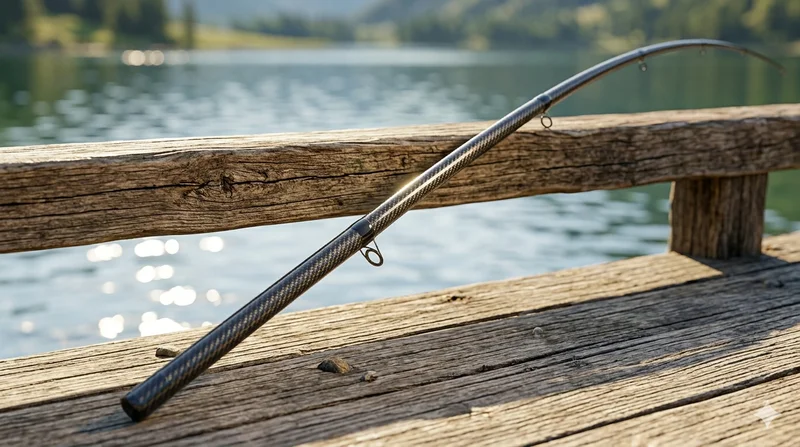
Carbon Fiber Fishing Rod Blank
High-quality carbon fiber fishing rod blank manufactured from multiple grades of Toray carbon fiber cloth. Available in a wide range of lengths, powers, and actions for freshwater and saltwater applications. Suitable for OEM rod building.
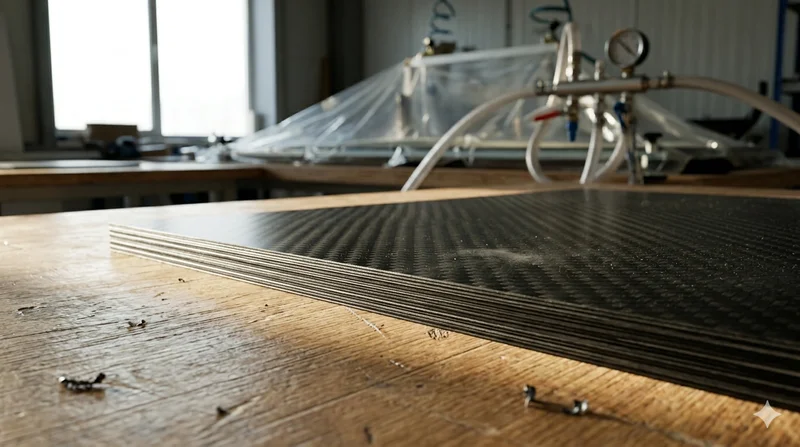
Carbon Fiber Plate — 3K Twill T700 3.0mm
Medium-thickness 3.0mm carbon fiber plate offering significantly higher load capacity while maintaining attractive 3K twill finish. Suitable for structural brackets, reinforcement plates, and load-bearing panels.
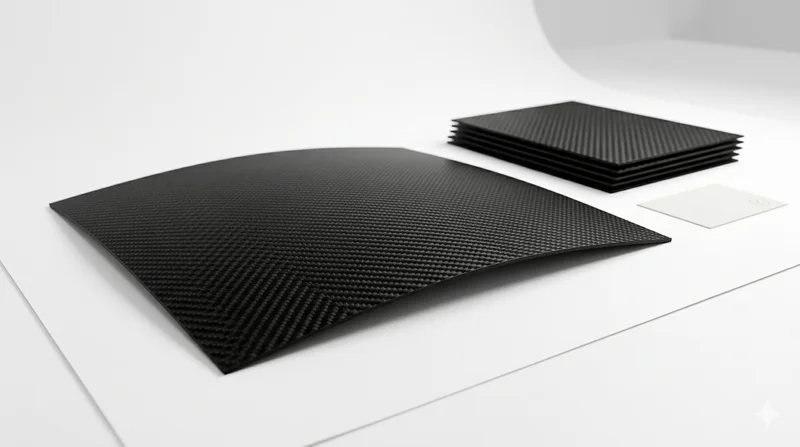
Carbon Fiber Plate — 3K Twill T700 1.5mm
Thin 1.5mm carbon fiber plate with 3K twill weave surface. Lightweight and stiff, commonly used for covers, panels, drone bodies, and applications requiring a premium aesthetic appearance.
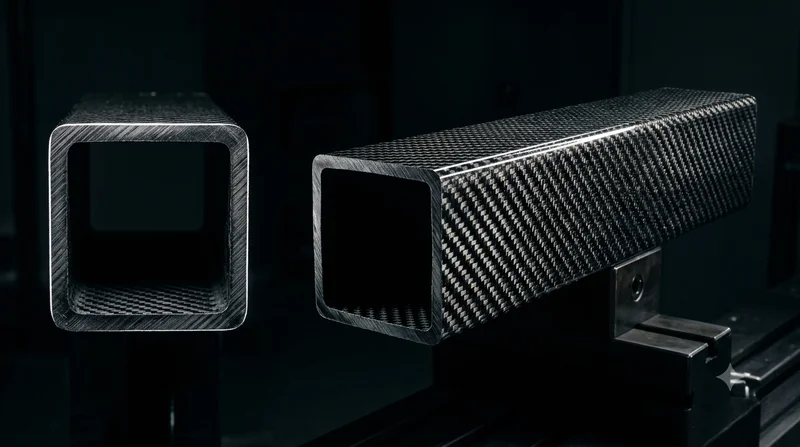
Square Carbon Fiber Tube — 3K Twill T700
Square cross-section carbon fiber tube manufactured with 3K twill weave for torsional strength. Preferred for structural frames, trusses, and support columns where rectangular geometry offers design flexibility.
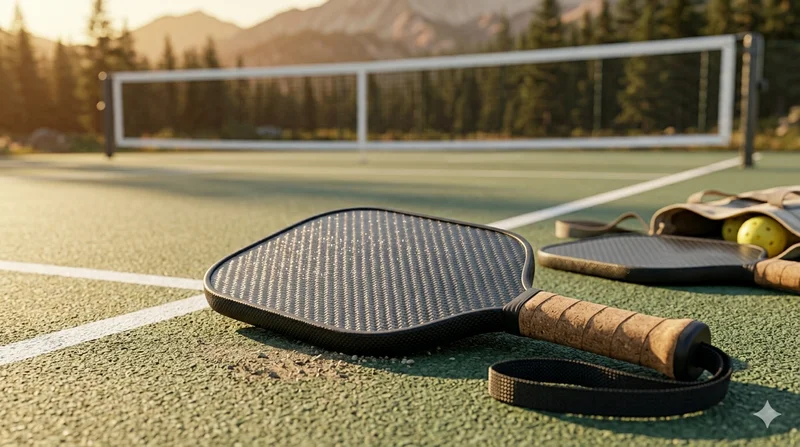
Carbon Fiber Pickleball Paddle
High-performance pickleball paddle with Toray T700 carbon fiber face and polypropylene honeycomb core. Delivers excellent power-to-weight ratio, spin generation, and vibration dampening for competitive play.