
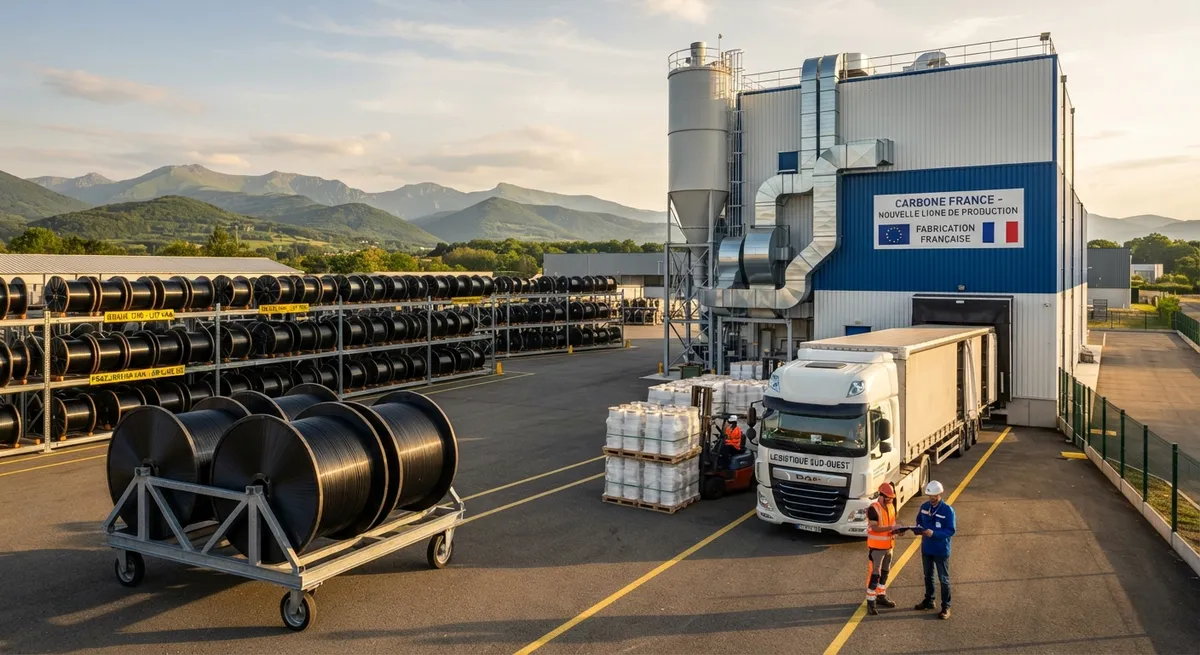
Toray Carbon Fibers Europe has announced the operational start-up of a new carbon fiber production facility at its Abidos plant in South-West France. The facility produces T300 and high-modulus (HM) carbon fibers and increases the plant's total annual capacity from 5,000 to 6,000 tonnes
Introduction
Toray Carbon Fibers Europe has announced the operational start-up of a new carbon fiber production facility at its Abidos plant in South-West France. The facility produces T300 and high-modulus (HM) carbon fibers and increases the plant's total annual capacity from 5,000 to 6,000 tonnes, with the new capacity becoming fully operational in the second half of 2026. The investment, originally announced by parent company Toray Industries in 2023, marks a milestone in the group's long-term strategy to build a robust local supply chain in Europe.
For composite buyers across aerospace, defense, energy, and premium automotive, the significance is concrete: a regional source of high-modulus carbon fiber that reduces dependence on intercontinental logistics, shortens lead times, and strengthens supply security at a moment when European aircraft production rates are ramping. This article examines what the expansion adds, what it means for the European carbon fiber market, and how buyers can position their sourcing strategies around it.
The Abidos Site and the New Production Line
The Abidos plant, located in the Lacq basin of South-West France, is the largest carbon fiber production site in Europe. Toray Carbon Fibers Europe operates the facility as the regional arm of Toray Industries, covering the full tow range from 3K to 24K across standard-modulus, intermediate-modulus, and high-modulus fibers. The new line adds dedicated T300 and HM capacity on top of the existing production base, which also supports increased availability of intermediate-modulus fibers as the plant rebalances its portfolio.
The expansion was driven by demand signals that have been building for several years: higher build rates for commercial aircraft, particularly in secondary structures and engines; growth in centrifuge production for energy applications; satellites; and high-end automotive programs. Each of these segments values high-modulus fiber for its stiffness-to-weight ratio, and each has been sensitive to the logistics exposure of sourcing from Asia. Localizing HM production in Europe directly addresses that exposure.
The addition of dedicated T300 capacity is equally important, because T300 is the industry's workhorse grade for aerospace secondary structures, engine components, and industrial applications that require consistent mechanical properties at moderate stiffness. By pairing a high-volume T300 line with a high-modulus line on the same site, the Abidos plant can serve both the throughput-driven and the stiffness-driven ends of the European market from a single qualified source, which simplifies qualification programs that would otherwise need two separate suppliers and two logistics chains.
Capacity Math: From 5,000 to 6,000 Tonnes
The 1,000-tonne capacity increase at Abidos is strategically significant in a market where incremental tonnage is the binding constraint on European independence. The table below places the Abidos expansion in the context of the European supply landscape:
| Parameter | Before expansion | After expansion | Change |
|---|---|---|---|
| Abidos plant capacity | 5,000 t/yr | 6,000 t/yr | +1,000 t/yr (+20%) |
| New line products | — | T300 + high-modulus (HM) | New capability |
| Full commissioning | — | Second half 2026 | Ramp phase |
| Tow range available | 3K-24K | 3K-24K | Unchanged |
| Grade spectrum | Standard to high modulus | Standard to high modulus | Portfolio deepening |
| Intermediate-modulus availability | Constrained | Increased | Portfolio rebalance |
The arithmetic matters for planning purposes. A 1,000-tonne increment equals roughly the annual fiber consumption of a large commercial aerospace secondary-structure program or a meaningful share of European wind and energy applications. When combined with the portfolio rebalancing that frees intermediate-modulus capacity, the effective availability gain is larger than the headline tonnage suggests.
Why High-Modulus Localization Matters
High-modulus carbon fiber is a different supply chain from standard modulus. HM fiber is produced in lower volumes, with tighter process windows, and historically a larger share of European HM consumption has been served by imports than is the case for standard tow. Import dependence carries three costs for buyers: longer lead times that extend inventory buffers, freight and tariff exposure that adds cost volatility, and supply continuity risk during geopolitical or logistics disruptions.
The Abidos HM line changes each of these. Regional production compresses lead times, reduces the buffer stock that buyers must hold against transit variability, and anchors a European source that can be qualified into existing programs without transatlantic or trans-Pacific shipping considerations. For qualification-dependent industries like aerospace, the ability to source HM fiber from a stable European supplier with established pedigree materially simplifies the supply chain approval process.
ISCC Certification and Sustainability Positioning
Beyond capacity, the Abidos site is advancing sustainability credentials that matter to European customers under increasing environmental disclosure pressure. The site operates under International Sustainability and Carbon Certification (ISCC) principles, enabling mass-balance accounting of bio-based and recycled feedstock through the production chain. For downstream customers, ISCC-aligned sourcing supports Scope 3 reporting, eco-design requirements, and the growing number of tenders that weight supply chain sustainability alongside technical performance.
The combination of expanded local capacity and certified sustainable feedstock positions the Abidos plant to serve both the volume-driven and the sustainability-driven segments of the European market. Buyers consolidating their fiber sourcing around ISCC-aligned suppliers reduce the administrative burden of proving feedstock provenance across multiple vendors.
What the Expansion Means for Buyers
The practical implications of the Abidos expansion for procurement and engineering teams include:
- Shorter lead times: Regional production reduces transit time for T300 and HM grades, allowing smaller safety stock and faster response to schedule changes.
- Reduced logistics risk: European sourcing removes exposure to intercontinental freight delays, port congestion, and customs friction.
- Better qualification paths: A European source of record simplifies customer approval processes for programs that require documented supply chain stability.
- Intermediate-modulus availability: Portfolio rebalancing at Abidos increases access to intermediate-modulus grades that sit between standard and full HM in the stiffness spectrum.
- Sustainability alignment: ISCC-certified feedstock supports Scope 3 reporting and sustainability-weighted procurement.
- Rate ramp support: The 6,000-tonne ceiling gives European programs headroom to increase production rates without immediately re-opening import dependency.
Frequently Asked Questions
How much capacity does the Toray Abidos expansion add?
The expansion adds 1,000 tonnes of annual capacity, taking the Abidos plant from 5,000 to 6,000 tonnes per year. The new production line manufactures T300 and high-modulus (HM) carbon fibers, and the new capacity becomes fully operational in the second half of 2026. Toray Carbon Fibers Europe describes the site as offering the largest production capacity and portfolio in Europe, from standard to high modulus in tow sizes from 3K to 24K.
Why is local high-modulus carbon fiber production important for European buyers?
Historically, a larger share of European high-modulus fiber consumption has been served by imports than is the case for standard tow, which adds lead time, freight cost, and supply continuity risk. Local HM production at Abidos shortens lead times, reduces the buffer stock buyers must hold, and anchors a European source of record that simplifies qualification and supply chain approval processes in aerospace, defense, energy, and premium automotive programs.
When will the new Abidos capacity be fully operational?
Toray Carbon Fibers Europe announced the operational start-up of the new facility in the first quarter of 2026, and the new production capacity will be fully operational in the second half of 2026. The investment was originally announced by Toray Industries in 2023 as part of its long-term strategy to secure a reliable local supply chain in Europe and improve the availability of TORAYCA high-performance carbon fibers.
Conclusion
The Toray Abidos expansion is a structural change in the European carbon fiber supply landscape, not an incremental capacity addition. Taking the plant to 6,000 tonnes per year with dedicated T300 and high-modulus lines, full commissioning in the second half of 2026, and ISCC-aligned sustainability accounting gives European buyers a regional source that shortens lead times, cuts logistics exposure, and simplifies qualification. For programs that depend on high-modulus fiber, the sourcing arithmetic has changed in their favor.
For procurement and engineering teams evaluating their fiber sourcing strategy, the question is now how to lock in the benefits of localized European supply: qualify the regional source, rebalance inventory around shorter lead times, and align feedstock sustainability accounting where tenders require it. Explore our range of carbon fiber fabrics and reinforcement formats, or contact our engineering team to discuss how a reliable European fiber supply fits your program's requirements.
Part of topic
Related Articles
- Carbon Fibre Sheet Supplier UK: Sourcing Options and Specification Checklist
- Carbon Fiber Sheets Near Me Suppliers: Local Stock vs Factory Direct
- Filament Wound Epoxy Tubes: Industry Standards and Compliance Requirements
- Carbon Fiber Dealers Near Me: What a Good Dealer Actually Adds
- Carbon Fiber Supplies Near Me: Local Sourcing Without Compromising Spec
- Carbon Fiber for Sale: Online Platforms and Direct Sales Channel Comparison
Interested in Our Products?
Contact our team for competitive pricing and technical specifications.
Get a QuoteRelated Products
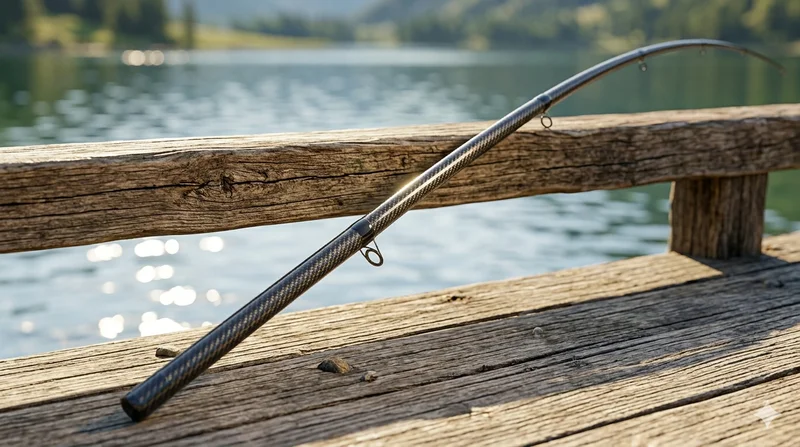
Carbon Fiber Fishing Rod Blank
High-quality carbon fiber fishing rod blank manufactured from multiple grades of Toray carbon fiber cloth. Available in a wide range of lengths, powers, and actions for freshwater and saltwater applications. Suitable for OEM rod building.
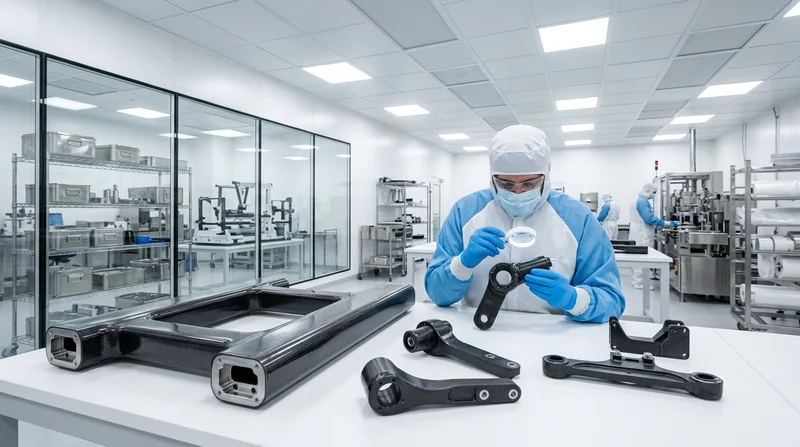
Custom Carbon Fiber Medical Device Components
Medical-grade carbon fiber components manufactured for imaging equipment, surgical instruments, and patient support systems. Carbon fiber's radiolucency (X-ray transparency) and high strength-to-weight ratio make it ideal for CT scanner beds, wheelchair frames, surgical robot arms, and MRI-compatible accessories. Biocompatible resin systems available.
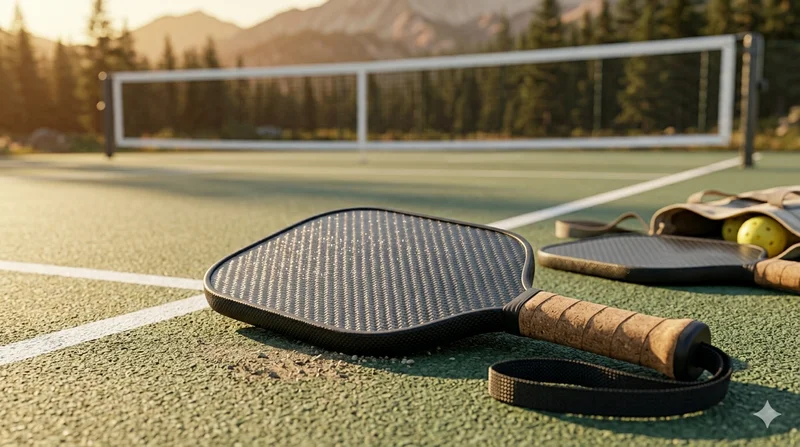
Carbon Fiber Pickleball Paddle
High-performance pickleball paddle with Toray T700 carbon fiber face and polypropylene honeycomb core. Delivers excellent power-to-weight ratio, spin generation, and vibration dampening for competitive play.
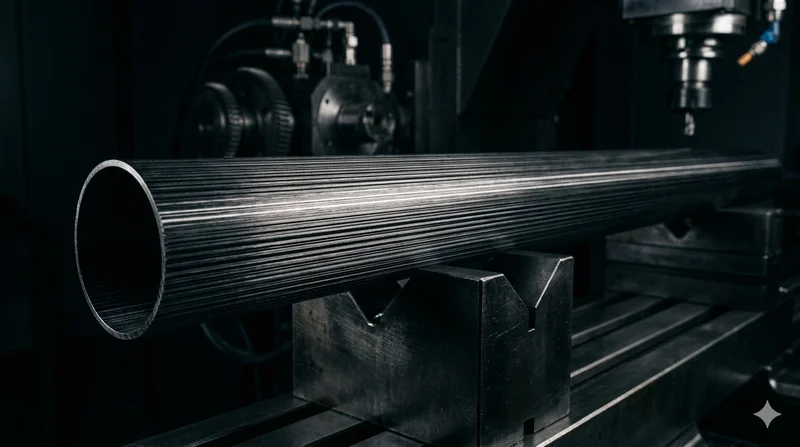
Round Carbon Fiber Tube — UD Unidirectional T700
Unidirectional (UD) round tube with all fibers aligned axially for maximum longitudinal stiffness. Ideal for applications requiring high bending rigidity with minimal weight, such as shafts, struts, and structural reinforcements.
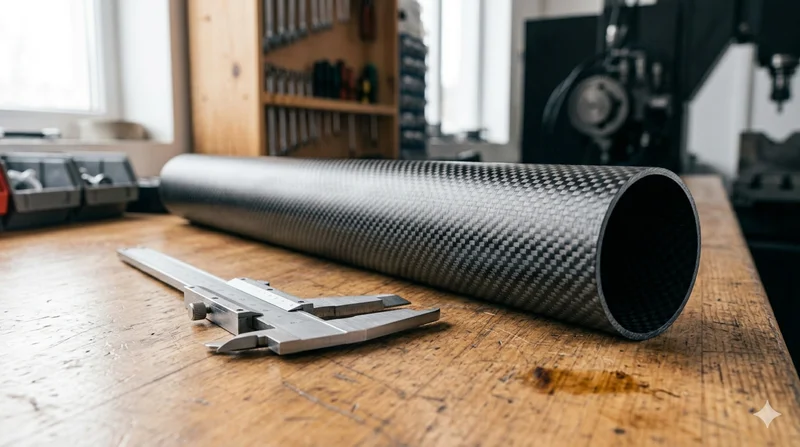
Round Carbon Fiber Tube — 3K Plain Weave T700
Standard round carbon fiber tube manufactured from Toray T700 grade fiber with 3K plain weave. Offers balanced strength and stiffness for general industrial applications including robotics, automation, sports equipment, and aerospace structures.