
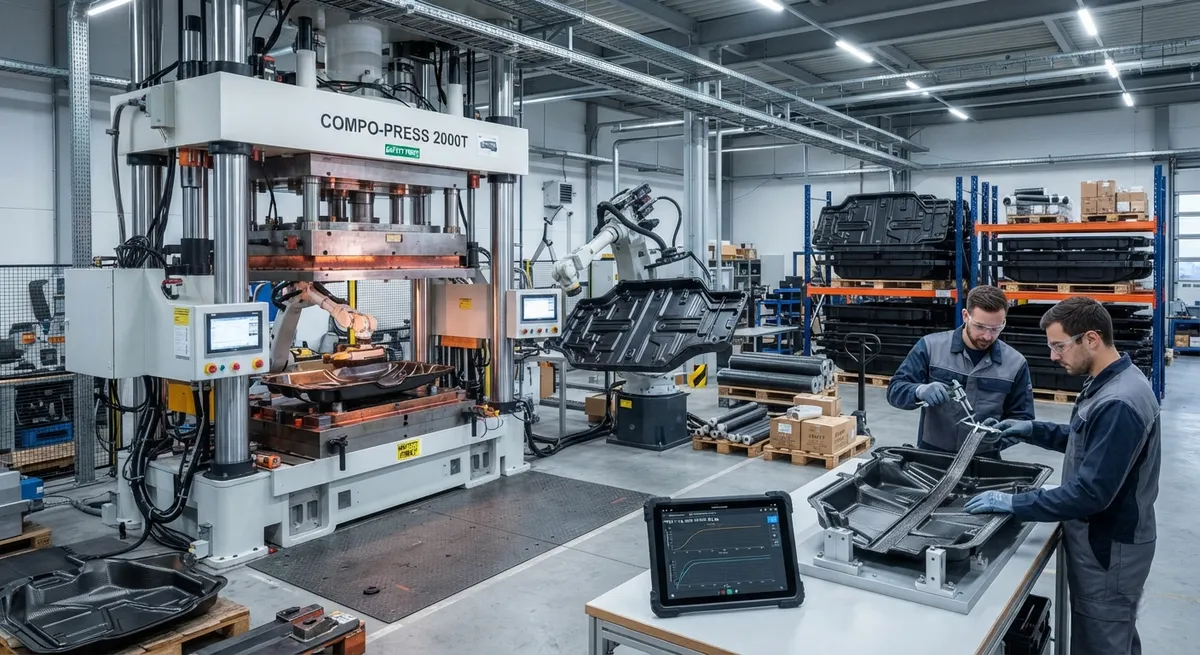
Electric vehicle programs measure manufacturing viability in seconds of cycle time, not kilograms of mass saved. A battery enclosure is one of the largest single parts on an EV platform — a typical C-segment housing spans more than 1,400 millimeters in length and carries crash, crush, a
Introduction
Electric vehicle programs measure manufacturing viability in seconds of cycle time, not kilograms of mass saved. A battery enclosure is one of the largest single parts on an EV platform — a typical C-segment housing spans more than 1,400 millimeters in length and carries crash, crush, and thermal-runaway requirements in the same structure. When the first generation of battery trays was engineered, the production volumes did not justify tooling for anything faster than welded aluminum extrusion assemblies. That constraint has flipped. High-volume platforms now plan hundreds of thousands of units per year, and the part that previously consumed dozens of welding, sealing, and coating steps must instead come off a molding press in minutes.
Thermoplastic composites are the route that resolves this tension. Direct long-fiber thermoplastic (D-LFT) compression molding processes a PA6 matrix with reinforcement levels of roughly 45% long glass fiber, and the same process accepts carbon fiber and continuous-fiber thermoplastic sheets for local structural reinforcement. The result is a battery tray that combines one-shot molding, integrated cooling-plate channels, and structural stiffness in a single press cycle that routinely beats five minutes.
Why Cycle Time Became the Constraint
Steel and aluminum enclosures are assembled, not molded. An aluminum tray begins as extruded profiles that are machined, MIG-welded into a frame, laser-welded for leak tightness, and cathodic-dip coated for corrosion. Each of those steps adds press-side time, floor space, and tolerance risk. Studies of large-format housings consistently attribute the cost of metal enclosures to the number of secondary operations — welding, punching, riveting, sealing — rather than to the raw material itself.
Thermoplastic molding collapses that process chain. The extruded thermoplastic charge is placed into a heated mold by robot and formed under hydraulic pressure; features such as fasteners, cooling plates, and stiffening ribs are integrated into the tool, eliminating secondary assembly. Because the polymer is corrosion-resistant and electrically insulating, the cathodic dip coating step disappears entirely, and fewer sealing joints reduce leak risk across the pack. The cycle is bracketed by heating, forming, and cooling, and modern compression presses hold the complete molding step in the four to six minute window for large-format trays.
D-LFT and the One-Shot Molding Route
Direct long-fiber thermoplastic molding is the workhorse process for these trays. In D-LFT, the polymer matrix — typically PA6, as in LANXESS Durethan B24CMH2.0 — is compounded with reinforcement rovings in a continuous extrusion step immediately before the mold, which preserves fiber length better than pre-compounded pellets. The random long-fiber mat provides isotropic stiffness in the plane of the tray floor, while continuous-fiber reinforced thermoplastic sheets such as Tepex are placed locally where crash loads and mounting points demand directional strength. The Envalior and Kautex joint development that fitted a full high-voltage battery tray into a VW ID.3 combined D-LFT PA6 with 45% long glass fiber and Tepex local reinforcement in a single compression step.
The same molding infrastructure scales to carbon fiber. Short and long carbon fiber compounds in the $8-10 per kilogram range enter the identical D-LFT and compression process, raising stiffness per kilogram where the glass-fiber baseline is not enough. The process family is therefore not a single material decision but a graded set: glass D-LFT for cost-driven trays, carbon-fiber-modified D-LFT where mass targets tighten, and hybrid layouts with continuous-fiber inserts at crash-critical locations. All of them share the one-shot molding step and its sub-5-minute takt.
Material Cost and Performance at a Glance
Selecting a battery tray material is a three-way trade between cost per part, structural performance, and manufacturing cycle. The table compares the main routes on the numbers that procurement teams actually quote:
| Parameter | Aluminum extrusion assembly | Glass D-LFT PA6 | Carbon-modified D-LFT |
|---|---|---|---|
| Compound cost per kg | N/A (machined profiles) | $3-5 | $8-10 (short CF) |
| Molding / assembly cycle | Hours (weld + seal + coat) | 4-6 minutes | 4-6 minutes |
| Secondary operations | 10-15 (weld, drill, seal, coat) | 1-2 (inserts, leak test) | 1-2 (inserts, leak test) |
| Specific stiffness | Baseline | ~Glass-fiber baseline | +30-50% vs glass D-LFT |
| Weight vs aluminum | Baseline | Up to 50% lighter | Up to 50% lighter |
| Corrosion protection | Required (cataphoretic dip) | Not required | Not required |
| Leak-tight integration | Many joints | Molded, few joints | Molded, few joints |
The pattern is consistent: the thermoplastic routes trade a slightly higher material cost per kilogram for a dramatic cut in cycle time and secondary operations. At high volume, the press-side savings dominate, which is why the process economics favor thermoplastic trays as production rates climb.
Why Thermoset and Autoclave Routes Fall Short
Structural battery parts can also be made from carbon fiber epoxy prepreg, but the process economics do not survive volume scaling. Autoclave cure times run for hours per part, prepreg requires freezer storage and thaw management, and each cure cycle occupies an expensive pressure vessel. Vacuum-bag-only thermoset processing shortens the equipment constraint but keeps long in-mold cure times and adds labor-intensive bagging and debulking steps. Against the D-LFT route, thermoset processes deliver excellent stiffness but fail the takt requirement that defines modern EV line rates. Thermoplastic molding also retains a decisive end-of-life advantage, since the matrix can be remelted and the fiber reclaimed rather than pyrolyzed out of a cross-linked matrix.
Representative Applications
Fast-cycle thermoplastic battery trays are being adopted across the electrified vehicle spectrum:
- Cell-to-pack (CTP) enclosures: Full composite trays that mount cells directly to the pack, cutting module hardware and improving volumetric energy density by reducing clearance between cells and housing.
- Full BEV floor trays: Large-format one-shot trays above 1,150 millimeters in length with continuous-fiber local inserts at sills and cross-member mounting points.
- Hybrid and PHEV subunit trays: Smaller trays up to roughly 750 millimeters that use glass D-LFT alone, where stiffness requirements are met without carbon reinforcement.
- Cover and underbody protection: Molded thermoplastic covers with integrated heating and thermal-management channels, replacing stamped metal covers and their sealing gaskets.
- Commercial vehicle packs: Longer, lower-volume trays where the one-shot tool amortizes across fewer units but the assembly savings still justify the switch.
Frequently Asked Questions
How fast is a thermoplastic battery tray molding cycle?
Large-format D-LFT compression molding of battery trays holds the complete molding step in roughly four to six minutes for parts over 1,100 millimeters in length, and shorter subunit trays mold faster. The comparison that matters is total process chain time: an aluminum enclosure still requires hours of welding and sealing across multiple workstations, while the thermoplastic route compresses the part into a single press cycle with one or two secondary steps for inserts and leak testing.
Can a thermoplastic tray meet structural EV battery requirements?
Yes, when the material layout is designed for the load case. Glass D-LFT PA6 with roughly 45% long fiber provides isotropic stiffness for the tray floor, and continuous-fiber reinforced thermoplastic sheets placed at sills, cross members, and mounting points carry directional crash loads. The D-LFT and Tepex combination has passed system-level shock, crush, and vibration testing in prototypes, including a full working high-voltage tray retrofitted into a VW ID.3. Thermal-runaway management is handled separately with cooling plates and insulation layers integrated into the molding.
How does thermoplastic tray cost compare with aluminum at high volume?
Compounds cost more per kilogram — roughly $3-5 per kg for glass D-LFT and $8-10 per kg for carbon-modified D-LFT against machined aluminum profiles — but total part cost is dominated by assembly labor and tooling at volume. Eliminating ten to fifteen secondary operations, dropping cathodic dip coating, and cutting cycle time from hours to minutes shifts the total-cost crossover decisively in favor of thermoplastic at scale, with further savings from fewer sealing joints and reduced leak-test scrap.
Conclusion
Fast-cycle thermoplastic battery trays turn the biggest structural part of an EV platform into a one-shot molding operation. D-LFT PA6 compression molding delivers sub-5-minute takt at large format, integrated feature molding eliminates a long tail of welding and sealing steps, and continuous-fiber local reinforcement closes the stiffness gap that glass fiber alone cannot reach. Where mass targets tighten, carbon-modified D-LFT compounds enter the same process at $8-10 per kilogram, making the step from glass to carbon reinforcement a tooling-neutral decision.
For engineering teams sizing a new battery enclosure program, the decision framework is clear: define the stiffness envelope, compare press-side cycle cost against metal assembly cost, and select the reinforcement system — glass, carbon-modified, or hybrid — that meets the mass budget. Explore our range of carbon fiber fabrics and thermoplastic-compatible reinforcement formats, or contact our engineering team to discuss reinforcement specifications for your tray program.
Part of topic
Related Articles
- Carbon Fiber Drone Blades and Propellers: Stiffness, Balance and Noise Reduction
- Fiberglass Filament Wound Tubes: Cost-Effective Alternative to Carbon Fiber
- Filament Wound Epoxy Tube Design: Wall Thickness, Fiber Angle and Load Optimization
- Filament Wound Epoxy Tubes: Testing Standards and Quality Assurance
- Filament Wound Epoxy Tubes Manufacturing: Process and Quality Control
- Filament Wound Fiberglass Tube: Process Parameters and Performance vs Carbon Fiber
Interested in Our Products?
Contact our team for competitive pricing and technical specifications.
Get a QuoteRelated Products

Carbon Fiber Plate — 3K Twill T700 3.0mm
Medium-thickness 3.0mm carbon fiber plate offering significantly higher load capacity while maintaining attractive 3K twill finish. Suitable for structural brackets, reinforcement plates, and load-bearing panels.

Square Carbon Fiber Tube — 3K Twill T700
Square cross-section carbon fiber tube manufactured with 3K twill weave for torsional strength. Preferred for structural frames, trusses, and support columns where rectangular geometry offers design flexibility.
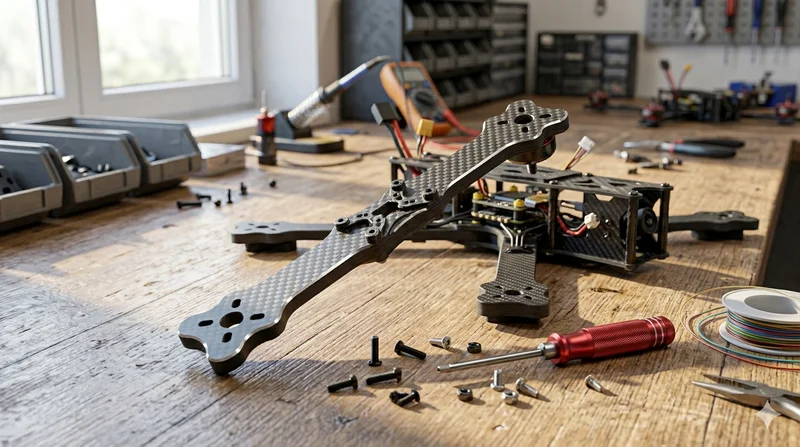
Carbon Fiber Drone Arm
Precision-molded carbon fiber drone arm combining unidirectional fiber for stiffness and woven layers for torsional strength. Designed for FPV, photography, and industrial drone platforms. Each arm is CNC-machined to exact specifications.
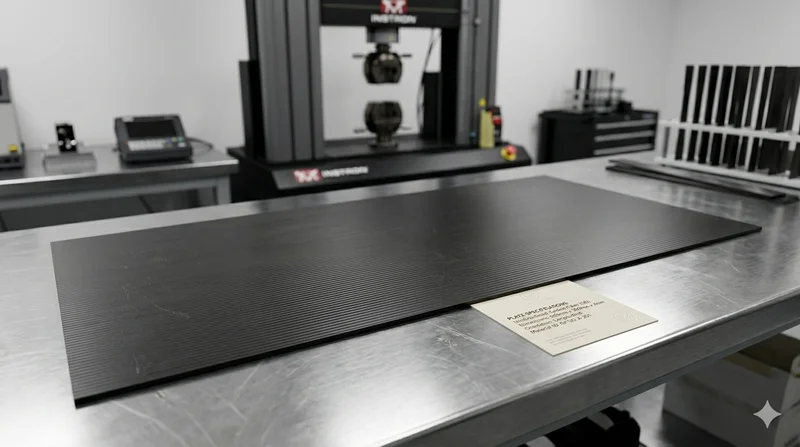
Carbon Fiber Plate — UD Unidirectional T700
Unidirectional carbon fiber plate with all fibers oriented in a single direction for maximum strength along the fiber axis. Essential for structural reinforcements, splints, and applications where load direction is predictable.
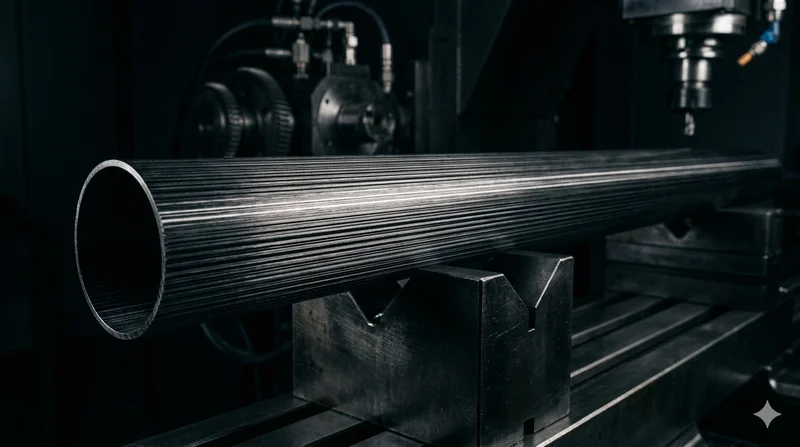
Round Carbon Fiber Tube — UD Unidirectional T700
Unidirectional (UD) round tube with all fibers aligned axially for maximum longitudinal stiffness. Ideal for applications requiring high bending rigidity with minimal weight, such as shafts, struts, and structural reinforcements.