
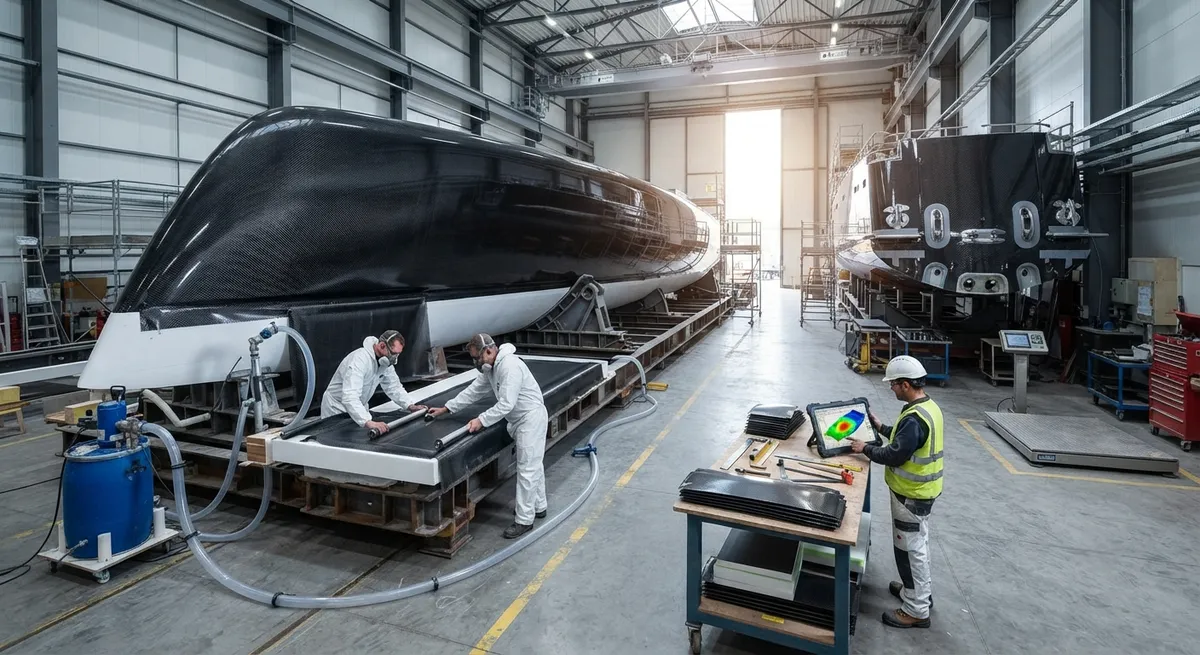
Superyacht design has converged on a simple equation: weight is luxury. A 50-meter yacht that shaves 30 tonnes from its hull and superstructure gains speed, range, fuel economy, and payload capacity for tenders, toys, and guest amenities. No material delivers more of that saving per kil
Introduction
Superyacht design has converged on a simple equation: weight is luxury. A 50-meter yacht that shaves 30 tonnes from its hull and superstructure gains speed, range, fuel economy, and payload capacity for tenders, toys, and guest amenities. No material delivers more of that saving per kilogram than carbon fiber, which is why the world's most advanced yards — from the Netherlands' superyacht builders to Italian shipyards — increasingly specify carbon fiber hulls, decks, and structural bulkheads for vessels above 40 meters.
Carbon fiber is not a plug-and-play material for marine structures. It demands a different construction philosophy than fiberglass or aluminum: controlled layup environments, engineered core materials, and careful attention to galvanic corrosion where carbon meets metal. This article compares the three dominant construction routes — prepreg-autoclave, resin infusion, and hybrid approaches over structural foam core — and provides practical specification guidance for builders, naval architects, and yacht owners.
Why Carbon Fiber Wins Above 40 Meters
The case for carbon fiber strengthens with vessel size because weight savings compound. A lighter hull needs a smaller engine for the same speed, which weighs less itself, which allows a smaller fuel load for the same range, which lightens the structure further. In displacement and semi-displacement hulls, this compounding can multiply the initial carbon fiber saving by 1.5-2x at the level of total vessel weight.
Stiffness matters as much as weight. Carbon fiber's modulus-to-density ratio is roughly double that of aluminum, so a carbon fiber hull can be both lighter and stiffer, reducing hull flex, noise, and vibration in the accommodation areas. For owners who measure luxury in silence and stability, this is the difference between a hull that feels alive in a seaway and one that feels like a solid platform.
| Parameter | Fiberglass (E-glass/Vinyl Ester) | Aluminum 5083 | Carbon Fiber / Foam Core |
|---|---|---|---|
| Relative hull weight | 1.0 (baseline) | 0.75-0.85 | 0.55-0.65 |
| Stiffness (EI per unit weight) | Baseline | ~1.2x | ~2.0x |
| Fatigue behavior | Good | Susceptible to weld fatigue | Excellent (no welds) |
| Corrosion | None | Galvanic + weld corrosion | Galvanic — requires isolation |
| Typical construction | Hand layup / infusion | Welded plate | Prepreg or infusion + foam core |
| Weight saving vs fiberglass | — | 15-25% | 35-45% |
For a 50-meter yacht, the 35-45% structural weight reduction versus fiberglass typically translates into 25-40 tonnes of savings before compounding — enough to fund the material premium through lower engine, fuel, and systems costs, and to add measurable speed and range.
Construction Route 1: Prepreg-Autoclave
The highest-performance route uses carbon fiber prepreg cured in an autoclave under heat and pressure. It delivers the lowest void content — typically below 1% — and the highest fiber volume fraction, around 60%, which maximizes strength and stiffness per kilogram. This is the route of choice for racing yacht hulls, carbon masts, and the most demanding structural bulkheads, and it is now used for entire hulls on several production superyachts above 40 meters.
The trade-offs are real: autoclaves impose a size limit, molds and ovens are expensive, and the process is inherently batch-oriented. Builders typically reserve prepreg-autoclave for the components that benefit most — the hull shell below the waterline, the deck structure, and structural grids — while using infusion elsewhere.
Construction Route 2: Resin Infusion over Foam Core
Resin infusion — typically vacuum-assisted resin transfer (VARTM) — has become the workhorse of large carbon fiber marine structures. Dry carbon fiber is laid over a structural foam core, sealed in a vacuum bag, and impregnated with resin drawn through the laminate. The process produces large, void-controlled sandwich panels with a carbon-to-core bond that is superior to secondary bonding, at a fraction of the tooling cost of prepreg-autoclave.
Structural PVC or PET foam cores, often with balsa options for local stiffness, provide the shear web between carbon skins. Sandwich construction is what makes carbon fiber economical at yacht scale: thin, highly stressed carbon skins separated by a thick, light core give a stiffness-to-weight ratio that solid laminates cannot approach. Typical marine cores range from 60-250 kg/m³ depending on location, with higher density cores under concentrated loads such as mast steps, keel attachments, and appendage roots.
- Controlled environment: Infusion requires clean, temperature-controlled layup halls because the dry carbon is exposed to dust and moisture before resin application.
- Core design: Foam core grading from the waterline to the sheer line balances stiffness and weight; denser cores handle keel and rig loads.
- Galvanic isolation: Carbon fiber is cathodic to aluminum and most metals, so every carbon-metal interface needs isolation (isolation washers, epoxy barriers, or glass ply scrims) to prevent galvanic corrosion.
Hybrid Approaches and Deck Structures
Most production superyachts above 40 meters do not choose a single route. A typical hybrid specification uses prepreg-autoclave for the structural grid and high-load frames, infusion over foam core for the hull shell and main deck, and either carbon or aluminum for the superstructure depending on weight targets and cost. This tiered approach captures most of the weight saving at controlled cost.
Deck structures deserve special attention because they are large, flat, and highly loaded. A carbon fiber / foam core main deck for a 50-meter yacht can weigh 30-40% less than an equivalent aluminum deck while providing a flat, vibration-free surface for the interior ceiling below. Deck paneling, hatch structures, and structural bulkheads follow the same sandwich logic, and the stiffness improvement directly reduces the primary structure needed beneath them.
Frequently Asked Questions
Is carbon fiber worth the premium for a production superyacht?
For vessels above 40 meters, usually yes. The 35-45% structural weight reduction against fiberglass — and roughly 25-35% against aluminum — compounds through engine sizing, fuel load, and systems, so the total vessel weight saving can reach 1.5-2x the initial structural saving. That translates into higher speed, longer range, or additional guest payload. The material premium is increasingly offset by lower engine and systems costs, and by fuel savings over the vessel's life. For racing and semi-displacement yachts, carbon fiber is effectively standard.
What is the risk of galvanic corrosion with carbon fiber hulls?
Carbon fiber is more noble (cathodic) than aluminum and most structural metals, so in a saltwater environment it drives galvanic corrosion of the metal it touches. The standard mitigation is isolation: every carbon-metal interface uses isolation washers, epoxy barriers, or glass ply scrims to break electrical continuity. With correct isolation and bonded isolation plates at through-hull fittings, corrosion risk is managed to a negligible level — this is routine practice in the marine carbon fiber industry.
Prepreg-autoclave or resin infusion: which is better for a large hull?
There is no universal answer. Prepreg-autoclave gives the highest fiber volume fraction (around 60%) and lowest void content (below 1%), maximizing strength and stiffness per kilogram — best for the highest-loaded components and racing hulls. Resin infusion over foam core produces large sandwich panels at a fraction of the tooling cost, with excellent skin-core bonds, and is the economic choice for hull shells and decks on production yachts. Most builders use both: autoclave for the structural grid and critical frames, infusion for the skins and decks.
Conclusion
Carbon fiber hull and deck structures are no longer exotic in the superyacht world — they are the reference solution for builders of 40-meter-plus vessels who compete on performance, range, and comfort. Prepreg-autoclave delivers maximum performance where loads are highest; resin infusion over structural foam core delivers large, economical sandwich structures for hulls and decks; and hybrid specifications capture most of the weight saving at controlled cost. The 35-45% weight reduction against fiberglass, compounded through the systems and fuel load, pays for the material premium and returns measurable speed and range.
If your yard or design office is evaluating carbon fiber for a hull, deck, or superstructure program, browse our carbon fiber product range for woven fabrics, unidirectional laminates, and sandwich solutions, or contact our engineering team to discuss material selection, core grading, and galvanic isolation planning for your next vessel.
Part of topic
Related Articles
- Carbon Fiber Tube for Sale: Comparing Listings and Avoiding Bad Specs
- Carbon Fiber Engine Parts: High-Temperature Performance for Racing and Performance Vehicles
- Carbon Fiber Body Parts: Automotive Exterior Panels and Structural Components
- Carbon Fiber Drone Body Manufacturing: Monocoque Design and Production Methods
- Carbon Fiber Drone Parts Supplier: FPV Frames, Arms and Structural Components
- Filament Wound Epoxy Tubes: Industrial Applications from Oil and Gas to Aerospace
Interested in Our Products?
Contact our team for competitive pricing and technical specifications.
Get a QuoteRelated Products
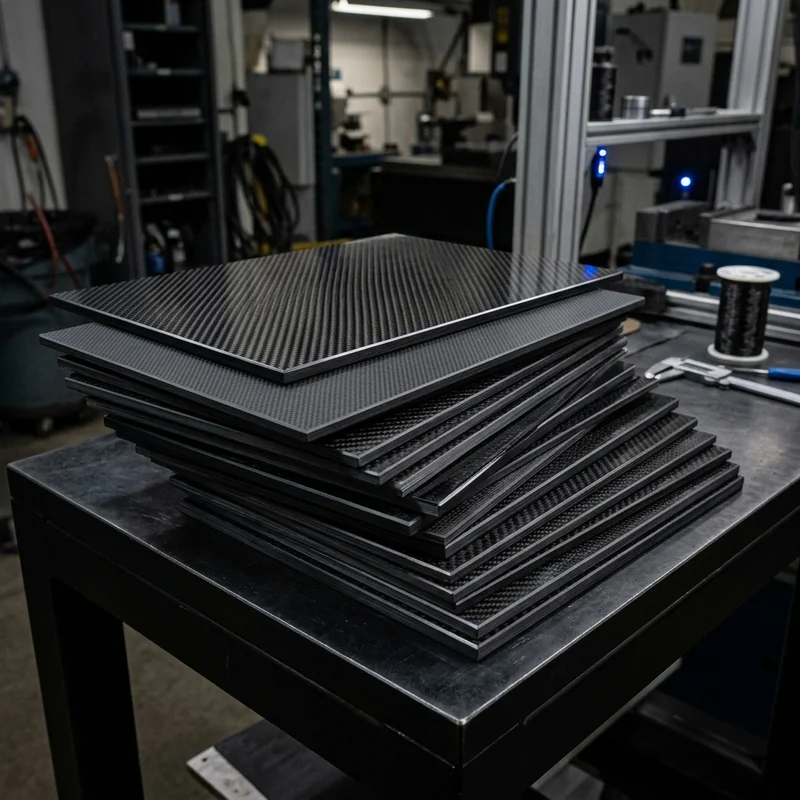
Carbon fiber standard plate-3k stripe
Lightweight, ultra-rigid standard sheets for drone fuselages, robot housings, facades and structural applications.
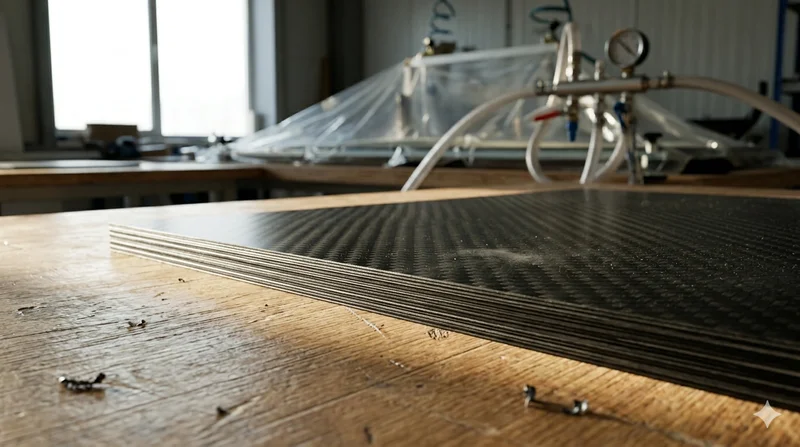
Carbon Fiber Plate — 3K Twill T700 3.0mm
Medium-thickness 3.0mm carbon fiber plate offering significantly higher load capacity while maintaining attractive 3K twill finish. Suitable for structural brackets, reinforcement plates, and load-bearing panels.
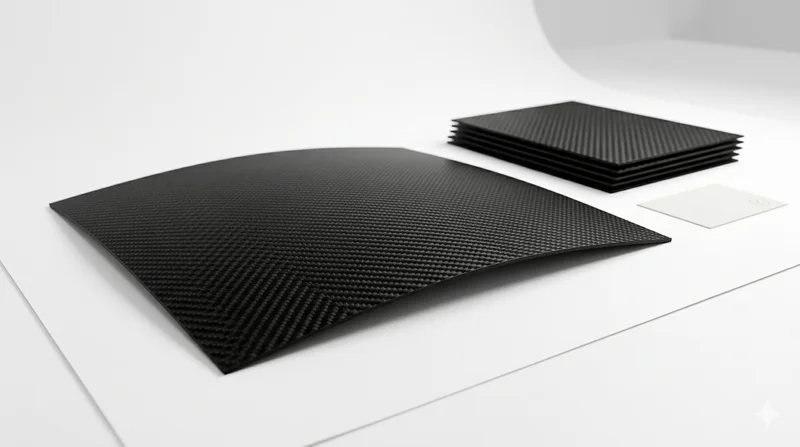
Carbon Fiber Plate — 3K Twill T700 1.5mm
Thin 1.5mm carbon fiber plate with 3K twill weave surface. Lightweight and stiff, commonly used for covers, panels, drone bodies, and applications requiring a premium aesthetic appearance.
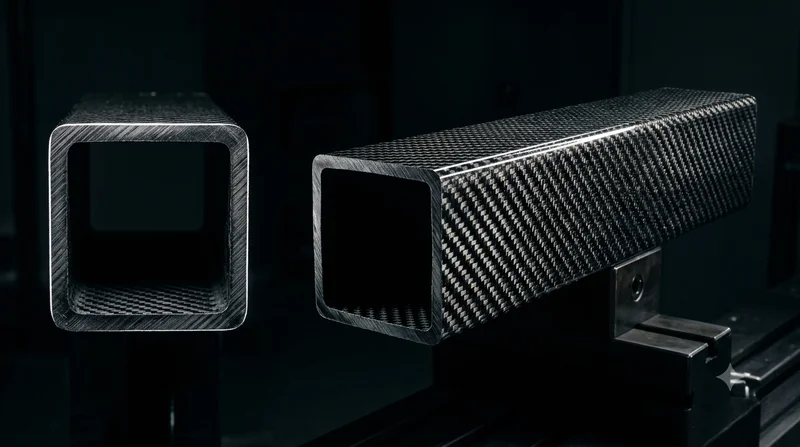
Square Carbon Fiber Tube — 3K Twill T700
Square cross-section carbon fiber tube manufactured with 3K twill weave for torsional strength. Preferred for structural frames, trusses, and support columns where rectangular geometry offers design flexibility.
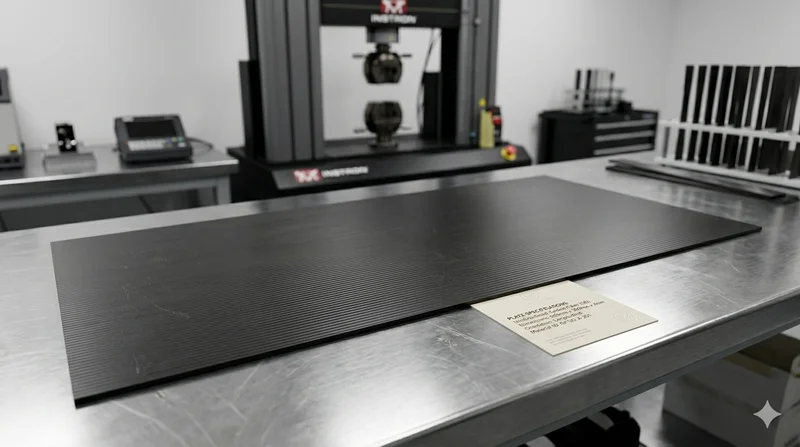
Carbon Fiber Plate — UD Unidirectional T700
Unidirectional carbon fiber plate with all fibers oriented in a single direction for maximum strength along the fiber axis. Essential for structural reinforcements, splints, and applications where load direction is predictable.