
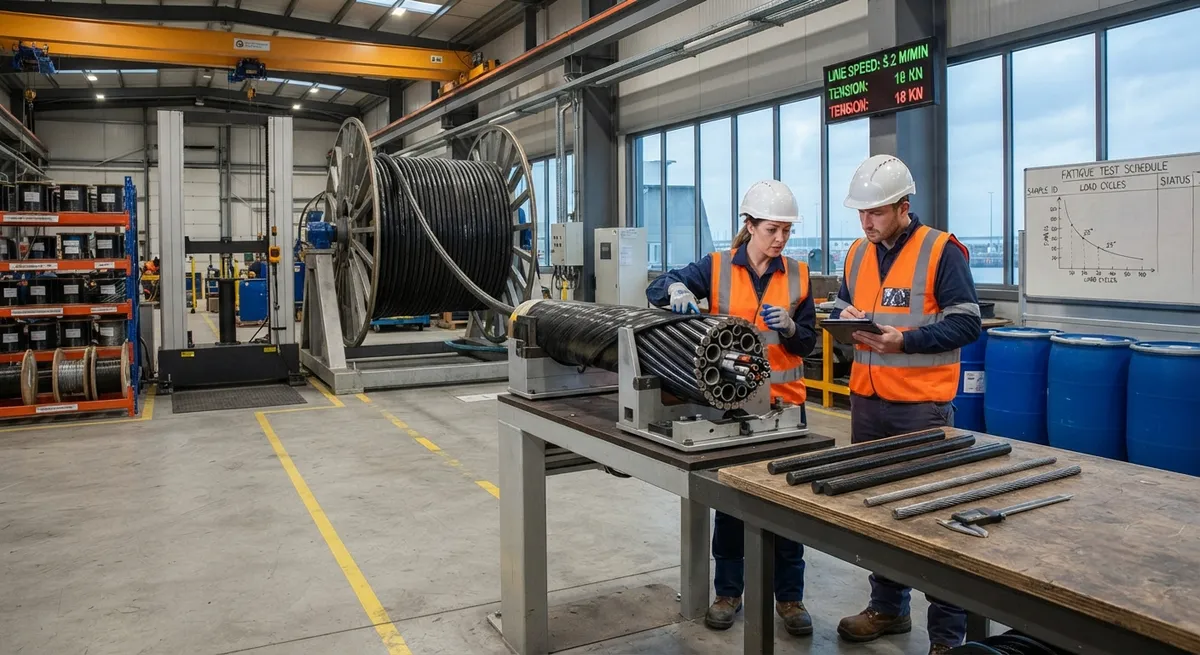
A detailed B2B technical analysis of carbon fiber composite strength members used in subsea umbilical cables for offshore oil & gas and renewable energy applications. This article examines the engineering requirements for tensile armor layers, fatigue life under cyclic bending and tension loads, deep-water hydrostatic pressure performance, corrosion resistance in seawater environments, and qualification testing protocols. Includes comparative data on steel wire, aramid, and carbon fiber strength member systems.
Introduction
Subsea umbilical cables are the lifelines of offshore oil & gas production and offshore wind energy installations. These cables bundle together hydraulic lines, electrical power conductors, fiber-optic communication cables, and chemical injection tubes, connecting surface platforms or floating production vessels to subsea wells, manifolds, and control systems. The structural integrity of the umbilical depends critically on its strength members — the tensile armor layers that bear axial loads during installation, operation, and recovery.
Traditional steel wire strength members have been the industry standard for decades, but they face inherent limitations: high weight that increases installation tension demands, susceptibility to corrosion fatigue in seawater, and a limited bending radius that constrains installation vessel compatibility. Carbon fiber reinforced polymer (CFRP) strength members have emerged as a compelling alternative, offering a density of 1.55–1.65 g/cm³ versus 7.85 g/cm³ for steel, a tensile strength of 2,400–3,800 MPa in the fiber direction, and exceptional fatigue resistance in corrosive environments.
The global subsea umbilical market was valued at approximately $3.2 billion in 2025, with an estimated CAGR of 6.8% through 2032, driven by deep-water field development in the Gulf of Mexico, offshore Brazil, West Africa, and the North Sea, as well as the rapid expansion of floating offshore wind farms. Carbon fiber strength members currently account for an estimated 4–7% of new umbilical installations, with this share projected to reach 15–20% by 2030 as manufacturing costs decrease and qualification data accumulates.
This article provides an engineering examination of CFRP strength members for subsea umbilicals, covering material selection, fatigue performance, hydrostatic pressure behavior, corrosion resistance, manufacturing processes, and qualification testing.
Umbilical Cable Architecture and Strength Member Requirements
A typical subsea umbilical cable for deep-water applications (1,500–3,000 m water depth) consists of the following layers from the inside out:
- Core bundle: Steel tubes for hydraulic and chemical injection (6–25 mm diameter), electrical power conductors (600–3,600 V), fiber-optic cables, and fillers — all helically wound or cabled together.
- Inner sheath: Extruded thermoplastic layer (typically HDPE or PA-11, 3–8 mm thick) providing water blocking and mechanical protection.
- Strength member layer: Tensile armor wires or rods helically applied at a lay angle of 20–35 degrees relative to the cable axis. This layer carries the axial tension load.
- Outer sheath: Extruded thermoplastic layer (HDPE, 4–10 mm thick) providing abrasion resistance and additional water blocking.
The strength member layer is the most structurally critical component. It must support the umbilical's own weight, the weight of attached subsea hardware, and dynamic loads from platform motion or ocean currents. For a 3,000 m deep-water umbilical with a steel core bundle weighing 35–55 kg/m in seawater, the strength member must support an installed wet weight of 105–165 metric tons at the top termination. The safety factor requirement is typically 2.0–2.5 against ultimate tensile strength for static applications, and 3.0–4.0 for dynamic riser applications.
| Property | Steel Wire (Galvanized, 1,770 MPa) | Aramid Fiber (Kevlar 49) | Carbon Fiber (T700 grade) | Unit |
|---|---|---|---|---|
| Density | 7.85 | 1.44 | 1.55–1.60 | g/cm³ |
| Tensile strength (fiber direction) | 1,770–1,960 | 2,760–3,000 | 3,500–4,900 | MPa |
| Tensile modulus | 195–210 | 112–131 | 230–240 | GPa |
| Elongation at break | 5–8 | 2.2–2.8 | 1.5–2.0 | % |
| Fatigue strength (10⁷ cycles, R=0.1, seawater) | 180–250 | 400–500 | 600–900 | MPa |
| Corrosion rate in seawater | 0.05–0.20 mm/year (requires protection) | Negligible | Negligible | — |
| Linear weight in seawater (per kN capacity) | 4.5–5.5 | 0.8–1.0 | 0.7–0.9 | kg/m |
| Minimum bend radius (relative to steel) | 1.0× (baseline) | 0.6–0.7× | 0.5–0.6× | D/d ratio |
| Typical raw material cost | $3–8 | $25–45 | $30–60 | USD/kg |
| Creep at 50% UTS after 1 year | <0.1% | 0.3–0.5% | 0.1–0.3% | strain |
Fatigue Performance Under Cyclic Loading
Subsea umbilical cables in dynamic riser configurations — connecting floating platforms to seabed infrastructure — are subjected to complex cyclic loading throughout their 20–30 year design life. This loading includes: wave-induced vessel heave (periods 5–15 seconds, amplitudes 1–10 m), vortex-induced vibrations (VIV) from ocean currents, low-frequency drift oscillations, and thermal expansion/contraction cycles. The fatigue loading spectrum for a top-section dynamic umbilical typically spans 10⁷ to 10⁸ stress cycles over its lifetime.
Carbon fiber strength members demonstrate exceptional fatigue performance compared to steel. In tension-tension fatigue testing (R-ratio = 0.1, frequency = 1–5 Hz) conducted in artificial seawater at 4°C (representative of North Sea seabed conditions), CFRP rods with a 60% fiber volume fraction showed no fatigue failure after 10⁷ cycles at a maximum stress of 60% of ultimate tensile strength (UTS). By contrast, galvanized steel wires of equivalent tensile capacity typically fail between 10⁵–10⁶ cycles at the same percentage of UTS in seawater, due to corrosion fatigue crack initiation at surface defects.
Several factors contribute to CFRP's superior fatigue resistance:
- Corrosion immunity: Carbon fiber is electrochemically noble and does not corrode in seawater. The epoxy matrix provides a barrier against moisture ingress, with equilibrium moisture absorption of 0.5–1.5% by weight, causing minimal degradation to mechanical properties.
- High stiffness-to-weight ratio: The higher modulus of carbon fiber (230–240 GPa) relative to steel (195–210 GPa) means that for an equivalent axial stiffness, the CFRP strength member requires less cross-sectional area, reducing both weight and hydrodynamic diameter.
- Fiber-dominated axial behavior: The longitudinal fatigue response of CFRP is governed by the carbon fibers themselves, which have a fatigue endurance limit of 70–80% of their static strength, compared to 30–50% for structural steel in benign environments.
- Consolidated rod construction: Modern CFRP strength members are produced as pultruded rods or helically wound tapes, minimizing stress concentrations from wire-wire contact points that plague steel wire armor layers.
However, CFRP strength members exhibit sensitivity to transverse loading and impact. The transverse compressive strength of unidirectional CFRP is only 150–250 MPa (approximately 5–10% of its longitudinal strength), making it vulnerable to damage from cable handling equipment, improper spooling, or pinch loads between steel tubes in the core bundle. Protection against these loads is achieved through a combination of optimized lay angles, sacrificial outer layers, and careful cable design that minimizes inter-layer contact stresses.
Deep-Water Hydrostatic Pressure Performance
At water depths of 2,000–3,000 m, hydrostatic pressure reaches 20–30 MPa (200–300 bar). This external pressure imposes a compressive stress on the strength member layer that must be carefully managed. For unidirectional CFRP rods, the transverse compressive strength (150–250 MPa) is sufficient to withstand these pressures directly, but buckling stability of individual rods within the cable cross-section must be verified.
The primary concern at extreme water depths is micro-buckling of carbon fibers under combined axial compression and lateral pressure — a failure mode known as fiber kinking. Testing by several umbilical manufacturers has demonstrated that pultruded CFRP rods (6–15 mm diameter) maintain structural integrity at hydrostatic pressures exceeding 50 MPa (equivalent to 5,000 m water depth) when the rod diameter-to-length ratio and lay angle are optimized.
The low coefficient of thermal expansion (CTE) of carbon fiber (−0.5 to 1.0 ppm/°C in the fiber direction) is an additional advantage for deep-water umbilicals. As the cable traverses from the warm surface (20–30°C) to the cold seabed (0–4°C), the differential thermal contraction between the strength member and steel core tubes is significantly reduced compared to aramid or steel strength members, which have CTEs of −2 to −4 ppm/°C and 11–13 ppm/°C respectively.
Corrosion Resistance and Long-Term Durability
One of the most compelling arguments for CFRP strength members in subsea umbilicals is their inherent corrosion resistance. Steel wires require a three-layer protection system: (1) galvanization (zinc coating, 100–300 g/m²), (2) an inter-layer anti-corrosion grease or gel, and (3) a cathodic protection (CP) system using sacrificial anodes (zinc or aluminum) or impressed current. Even with these measures, corrosion fatigue remains the dominant failure mechanism for steel-strengthened dynamic umbilicals, and CP system monitoring adds significant operational cost.
CFRP strength members eliminate the need for CP systems in the armor layer. The carbon fibers are electrochemically stable in seawater, and the epoxy matrix acts as a barrier to moisture and ionic species. Accelerated aging tests per ISO 23936-2 and NORSOK M-710 have shown that CFRP rods maintain 85–95% of their initial tensile strength after 6 months of immersion in synthetic seawater at 90°C (the standard accelerated test protocol simulating 25+ years of service). Moisture uptake plateaus at 0.5–1.5% by weight after 1–2 years of immersion, with no further degradation observed in long-term exposure studies extending to 10+ years.
The primary degradation mechanism for CFRP in seawater is hydrolysis of the epoxy matrix at elevated temperatures. For standard bisphenol-A epoxy systems, significant hydrolysis (causing >10% strength loss) requires temperatures above 100°C combined with high moisture content — conditions rarely encountered in subsea umbilical service, where the maximum operating temperature is typically 60–80°C at the topside termination. For higher-temperature applications, epoxy novolac or polyurethane resin systems provide enhanced hydrolysis resistance.
Manufacturing and Installation Considerations
The manufacturing of CFRP strength members for subsea umbilicals primarily uses the pultrusion process, where continuous carbon fiber tows are impregnated with epoxy resin, pulled through a heated die to cure, and cut to length. Key process parameters include:
- Fiber volume fraction: Typically 60–65% for optimal balance of tensile strength, transverse properties, and fatigue resistance.
- Rod diameter: 4–16 mm, with 6–12 mm being most common. The diameter is limited by the exothermic reaction heat generated during curing of thick sections.
- Production speed: 0.5–2.0 m/min, yielding a single-line production capacity of 200–800 tons per year.
- Surface finish: As-pultruded or sand-coated to improve adhesion to the surrounding thermoplastic sheath layers.
Installation of CFRP-strengthened umbilicals requires modifications to standard handling procedures. The superior bending flexibility of CFRP rods (minimum bend radius 0.5–0.6× that of steel for equivalent axial stiffness) allows the use of smaller-diameter installation sheaves and chutes, reducing the required deck footprint on installation vessels. The reduced linear weight — approximately 0.7–0.9 kg/m per kN of axial capacity in seawater, versus 4.5–5.5 kg/m for steel — reduces the required vessel crane capacity and top tension during deployment, enabling installation from smaller, lower-cost vessels.
Offshore installation trials conducted in 2022–2024 on the Norwegian Continental Shelf demonstrated that CFRP-strengthened umbilicals can be deployed at rates of 200–400 m/hour, comparable to steel-strengthened umbilicals, with no special handling equipment beyond modified caterpillar tensioners and bend restrictors.
Qualification Testing and Standards
Qualification of CFRP strength members for subsea umbilical service follows a structured program per industry standards including ISO 13628-5 (subsea umbilicals), API 17E (subsea umbilicals), DNV-ST-F201 (dynamic risers), and the joint industry project (JIP) guidelines for composite umbilical strength members. A typical qualification program includes:
- Characterization testing: Tensile, compression, shear, and flexure properties at −20°C to +90°C; fiber volume fraction, void content, Tg by DMA.
- Fatigue testing: Tension-tension (R=0.1), flexural fatigue, and combined tension-bending fatigue in synthetic seawater at 4°C and 60°C, targeting 10⁷ cycles minimum, with S-N curves generated at 3–5 stress levels.
- Creep and stress rupture: Long-term (≥1,000 hours) creep testing at 40–60% UTS; residual strength evaluation after creep exposure.
- Hydrostatic pressure: External pressure cycling (0 to 30 MPa) and sustained pressure exposure at maximum design depth plus safety margin.
- End-fitting qualification: Full-scale tensile and fatigue testing of the terminated rod assembly, including the epoxy socket or wedge grip termination system.
- Fluid compatibility: Immersion in seawater, methanol (for hydrate inhibition), and produced water at design temperatures for 6 months minimum.
The total cost of a full qualification program for a new CFRP strength member system is estimated at $3–8 million, with a timeline of 18–30 months. This investment is typically shared among the carbon fiber manufacturer, the umbilical cable supplier, and the end-user operator through JIP structures.
Frequently Asked Questions
How does the cost of CFRP umbilical strength members compare to steel?
At the raw material level, carbon fiber costs $30–60/kg compared to $3–8/kg for galvanized steel wire. However, when the complete system is considered — including the CP system, corrosion monitoring equipment, and the larger installation vessel required for steel umbilicals — the total installed cost of CFRP-strengthened umbilicals is typically 10–30% higher than steel for shallow water, but becomes cost-competitive at water depths exceeding 1,500 m and cheaper beyond 2,500 m due to reduced installation costs and elimination of CP system requirements.
What is the design life of CFRP strength members in subsea service?
Accelerated aging tests equivalent to 25+ years of subsea service show 85–95% retention of initial tensile strength. Based on these data and 10+ years of field experience from early adopters, the design life for CFRP strength members under normal operating conditions is estimated at 20–30 years, matching the typical field life of subsea production systems. The primary failure mode at end of life is expected to be gradual matrix degradation rather than sudden fiber failure, providing a predictable margin for retirement planning.
Can CFRP strength members be repaired if damaged during installation?
Minor surface damage (scratches or abrasions not penetrating beyond 10% of the rod diameter) does not significantly affect tensile capacity and can be left as-is after inspection. Damage exceeding 20% of the rod cross-section requires replacement of the affected section. Unlike steel wires, individual CFRP rods cannot be field-spliced; the damaged section must be cut out and a new rod segment installed with mechanical connectors. This is typically only feasible for the topside termination section where access is available.
How are CFRP strength members terminated at the cable ends?
The most common termination method for CFRP rods is the epoxy socket, where the rod end is stripped of its sheath, flared or grit-blasted for adhesion, and potted in a conical steel socket filled with epoxy resin. A second approach uses wedge grip terminations, where conical wedges grip the rod circumference. Both methods have been qualified to 95% of the rod's ultimate tensile strength under static and fatigue loading. The termination efficiency (the percentage of rod UTS achieved in the termination) typically ranges from 80–95%.
How does the bending fatigue performance of CFRP compare to steel in dynamic umbilicals?
In cyclic bending fatigue tests simulating 20 years of wave-induced vessel motion (10⁷ cycles, bend radius 2–5 m), CFRP-strengthened umbilical samples showed no strength member failure. Steel-strengthened samples at the same bending amplitude began to show individual wire failures at 3×10⁶–5×10⁶ cycles due to fretting fatigue between contacting steel wires. The elimination of fretting — because CFRP rods are typically wrapped with a fabric separator or spaced within the cable cross-section — is a key advantage for dynamic riser applications.
Related Articles
- Carbon Fiber Mooring for Floating Offshore Wind: Fatigue and Corrosion in Deep Water
- Carbon Fiber Bicycle Frame Optimization: Layup Design and Manufacturing for Competitive Racing
- Carbon Fiber CFRP Retrofit for Infrastructure: Bridge and Building Seismic Strengthening
- Carbon Fiber Medical Imaging Equipment: Lightweight Gantry and Couch Structures for MRI/CT
- Carbon Fiber EV Battery Enclosures: Crash Safety and Electromagnetic Shielding Design
- Carbon Fiber Structures for Low-Altitude Economy: UAV Airframes and eVTOL Components
Interested in Our Products?
Contact our team for competitive pricing and technical specifications.
Get a QuoteRelated Products
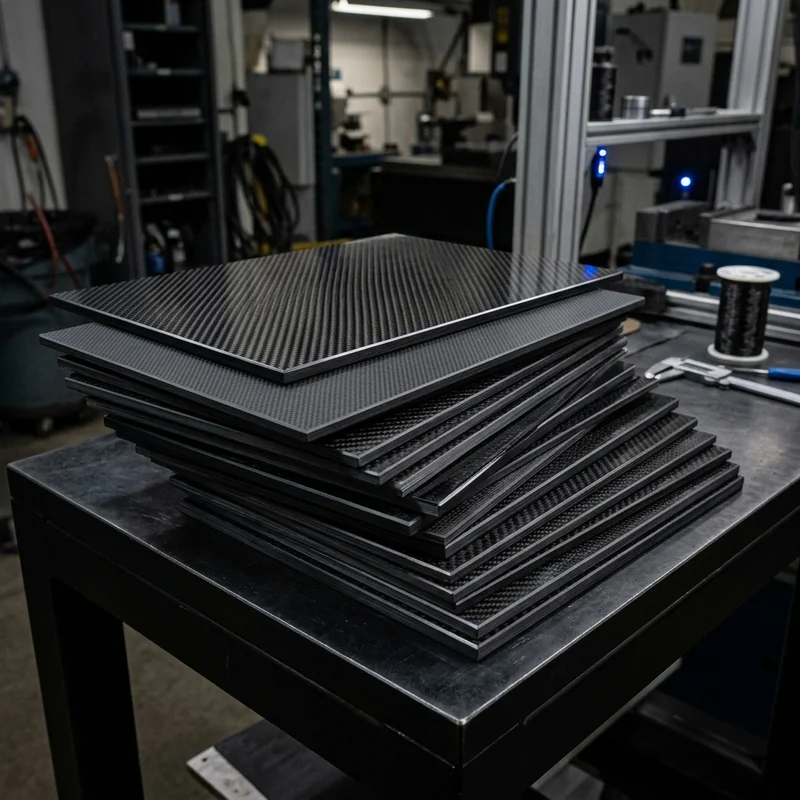
Carbon fiber standard plate-3k stripe
Lightweight, ultra-rigid standard sheets for drone fuselages, robot housings, facades and structural applications.
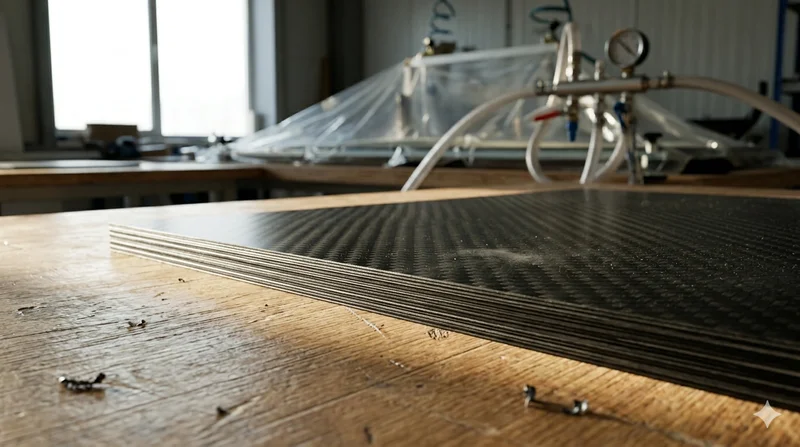
Carbon Fiber Plate — 3K Twill T700 3.0mm
Medium-thickness 3.0mm carbon fiber plate offering significantly higher load capacity while maintaining attractive 3K twill finish. Suitable for structural brackets, reinforcement plates, and load-bearing panels.
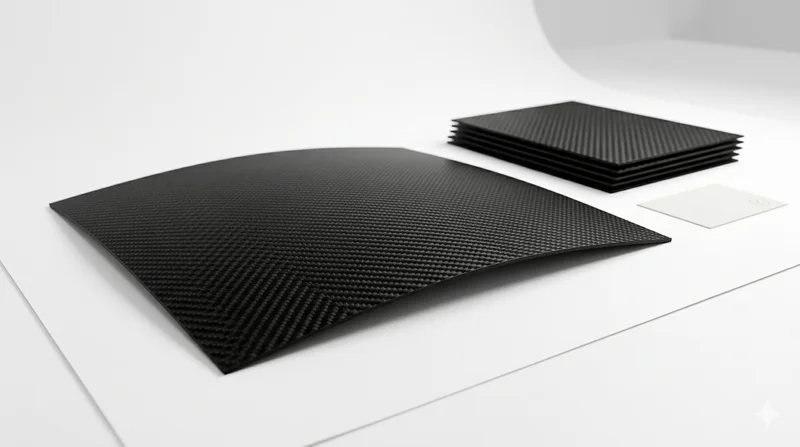
Carbon Fiber Plate — 3K Twill T700 1.5mm
Thin 1.5mm carbon fiber plate with 3K twill weave surface. Lightweight and stiff, commonly used for covers, panels, drone bodies, and applications requiring a premium aesthetic appearance.
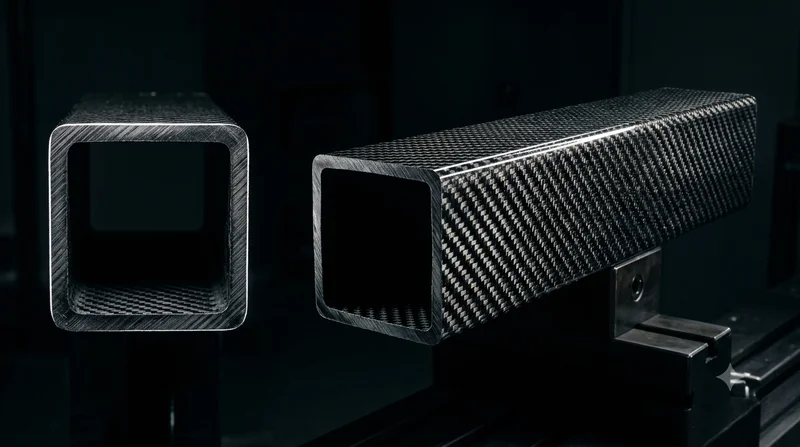
Square Carbon Fiber Tube — 3K Twill T700
Square cross-section carbon fiber tube manufactured with 3K twill weave for torsional strength. Preferred for structural frames, trusses, and support columns where rectangular geometry offers design flexibility.
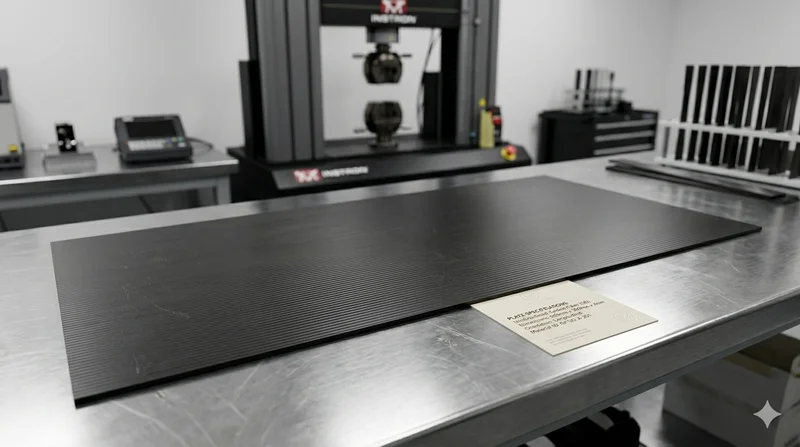
Carbon Fiber Plate — UD Unidirectional T700
Unidirectional carbon fiber plate with all fibers oriented in a single direction for maximum strength along the fiber axis. Essential for structural reinforcements, splints, and applications where load direction is predictable.