
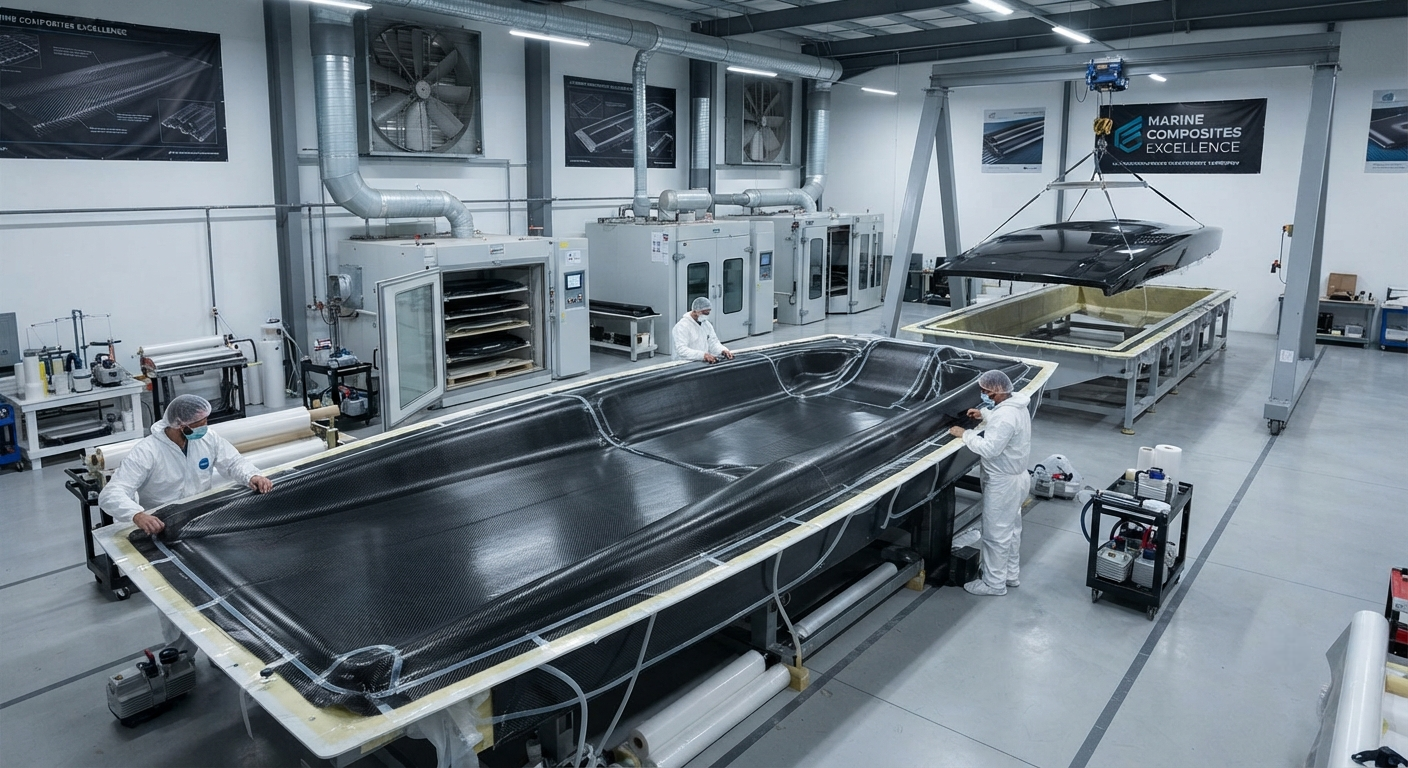
The transition from fibreglass to carbon fibre composites in marine performance applications is accelerating. Sports boat builders, superyacht tender manufacturers, and high-performance p
Introduction
The transition from fibreglass to carbon fibre composites in marine performance applications is accelerating. Sports boat builders, superyacht tender manufacturers, and high-performance powerboat OEMs are adopting carbon fibre hull and deck construction to reduce weight, increase stiffness, and improve fuel efficiency at planing speeds. This article provides B2B buyers and marine engineers with a detailed technical reference for carbon fibre laminate schedules, core material selection, tooling strategies, and cost modelling specific to marine structures.
Carbon fibre composites offer a density of approximately 1.6 g/cm³ versus 2.5 g/cm³ for E-glass and 2.7 g/cm³ for aluminium alloys. In a typical 12-metre sports boat, replacing a fibreglass hand layup with a carbon/epoxy prepreg infusion can reduce structural mass by 35–45%, translating to lower power requirements, reduced fuel consumption, and higher top speeds. For superyacht tenders operating at 40+ knots, every kilogram of structural weight saved directly increases payload capacity or reduces engine size.
Laminate Architecture for Sports Boat Hulls
A typical carbon fibre sports boat hull laminate consists of four functional layers, each engineered for specific load paths and environmental exposure:
| Layer | Function | Material | Typical Areal Weight | Cure Method |
|---|---|---|---|---|
| Gelcoat / Outer Skin | Hydrodynamic surface, UV resistance | Vinyl ester gelcoat + 200 g/m² carbon veil | 200–400 g/m² | Ambient gel + post-cure |
| Structural Laminate | Primary bending and torsion stiffness | Toray T700 / Teijin HTS40 12K unidirectional or 2×2 twill woven | 600–1200 g/m² per ply, 4–8 plies | Vacuum-bag oven cure (80–120°C) |
| Core Material | Shear transfer, buckling resistance, buoyancy | PET foam (100–200 kg/m³) or Nomex honeycomb | 10–25 mm thickness | Co-cured or secondary bond |
| Inner Skin | Secondary load path, abrasion resistance | Carbon/epoxy woven + glass veil | 400–800 g/m² | Co-cured with core |
The table above reflects a typical vacuum-assisted resin transfer moulding (VARTM) or prepreg layup schedule. For production-series sports boats (50–200 units per year), most OEMs select woven 2×2 twill carbon fibre with a 45/45 fibre orientation in the outer plies and 0/90 in the core plies to balance impact resistance and longitudinal stiffness. For one-off custom superyacht tenders, unidirectional prepreg plies tailored by finite element analysis (FEA) optimise weight to within 2–3% of theoretical minimum.
Core Material Selection: PET Foam vs. Nomex Honeycomb
Core material choice significantly affects cost, weight, and bonding reliability:
- PET foam (100–200 kg/m³): The dominant choice for production marine hulls. Closed-cell structure resists moisture ingress, can be thermoformed to double-curvature moulds, and offers excellent peel strength with epoxy adhesives. Typical cost: $35–55/m² at 15 mm thickness. Preferred by builders producing more than 30 hulls per year.
- Nomex honeycomb (aramid fibre/phenolic): Lighter than foam (48–80 kg/m³) with superior shear modulus. Used in racing powerboats and weight-critical superyacht deck structures. Requires careful edge filling to prevent water wicking. Typical cost: $80–150/m² at 15 mm. Common in hulls under 10 metres where weight reduction justifies premium cost.
- PVC foam (cross-linked): Legacy material, still used in refit and repair. Good impact toughness but higher density (150–250 kg/m³) than PET. Being phased out by major OEMs due to recyclability concerns.
Tooling Strategy: Moulds and Mandrels
Tooling represents 15–25% of total project cost for a carbon fibre sports boat. Two approaches dominate:
Female (cavity) moulds — CNC-machined from epoxy tooling board or nickel-shell electroformed surfaces. Provide exact outer geometry, critical for hydrodynamic performance. A 12-metre hull mould costs $80,000–$150,000 and lasts 150–300 parts before needing surface refurbishment. Preferred for production hulls where dimensional consistency across units is paramount.
Male (plug) moulds with outer vacuum bagging — Lower tooling cost ($30,000–$60,000) but higher per-part labour. Used for one-off custom tenders where the hull shape is iterated during design. Outer bag surface finish requires extensive fairing and painting, adding 40–80 labour hours per hull.
Manufacturing Cost Breakdown per Hull (12-metre Sports Boat)
| Cost Component | Fibreglass (Polyester) | Carbon Fibre (Infusion) | Carbon Fibre (Prepreg) |
|---|---|---|---|
| Raw materials (resin + fibre) | $4,500 | $12,800 | $18,500 |
| Core materials | $1,200 | $1,800 | $1,800 |
| Tooling amortisation (100 units) | $800 | $1,200 | $1,500 |
| Labour (layup + cure + finishing) | $6,000 | $7,500 | $8,200 |
| Quality testing (NDT + coupon) | $500 | $1,200 | $1,200 |
| Total per hull | $13,000 | $24,500 | $31,200 |
| Hull weight (kg) | 1,850 | 1,020 | 980 |
| Weight reduction vs. fibreglass | — | −44.9% | −47.0% |
The upfront premium for carbon fibre construction is recouped through reduced engine power requirements (saving $8,000–$15,000 per hull in smaller engine options), lower fuel burn at cruise (25–35% reduction), and higher resale value for performance-oriented buyers. For superyacht tenders, the weight saving also extends range — a 1,020 kg carbon hull achieves 15% greater range at 30 knots compared to its 1,850 kg fibreglass counterpart with the same fuel load.
Joining Hull to Deck: Structural Bonding
The hull-to-deck joint in carbon fibre sports boats is a critical structural element. Three methods are commonly specified:
- Adhesive bonding with methacrylate (MMA): Fast-curing (20–40 min open time), gap-filling, excellent adhesion to cured epoxy. Used by 70% of production marine OEMs. Typical bond line thickness: 1–2 mm. Shear strength: 18–22 MPa.
- Mechanical fastening with titanium bolts: Used in combination with adhesive for racing hulls subject to impact loads. Titanium grade 5 (Ti-6Al-4V) is specified to avoid galvanic corrosion with carbon fibre. Bolt spacing: 150–200 mm.
- Co-cured integrated flange: The deck flange is infused integrally with the hull in a single mould cycle. Eliminates secondary bonding but increases mould complexity. Preferred by superyacht tender builders for weight savings of 8–12 kg per joint.
Frequently Asked Questions
What is the service life of a carbon fibre sports boat hull?
With proper gelcoat maintenance and UV protection, a carbon fibre hull built with marine-grade epoxy systems has an expected service life exceeding 25 years in saltwater use. Unlike fibreglass, carbon fibre does not suffer from osmotic blistering (poX), provided the resin system is correctly formulated for marine immersion. Annual NDT inspection is recommended after year 15.
Is carbon fibre in marine applications susceptible to galvanic corrosion?
Carbon fibre is electrically conductive and will accelerate galvanic corrosion of dissimilar metals (aluminium, steel) in direct contact. All metal fittings in contact with carbon laminates must be isolated — titanium, stainless steel 316 with epoxy isolation layers, or bronze are the standard choices. Bonding to the hull anodic protection system is mandatory.
Can existing fibreglass hulls be retrofitted with carbon fibre components?
Yes. Common retrofits include carbon fibre stringers, bulkheads, and hardtop structures. Weight savings of 20–35% are achievable on these secondary structures. Retrofitting the entire hull shell is rarely economical — the mould tooling and cure cycle requirements make a new-build hull the better option.
What NDT methods are used to verify carbon hull quality?
Ultrasonic C-scan (immersion or phased-array) is the standard for detection of delamination, porosity, and disbonds in production hulls. Thermography and tap testing are used for in-service inspection. Void content below 2% is the typical acceptance criterion for marine-grade laminates.
What is the minimum order quantity for custom carbon fibre hulls from Chinese manufacturers?
For full custom prepreg hulls (10–20 m), Chinese composite manufacturers typically require MOQ of 5–10 units per design for tooling amortisation. For standardised hull shapes adapted from existing tooling, MOQ can be as low as 1–2 units. YongXian CarbonFiber coordinates with partner shipyards in Guangdong and Shandong for marine-grade carbon fibre supply and sub-assembly.
Part of topic
Related Articles
- Carbon Fiber Mooring for Floating Offshore Wind: Fatigue and Corrosion in Deep Water
- Carbon Fiber Bicycle Frame Optimization: Layup Design and Manufacturing for Competitive Racing
- Carbon Fiber CFRP Retrofit for Infrastructure: Bridge and Building Seismic Strengthening
- Carbon Fiber Medical Imaging Equipment: Lightweight Gantry and Couch Structures for MRI/CT
- Carbon Fiber EV Battery Enclosures: Crash Safety and Electromagnetic Shielding Design
- Carbon Fiber Structures for Low-Altitude Economy: UAV Airframes and eVTOL Components
Interested in Our Products?
Contact our team for competitive pricing and technical specifications.
Get a QuoteRelated Products
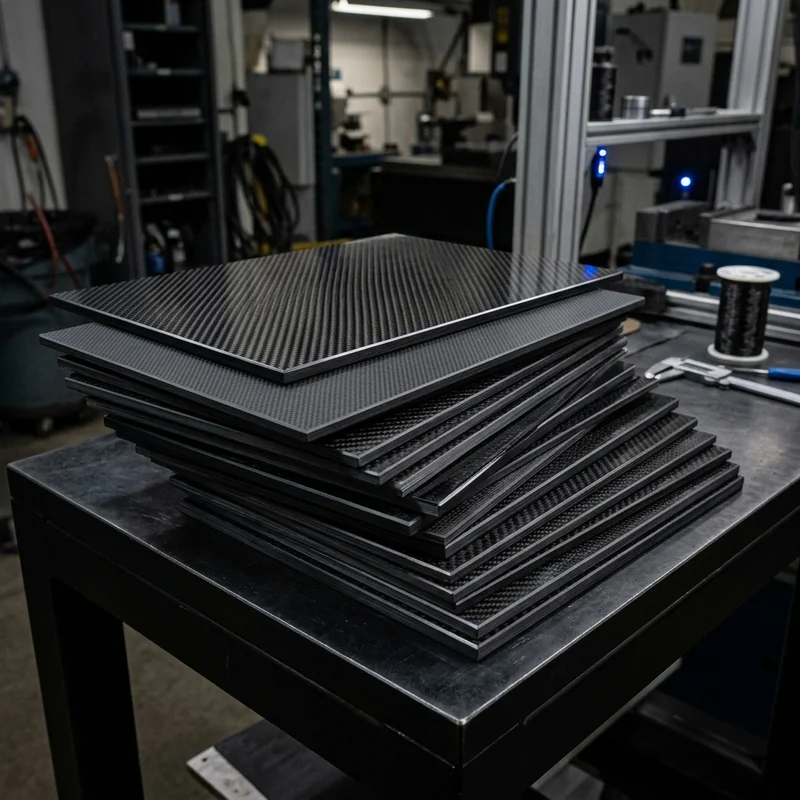
Carbon fiber standard plate-3k stripe
Lightweight, ultra-rigid standard sheets for drone fuselages, robot housings, facades and structural applications.
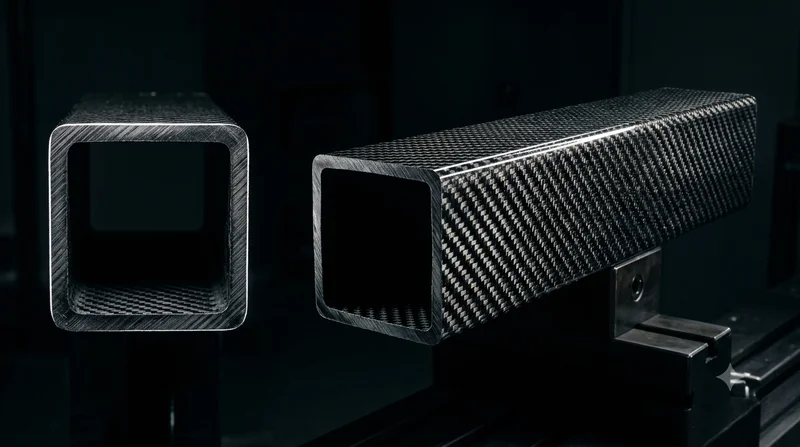
Square Carbon Fiber Tube — 3K Twill T700
Square cross-section carbon fiber tube manufactured with 3K twill weave for torsional strength. Preferred for structural frames, trusses, and support columns where rectangular geometry offers design flexibility.
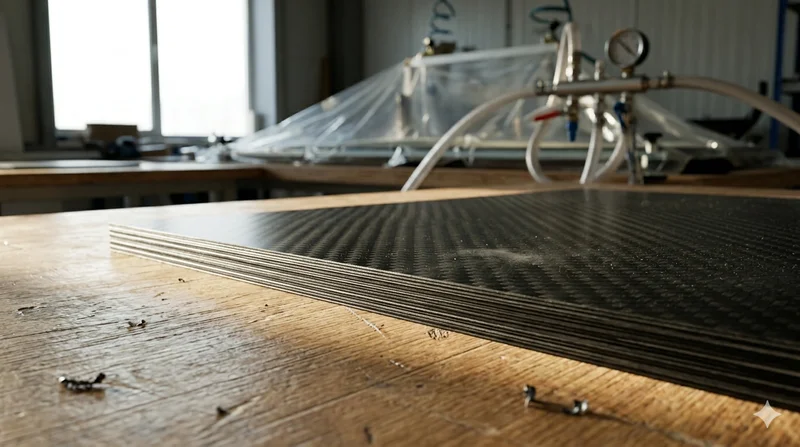
Carbon Fiber Plate — 3K Twill T700 3.0mm
Medium-thickness 3.0mm carbon fiber plate offering significantly higher load capacity while maintaining attractive 3K twill finish. Suitable for structural brackets, reinforcement plates, and load-bearing panels.
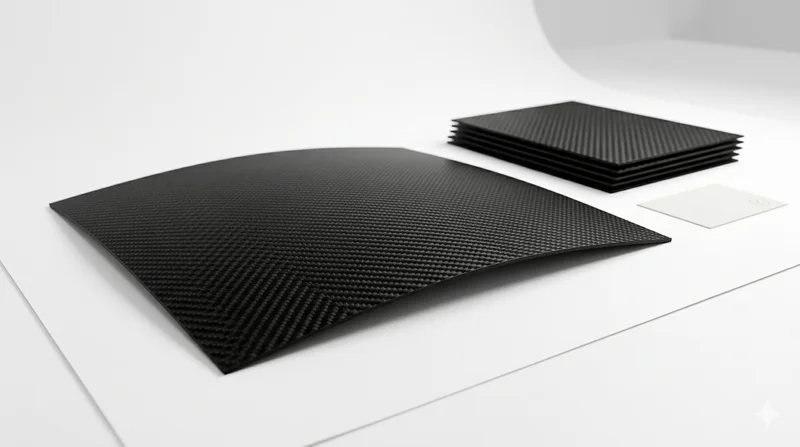
Carbon Fiber Plate — 3K Twill T700 1.5mm
Thin 1.5mm carbon fiber plate with 3K twill weave surface. Lightweight and stiff, commonly used for covers, panels, drone bodies, and applications requiring a premium aesthetic appearance.
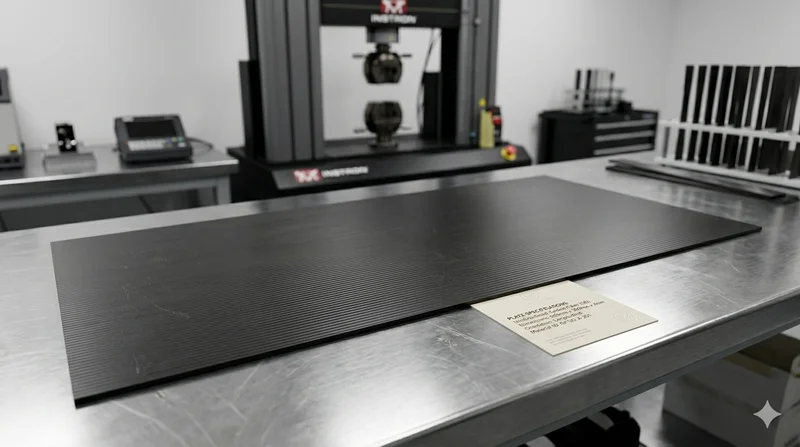
Carbon Fiber Plate — UD Unidirectional T700
Unidirectional carbon fiber plate with all fibers oriented in a single direction for maximum strength along the fiber axis. Essential for structural reinforcements, splints, and applications where load direction is predictable.