
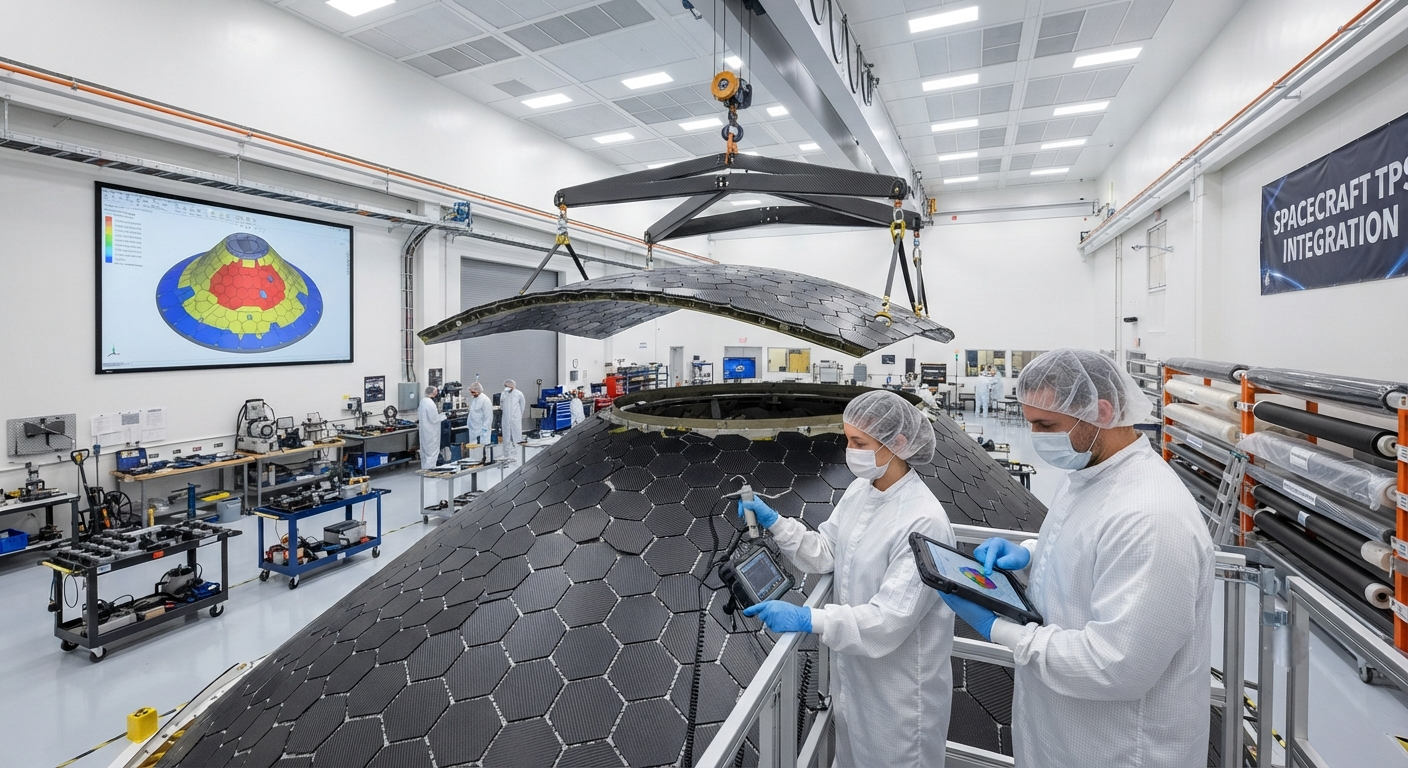
Comprehensive B2B technical analysis of carbon fiber thermal protection systems (TPS) for re-entry spacecraft — covering ablative carbon-phenolic and carbon-carbon materials, non-ablative C/SiC CMCs, manufacturing processes (prepreg, carbonization, CVI, coating), spacecraft case studies (Orion, Dragon 2, Starship, Starlink), and cost comparison for reusable vs. single-use programs.
The Critical Role of Carbon Fiber in Re-Entry Spacecraft Thermal Protection
Re-entry into Earth's atmosphere represents the most extreme thermal environment encountered by any engineered structure. A spacecraft returning from low Earth orbit enters the atmosphere at approximately 7.8 km/s (Mach 25), generating stagnation-point temperatures of 2,500–3,000°C, surface heat fluxes of 50–200 W/cm², and structural loads reaching 5–8 g. In this environment, conventional aerospace materials — aluminum alloys, titanium, and even nickel-based superalloys — would fail catastrophically within seconds. Carbon fiber reinforced carbon (CFRC) and carbon fiber reinforced ceramic matrix composite (CMC) thermal protection systems (TPS) have emerged as the enabling technologies that make controlled re-entry and hypersonic flight possible. This article provides a comprehensive technical analysis of carbon fiber-based TPS for re-entry spacecraft, covering ablative and non-ablative solutions, material architectures, manufacturing processes, and current spacecraft applications.
The global aerospace thermal protection system market was valued at approximately $3.8 billion in 2025, with carbon-based TPS materials accounting for 55–60% of the total value. The market is projected to grow at a compound annual growth rate of 8–10% through 2035, driven by the expansion of reusable launch vehicle programs (SpaceX Starship, Blue Origin New Glenn, Rocket Lab Neutron), the emergence of point-to-point hypersonic transport concepts, and renewed interest in planetary entry probes for Mars, Venus, and Titan missions. Carbon fiber-based TPS materials — including carbon-carbon composites, carbon/silicon carbide (C/SiC) ceramics, and carbon-phenolic ablatives — occupy the critical performance tier between 1,000°C and 3,000°C service temperatures, a regime inaccessible to metallic TPS.
Ablative Thermal Protection Systems: Material Architectures and Performance
Ablative TPS materials protect re-entry vehicles by absorbing thermal energy through controlled surface material removal — pyrolysis, melting, sublimation, and mass ejection — carrying heat away from the underlying structure. Carbon fiber-based ablatives offer the highest heat flux capability of any TPS material class, making them the default choice for planetary entry at hypersonic velocities above Mach 30. Three distinct carbon fiber ablative architectures dominate current spacecraft applications:
- Carbon-phenolic ablators (CPAs): The most widely used carbon-based ablative, consisting of a carbon fiber reinforcement preform (random fiber mat, 2D fabric layup, or 3D woven structure) infiltrated with phenolic resin. During re-entry, the phenolic resin undergoes endothermic pyrolysis at 300–500°C, forming a porous carbon char layer while releasing volatile gases that transpire through the char, creating a cooling boundary layer. The carbon fiber char retains structural integrity at temperatures exceeding 2,500°C, with the fiber-to-charge conversion consuming approximately 5–15 mm of material depth per minute of peak heating. Aviation-grade carbon-phenolic (e.g., NASA's AVCOAT-5026-39G, used on Apollo and Orion crew modules) achieves effective heats of ablation of 15–30 MJ/kg, dependent on entry velocity and atmospheric composition. The material density ranges from 0.8–1.6 g/cm³, with higher densities providing greater erosion resistance at the cost of increased mass.
- Carbon-carbon (C/C) ablatives: Carbon fiber reinforced carbon matrix composites — where both the fiber reinforcement and the matrix are pure carbon — represent the ultimate high-temperature ablative material. C/C ablatives are manufactured by carbonizing a carbon fiber/phenolic precursor at 1,000–1,500°C, followed by repeated cycles of liquid silicon infiltration or chemical vapor infiltration (CVI) to densify the carbon matrix. The resulting material has a sublimation temperature exceeding 3,600°C (in an inert atmosphere) and a thermal conductivity of 50–150 W/m·K at room temperature (increasing to 100–250 W/m·K at 2,000°C). C/C ablatives are used in the highest-heat-flux regions of re-entry vehicles — nosetips (heat flux up to 1,000 W/cm² on ballistic re-entry vehicles) and leading edges — where their exceptional thermal conductivity rapidly conducts heat away from the stagnation point to cooler regions of the TPS. The specific heat of sublimation for C/C is approximately 15–20 MJ/kg in dissociated air. SpaceX's Starlink satellite deorbit systems use a proprietary C/C TPS material that achieves reliable survival at entry velocities of 8–10 km/s with a mass penalty of approximately 0.5–1.5% of total satellite mass.
- Carbon fiber-reinforced ceramic matrix composites (C/SiC): For applications requiring multiple re-entry cycles with minimal TPS refurbishment — such as reusable launch vehicle leading edges and control surfaces — carbon fiber-reinforced silicon carbide (C/SiC) composites offer a non-ablative or minimally ablative solution. C/SiC is manufactured by infiltrating a carbon fiber preform with silicon or silicon alloy at 1,400–1,600°C, forming a silicon carbide matrix through reactive melt infiltration. The material maintains structural integrity at service temperatures up to 1,650°C (long duration) and 2,000°C (short duration), with a density of 2.0–2.5 g/cm³ — significantly lower than the superalloys it replaces. The thermal expansion coefficient of C/SiC (1.5–3.0 × 10⁻⁶/K) is well-matched to C/C and silicon-based ceramics, enabling hybrid TPS designs. C/SiC TPS components have been flight-proven on the Space Shuttle (leading edge panels on the reinforced carbon-carbon RCC system), the X-37B orbital test vehicle, and multiple hypersonic test platforms.
| Material System | Density (g/cm³) | Max Service Temp (°C) | Ablation Mode | Heat of Ablation (MJ/kg) | Thermal Conductivity (W/m·K) | Reusability | Relative Cost |
|---|---|---|---|---|---|---|---|
| Carbon-Phenolic (AVCOAT) | 0.8–1.6 | 2,500–3,000 | Pyrolytic/charring | 15–30 | 0.5–2.0 | Single-use | 1.0× (baseline) |
| Carbon-Carbon (C/C) | 1.6–2.0 | 3,600+ (inert) | Sublimation | 15–20 | 50–250 | Limited (1–5 uses) | 3–5× |
| C/SiC (CMC) | 2.0–2.5 | 1,650 (long)/2,000 (short) | Minimal/non-ablative | N/A (oxidation limited) | 15–40 | 25+ uses | 5–10× |
| Carbon fiber PICA (NASA) | 0.25–0.45 | 2,000–2,500 | Pyrolytic/charring | 12–20 | 0.3–0.8 | Single-use | 0.8–1.5× |
| Carbon felt/silicone (Flexible TPS) | 0.15–0.30 | 1,200–1,500 | Charring/reradiation | 8–12 | 0.1–0.3 | Single-use | 0.5–0.8× |
Non-Ablative Carbon Fiber TPS: Reusable Solutions
The shift toward reusable launch vehicles has driven intensive development of non-ablative carbon fiber TPS materials that can withstand multiple re-entry cycles with minimal refurbishment. Two categories dominate reusable TPS design:
- Reinforced Carbon-Carbon (RCC) leading edges: Used on the Space Shuttle orbiter's wing leading edges (22 panels per vehicle, each 1.0–1.5 m² in area, 6–9 mm thick) and subsequently refined for the X-37B and planned Starship applications. RCC is manufactured by stacking multiple layers of carbon fiber fabric (8–15 layers for Shuttle RCC, 15–30 layers for modern variants), impregnating with phenolic resin, carbonizing at 1,100°C, and densifying through multiple (6–10) CVI cycles. The finished material has a density of 1.8–2.0 g/cm³, flexural strength of 100–200 MPa at room temperature (retaining 60–80% at 1,600°C in an inert atmosphere), and interlaminar shear strength of 5–12 MPa. A silicon carbide conversion coating (applied by pack cementation at 1,600–1,800°C) provides oxidation resistance for 10–50 re-entry cycles, depending on peak temperature exposure. Each Shuttle RCC panel cost approximately $500,000–$800,000 to manufacture and required re-certification inspection after every flight, including thermographic NDE, mass loss measurement, and coating thickness assessment. Modern manufacturing advances — including fiber placement automation and improved CVI cycle control — have reduced RCC panel costs to an estimated $200,000–$350,000 per square meter for current-generation vehicles.
- Oxidation-protected C/SiC (OMC — Oxide/Oxide CMC): For sustained hypersonic cruise (5–15 minutes at Mach 5–10) and multiple re-entry applications, oxidation-protected C/SiC composites offer the best balance of damage tolerance, thermal stability, and reusability. The materials are protected by an environmental barrier coating (EBC) system — typically a tri-layer coating: an inner silicon bond coat (50–100 µm), a middle mullite or yttrium silicate layer (100–200 µm) providing oxygen diffusion barrier, and an outer BSAS (barium-strontium-aluminosilicate) top coat (50–100 µm) for thermal stability and crack sealing. C/SiC TPS panels with EBC protection have demonstrated survival for 100+ simulated re-entry cycles in plasma tunnel testing at 1,400–1,600°C with minimal mass loss (<0.1% per cycle). The European Space Agency's IXV (Intermediate eXperimental Vehicle) and LOVEX (Light Orbital Vehicle EXperimental) programs validated C/SiC TPS panels on nose cap and body flap applications, confirming that the non-ablative surface profile is maintained within ±0.5 mm after a Mach 25 re-entry — a critical requirement for maintaining aerodynamic performance for precision landing.
Manufacturing Processes for Carbon Fiber TPS
The manufacturing of carbon fiber thermal protection materials requires specialized processes that differ fundamentally from standard carbon fiber composite fabrication. Five key processes are employed across the TPS material classes:
- Prepreg layup and autoclave curing (carbon-phenolic): Carbon fiber fabric (8HS satin weave, 3K or 6K tow) is prepregged with phenolic resin (resol or novolac type, 35–45% resin content). Ply layup is performed in controlled cleanroom conditions (class 10,000, temperature 20–25°C, humidity 30–50%), with ply orientation optimized for the predicted heat flux direction at each location. Curing is performed in a vacuum bag-autoclave system at 160–180°C and 5–7 bar pressure for 3–6 hours. The cured laminate has a fiber volume fraction of 55–60%. Post-cure machining to net shape is performed with diamond tooling.
- Carbonization and CVI densification (C/C, C/SiC): The cured carbon-phenolic green body is carbonized in an inert atmosphere furnace (nitrogen or argon, 800–1,800°C thermal ramp over 48–120 hours). Carbonization causes a 40–55% linear shrinkage and 50–65% mass loss as the phenolic matrix converts to amorphous carbon. The resulting porous C/C preform (porosity 20–30%) is densified through 6–12 cycles of chemical vapor infiltration (CVI) using methane or propane precursor gas at 1,000–1,200°C and reduced pressure (1–50 torr). Each CVI cycle adds 5–15% to the composite density, requiring intermediate surface machining every 3–4 cycles to reopen blocked pore networks. Total CVI processing time: 4–12 weeks for a C/C part with 1.8–2.0 g/cm³ final density. For C/SiC, the densification is performed by reactive melt silicon infiltration (RMSI or "liquid silicon infiltration") at 1,400–1,600°C under vacuum, requiring only one infiltration cycle of 1–4 hours — a dramatic time reduction compared to CVI processing.
- Oxidation protection coating application: For reusable C/C and C/SiC TPS, the protective coating system is applied after final densification and NDE inspection. For C/C (RCC), the silicon carbide conversion coating is applied by pack cementation: the C/C part is embedded in a powder pack containing silicon metal, alumina, and carbon (as silicon carbide formation catalyst) and heated to 1,600–1,800°C in an argon atmosphere for 4–12 hours. The resulting SiC conversion layer is 100–400 µm thick, with a conversion gradient zone of 200–500 µm where the carbon matrix transitions to SiC. For C/SiC, the EBC system is applied by atmospheric plasma spray (APS) or electron beam physical vapor deposition (EB-PVD), with each layer applied in a separate processing step requiring 30–90 minutes.
- Full-scale arc-jet qualification testing: Every TPS panel — whether for a crew vehicle, satellite deorbit system, or hypersonic demonstrator — must be qualified by arc-jet testing that replicates the re-entry thermal environment. Test specimens (typically 100–200 mm diameter for coupon testing, full-scale panels for qualification) are exposed to enthalpy conditions of 10–30 MJ/kg (re-entry stagnation enthalpy) at heat fluxes of 30–200 W/cm² for 30–300 seconds in facilities including NASA Ames's Interaction Heating Facility (IHF) and the Plasmatron at the von Karman Institute in Belgium. Qualification testing typically involves 15–30 arc-jet runs per TPS design across the flight envelope, at a cost of $10,000–$50,000 per run, contributing 5–15% of total TPS development cost.
Current Spacecraft Applications and Case Studies
Carbon fiber TPS materials protect the most demanding re-entry vehicles currently in operation or development:
- NASA Orion Crew Module: The Orion MPCV uses AVCOAT-5026-39G (carbon-phenolic) as its primary TPS material on the crew module heat shield — a 5.0-meter diameter, 8.7 m² backshell protected by approximately 240 individual AVCOAT tiles bonded to a carbon fiber composite carrier structure. Total TPS mass: approximately 750 kg out of a 10,400 kg crew module mass (7.2%). The AVCOAT tiles are designed for a single lunar return entry at 11 km/s (Mach 36), with a peak heat flux of approximately 70 W/cm² and a total heat load of 95 kJ/cm². Each Orion heat shield requires 18 months of factory-to-launch TPS manufacturing cycle, with AVCOAT blocks (density 0.82 g/cm³) machined from 1.2-meter-square billets, bonded to the composite carrier, and inspected by CT scanning, ultrasonics, and laser profilometry.
- SpaceX Dragon 2 and Starlink: SpaceX's Dragon 2 uses PICA-X — a proprietary variant of NASA's Phenolic Impregnated Carbon Ablator (PICA) — on its 3.6-meter diameter side-mounted heat shield. PICA-X is a lightweight carbon fiber ablative (density 0.25–0.35 g/cm³) manufactured by infiltrating a carbon fiber felt preform with phenolic resin under vacuum, then freeze-drying to create a micro-porous structure that maximizes insulation while minimizing density. SpaceX has flight-qualified PICA-X for over 50 crew Dragon re-entries (International Space Station missions at 7.8 km/s) and demonstrated its capability at lunar return velocities (11 km/s) in the Red Dragon feasibility studies. For Starlink satellite deorbit — over 6,000 satellites as of mid-2026 — SpaceX uses a proprietary C/C TPS material that is manufactured at a cost below $5,000 per square meter through automated fiber placement and shortened CVI cycles, enabling economically viable controlled deorbit of low-cost satellites.
- SpaceX Starship: The Starship/Super Heavy system uses a novel approach: non-ablative C/SiC TPS tiles on the windward side of the vehicle (approximately 18,000 hexagonal tiles, each 250–300 mm across, 15–25 mm thick), with C/C ablative panels at the highest-heat-flux locations (nosetip and leading edges). The Starship TPS tile system, evolved from the Shuttle RCC concept but manufactured at an order-of-magnitude lower cost, targets 25–100 re-entry cycles per tile before replacement. Each tile is mechanically attached to a stainless steel substructure through a three-point flexure mounting system that accommodates differential thermal expansion between the C/SiC tile (CTE 2.5 × 10⁻⁶/K) and the steel substructure (CTE 17.3 × 10⁻⁶/K). The inter-tile gap (1–3 mm) is sealed with a carbon fiber rope gasket that prevents hot gas ingress while allowing relative movement. Total Starship TPS mass: approximately 12–15 tonnes for a 132-tonne dry mass vehicle (9–11% of dry mass).
Testing, Qualification, and Certification
The qualification of carbon fiber TPS materials for crewed spacecraft follows a rigorous multi-level testing framework defined by NASA STD-7001 (Thermal Protection System Standard) and the European Cooperation for Space Standardization (ECSS) standards. The certification process includes coupon-level testing (100–200 specimens per material variant characterizing thermal, mechanical, and ablation properties), component-level testing (TPS panels or sections tested in arc-jets, radiant heaters, and mechanical test fixtures), and full-scale system testing (instrumented flight tests, or instrumented re-entry data collection). The complete qualification cycle for a new carbon fiber TPS material requires 3–7 years and costs $10–50 million.
Frequently Asked Questions
What is the difference between carbon-carbon (C/C) and carbon/silicon carbide (C/SiC) thermal protection materials?
The fundamental difference lies in the matrix material: C/C composites use a pure carbon matrix (amorphous or graphitic carbon), while C/SiC composites use a silicon carbide (SiC) ceramic matrix. This distinction drives all other performance differences. C/C has a higher maximum service temperature (3,600°C versus 1,600–2,000°C) but requires a protective coating for oxidation resistance above 500°C and is fundamentally an ablative material — it erodes during re-entry, limiting reusability. C/SiC has lower peak temperature capability but offers inherent oxidation resistance (the SiC matrix forms a protective silica scale at high temperature), enabling 25–100+ reuses with <0.1% mass loss per cycle. C/C sublimation cooling removes 15–20 MJ/kg from the TPS surface, making it the only choice for extreme heat fluxes exceeding 500 W/cm² (ballistic re-entry, planetary entry at >13 km/s). C/SiC functions primarily as a radiative TPS — it re-radiates absorbed heat to the surroundings — and is limited to heat fluxes below 150–200 W/cm² for reusable applications. In practice, advanced re-entry vehicles use both materials in a hybrid TPS architecture: C/C at the highest-heat-flux regions (nosetip, stagnation point) and C/SiC over lower-heat-flux acreage areas (windward body panels, control surfaces).
How is carbon fiber TPS mass fraction optimized for crewed Mars entry missions?
Crewed Mars entry vehicles — such as the NASA Mars Design Reference Architecture 5.0 (DRA 5.0) reference vehicle with a 40-tonne entry mass — require TPS mass fractions that are among the most demanding of any interplanetary mission. Mars atmospheric entry differs fundamentally from Earth re-entry: the Martian atmosphere is 95% CO₂ at 0.6% of Earth's surface pressure, requiring a larger-diameter aeroshell (typically 12–16 meters for a crewed vehicle) and a shallower entry flight path angle to achieve sufficient deceleration. The entry velocity from a minimum-energy Earth-Mars transfer is 6.0–6.5 km/s at Mars interface (125 km altitude). For DRA 5.0, the primary TPS material selected is a conformal phenolic-impregnated carbon ablator (CPICA — a flexible carbon felt/phenolic TPS) that is manufactured as a continuous blanket rather than individual tiles, reducing installation complexity and mass. The optimized TPS mass fraction for a 12-meter diameter Mars aeroshell is 15–22% of entry mass (versus 6–8% for LEO Earth re-entry), driven by the longer heating duration (80–120 seconds at peak heat flux versus 30–60 seconds for LEO return), the higher radiative heat flux from CO₂ plasma radiation (contributing 30–50% of total heat load at Mars entry), and the need to accommodate worst-case atmospheric density variations (Mars atmosphere exhibits 30–50% density variability at entry altitude). Current research focuses on multifunctional TPS concepts that integrate the thermal protection system with antenna windows, instrument apertures, and structural attachment points to reduce overall TPS mass by an additional 15–25% compared to DRA 5.0 baseline designs.
How do carbon fiber TPS costs compare for single-use versus reusable spacecraft programs?
The cost comparison between single-use (ablative) and reusable (non-ablative) carbon fiber TPS is highly dependent on the number of flights per vehicle. For a crewed capsule making a single flight (e.g., Orion, Starliner), ablative TPS is optimal: the heat shield costs approximately $2–5 million per vehicle (AVCOAT for Orion, PICA-X for Dragon 2), representing 3–6% of total spacecraft cost. The manufacturing cycle is 12–18 months, and the heat shield is replaced after each flight. For a reusable orbital vehicle targeting 10–25 flights (e.g., Shuttle Orbiter, Dream Chaser), reusable C/C and C/SiC TPS becomes cost-competitive: the TPS represents 10–15% of vehicle dry mass and 8–12% of vehicle cost, with per-flight refurbishment costs of $500,000–$2 million per flight (including inspection, coating repair or reapplication, tile replacement of 1–5% per flight). For a high-cadence reusable vehicle targeting 100+ flights (e.g., Starship, New Glenn), the amortized TPS cost per flight becomes the key metric. SpaceX targets a Starship TPS cost of $50,000–$100,000 per flight through high-volume tile manufacturing (automated C/SiC tile production at 50–100 tiles per day), simplified mechanical attachment reducing installation labor by 80% compared to Shuttle, and tile replacement rates below 0.5% per flight after the first 10-flight break-in period. At this cost, the Starship TPS represents approximately 0.5–1.0% of the per-flight cost target of $10 million — a dramatic reduction from the Shuttle's TPS cost per flight of $15–30 million (approximately 5–10% of Shuttle's per-flight cost of $300–450 million).
Part of topic
Related Articles
- Carbon Fiber Mooring for Floating Offshore Wind: Fatigue and Corrosion in Deep Water
- Carbon Fiber Bicycle Frame Optimization: Layup Design and Manufacturing for Competitive Racing
- Carbon Fiber CFRP Retrofit for Infrastructure: Bridge and Building Seismic Strengthening
- Carbon Fiber Medical Imaging Equipment: Lightweight Gantry and Couch Structures for MRI/CT
- Carbon Fiber EV Battery Enclosures: Crash Safety and Electromagnetic Shielding Design
- Carbon Fiber Structures for Low-Altitude Economy: UAV Airframes and eVTOL Components
Interested in Our Products?
Contact our team for competitive pricing and technical specifications.
Get a QuoteRelated Products
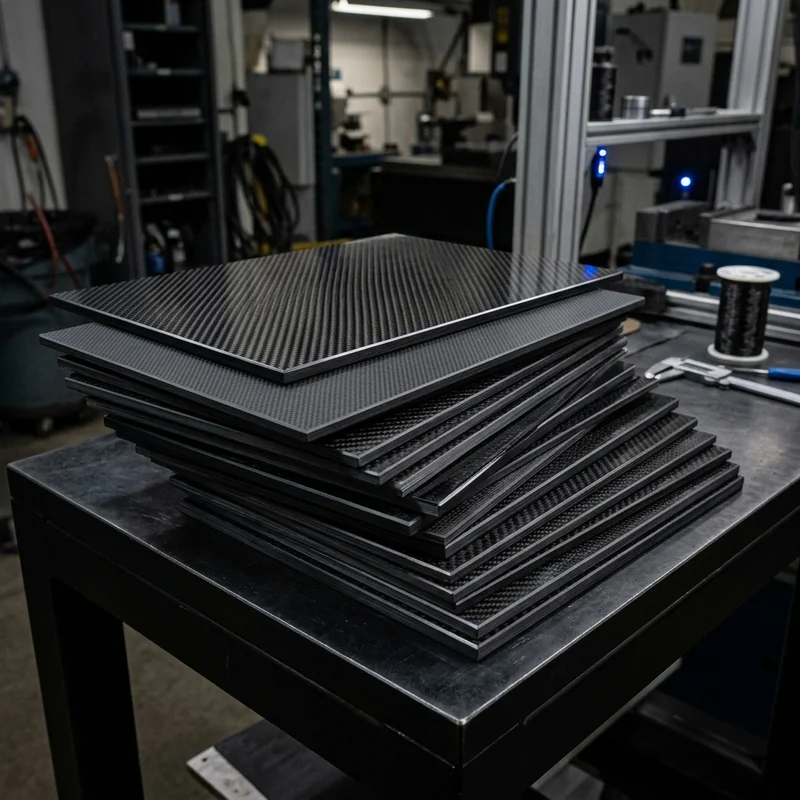
Carbon fiber standard plate-3k stripe
Lightweight, ultra-rigid standard sheets for drone fuselages, robot housings, facades and structural applications.
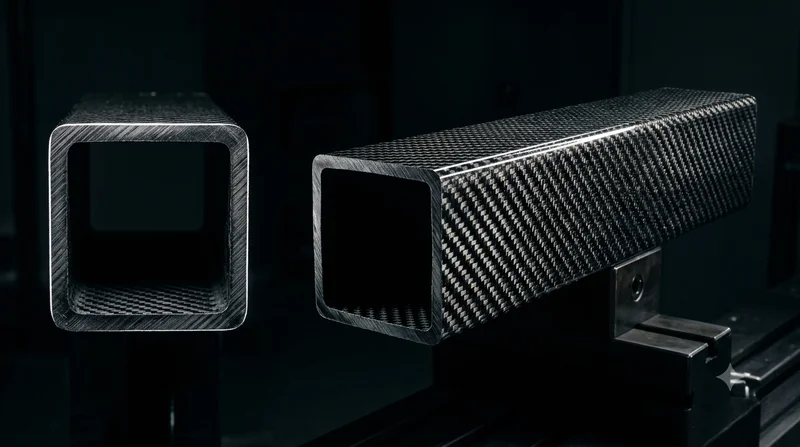
Square Carbon Fiber Tube — 3K Twill T700
Square cross-section carbon fiber tube manufactured with 3K twill weave for torsional strength. Preferred for structural frames, trusses, and support columns where rectangular geometry offers design flexibility.
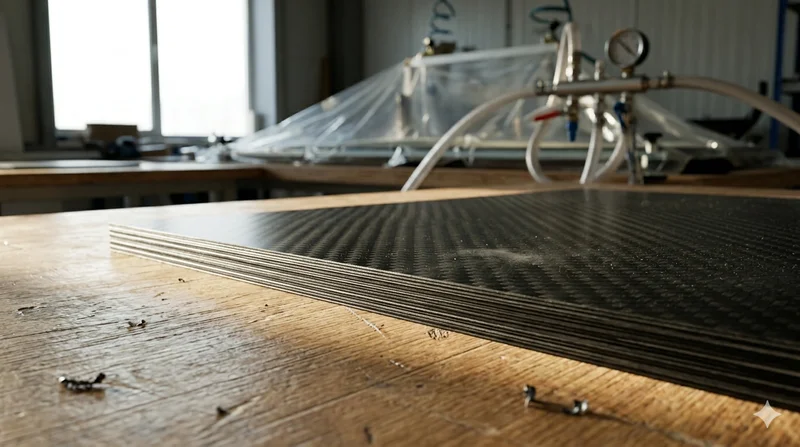
Carbon Fiber Plate — 3K Twill T700 3.0mm
Medium-thickness 3.0mm carbon fiber plate offering significantly higher load capacity while maintaining attractive 3K twill finish. Suitable for structural brackets, reinforcement plates, and load-bearing panels.
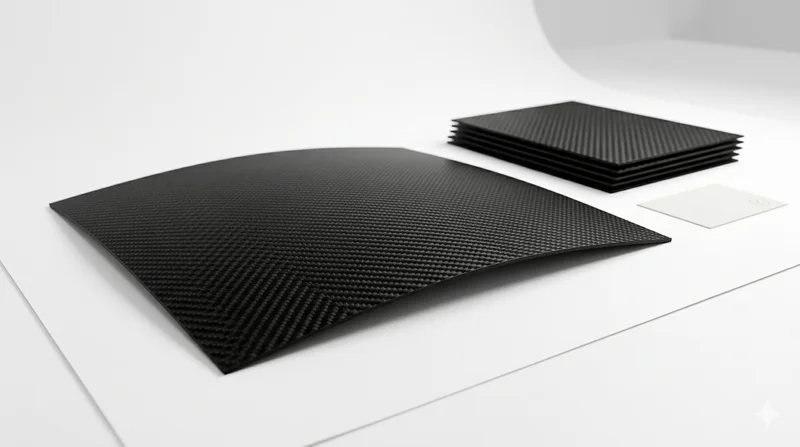
Carbon Fiber Plate — 3K Twill T700 1.5mm
Thin 1.5mm carbon fiber plate with 3K twill weave surface. Lightweight and stiff, commonly used for covers, panels, drone bodies, and applications requiring a premium aesthetic appearance.
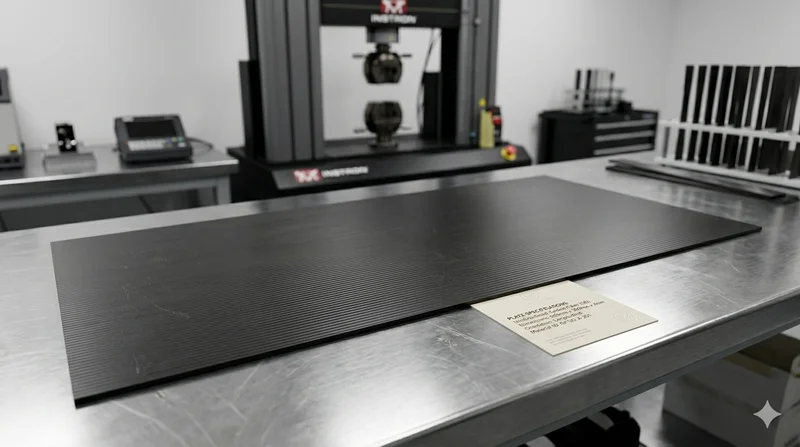
Carbon Fiber Plate — UD Unidirectional T700
Unidirectional carbon fiber plate with all fibers oriented in a single direction for maximum strength along the fiber axis. Essential for structural reinforcements, splints, and applications where load direction is predictable.