
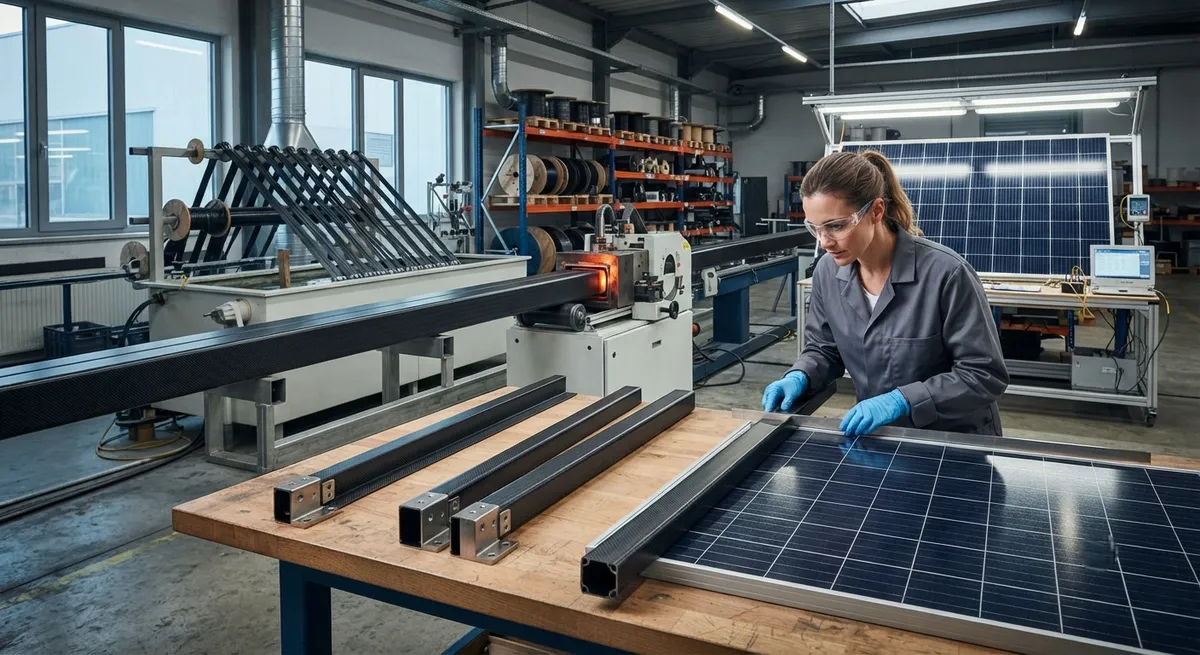
Solar panel frames have been aluminum for as long as modules have been mass produced. Extruded 6063 alloy rails are cheap, proven, and recyclable, and they do the job on millions of panels worldwide. But the job is changing. Modules are getting larger — 2.5 m by 1.3 m panels are now sta
Introduction
Solar panel frames have been aluminum for as long as modules have been mass produced. Extruded 6063 alloy rails are cheap, proven, and recyclable, and they do the job on millions of panels worldwide. But the job is changing. Modules are getting larger — 2.5 m by 1.3 m panels are now standard — while racks must span longer distances, carry panels in corrosive coastal and industrial environments, and support lighter rooftops that were never designed for 30 kg modules. Each of these pressures is pushing engineers to look at carbon fiber pultruded profiles as a serious alternative for the frame and the racking system.
Pultrusion is the manufacturing process that makes this economically interesting: continuous carbon fiber tows are pulled through a resin bath and a heated die to form constant-cross-section profiles at high speed. The result is a frame rail with unidirectional stiffness that can be several times stiffer per kilogram than aluminum, no corrosion in salt or acid environments, and a coefficient of thermal expansion near zero. This article examines the stiffness data, corrosion performance, and system-level weight savings that determine whether a carbon fiber pultruded frame is the right engineering choice.
How Pultruded Carbon Fiber Profiles Are Made
Pultrusion is the highest-volume way to produce continuous carbon fiber profiles, and it is the process used for the vast majority of solar frame rails in development. A creel of carbon fiber tows feeds through a resin impregnation bath, then through a heated die that cures the thermoset matrix while the profile is drawn continuously. The key parameters that define frame performance:
- Fiber volume fraction: Typically 55-68% for structural pultruded profiles; higher fiber fraction means higher stiffness and strength but a harder process to control.
- Fiber orientation: Unidirectional tows aligned with the rail axis carry the bending loads, while veil or braided layers add transverse and torsional stiffness and improve surface quality.
- Resin system: Vinyl ester or epoxy resins dominate; vinyl ester offers the best corrosion resistance at lower cost, while epoxy gives higher stiffness retention in hot climates.
- Profile shape: Frame rails are usually pultruded as closed box or C-channel sections, designed so the web takes the vertical load and the flanges carry the glass.
Pultrusion line speeds for carbon fiber are typically 0.3-1.5 m/min depending on section thickness, and a single die can produce one profile continuously for days. Because the process is continuous, per-meter cost drops dramatically compared to hand-layup or autoclave methods — which is the entire reason carbon fiber can compete with aluminum in a high-volume product like a solar frame.
Stiffness and Weight: Pultruded Carbon vs Extruded Aluminum
The engineering case for carbon fiber frames rests on stiffness-to-weight ratio. Bending deflection of a frame rail is governed by modulus and second moment of area; for the same geometry, a unidirectional carbon fiber pultrusion is roughly 3.4x stiffer than 6063 aluminum, while being about 55% lighter per unit volume.
| Property | Pultruded carbon fiber (UD, 60% FVF) | Aluminum 6063-T6 | Benefit of carbon |
|---|---|---|---|
| Density (g/cm³) | 1.55-1.60 | 2.70 | ~41% lighter per part volume |
| Tensile modulus (GPa) | 120-150 (axial) | 69 | 1.7-2.2x stiffer |
| Bending stiffness per kg | ~2.5-3.4x aluminum | Baseline | Same deflection at less weight |
| Tensile strength (MPa) | 1,500-2,400 (axial) | 215 | 7-11x stronger axially |
| CTE (10⁻⁶/K) | -0.5 to +1 (axial) | 23 | Near-zero thermal expansion |
| Fatigue endurance limit | ~60-70% of static strength | ~30-40% of yield | Higher cyclic load capability |
| Service life in marine/industrial air | 25+ years, no coating needed | Needs anodizing; pitting in salt | Maintenance-free corrosion margin |
A practical example: a 600 mm edge rail for a 2.5 m module made of aluminum weighs about 0.9 kg; the same profile in pultruded carbon fiber weighs about 0.5 kg while meeting the same deflection limit. Across a 100 kW ground-mount system with 180 modules, that difference removes roughly 70 kg of structure, and in a tracker system the reduction multiplies because less mass means smaller drives and lower torque loads.
Corrosion Resistance in Coastal and Industrial Environments
Aluminum frames carry a hidden cost in aggressive environments: 6063 alloy depends on its anodized oxide layer, and once that layer is scratched or pitted in chloride-laden coastal air, corrosion propagates under the module frame, lifting the glass edge and weakening the seal. Modules with corroded frames fail their IEC 61701 salt-spray qualification over time and typically show visual pitting and edge delamination within 5-10 years in coastal installations.
Carbon fiber pultruded profiles are electrochemically inert in these conditions. There is no metal to oxidize, so no anodizing step, no coating maintenance, and no galvanic couple with the racking unless the frame is mated to bare metal with an exposed fastener. In practice this means:
- No salt-spray failure mode: CFRP frames pass extended IEC 61701 cycling with no measurable degradation of stiffness or surface.
- No chemical compatibility limit: carbon profiles tolerate the acid rain and industrial sulfur compounds found near refineries and chemical plants, where aluminum anodizing erodes.
- Eliminated galvanic corrosion at racking interfaces: CFRP frame to galvanized steel racking needs no dielectric isolation at the contact point.
For floating solar and offshore installations — the fastest-growing niche in solar — the corrosion argument alone can justify carbon fiber frames, because the alternative is replacing aluminum racks every 10-15 years in an environment where servicing is difficult and expensive.
Lightweight Racking and System-Level Benefits
Frame weight is a system-level problem, not a part-level one. A lighter frame reduces the racking section needed, the foundation load, the crane and lifting cost, and — on rooftops — the structural retrofit required to carry the array. The compounding effects:
- Rooftop solar: Commercial roofs often have a live-load budget of 50-100 kg/m². Cutting module system weight by 15-25% can bring an array within the existing structural capacity, avoiding a full roof reinforcement.
- Tracking systems: Single-axis trackers torque the drive through the entire row. A 20-30% lighter module train allows smaller gearboxes, smaller foundations, and up to 10-15% lower tracker cost.
- Floating solar: Floater weight and buoyancy are directly proportional to module weight; lighter panels reduce float count and mooring load.
- Installation labor: Two-person handling of a 22 kg module instead of a 27 kg module reduces lifting injury risk and speeds installation on framing crews.
The trade-off is first cost. Pultruded carbon fiber frames currently cost 2-4x an equivalent anodized aluminum frame on a per-meter basis, and the payback depends on the environment, the system type, and the labor market. Where the analysis closes is predictable: coastal and offshore projects, high-albedo tracker installations, weight-limited rooftops, and premium modules where a 25-year frame warranty is worth more than a few dollars of up-front material savings.
Frequently Asked Questions
Are carbon fiber solar panel frames worth the higher cost?
The short answer is that it depends on the installation. On a standard ground-mount in a dry inland location, anodized aluminum is hard to beat on cost, and carbon fiber's premium is not justified. The economics flip in coastal and offshore environments where aluminum frames corrode and need replacement, on weight-limited rooftops where carbon fiber avoids a structural retrofit, and on tracking systems where lighter modules reduce drive and foundation costs. A practical rule: if the project has a corrosion risk, a weight limit, or a high labor cost, run the lifecycle cost comparison — carbon fiber typically wins in those cases.
How stiff are pultruded carbon fiber profiles compared to aluminum?
With a unidirectional 60% fiber volume fraction, a pultruded carbon fiber profile has an axial tensile modulus of roughly 120-150 GPa versus 69 GPa for 6063-T6 aluminum — about 1.7-2.2x stiffer. Because carbon fiber also has less than 60% of aluminum's density, the bending stiffness per kilogram is roughly 2.5-3.4x higher. In practice this means a carbon fiber frame rail can be thinner and lighter while meeting the same deflection limit, or the same profile can span longer racking distances without sagging.
Do carbon fiber frames have any drawbacks for solar panels?
Yes, three main ones. First, first cost: carbon fiber pultrusions cost 2-4x more per meter than anodized aluminum. Second, mechanical fixing: carbon fiber is brittle compared to aluminum, so screw threads strip more easily and drilled holes need larger edge margins; joints typically use threaded inserts or bonded inserts rather than tapping directly. Third, thermal expansion behavior: while axial CTE is near zero, transverse CTE is higher, so the frame design must account for differential expansion between the frame and the glass to avoid stress at the seal. None of these are blockers — all are solved in the profile design — but they explain why carbon frames are engineered products rather than direct drop-in substitutes.
Conclusion
Carbon fiber pultruded frames bring a combination that aluminum cannot match: near-zero corrosion, 2-3x bending stiffness per kilogram, and system-level weight savings that reduce racking, foundation, and tracker costs. They are not a universal replacement — the cost premium rules them out for commodity ground-mount projects in benign climates — but for coastal and offshore arrays, weight-limited rooftops, and high-performance tracking systems, the lifecycle economics increasingly favor carbon fiber. The deciding factors are environment, system type, and the cost of weight in the specific installation.
If you are evaluating carbon fiber frames or pultruded profiles for your module design or racking system, explore our pultruded carbon fiber profile products or contact our engineering team for profile section design and stiffness validation for your application.
Part of topic
Related Articles
- Carbon Fiber Tube for Sale: Comparing Listings and Avoiding Bad Specs
- Carbon Fiber Engine Parts: High-Temperature Performance for Racing and Performance Vehicles
- Carbon Fiber Body Parts: Automotive Exterior Panels and Structural Components
- Carbon Fiber Drone Body Manufacturing: Monocoque Design and Production Methods
- Carbon Fiber Drone Parts Supplier: FPV Frames, Arms and Structural Components
- Filament Wound Epoxy Tubes: Industrial Applications from Oil and Gas to Aerospace
Interested in Our Products?
Contact our team for competitive pricing and technical specifications.
Get a QuoteRelated Products
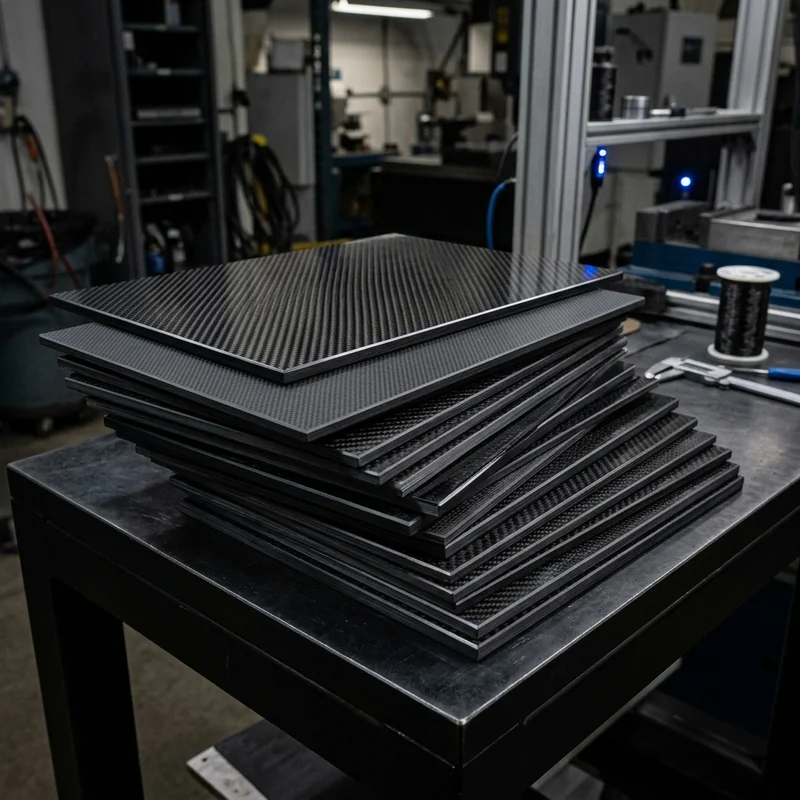
Carbon fiber standard plate-3k stripe
Lightweight, ultra-rigid standard sheets for drone fuselages, robot housings, facades and structural applications.

Carbon Fiber Plate — 3K Twill T700 3.0mm
Medium-thickness 3.0mm carbon fiber plate offering significantly higher load capacity while maintaining attractive 3K twill finish. Suitable for structural brackets, reinforcement plates, and load-bearing panels.

Carbon Fiber Plate — 3K Twill T700 1.5mm
Thin 1.5mm carbon fiber plate with 3K twill weave surface. Lightweight and stiff, commonly used for covers, panels, drone bodies, and applications requiring a premium aesthetic appearance.

Square Carbon Fiber Tube — 3K Twill T700
Square cross-section carbon fiber tube manufactured with 3K twill weave for torsional strength. Preferred for structural frames, trusses, and support columns where rectangular geometry offers design flexibility.
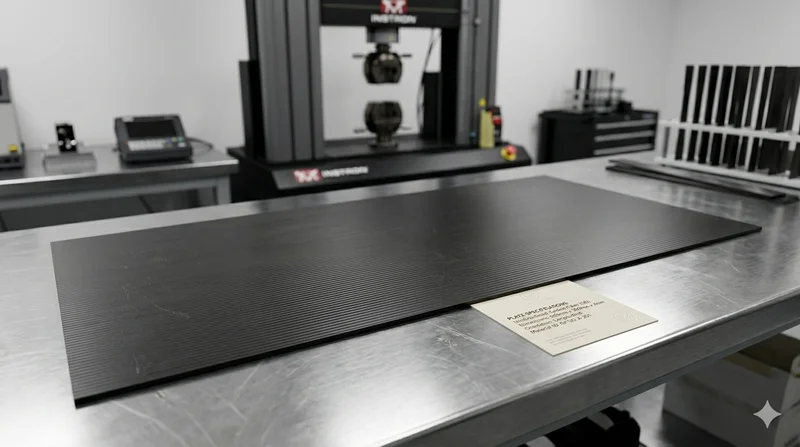
Carbon Fiber Plate — UD Unidirectional T700
Unidirectional carbon fiber plate with all fibers oriented in a single direction for maximum strength along the fiber axis. Essential for structural reinforcements, splints, and applications where load direction is predictable.