
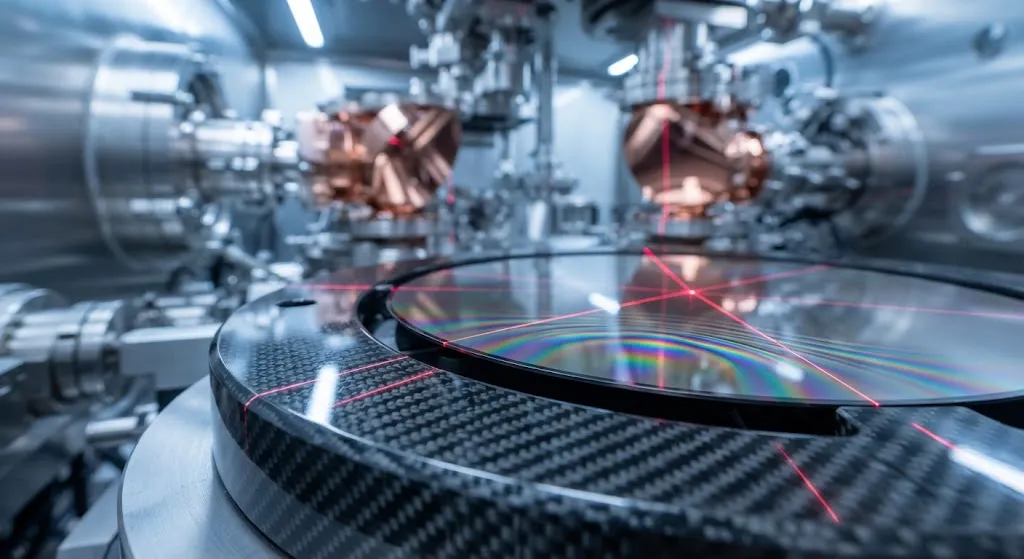
Semiconductor equipment demands exceptional carbon fiber purity and thermal stability, creating specialized market opportunities for advanced composite suppliers.
In this article, we examine the specialized requirements for carbon fiber in semiconductor equipment and the implications for material suppliers.
Why Semiconductor Equipment Demands Ultra-Pure Carbon Fiber
The Contamination Problem
Semiconductor fabrication operates at nanometer scales. A single particle or outgassed molecule can destroy an entire wafer batch worth millions of dollars.
| Contamination Source | Impact Level | Acceptable Threshold |
|---|---|---|
| Metallic particles | Critical | <0.1 atoms/cm² |
| Organic outgassing | High | <10⁻¹² Torr·L/s/cm² |
| Particulate generation | Critical | <0.01 particles/cm³ |
| Moisture absorption | Moderate | <0.01% by weight |
Standard carbon fiber contains trace metals (Na, Fe, Cu, Ca) at levels acceptable for aerospace but catastrophic for semiconductor processes.
Purity Grades for Semiconductor Applications
| Grade | Metal Content | Outgassing Rate | Typical Application |
|---|---|---|---|
| Standard | 50-200 ppm | 10⁻⁸ Torr·L/s/cm² | General industrial |
| Cleanroom | 10-50 ppm | 10⁻¹⁰ Torr·L/s/cm² | FPD manufacturing |
| Semiconductor | 1-10 ppm | 10⁻¹² Torr·L/s/cm² | EUV lithography |
| Ultra-pure | <1 ppm | 10⁻¹⁴ Torr·L/s/cm² | Advanced nodes (≤3nm) |
Critical Applications in Semiconductor Equipment
EUV Lithography Systems
Extreme ultraviolet (EUV) lithography operates at 13.5 nm wavelength in high vacuum. Carbon fiber components serve as:
- Mirror substrates — Structural support for multilayer mirrors
- Chucking mechanisms — Wafer holding during exposure
- Thermal management — Heat dissipation from high-power sources
Thermal Stability Requirements
EUV systems generate significant heat. Carbon fiber components must maintain dimensional stability:
| Parameter | Standard CFRP | Semiconductor-Grade CFRP |
|---|---|---|
| CTE (Coefficient of Thermal Expansion) | 1-2 × 10⁻⁶/K | 0.1-0.5 × 10⁻⁶/K |
| Thermal conductivity | 5-10 W/mK | 100-400 W/mK |
| Max operating temperature | 300°C | 800°C |
| Dimensional stability at 200°C | ±5 μm/m | ±0.5 μm/m |
Vacuum Chamber Components
Carbon fiber reinforced silicon carbide (C/SiC) composites are increasingly used in vacuum chambers:
- Chamber walls — Low outgassing, high rigidity
- Support structures — Minimal thermal expansion
- Electrostatic chucks — Dielectric properties with thermal management
Manufacturing Process for Ultra-Pure Carbon Fiber
Purification Steps
Producing semiconductor-grade carbon fiber requires additional processing:
1. Precursor purification — Polyacrylonitrile (PAN) precursor treated to remove metallic catalysts
2. Carbonization optimization — Higher temperatures (1800-2200°C) for complete carbonization
3. Graphitization — Treatment at 2500-3000°C to improve crystal structure
4. Surface treatment — Plasma cleaning to remove adsorbed contaminants
5. Washing — Acid treatment to leach residual metals
6. Final inspection — ICP-MS analysis for trace metal content
Quality Control Metrics
| Stage | Test Method | Acceptance Criteria |
|---|---|---|
| Precursor | ICP-OES | <0.1 ppm total metals |
| After carbonization | XPS | <1 ppm surface metals |
| After graphitization | Raman spectroscopy | ID/IG ratio <0.1 |
| Final product | ICP-MS | <0.5 ppm total metals |
| Outgassing | TGA-MS | <10⁻¹² Torr·L/s/cm² |
Market Dynamics
Supply Chain Structure
The semiconductor carbon fiber supply chain is highly specialized:
| Tier | Players | Characteristics |
|---|---|---|
| Precursor | Toray, Mitsubishi, SGL | High-purity PAN production |
| Fiber production | Toray, Toho, Hexcel | Specialized cleanroom facilities |
| Composite fabrication | Schunk, CoorsTek | Precision machining capabilities |
| OEM integration | ASML, Tokyo Electron | System-level qualification |
Pricing Structure
| Grade | Price per kg | Market Size (2025) |
|---|---|---|
| Standard aerospace | $80-120 | $2.1 billion |
| Cleanroom grade | $150-250 | $380 million |
| Semiconductor grade | $300-500 | $120 million |
| Ultra-pure | $500-800 | $25 million |
Challenges and Future Outlook
Current Limitations
| Challenge | Impact | Mitigation Strategy |
|---|---|---|
| High cost | Limits adoption | Process optimization |
| Supply concentration | Risk of shortage | Diversification |
| Qualification time | 12-18 months | Standardization efforts |
| Material variability | Yield loss | Advanced process control |
Technology Trends
The semiconductor industry roadmap drives carbon fiber requirements:
- 2026-2027 — 2nm node production begins, tighter purity requirements
- 2028-2029 — High-NA EUV systems require larger, more precise optics
- 2030+ — Post-EUV technologies may demand new material solutions
Conclusion
Carbon fiber in semiconductor equipment represents the pinnacle of material purity requirements. With metal content measured in parts per billion and thermal stability measured in sub-micron dimensional changes, these materials enable the nanometer-scale precision that modern chip manufacturing demands.
Key takeaways:- Semiconductor carbon fiber requires <1 ppm metal content (vs. 50-200 ppm for aerospace)
- Thermal stability requirements demand CTE values 10× lower than standard CFRP
- Ultra-pure grade costs $500-800/kg but enables multi-million dollar wafer production
- Market concentrated among Japanese and German suppliers
Explore more specialized carbon fiber applications: [Aerospace Grade CFRP](https://www.yongxian.co/articles/carbon-fiber-aerospace-applications), [Thermal Management](https://www.yongxian.co/articles/high-conductivity-carbon-fiber), [Advanced Manufacturing](https://www.yongxian.co/articles/ai-optimized-cfrp-fiber-placement).
Part of topic
Related Articles
- Recycled Carbon Fiber Market Forecast 2030: Technology Maturity and Commercialization Path
- South Korea Carbon Fiber Market 2026: Hydrogen Economy and Shipbuilding Innovation
- Wind Turbine Blade Leading Edge Protection 2026: Polyurethane, Tape, and Metallic Shield Solutions
- China Carbon Fiber Overcapacity 2026: Price War Impact and Industry Consolidation
- India Carbon Fiber Market 2026: Wind Energy, Aerospace, and Defense Expansion
- PAN Precursor Market 2026: Acrylonitrile Supply and Carbon Fiber Cost Structure
Interested in Our Products?
Contact our team for competitive pricing and technical specifications.
Get a QuoteRelated Products
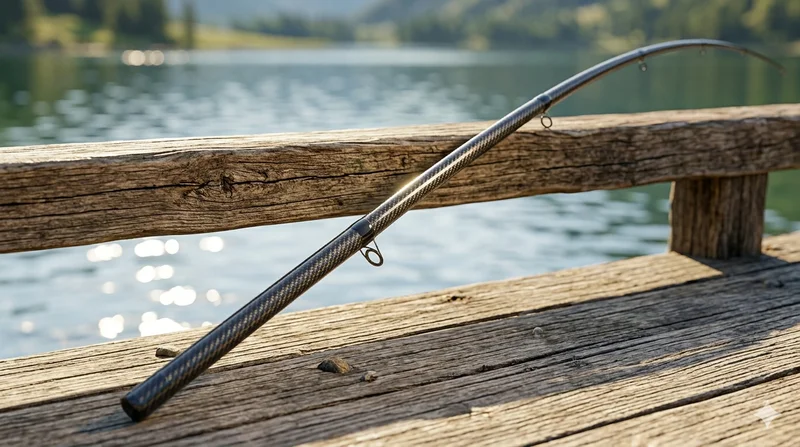
Carbon Fiber Fishing Rod Blank
High-quality carbon fiber fishing rod blank manufactured from multiple grades of Toray carbon fiber cloth. Available in a wide range of lengths, powers, and actions for freshwater and saltwater applications. Suitable for OEM rod building.
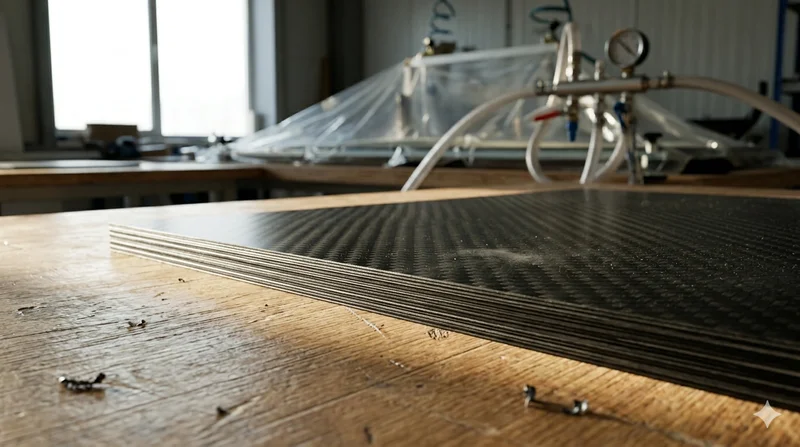
Carbon Fiber Plate — 3K Twill T700 3.0mm
Medium-thickness 3.0mm carbon fiber plate offering significantly higher load capacity while maintaining attractive 3K twill finish. Suitable for structural brackets, reinforcement plates, and load-bearing panels.
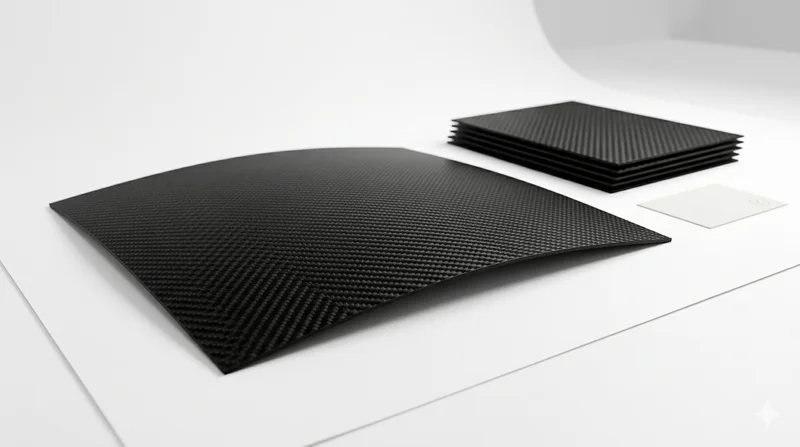
Carbon Fiber Plate — 3K Twill T700 1.5mm
Thin 1.5mm carbon fiber plate with 3K twill weave surface. Lightweight and stiff, commonly used for covers, panels, drone bodies, and applications requiring a premium aesthetic appearance.
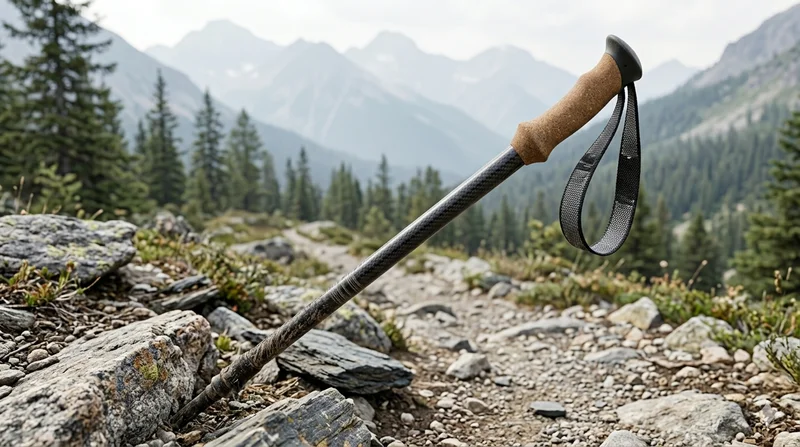
Carbon Fiber Trekking Pole
Lightweight carbon fiber trekking pole manufactured from high-grade carbon fiber tube. Weighs only 160g per pole while providing superior shock absorption and durability for hiking, trail running, and backpacking.
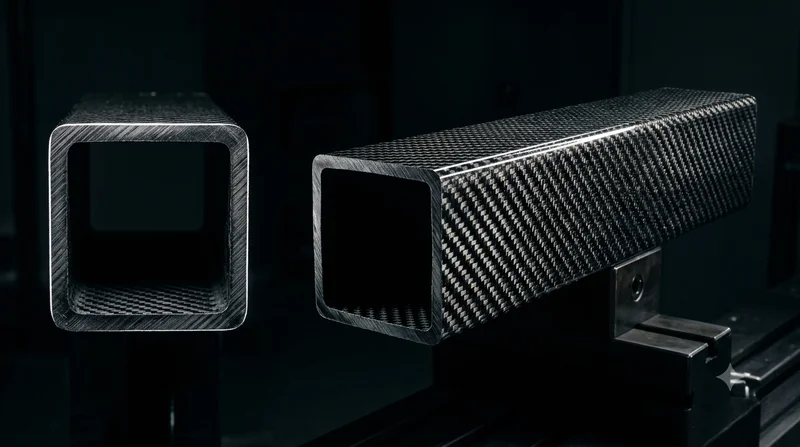
Square Carbon Fiber Tube — 3K Twill T700
Square cross-section carbon fiber tube manufactured with 3K twill weave for torsional strength. Preferred for structural frames, trusses, and support columns where rectangular geometry offers design flexibility.