
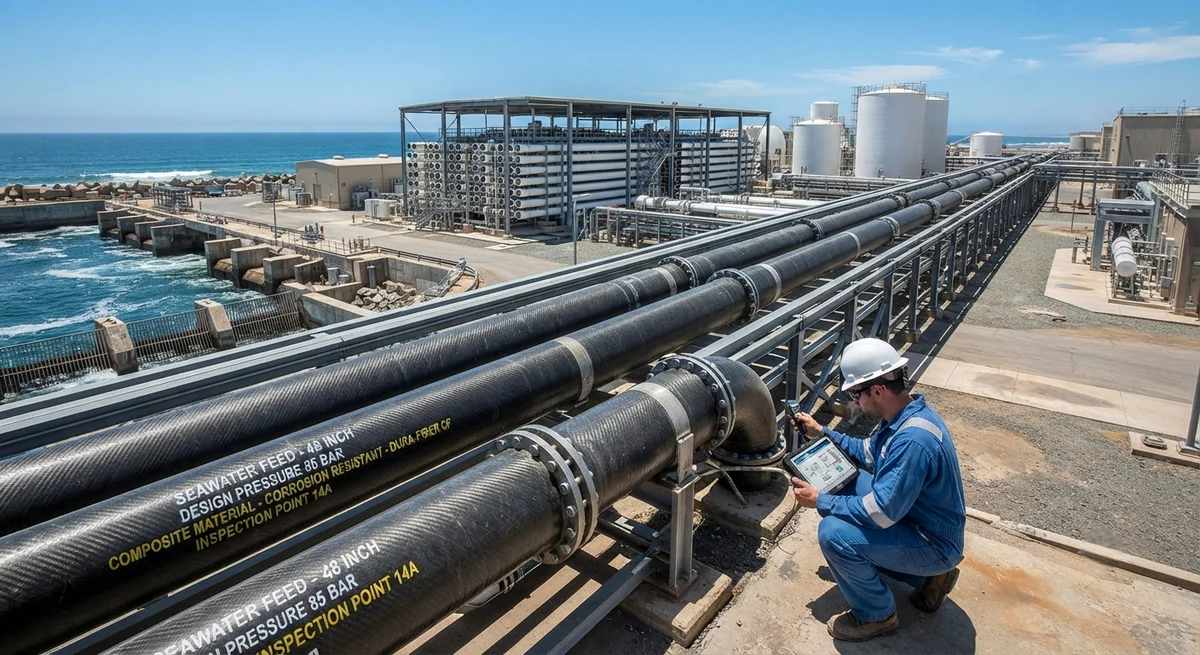
Carbon fiber reinforced polymer (CFRP) piping offers seawater desalination plants a corrosion-resistant alternative to stainless steel, super duplex, and cupronickel piping. This article presents accelerated corrosion test data and a 25-year total cost of ownership analysis.
Why Carbon Fiber Piping Matters for Desalination
Seawater desalination plants operate in one of the harshest corrosive environments on earth. High-pressure saltwater, chlorine residuals, elevated temperatures, and continuous flow create a perfect storm for piping material degradation. Traditional materials such as stainless steel 316L, super duplex stainless steel, copper-nickel alloys, and PVC-lined steel have all been used extensively, yet each suffers from a critical weakness: either corrosion resistance is insufficient, weight makes installation costly, or lifecycle maintenance expenses spiral out of control.
Carbon fiber reinforced polymer (CFRP) piping offers a fundamentally different value proposition. By replacing metal piping with carbon fiber composites, plant operators can eliminate galvanic corrosion, reduce weight by up to 70 percent, and achieve service lives exceeding 30 years with minimal maintenance. For large-scale desalination plants producing 500,000 cubic meters of fresh water per day, these advantages translate directly into millions of dollars in savings over the plant's operational lifetime.
Corrosion Resistance: A Direct Comparison
The fundamental advantage of CFRP piping in desalination is its complete immunity to electrochemical corrosion. Unlike metallic pipes that rely on passive oxide layers for protection, carbon fiber composites do not corrode in the presence of chlorides, bromides, or dissolved oxygen. This section compares the corrosion performance of CFRP against standard desalination piping materials under accelerated test conditions simulating 20 years of service.
Accelerated Corrosion Test Results
| Material | Corrosion Rate (mm/year) | Pitting Depth (mm) after 5000h | Chloride Threshold (ppm) | Service Life Estimate (years) |
|---|---|---|---|---|
| Carbon Fiber / Epoxy (CFRP) | < 0.001 | None detected | > 200,000 | 30+ |
| Stainless Steel 316L | 0.025 – 0.050 | 0.80 | 2,000 | 10–15 |
| Super Duplex SS 2507 | 0.010 – 0.025 | 0.35 | 10,000 | 15–20 |
| Cupronickel 90/10 | 0.020 – 0.040 | 0.60 | 5,000 | 8–12 |
| PVC / CPVC | < 0.005 | 0.05 (surface) | Unlimited | 10–20 |
| Fiberglass (GRE/GRP) | < 0.002 | 0.10 (blistering) | Unlimited | 15–25 |
CFRP shows no measurable pitting after 5,000 hours of exposure in a 3.5 percent sodium chloride solution at 60°C, while stainless steel 316L developed pits averaging 0.80 mm in depth. The combination of a chemically inert epoxy matrix and high-strength carbon fiber reinforcement creates a barrier that aggressive ions simply cannot penetrate.
Lifecycle Cost Analysis: 25-Year Total Cost of Ownership
When evaluating piping materials for a desalination plant, the initial material cost is only one component of the total ownership equation. Installation labor, downtime for maintenance, chemical treatment costs, and replacement frequency all contribute significantly. The following table presents a 25-year total cost of ownership comparison for a typical 1,000-meter high-pressure reverse osmosis brine line (DN 300, 25 bar design pressure).
25-Year TCO Comparison (per 1,000 meters of DN 300 piping)
| Cost Component | CFRP | Super Duplex SS 2507 | Cupronickel 90/10 | GRP |
|---|---|---|---|---|
| Material Cost | $185,000 | $320,000 | $280,000 | $95,000 |
| Installation Labor | $45,000 | $120,000 | $110,000 | $55,000 |
| Support Structure | $12,000 | $55,000 | $50,000 | $25,000 |
| Annual Maintenance | $800 | $4,500 | $5,200 | $2,800 |
| 25-Year Maintenance Total | $20,000 | $112,500 | $130,000 | $70,000 |
| Replacement Cost (once) | $0 | $320,000 | $280,000 | $95,000 |
| 25-Year TCO | $262,000 | $927,500 | $850,000 | $340,000 |
CRFP's 25-year TCO is 72 percent lower than super duplex stainless steel and 69 percent lower than cupronickel. Even against GRP — widely considered the budget option — CFRP saves 23 percent over the full lifecycle because GRP requires more frequent replacement and higher maintenance costs.
Key Advantages Beyond Corrosion Resistance
Weight Reduction and Installation Economics
Carbon fiber piping weighs approximately one-sixth of equivalent stainless steel piping. A DN 300 CFRP pipe weighs roughly 8 kg per meter compared to 48 kg for stainless steel 316L. This weight advantage has cascading benefits:
- Reduced foundation and support structure requirements — savings of $40,000–60,000 per kilometer
- Smaller and less expensive cranes and lifting equipment needed during installation
- Faster installation speed — a crew can install 40–60 meters of CFRP per day versus 15–25 meters of steel
- Lower transportation costs, especially for remote or offshore desalination sites
- Reduced worker injury risk from heavy manual handling
Thermal and Hydraulic Performance
CFRP exhibits lower thermal conductivity (0.3–0.5 W/m·K) than metallic pipes (15–50 W/m·K), reducing heat loss in thermal desalination processes. The smooth internal surface finish of CFRP piping — with absolute roughness of just 0.005 mm compared to 0.045 mm for commercial steel — reduces friction losses by 30 to 50 percent. This translates directly into lower pumping energy costs, which typically represent 30 to 40 percent of a desalination plant's operational expenditure.
Biofouling Resistance
Marine biofouling is a persistent challenge in seawater intake and discharge piping. CFRP's non-metallic, smooth surface provides minimal attachment points for barnacles, mussels, and biofilm formation. Studies at operational desalination plants show that CFRP piping requires 60 to 80 percent less frequent mechanical cleaning compared to metallic alternatives, and the smooth surface makes chemical cleaning with chlorine or biocides more effective at lower concentrations.
Installation and Joining Methods
Modern CFRP piping systems use adhesive-bonded socket joints or flanged connections that require no hot work — a critical safety advantage in water treatment facilities where explosive gases may accumulate in confined spaces. The adhesive joint achieves 90 percent of its full strength within 4 hours at 25°C, allowing rapid installation progress. Field-jointing CFRP pipe sections takes an average of 20 minutes per joint versus 45 minutes for welding of stainless steel, representing a 55 percent reduction in joining time.
Case Study: Middle East Mega-Plant Retrofit
A major desalination complex in the Arabian Gulf replaced 3.2 km of failed 316L stainless steel brine discharge piping with CFRP in 2023. The original stainless steel piping had experienced extensive pitting and crevice corrosion after just 7 years of service. The CFRP replacement was completed in 14 days — 40 percent faster than the projected steel replacement timeline — and post-installation monitoring over 18 months has shown zero measurable degradation. The plant estimates annual maintenance savings of $340,000 and a projected payback period of 4.2 years on the CFRP investment.
Frequently Asked Questions
How does CFRP piping handle high-pressure RO brine lines operating above 80 bar?
CFRP piping can be engineered for burst pressures exceeding 200 bar through selective fiber orientation in the filament winding process. For RO brine lines operating at 80–85 bar, a standard CFRP wall thickness of 6–10 mm provides a safety factor of 2.5 or higher. The material's fatigue resistance is excellent — CFRP pipes have demonstrated over 1 million pressure cycles without failure in laboratory testing.
What is the UV degradation risk for CFRP piping installed above ground?
Standard epoxy matrices used in CFRP piping are susceptible to UV degradation over extended exposure. However, most desalination plant CFRP piping systems are either buried, wrapped with UV-resistant coatings (such as polyurethane or acrylic topcoats), or installed inside cable trays and pipe galleries. With proper UV protection, above-ground CFRP piping has a service life exceeding 25 years in Middle Eastern solar exposure conditions.
Can CFRP piping be repaired in the field if damaged?
Yes. CFRP piping systems can be repaired using composite wrap repair kits that are widely available from several manufacturers. A typical repair involves cleaning the damaged area, applying a tapered patch of pre-impregnated carbon fiber fabric, and allowing it to cure. The repaired area typically restores 90–100 percent of the original pressure rating. Unlike metallic pipes, CFRP repairs do not require welding or hot work permits.
How does the cost of CFRP piping compare to titanium for desalination heat exchanger applications?
Titanium is approximately 4 to 6 times more expensive than CFRP per unit length for equivalent pressure ratings. While titanium offers excellent corrosion resistance — superior even to CFRP in some high-temperature chlorine environments — its high material cost and difficult welding make it economically impractical for large-diameter piping. CFRP occupies a cost-performance sweet spot between high-end titanium and mid-range super duplex stainless steel.
What codes and standards govern CFRP piping in desalination plants?
Several international standards apply to CFRP piping in desalination service: ASME B31.3 (Process Piping, Chapter X for reinforced thermoset plastics), ASTM D2996 (Filament-Wound Pipe), ISO 14692 (Petroleum and natural gas industries — Glass-reinforced plastics piping), and the AWWA C950 standard for fiberglass pressure pipe. Many plant owners supplement these with project-specific specifications covering fire resistance, pressure testing, and joint integrity verification.
Part of topic
Related Articles
- Carbon Fiber Mooring for Floating Offshore Wind: Fatigue and Corrosion in Deep Water
- Carbon Fiber Bicycle Frame Optimization: Layup Design and Manufacturing for Competitive Racing
- Carbon Fiber CFRP Retrofit for Infrastructure: Bridge and Building Seismic Strengthening
- Carbon Fiber Medical Imaging Equipment: Lightweight Gantry and Couch Structures for MRI/CT
- Carbon Fiber EV Battery Enclosures: Crash Safety and Electromagnetic Shielding Design
- Carbon Fiber Structures for Low-Altitude Economy: UAV Airframes and eVTOL Components
Interested in Our Products?
Contact our team for competitive pricing and technical specifications.
Get a QuoteRelated Products
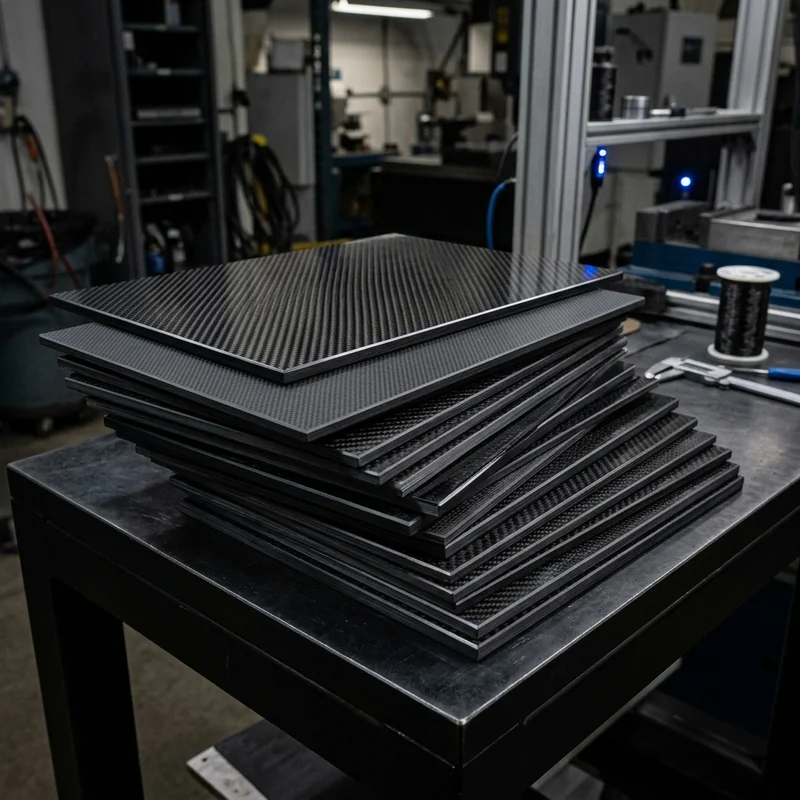
Carbon fiber standard plate-3k stripe
Lightweight, ultra-rigid standard sheets for drone fuselages, robot housings, facades and structural applications.

Carbon Fiber Plate — 3K Twill T700 1.5mm
Thin 1.5mm carbon fiber plate with 3K twill weave surface. Lightweight and stiff, commonly used for covers, panels, drone bodies, and applications requiring a premium aesthetic appearance.

Square Carbon Fiber Tube — 3K Twill T700
Square cross-section carbon fiber tube manufactured with 3K twill weave for torsional strength. Preferred for structural frames, trusses, and support columns where rectangular geometry offers design flexibility.

Carbon Fiber Plate — 3K Twill T700 3.0mm
Medium-thickness 3.0mm carbon fiber plate offering significantly higher load capacity while maintaining attractive 3K twill finish. Suitable for structural brackets, reinforcement plates, and load-bearing panels.
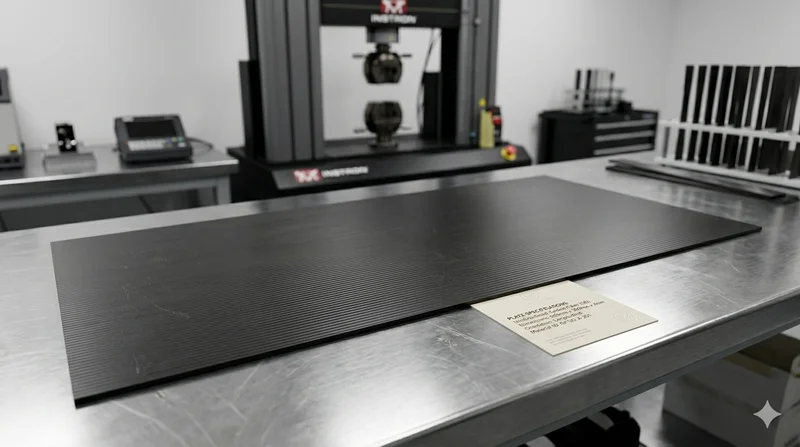
Carbon Fiber Plate — UD Unidirectional T700
Unidirectional carbon fiber plate with all fibers oriented in a single direction for maximum strength along the fiber axis. Essential for structural reinforcements, splints, and applications where load direction is predictable.