
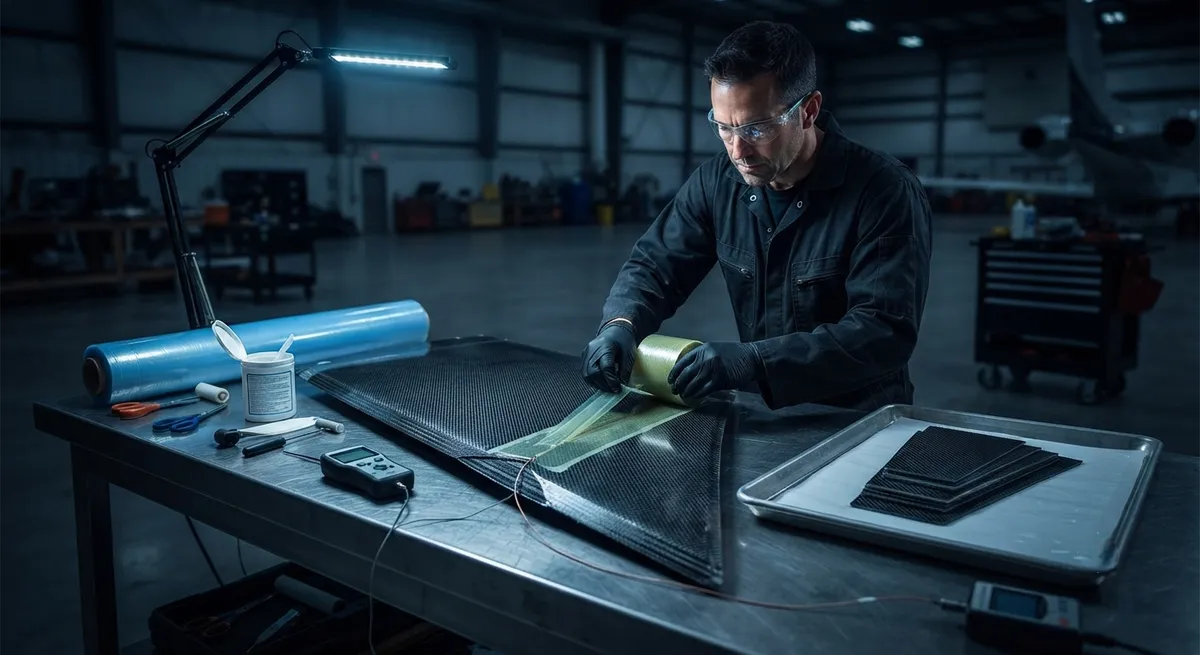
Carbon fiber structures are prized for their strength-to-weight ratio, but when a laminate suffers impact damage, a barely visible delamination can grow into a flight-critical defect. Bolted patch repairs add weight and introduce new stress concentrations, which defeats the purpose of a
Introduction
Carbon fiber structures are prized for their strength-to-weight ratio, but when a laminate suffers impact damage, a barely visible delamination can grow into a flight-critical defect. Bolted patch repairs add weight and introduce new stress concentrations, which defeats the purpose of a composite airframe. Scarf repair solves this by machining a tapered recess around the damage and bonding a stepped patch into it, restoring both the surface contour and much of the original load-bearing capability. It is the standard structural repair method across commercial aviation, rotorcraft, and increasingly in wind energy and marine applications.
Getting a scarf repair right is demanding. The taper geometry controls how efficiently load transfers from the parent laminate into the patch, the adhesive system determines whether bondline stresses remain within allowable limits, and the entire process must be validated to meet airworthiness requirements. This article walks through the taper ratio, adhesive selection, surface preparation, and certification framework that separate a durable repair from a premature failure.
How a Scarf Repair Works
A scarf repair begins by physically removing the damaged plies, then tapering the surviving laminate into a wedge with a precisely controlled angle. A multi-layer patch cut from the same material system is bonded into this recess and co-cured or bonded with an adhesive film. When the taper is shallow, the load transfers gradually along the bondline instead of concentrating at a single sharp transition, which is why scarf geometry has such a large effect on strength.
The defining parameter of any scarf repair is the taper ratio — the length of the taper divided by the depth removed. A 1:20 taper means that for every 20 millimeters of horizontal scarf length, the laminate is cut down 1 millimeter in depth. Higher ratios (1:30, 1:40) produce shallower, longer tapers that spread load over a greater bond area.
| Taper ratio | Taper angle (°) | Typical strength recovery* | Common application |
|---|---|---|---|
| 1:10 | ≈5.7° | 55-70% | Temporary / ground-use repairs |
| 1:20 | ≈2.9° | 75-90% | General aviation skins, fairings |
| 1:30 | ≈1.9° | 85-95% | Primary flight structure (typical) |
| 1:40 | ≈1.4° | 90%+ | Highly loaded or stiffness-critical areas |
*Strength recovery depends on laminate thickness, adhesive, and bond quality; these are representative figures for a quasi-isotropic layup with a toughened film adhesive at room temperature.
The steepest tapers (1:10, 1:20) are reserved for lightly loaded or temporary repairs because the short bond length concentrates shear stress. Aerospace primary structure commonly specifies 1:30, and in many OEM structural repair manuals a 1:40 taper is used where maximum load retention is required but the prolonged repair footprint is acceptable on larger skins and covers.
Adhesive Selection for Bonded Scarf Repairs
The adhesive carries essentially the entire shear load in a scarf repair, so its selection is as important as the carbon fiber patch itself. Three families dominate aerospace practice:
- Film adhesives: Pre-cast epoxy films with a scrim carrier, cured under heat and pressure. They produce a uniform, controlled bondline and are the default for structural scarf repairs with an autoclave or heat blanket.
- Paste adhesives: two-part epoxy pads and thixotropic pastes applied by syringe or trowel. They suit field repairs, doublers and co-curings without positive pressure, and gap-filling bonds to cure surfaces.
- Toughened structural adhesives: epoxy-polyamide or epoxy-rubber hybrids with improved fracture toughness, used where peel and impact loads dominate and thicker bondlines are unavoidable.
Selection hinges on the cure schedule the repair environment can deliver. Film adhesives for primary structure are cured at 120-180°C for 1-3 hours under 0.1-0.4 MPa vacuum or autoclave pressure. Paste adhesives cure from room temperature up to 120°C and are chosen when positive pressure tooling is not viable, accepting a slight penalty in ultimate strength. Toughened film systems add a degree of peel resistance that is important in engine-adjacent or hot-zone repairs.
Load Transfer and Residual Strength
The strength of a bonded scarf repair depends fundamentally on peel and shear stress transfer. In a shallow scarf, the shear stress in the adhesive rises toward a peak at the taper tip, and wherever the patch face carries a step or mismatch, peel stress appears. If the taper is too steep or the adhesive too stiff, the peak local stress exceeds the adhesive yield and the joint debonds at a fraction of undamaged strength. That is why a peak-stress analysis is essential for every structural repair: the design intent is to make the adhesive shear stress roughly uniform along the bondline by choosing a taper shallow enough that load transfers gradually.
Practical guidance established from test programs: residual strength recovery above about 85% typically requires a taper ratio of 1:30 or shallower combined with a ductile, toughened adhesive and a well-rounded patch edge. Repairs built with a 1:10 taper and a brittle paste often recover only half the original strength and are not approved for flight-critical parts. Moisture control during the repair (parts must be dry before bonding) is equally important, because absorbed moisture turns to steam during the elevated-temperature cure, creating porosity voids that lower bond strength.
Surface Preparation and Process Control
Surface preparation determines whether the adhesive wets the patch and the underlying laminate at a molecular scale. The three essential steps are abrasion, wiping and drying, and cleanliness verification. Abrasion removes the glossy, chemically inert resin surface to expose fresh, actively polar carbon surface — usually with fine abrasive blasting or manual abrading. Solvent wipe removes any residual oil and dust, and a check with a cleanliness test (protrusion meter or contact angle) confirms the surface is ready. Bonding must happen within a short open-time window, and the environment must be temperature- and humidity-controlled because excess moisture undermines the bond.
Downstream process control is equally strict: the repair area is vacuum-bagged, a thermocouple is placed at the bond, and heat is raised to the cure temperature at a governed ramp rate. Real-time cure monitoring and a pressure/vacuum record are kept. Under the major repair programs the entire sequence, from scarf to ultrasonic inspection, is documented so the bond is traceable long after the repair leaves the workshop.
Certification and Quality Requirements
No bonded scarf repair becomes part of an approved airframe without a documented trail. In civil aerospace the relevant framework is repair data approved by the Type Certificate holder, or repair data approved under the applicable provisions of FAR Part 145 / EASA Part-145, frequently delivered through an Approved Repair Design (ARD) scheme. Certification requires the repair to demonstrate that it restores at least the load capacity required for the remaining structural margin, typically demonstrated with coupon-level tests, and an analysis method calibrated against that test evidence.
For bonded (adhesively joined) repairs the threshold is that verification is demonstrated rather than assumed: bondline qualification uses coupon tests that prove the failure mode switches from an adhesive-interface failure to a cohesive failure, backed by ultrasonic inspection of the bonded patch. This is what separates a flight-certified bonded repair from a merely cosmetic structural repair, and it is why the certification assessment and its test evidence are created and curated by qualified engineers.
Frequently Asked Questions
What is the taper ratio, and how does it affect a scarf repair's strength?
The taper ratio is the length of the tapered cut divided by the thickness removed. A 1:30 ratio produces a shallower, longer taper than 1:20. Shallow tapers spread the adhesive shear load over a greater bond area, which lowers the local peak stress, and this raises the residual strength of the repair. For primary structure, 1:30 or shallower typically recovers 85-95% of the original strength, while steep 1:10 tapers recover only 55-70% and are not approved for flight-critical parts.
Can a bonded scarf repair be used on a load-bearing carbon fiber airframe part?
Yes, bonded scarf repairs are approved for primary flight structure, but only when the repair data is certified and based on testing that validates the bond as reliability-proven — a coupon test that demonstrates the adhesive bond is the limiting link, plus ultrasonic coverage of the entire bonded patch. The repair must also use an approved material system, a controlled taper, and a carrier/adhesive cured on the specified schedule. Absent certification, a bonded repair is limited to temporary or nonstructural duties.
Why is surface preparation so important for a scarfed bonded repair?
An adhesive bond is only as strong as the interfaces it connects. If the surface is glossy, contaminated, oily, or damp, the adhesive adheres to the contaminated layer instead of the carbon fiber, and the joint fails at low load. Verified abrasion, a clean wiping stage, a rapid open-time window, and a dry, moisture-controlled environment are what allow the bond to develop the full shear strength that the tapers are designed around.
What is the difference between a temporary repair and a certified structural repair?
A temporary repair uses a safe and simple patch (often mechanically or with a coarse taper, e.g. 1:10) intended to restore limited load for a short term until a permanent repair is made. It is documented but not certified to restore the full design capacity. A certified structural repair is built from the approved scarf geometry and adhesive, follows the manufacturer's qualified process with recorded cure data, and is validated by test and analysis so that it is the same as the original structure for the design load cases.
Conclusion
A scarf repair is the preferred way to restore a carbon fiber structure through bonded patching rather than bolting on a heavier doubler. The taper ratio sets the upper limit of strength recoverable, the adhesive selection and surface preparation determine whether that strength is actually achieved, and certification evidence determines whether the result is acceptable as a primary flight part. A thorough, well-documented 1:30 repair with a toughened film adhesive and clean, dry surfaces recovers 90%+ of load capacity — for practical purposes indistinguishable from the original structure.
When a bonded repair program is on your shop floor, reliable spare materials matter as much as process discipline. Explore our aerospace-grade carbon fiber prepregs and woven reinforcements for a matching patch layup, or contact our engineering team to review the taper, adhesive, and cure recommendation for your specific structure.
Part of topic
Related Articles
- Carbon Fiber Drone Blades and Propellers: Stiffness, Balance and Noise Reduction
- Fiberglass Filament Wound Tubes: Cost-Effective Alternative to Carbon Fiber
- Filament Wound Epoxy Tube Design: Wall Thickness, Fiber Angle and Load Optimization
- Filament Wound Epoxy Tubes: Testing Standards and Quality Assurance
- Filament Wound Epoxy Tubes Manufacturing: Process and Quality Control
- Filament Wound Fiberglass Tube: Process Parameters and Performance vs Carbon Fiber
Interested in Our Products?
Contact our team for competitive pricing and technical specifications.
Get a QuoteRelated Products
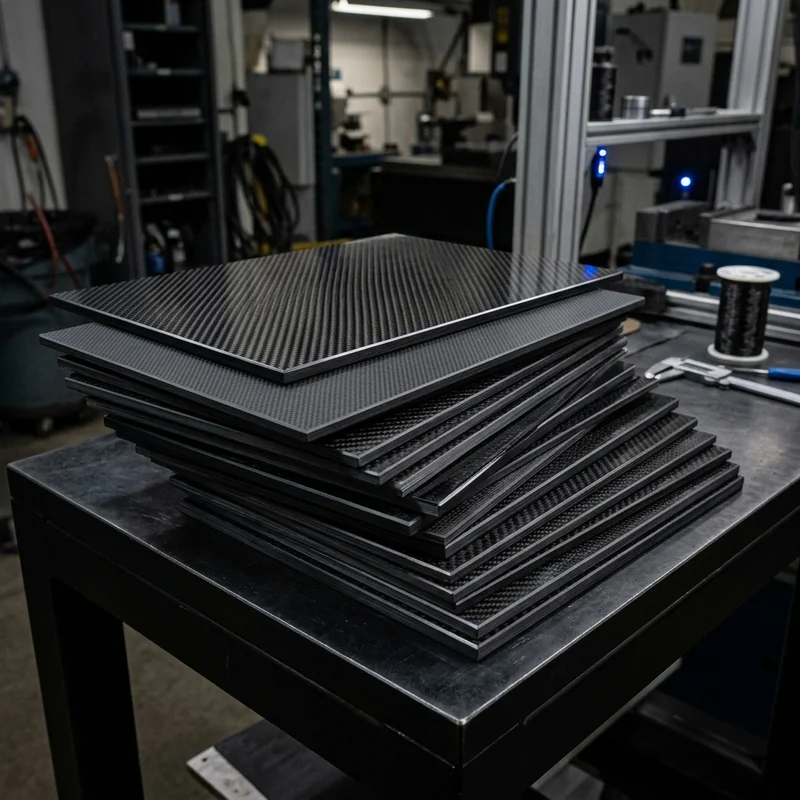
Carbon fiber standard plate-3k stripe
Lightweight, ultra-rigid standard sheets for drone fuselages, robot housings, facades and structural applications.
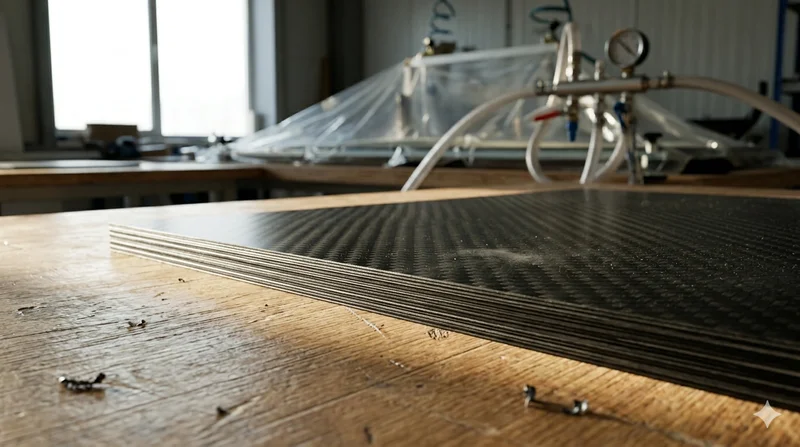
Carbon Fiber Plate — 3K Twill T700 3.0mm
Medium-thickness 3.0mm carbon fiber plate offering significantly higher load capacity while maintaining attractive 3K twill finish. Suitable for structural brackets, reinforcement plates, and load-bearing panels.
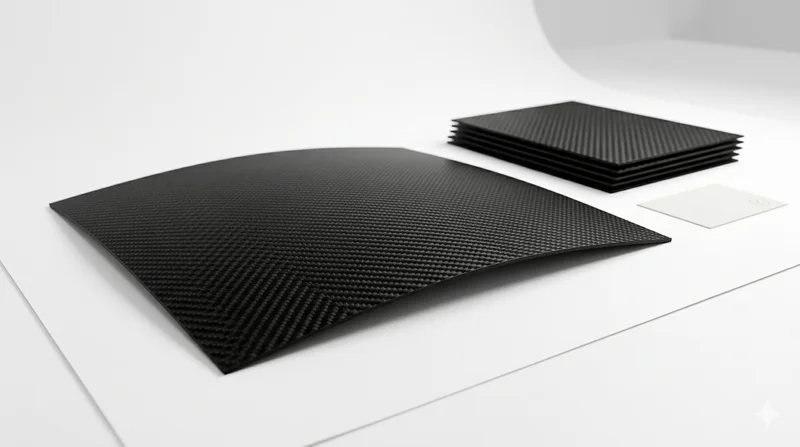
Carbon Fiber Plate — 3K Twill T700 1.5mm
Thin 1.5mm carbon fiber plate with 3K twill weave surface. Lightweight and stiff, commonly used for covers, panels, drone bodies, and applications requiring a premium aesthetic appearance.
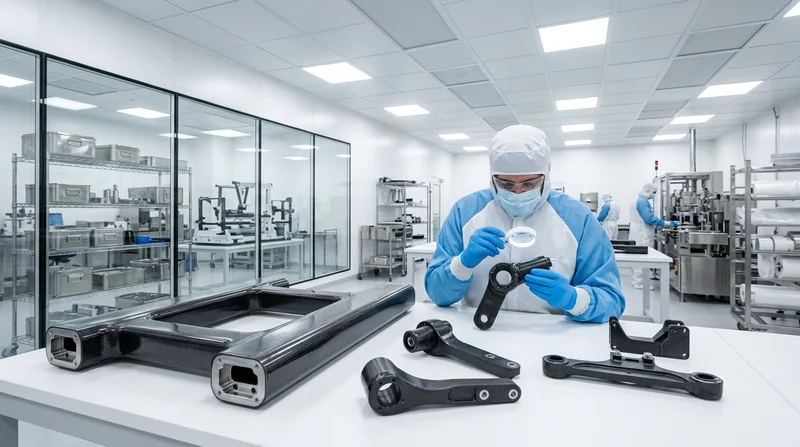
Custom Carbon Fiber Medical Device Components
Medical-grade carbon fiber components manufactured for imaging equipment, surgical instruments, and patient support systems. Carbon fiber's radiolucency (X-ray transparency) and high strength-to-weight ratio make it ideal for CT scanner beds, wheelchair frames, surgical robot arms, and MRI-compatible accessories. Biocompatible resin systems available.
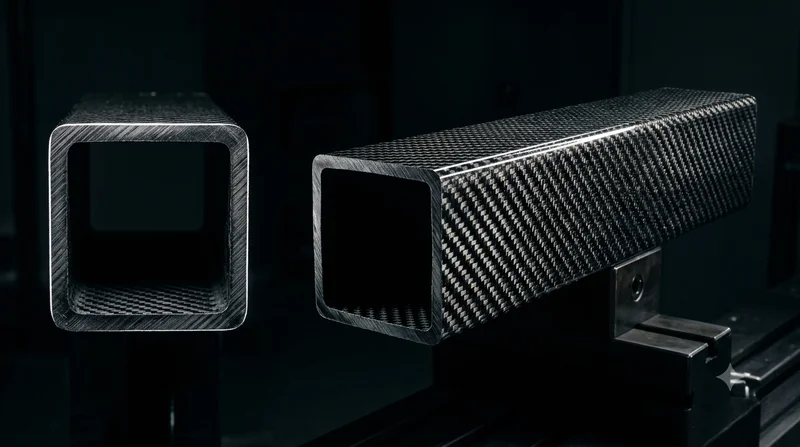
Square Carbon Fiber Tube — 3K Twill T700
Square cross-section carbon fiber tube manufactured with 3K twill weave for torsional strength. Preferred for structural frames, trusses, and support columns where rectangular geometry offers design flexibility.