
In the production of carbon fiber composite parts, the single layer of flow media, peel ply, and vacuum bag that sits on top of the laminate is far from disposable convenience — it is the mechanism that controls how much resin leaves, how completely air is evacuated, and ultimately how
Introduction
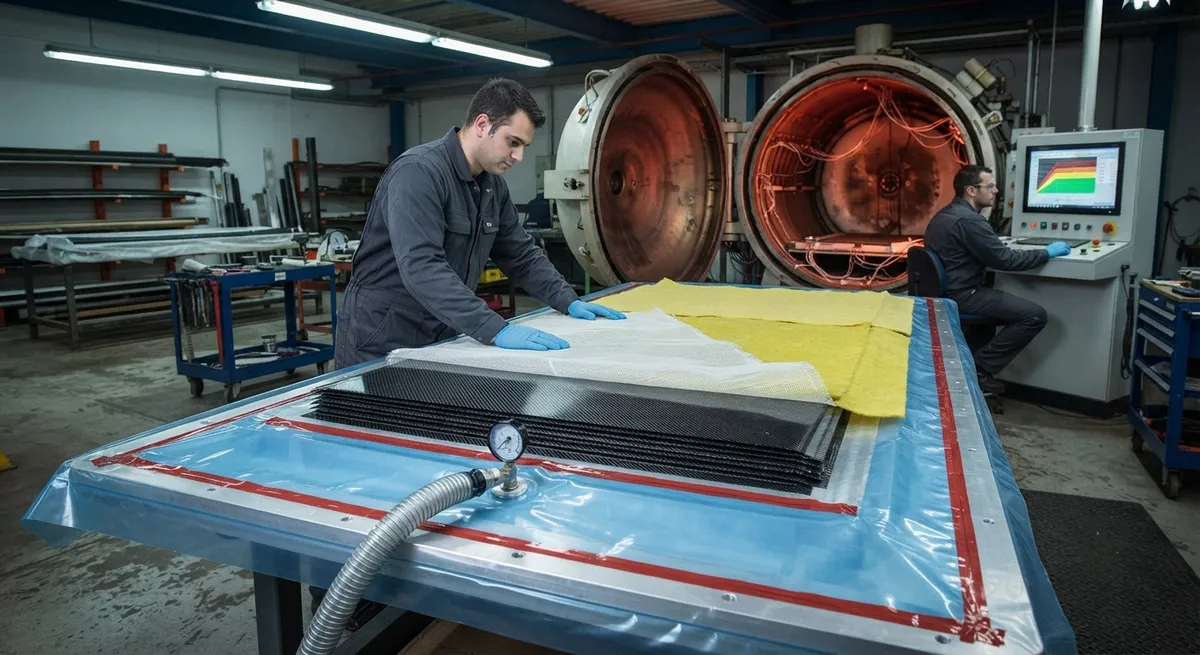
In the production of carbon fiber composite parts, the single layer of flow media, peel ply, and vacuum bag that sits on top of the laminate is far from disposable convenience — it is the mechanism that controls how much resin leaves, how completely air is evacuated, and ultimately how thick and void-free the final part becomes. The bleed and breather system, made from engineering fabrics rather than scrap material, is what turns raw carbon fiber fabric and resin into a consistent, structural composite with the fiber volume fraction engineers specify on the drawing.
Yet this consumable stack is usually specified by habit rather than by engineering. A shop that used 25 g/yd² bleeder for one panel keeps using it for every panel, regardless of whether the target fiber volume is 58% for a helicopter part or 45% for a cosmetic trim panel. This article breaks down the physics of bleed and breather system design, quantifies consumable performance, and gives a repeatable procedure for matching bleeder and breather selection to a measured thickness target.
How Resin Bleed and Breather Work Together
During an autoclave or oven cure, the combined consumable stack outside the laminate performs three distinct jobs:
- Peel ply separates the cured part from the "bleeder" so the finished laminate releases cleanly. It also leaves a reproducible rough surface texture ideal for post-cure bonding and secondary adhesive bonding.
- Bleeder (resin-absorbing layer) absorbs excess resin squeezed out of the laminate as it becomes fluid under heat and pressure. Its thickness and absorbency set how much resin the laminate can lose, which directly controls fiber volume fraction and thickness.
- Breather layer provides a continuous path for the vacuum to reach every point of the laminate and for air and volatiles to escape. Because it sits between the bag film and the bleeder, its permeability governs how evenly the vacuum distributes under the whole vacuum bag — the source of uniformity, which directly affects warping, resin-rich pockets, and edge quality.
Consumable Selection by Areal Weight and Permeability
Resin bleed systems are classified by their "areal weight" (mass per unit area) and their permeability, both measured on standard industry test methods. The table below maps typical bleeder and breather fabrics to the process they suit:
| Consumable | Areal Weight (g/m²) | Role | Typical Cure Conditions | Key Property |
|---|---|---|---|---|
| Glass (E-glass) bleeder cloth | 100-500 | Resin bleed control | Autoclave, 100-180 °C | High absorbency, thermally stable, wrinkle-resistant |
| Polyester non-woven breather | 200-600 | Bleed + flow media | Oven or autoclave | Good permeability, low cost, disposable |
| Nylon breather | 300-700 | Breather and release | Vacuum bag, RTM, low-pressure cure | High permeability, damage resistance |
| PTFE-coated breather | Heat-weldable | Non-stick release + breather | High-temp autoclave, 180-220 °C | Chemical resistance, no stick-up |
| Carbon (graphite) bleeder | 150-400 | High-temp bleed | Autoclave >200 °C | Stable to high temp, conductive |
Two quantities matter most when choosing: (1) the total absorbency of the bleeder stack, which is the maximum resin it can hold per square meter before the resin floods back into the laminate, and (2) the vertical permeability of the breather, which decides whether air is pulled out quickly or slowly.
Bleed Ratio and How It Controls Thickness
"Bleed ratio" is the ratio of bleeder areal weight (area density) to the laminate's fiber areal weight placed on the tool, typically expressed as a percentage of the total resin content to be removed. If you bleed too little, the part comes out resin-rich and too thick. If you bleed too much, the laminate becomes starved, dry areas appear, and the fiber volume fraction rises beyond the design point, causing porosity in the resin-poor zones.
The relationship is linear and predictable in stabilized prepreg systems. For a typical tension-side prepreg with an initial fiber volatile content around 35-38%, a bleed ratio of 5-10% typically produces a fiber volume fraction between 55-60%. The table below gives the bleed-ratio-to-FVF relationships engineers use as a first-pass estimate:
| Target Fiber Volume Fraction | Approximate Bleed Ratio (% resin removed) | Typical Resulting Thickness Change from Net Thickness |
|---|---|---|
| 55% | 3-6% | Net thickness unchanged |
| 58% | 6-9% | −2 to −4% |
| 60% | 9-12% | −5 to −7% |
| 62% | 12-16% | −8 to −10% |
In practice, engineers count the total resin that the bleeder cloths will absorb as a function of their area density, and size the number of bleeder plies so their total absorption equals target bleed weight. The engineering trick is that the bleeder finish and the cure schedule define only the potential rate; the actual bleed is limited by the bleeder's absorption capacity. So cutting any bleeder layer or swapping the bleeder material changes the fiber volume fraction of a cured part by several %.
Breather Stack Placement and Air Leak Management
Even a correctly sized bleeder cannot function if the breather fails to deliver a consistent vacuum to the center of the part. The dominant failure mode of bleed/breather systems is a "bridged" vacuum — where the breather is crushed under consolidation pressure and pockets of air remain trapped near the part edges or at the central zone. Three rules govern reliable breathing:
- Always cross order to the vacuum port. A single breather path straight to the port, unarticulated in the bag, is what lets air travel. Do not block breather continuity with tape lines or protruding flanges.
- Give the breather enough thickness. Under autoclave pressure, a light 300 g/m² breather can compress by 30-40%, losing permeability exactly when the resin is most fluid. A 600 g/m² breathable or a high loft polyester net prevents this collapse.
- Match extreme edges. The area inside the seam and around sharp corners heats up and cures first; if the breather does not reach into every recess, the laminate thickens locally, producing resin pockets or resin reading. Keep the breather within 1-3 mm of any edge that sharp radius-locking dented.
Correlated with bleed design, temperature uniformity in the consumable stack is the controlling variable. The bleeder layers act as heat sinks during the initial ramp; we also run a thermal blanket so the bleeder and breather do not cool, restricting resin flow. This is why thicker breath that retains loft when it warms is preferred by careful shops rather than the thinnest available.
Void Prevention and Quality Verification
The ultimate check of a bleed/breather system is how much porosity ends up in the cured part. Any air that the breather path fails to remove during the 10-12 minute vitrification window is trapped in the resin and shows up as voids in the micrograph. The primary configuration-level anti-porosity counter-measures live in the gear-stack design:
- Sweep air from the low point to the high port so that trapped bubbles evacuate upward through the path, rather than toward the compact.
- Apply manufacturer-recommended resin dry-film or vacuum de-bulk cycles before bagging; they laminate while the matrix is still low-viscosity.
- Comply with a leak test on the bag at 6-8 kPa under report so the bleeder volume and breather path are proven before you commit the part to temperature.
Post-cure verification uses micrography on a section or acid-digestion fiber volume measurement to confirm that fiber volume and void content meet the design specification. A 300x cross-section micrograph reveals both artifact: whether the bleed ratio yielded the intended matrix content and whether breathing proved adequate to reach next to zero gas voids.
Frequently Asked Questions
How much effect does the bleed ratio have on the final thickness of a cured panel?
It is direct and often significant. With a fabric system, raising the bleed ratio from 8% to 14% typically drops the panel's fiber volume fraction from about 58% to 62% and can change the finished thickness by 5-10% depending on the baseline thickness. Because thickness is a stated requirement in many carbon fiber components (such as a 2.0 mm skin), bleed ratio must be treated as a process variable, not a fixed setting. Measure fiber volume on a test panel and adjust the bleeder plies to arrive at the specified thickness by iteration until the first-run creates the exact thickness.
Does a disposable breather fabric always need to be resin-proof, or can I reuse it?
You should never reuse a bleeder or breather that has absorbed resin. Once resin cures into the stack, it becomes brittle, loses permeability, and can no longer provide an effective path for air; reusing it almost guarantees a bridged bulk cell with trapped voids and poor surface finish. Breather placed on the non-resin face (a dedicated breather that never contacts the laminate) can sometimes be reused if the resin did not wick into it, but the seams and any touch point make this hard to guarantee. Most quality regulated shops treat all bleeder and breather layers from a one-part-run, the ones from the nullable bag side can sometimes be reused, but this is rarely cost-effective given consumable pricing.
What happens if I use too few breather plies and the vacuum compresses the stack?
If the breather compresses rather than maintain its network, three faults will present: the vacuum can no longer reach the central laminate, the fiber bundle becomes poor when air pressure builds high, and edge or corner zones cure with visible porosity. Combined, this produces a panel that is thicker than floor target, resin-rich in the center, and with acceptable strength lower than the laminate spec in the middle. The fix is to add a high loft (>600 g/m²) breather layer or a coarser flow media and re-run the vacuum gate-flow test before the cure cycle. For production, this makes the breather stack the largest variable in part quality — match it to the pressure rating of your process.
Conclusion
A well-designed resin bleed and breather system is the difference between a structural panel that meets its fiber volume fraction and thickness drawing requirement and one that is sent back for a porosity rework. The bleed ratio decided by bleeder absorption and bleeder areal weight sets fiber volume, the breather permeability and placement guarantee uniform vacuum, and a rigorous post-cure micrograph study confirms the intended result. For any cure temperatures above 150 °C or any thickness-critical part, the consumable stack must be treated as engineered tooling.
Designing a bleed and breather system is empirical, but it is entirely repeatable once you have the engineering fabrics and data. Explore our carbon fiber prepreg and vacuum-bagging consumable range, or contact our process engineering team to validate a bleed matrix and stack recipe for your specific part and cure profile.
Part of topic
Related Articles
- Carbon Fiber Drone Blades and Propellers: Stiffness, Balance and Noise Reduction
- Fiberglass Filament Wound Tubes: Cost-Effective Alternative to Carbon Fiber
- Filament Wound Epoxy Tube Design: Wall Thickness, Fiber Angle and Load Optimization
- Filament Wound Epoxy Tubes: Testing Standards and Quality Assurance
- Filament Wound Epoxy Tubes Manufacturing: Process and Quality Control
- Filament Wound Fiberglass Tube: Process Parameters and Performance vs Carbon Fiber
Interested in Our Products?
Contact our team for competitive pricing and technical specifications.
Get a QuoteRelated Products
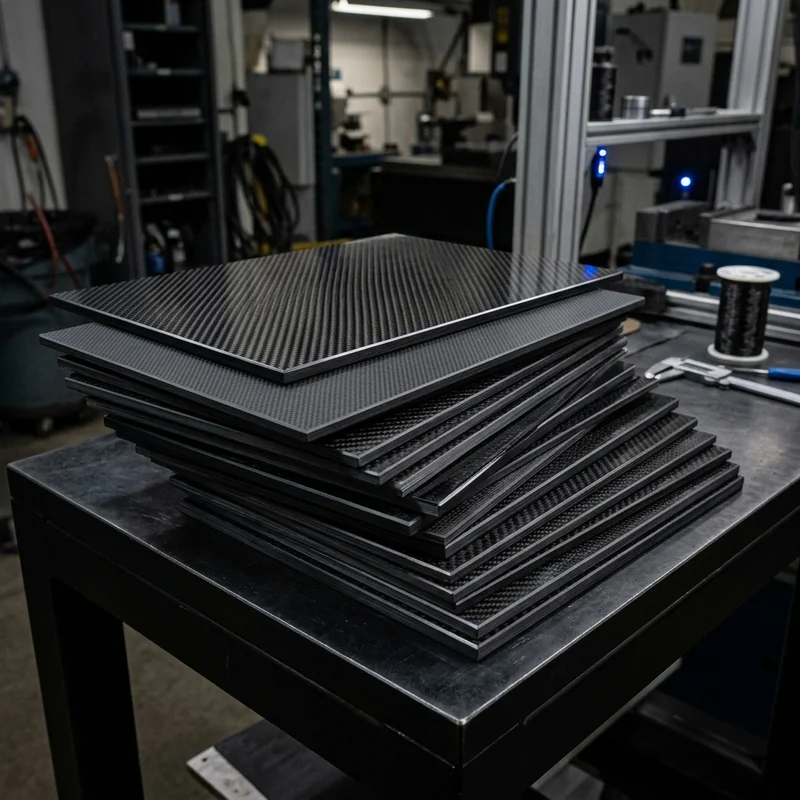
Carbon fiber standard plate-3k stripe
Lightweight, ultra-rigid standard sheets for drone fuselages, robot housings, facades and structural applications.

Carbon Fiber Plate — 3K Twill T700 3.0mm
Medium-thickness 3.0mm carbon fiber plate offering significantly higher load capacity while maintaining attractive 3K twill finish. Suitable for structural brackets, reinforcement plates, and load-bearing panels.

Carbon Fiber Plate — 3K Twill T700 1.5mm
Thin 1.5mm carbon fiber plate with 3K twill weave surface. Lightweight and stiff, commonly used for covers, panels, drone bodies, and applications requiring a premium aesthetic appearance.
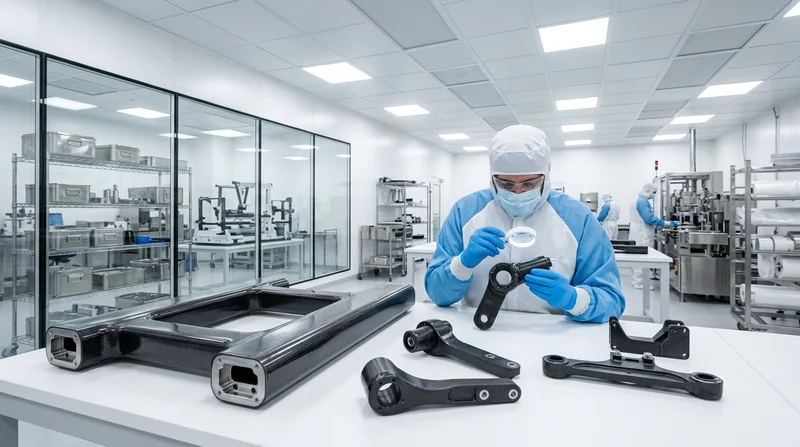
Custom Carbon Fiber Medical Device Components
Medical-grade carbon fiber components manufactured for imaging equipment, surgical instruments, and patient support systems. Carbon fiber's radiolucency (X-ray transparency) and high strength-to-weight ratio make it ideal for CT scanner beds, wheelchair frames, surgical robot arms, and MRI-compatible accessories. Biocompatible resin systems available.

Square Carbon Fiber Tube — 3K Twill T700
Square cross-section carbon fiber tube manufactured with 3K twill weave for torsional strength. Preferred for structural frames, trusses, and support columns where rectangular geometry offers design flexibility.