
The car body is the primary structure of every passenger train. It carries passenger mass, transfers structural load, and in a collision it is the first line of defense between the occupants and the impact. It is also heavy: on a typical metro or intercity train the body accounts for ro
Introduction
The car body is the primary structure of every passenger train. It carries passenger mass, transfers structural load, and in a collision it is the first line of defense between the occupants and the impact. It is also heavy: on a typical metro or intercity train the body accounts for roughly 30-40% of the total empty vehicle weight. That mass is the main reason operators and integrators are paying serious attention to carbon fiber composites. In the 2020s the technology moved from demonstration displays to validated, production-bound carbody programs, and the economics are now near the tipping point for high-value fleets.
This article explains how carbon fiber carbody shells achieve meaningful weight savings, what stiffness criteria dominate their design, and how crash energy management is engineered into a train that must be both light and collision-safe. The comparison data applies to metro, suburban, and intercity vehicles that operators and integrators are evaluating today.
The Weight Case: What a Carbon Fiber Carbody Saves
A typical steel-bodied metro car body weighs 10-12 tonnes. A welded aluminum extrusion carbody weighs 7-9 tonnes. A carbon fiber hybrid carbody — CFRP roof, side, and floor panels assembled around a load-bearing frame — weighs 5-6 tonnes, a saving of roughly 40% compared with steel and 25-35% compared with aluminum. Across a six-car metro train this translates to roughly 10-15 tonnes of fleet-level weight reduction, which lowers peak traction power, reduces brake and wheel wear, and lowers the track damage that drives the most expensive maintenance in the rail lifecycle.
Weight at the body is especially valuable because it sits high above the bogie. Body mass contributes to the effective dynamic wheel-load, and a reduction in body mass is transferred directly into lower dynamic track loads at operating speed. Lower body mass improves ride stability and reduces the energy cost to accelerate and stop the train. In short, body mass savings compound across nearly every subsystem, which is why the rail industry treats the carbody as the highest-priority target for lightweighting.
Carbody Stiffness: The Governing Criterion
Unlike an aerospace panel, a rail carbody must behave as a continuous bending beam under traction and braking. The governing stiffness requirement is therefore bending stiffness: a passenger body must meet a first-bending natural frequency of roughly 8-12 Hz, safely above the bogie-track excitation band (2-6 Hz) that causes ride resonances for passengers. A body with a natural frequency below that band amplifies the terrain-induced oscillation and makes the vehicle uncomfortable or unstable at speed.
This is where carbon fiber excels, but only with the correct layup. Unidirectional high-stiffness carbon in the roof, underframe, and sloped side zones provides the bending stiffness with low weight, while the longitudinal members carry load along the train. The result — high bending stiffness at low mass — lets a body meet the same vibration target at 25-35% less body mass. Torsion stiffness is a secondary criterion, usually satisfied by an integral monocoque where skin and frames act together rather than as separate bolted panels.
Crash Energy Management Framework
Crash safety in passenger rail is designed under a differentiated collapse framework. The governing European standard is EN 15227 (crashworthiness) with structural requirements in EN 12663-1. Rail crash design uses a sequence of controlled collapse zones rather than a single stiff shell: the energy absorbers at the front end are replaceable, determinant, and tuned from approximately 15-20 km/h up to the design scenario speed, so the passenger survival zone — the rigid central body — is preserved while the ends crush.
Carbon fiber contributes in three ways. First, its specific energy absorption (SEA) is 60-120 kJ/kg during progressive crushing, several times higher than steel or aluminum, so a composite front end can absorb the same energy in less mass. Second, tubular composite crash zones (cylindrical, tulip-shaped, or honeycomb tubes) crush in a highly predictable force-displacement pattern, simplifying the absorber design. Third, because the survival zone is a separate rigid structure, the composite crushable ends can be designed as replaceable modules that absorb and redirect force before the body cell is reached.
Comparison: Carbody Material Options
| Criterion | Steel (Corten/HSLA) | Aluminum Extrusion | Carbon Fiber Hybrid |
|---|---|---|---|
| Density (g/cm³) | 7.85 | 2.70 | 1.55-1.60 |
| Specific bending stiffness (relative) | 26 | 26-28 | 77-97 |
| Metro body mass (tonnes) | 10-12 | 7-9 | 5-6 |
| First bending natural frequency | ~10 Hz | ~11-12 Hz | 8-12 Hz designed |
| Crash specific energy absorption (kJ/kg) | 40-80 | 40-70 | 80-150 |
| Corrosion resistance | Requires painting | Generally good | Excellent |
| Fire behavior (passenger car) | Non-combustible | Needs coating | Requires fire-retardant resin |
| Tooling cost index | 1.0x | 1.6x | 2.0-3.0x |
The trade-off is clear from the table: composite carbodies offer a 40% mass reduction and several times higher specific energy absorption, but at a higher tooling and material cost. This is why composite bodies first appear on high-value, moderate-volume programs — metro, suburban, intercity, and specialized services — where the fleet-weight and operational savings pay back the premium, rather than on large-volume low-cost stock where the initial cost is harder to amortize.
Fire Safety and Passenger Requirements
Rail bodies are among the most fire-sensitive structures in transport because occupants cannot leave the vehicle instantly. European rail uses the EN 45545 series, and NFPA 130 in France, for fire behavior of onboard materials, with hazard levels HL1-HL4, higher for underground and longer tunnel sections. A carbon fiber body using an unmodified epoxy resin would not meet the requirement, because the resin is combustible and produces smoke. The rail engineering solution is to combine a flame-retardant resin system (a thermoplastic such as PPS or PA6, or a phenolic precursor) with an intumescent coating in the interior and edge protection, meeting the required smoke and flame indexes while keeping the structure closed.
The use of a fire-resistant high-temperature matrix in the exterior also improves long-term durability — the material retains its strength at higher temperatures and does not become brittle — and avoids the need for secondary metal protection. The most common approach in fleets today is a hybrid: carbon fiber structure for the internal frame and roof, with outer skins and a flame-retardant cover or coating, sized according to the hazard level required for the line and its tunnels.
Manufacturing Routes for Rail Body Shells
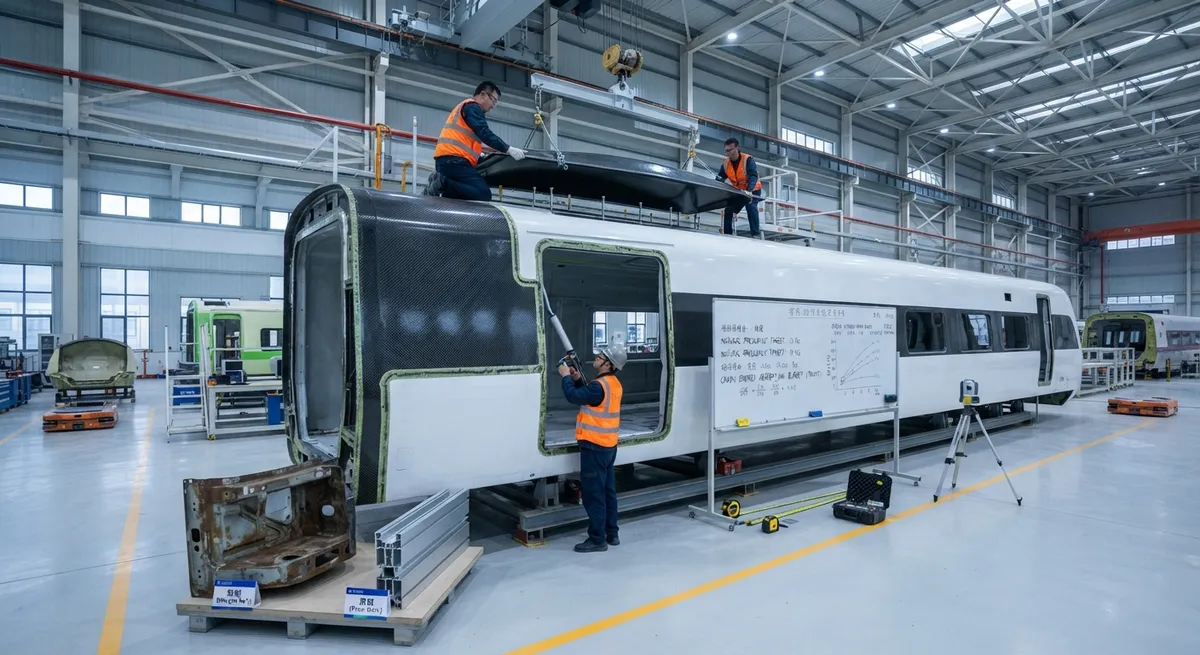
Rail bodies are large — a 20-25 m monocoque for a typical car body — and this drives the manufacturing model. Three routes are practical, from least to most integrated:
- Hybrid assembly: CFRP panels (roof, sides, floor) are bonded and fastened over a steel or composite frame. This is the lowest-tooling-risk route and delivers a 20-25% weight saving, with the frame carrying the primary structural role.
- Vacuum infusion or VAP of panels: Large roof and side panels are infused jointly around a frame, yielding a lighter integrated structure, with cycles measured in hours per panel.
- Automated fiber placement (AFP) plus autoclave: The unidirectional layup is placed by robot over a full-size mold and cured with co-bonded frames, giving the highest specific stiffness per kilogram and the lowest weight, at the highest tooling and cycle cost.
For next-generation programs the hybrid route is usually the first step, because it removes the tooling risk while still delivering a meaningful weight saving; the fully automated AFP monocoque remains the end goal for pure-composite fleets where maximum stiffness and lowest mass justify the tooling.
Frequently Asked Questions
How much weight does a carbon fiber rail car body actually save?
Compared to a 10-12 t steel body, a carbon fiber hybrid body saves roughly 40%; compared to a 7-9 t aluminum body, about 25-35%. For a metro car that brings the body to approximately 5-6 t. Across a six-car train, operators report a fleet-level saving of 10-15 t, meaning lower traction power, lower wheel wear during braking, and lower track energy, directly cutting the largest energy and maintenance costs in rail.
Are carbon fiber rail bodies fire-safe for passenger operation?
Yes — when designed for it. Unmodified aerospace epoxy would not pass, but a flame-retardant thermoplastic (PEEK, PPS, or PA6) or a heat-retardant resin with intumescent areas meets the EN smoke and surface-flame tests, commonly reaching the HL2-HL3 hazard level in underground configurations. A fire-resistant coating preserves the body integrity during the evacuation window required for safe egress, so fire is a design requirement rather than a contradiction. The certified design accommodates the hazard level required for each line.
Why are composite rail bodies only now entering series production, not earlier?
Composite carbody concepts have been demonstrated since the 1980s, but three factors slowed them: high tooling cost for large-scale bodies, the challenge of fire compliance, and the need for certified long-life testing. In the 2020s all three changed — tooling became cheaper, fire-retardant resins matured, and operators facing stricter emission and carbon regimes increased the value they place on mass savings. As a result, major manufacturers began production orders of composite carbody structures, with more programs and higher volume expected as certification experience builds on the first pilot fleets.
Conclusion
Carbon fiber rail car bodies are the largest weight-saving opportunity in rail, and next-generation fleets are adopting them because the physics and the economics have aligned. The mass reduction lowers traction, brake wear, and track energy; the composite stiffness, with proper lamination, meets the natural-frequency target at 25-35% less body mass; and the crash energy management framework turns the composite into a safe, crash-absorbing front end. Flame-retardant resin technology now removes the fire barrier that once shelved composite bodies.
For operators and carbody integrators, the decision starts with a weight-and-frequency study and a crash energy budget. Explore our carbon fiber sheet, panel, and profile range suitable for carbody structures and crash zones, or speak with our engineering team to scope the joint, tooling, and prototype route for your next program.
Part of topic
Related Articles
- Carbon Fiber Tube for Sale: Comparing Listings and Avoiding Bad Specs
- Carbon Fiber Engine Parts: High-Temperature Performance for Racing and Performance Vehicles
- Carbon Fiber Body Parts: Automotive Exterior Panels and Structural Components
- Carbon Fiber Drone Body Manufacturing: Monocoque Design and Production Methods
- Carbon Fiber Drone Parts Supplier: FPV Frames, Arms and Structural Components
- Filament Wound Epoxy Tubes: Industrial Applications from Oil and Gas to Aerospace
Interested in Our Products?
Contact our team for competitive pricing and technical specifications.
Get a QuoteRelated Products
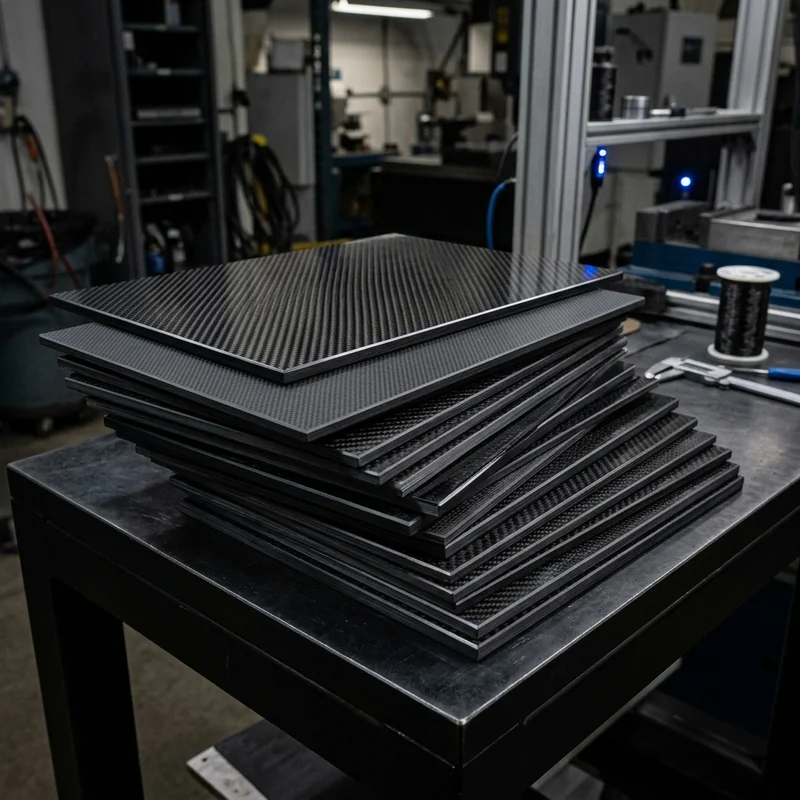
Carbon fiber standard plate-3k stripe
Lightweight, ultra-rigid standard sheets for drone fuselages, robot housings, facades and structural applications.

Carbon Fiber Plate — 3K Twill T700 3.0mm
Medium-thickness 3.0mm carbon fiber plate offering significantly higher load capacity while maintaining attractive 3K twill finish. Suitable for structural brackets, reinforcement plates, and load-bearing panels.

Carbon Fiber Plate — 3K Twill T700 1.5mm
Thin 1.5mm carbon fiber plate with 3K twill weave surface. Lightweight and stiff, commonly used for covers, panels, drone bodies, and applications requiring a premium aesthetic appearance.

Square Carbon Fiber Tube — 3K Twill T700
Square cross-section carbon fiber tube manufactured with 3K twill weave for torsional strength. Preferred for structural frames, trusses, and support columns where rectangular geometry offers design flexibility.
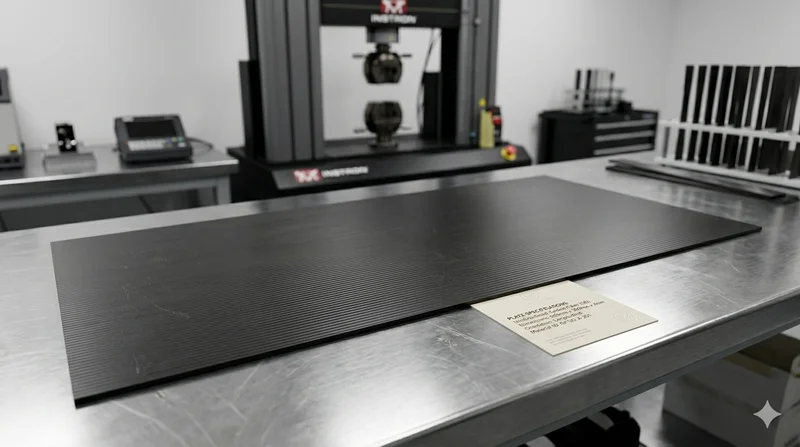
Carbon Fiber Plate — UD Unidirectional T700
Unidirectional carbon fiber plate with all fibers oriented in a single direction for maximum strength along the fiber axis. Essential for structural reinforcements, splints, and applications where load direction is predictable.