
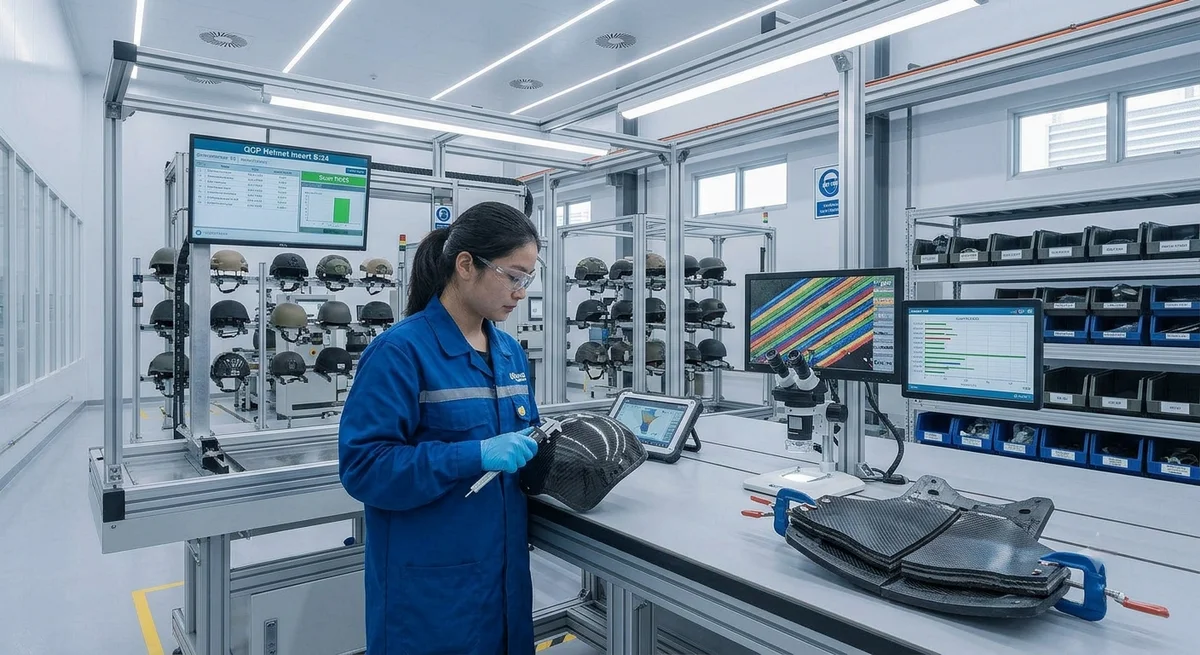
Carbon fiber composites are revolutionizing personal protective equipment (PPE) and tactical protection systems. From ballistic helmet inserts to lightweight body armor plates and impact-resistant sports guards, carbon fiber offers exceptional strength-to-weight ratios that significantly reduce user fatigue while maintaining or improving protective performance. This article examines the material science, manufacturing processes, and real-world applications of carbon fiber in protective gear, providing B2B buyers with technical specifications, comparative data, and procurement considerations.
Introduction
The global market for advanced protective gear is undergoing a fundamental transformation driven by two converging forces: the demand for lighter equipment to reduce operator fatigue, and the need for higher ballistic and impact protection standards. Carbon fiber reinforced polymers (CFRP) have emerged as the material of choice for next-generation protective solutions, offering tensile strengths exceeding 3,500 MPa at densities one-fifth that of steel.
Traditional protective gear relied on heavy metals (steel, titanium), ceramics (alumina, silicon carbide), or aramid fibers (Kevlar, Twaron). Each has trade-offs between weight, cost, and protection level. Carbon fiber composites uniquely combine high specific stiffness, excellent energy absorption, and design flexibility—allowing manufacturers to optimize protection geometries that were impossible with conventional materials.
Material Properties Critical for Protective Applications
The selection of carbon fiber for protective gear is driven by several key mechanical properties:
Tensile Strength and Modulus
| Property | Standard Carbon Fiber | Intermediate Modulus | High Modulus | Aramid (Kevlar 29) | Steel (AR500) |
|---|---|---|---|---|---|
| Tensile Strength (MPa) | 3,500-4,000 | 4,000-5,500 | 2,400-3,500 | 2,920 | 1,200-1,600 |
| Tensile Modulus (GPa) | 230-240 | 280-320 | 350-450 | 70 | 200 |
| Density (g/cm³) | 1.75-1.80 | 1.75-1.80 | 1.80-1.85 | 1.44 | 7.85 |
| Elongation at Break (%) | 1.5-2.0 | 1.2-1.8 | 0.5-0.8 | 3.6 | 12-18 |
| Specific Strength (kN·m/kg) | 1,944-2,222 | 2,222-3,056 | 1,297-1,892 | 2,028 | 153-204 |
Carbon fiber's specific strength is 9-15 times higher than steel, and its modulus-to-density ratio outperforms both aramid and metals. For protective gear, this translates directly to weight reduction without compromising protection.
Energy Absorption Mechanisms
Carbon fiber composites absorb impact energy through multiple mechanisms:
1. Fiber breakage — Individual carbon filaments fracture under tensile overload, consuming approximately 8-12 kJ/m² of energy per unit area
2. Matrix cracking — The epoxy or thermoplastic matrix develops microcracks, dissipating energy through crack propagation (3-5 kJ/m²)
3. Delamination — Controlled layer separation between plies absorbs 15-25 kJ/m², a critical mechanism for ballistic impact
4. Fiber pull-out — Fibers pulling out of the matrix contribute 5-8 kJ/m² of additional energy absorption
When optimized through proper layup sequencing, hybrid carbon-aramid laminates can achieve total energy absorption of 40-60 J for a 10mm thick panel subjected to a 9mm FMJ round at 400 m/s impact velocity.
Applications in Protective Gear
Ballistic Helmet Inserts
Modern military and law enforcement helmets combine a thermoplastic outer shell with carbon fiber composite inner structures. The carbon fiber insert provides:
- Weight reduction: A typical ECH (Enhanced Combat Helmet) using carbon fiber inserts weighs 1.1-1.3 kg compared to 1.5-1.8 kg for traditional aramid-only designs
- Back-face deformation (BFD) reduction: Carbon fiber's high stiffness limits deflection upon impact, reducing behind-helmet blunt trauma by 25-35%
- Multi-hit capability: Properly designed carbon fiber laminates maintain structural integrity after 3-5 consecutive hits within the same zone
The US Army's Next Generation Integrated Head Protection System (NG-IHPS) utilizes a carbon fiber composite shell achieving NIJ Level IIIA protection at approximately 1.0 kg—a 45% weight saving over the previous ACH design.
Body Armor Plates
Carbon fiber serves as both a standalone armor material (for lower threat levels) and a spall liner/spacer in hybrid ceramic-armor systems:
Standalone Carbon Fiber Armor (NIJ Level IIIA):
- Areal density: 5.5-6.5 kg/m²
- Thickness: 8-12 mm
- Weight for standard 10×12″ plate: 0.7-0.9 kg
- Performance: Stops .44 Magnum SJHP at 436 m/s
Hybrid Ceramic-Carbon Fiber Armor (NIJ Level IV):
- Strike face: 6-8 mm boron carbide or silicon carbide
- Backing: 10-14 mm carbon fiber laminate
- Total areal density: 18-22 kg/m²
- Weight for standard plate: 1.8-2.2 kg
- Performance: Stops .30-06 M2 AP at 878 m/s
Sports Impact Protection
In professional and amateur sports, carbon fiber components are increasingly replacing traditional materials:
- Football helmets: Carbon fiber face masks weigh 85-110 g compared to 150-200 g for polycarbonate, while absorbing 30% more impact energy
- Hockey shin guards: Carbon fiber-reinforced shells reduce weight by 40% while maintaining ASTM F1290 compliance
- Motorcycle racing suits: Carbon fiber knee and elbow sliders, back protectors, and chest plates meeting EN 1621-1/2 standards at weights 35-50% below CE-certified aramid alternatives
Industrial Safety Equipment
Carbon fiber is finding growing adoption in industrial PPE:
- Cut-resistant gloves: Carbon fiber hybrid yarns achieve ANSI A6-A9 cut levels while maintaining flexibility
- Safety toe caps: Carbon fiber toe caps meet ASTM F2413-18 at 15-20 g per pair, compared to 80-100 g for steel and 25-35 g for composite alternatives
- Respirator facepieces: Carbon fiber-reinforced silicone facepieces maintain seal integrity at extreme temperatures (-30°C to +150°C)
Manufacturing Processes
Compression Molding
The predominant manufacturing method for carbon fiber protective gear is compression molding:
1. Prepreg carbon fiber sheets (35-45% resin content) are cut into net-shape plies using automated laser cutting systems
2. Plies are stacked in prescribed orientation sequences (typically [0/90/±45]s for balanced protection)
3. The stack is placed in a heated mold at 140-160°C under 10-30 bar pressure for 45-90 minutes
4. Post-curing at 180°C for 2 hours completes crosslinking
Resin Transfer Molding (RTM)
For complex geometries such as full-face helmet shells:
1. Dry carbon fiber preform is placed in a closed mold
2. Low-viscosity epoxy resin is injected at 2-8 bar pressure
3. Cure cycle: 120°C for 60 minutes, then 160°C for 90 minutes
4. Advantages: Lower tooling costs, ability to incorporate foam cores and inserts
Automated Fiber Placement (AFP)
For large protective panels and curved armor sections:
- Placement rate: 15-25 kg/hour
- Tow width: 3.175 mm or 6.35 mm
- Steering radius: Minimum 300 mm
- Typical layup accuracy: ±0.5 mm
Quality Standards and Certifications
B2B buyers should verify the following certifications when sourcing carbon fiber protective gear components:
| Standard | Scope | Key Requirements |
|---|---|---|
| NIJ 0101.07 | Ballistic resistance of body armor | Threat-level specific V50 tests, BFD ≤ 44 mm |
| NIJ 0106.01 | Ballistic helmets | V50 testing, impact attenuation, retention system |
| ASTM F1290 | Football helmet face masks | Impact attenuation, penetration resistance |
| EN 1621-1 | Motorcyclists' protectors | Impact energy absorption ≤ 18 kN transmitted force |
| EN 388:2016 | Cut-resistant gloves | Cut resistance levels A1-A9 |
| ASTM F2413-18 | Safety footwear | Impact resistance ≥ 75 J, compression ≥ 75 J |
| MIL-DTL-62474F | Ballistic armor for aircraft seats | Fragment protection, flammability, durability |
FAQ
Q: Can carbon fiber body armor stop high-velocity rifle rounds?
Carbon fiber alone is not typically sufficient to stop high-velocity rifle rounds (5.56mm NATO, 7.62mm NATO) due to its tendency to fail in a brittle manner under concentrated impact. However, when used as a backing plate behind a ceramic strike face (boron carbide or silicon carbide), carbon fiber provides essential structural support and captures ceramic fragments. This hybrid configuration achieves NIJ Level IV protection while weighing 30-40% less than all-ceramic or metal alternatives.
Q: How long does carbon fiber protective gear last compared to aramid or metal?
Carbon fiber composites have excellent environmental resistance. When properly manufactured and maintained, carbon fiber components can remain serviceable for 15-20 years, compared to:
- Aramid (Kevlar): 5-10 years (UV degradation, moisture absorption reduces ballistic performance by 15-25% over time)
- Steel: 20+ years (but heavier, prone to corrosion)
- Ceramic: 5-10 years (shelf life limited by ceramic aging, moisture sensitivity)
Note: NIJ and most military standards recommend replacing ballistic armor every 5 years regardless of material, as adhesive bonding and matrix systems degrade over time.
Q: What are the cost implications of switching from aramid to carbon fiber in protective gear production?
The material cost premium for carbon fiber prepreg vs. aramid fabric is approximately 2-3× (carbon: $35-55/kg; aramid: $15-25/kg). However, the total manufactured component cost difference is smaller (1.5-2×) due to:
- Lower weight means less material required per component (15-30% less by mass)
- Faster cycle times in compression molding vs. aramid stitching/layup processes
- Reduced finishing labor (carbon fiber parts require less edge trimming and surface preparation)
For high-volume production (>10,000 units/year), automated manufacturing reduces the cost gap to 1.2-1.5×, making carbon fiber competitive with premium aramid systems on a per-protection-unit basis.
Conclusion
Carbon fiber composites represent the next frontier in personal protective equipment. With specific strength 9-15 times higher than steel, superior energy absorption characteristics, and design flexibility unmatched by traditional materials, carbon fiber enables a new generation of lighter, stronger, and more comfortable protective gear. For B2B buyers evaluating material options, the key considerations are threat level requirements, production volume, certification pathways, and total lifecycle cost.
As manufacturing automation continues to reduce carbon fiber component costs, and as new matrix systems improve ballistic multi-hit performance, the adoption of carbon fiber in protective gear applications will accelerate across military, law enforcement, sports, and industrial sectors. Suppliers who invest in carbon fiber capabilities today will be well-positioned to serve this growing market.
Part of topic
Related Articles
- Carbon Fiber Mooring for Floating Offshore Wind: Fatigue and Corrosion in Deep Water
- Carbon Fiber Bicycle Frame Optimization: Layup Design and Manufacturing for Competitive Racing
- Carbon Fiber CFRP Retrofit for Infrastructure: Bridge and Building Seismic Strengthening
- Carbon Fiber Medical Imaging Equipment: Lightweight Gantry and Couch Structures for MRI/CT
- Carbon Fiber EV Battery Enclosures: Crash Safety and Electromagnetic Shielding Design
- Carbon Fiber Structures for Low-Altitude Economy: UAV Airframes and eVTOL Components
Interested in Our Products?
Contact our team for competitive pricing and technical specifications.
Get a QuoteRelated Products
Carbon fiber standard plate-3k stripe
Lightweight, ultra-rigid standard sheets for drone fuselages, robot housings, facades and structural applications.

Carbon Fiber Plate — 3K Twill T700 1.5mm
Thin 1.5mm carbon fiber plate with 3K twill weave surface. Lightweight and stiff, commonly used for covers, panels, drone bodies, and applications requiring a premium aesthetic appearance.

Square Carbon Fiber Tube — 3K Twill T700
Square cross-section carbon fiber tube manufactured with 3K twill weave for torsional strength. Preferred for structural frames, trusses, and support columns where rectangular geometry offers design flexibility.

Carbon Fiber Plate — 3K Twill T700 3.0mm
Medium-thickness 3.0mm carbon fiber plate offering significantly higher load capacity while maintaining attractive 3K twill finish. Suitable for structural brackets, reinforcement plates, and load-bearing panels.
Carbon Fiber Plate — UD Unidirectional T700
Unidirectional carbon fiber plate with all fibers oriented in a single direction for maximum strength along the fiber axis. Essential for structural reinforcements, splints, and applications where load direction is predictable.