
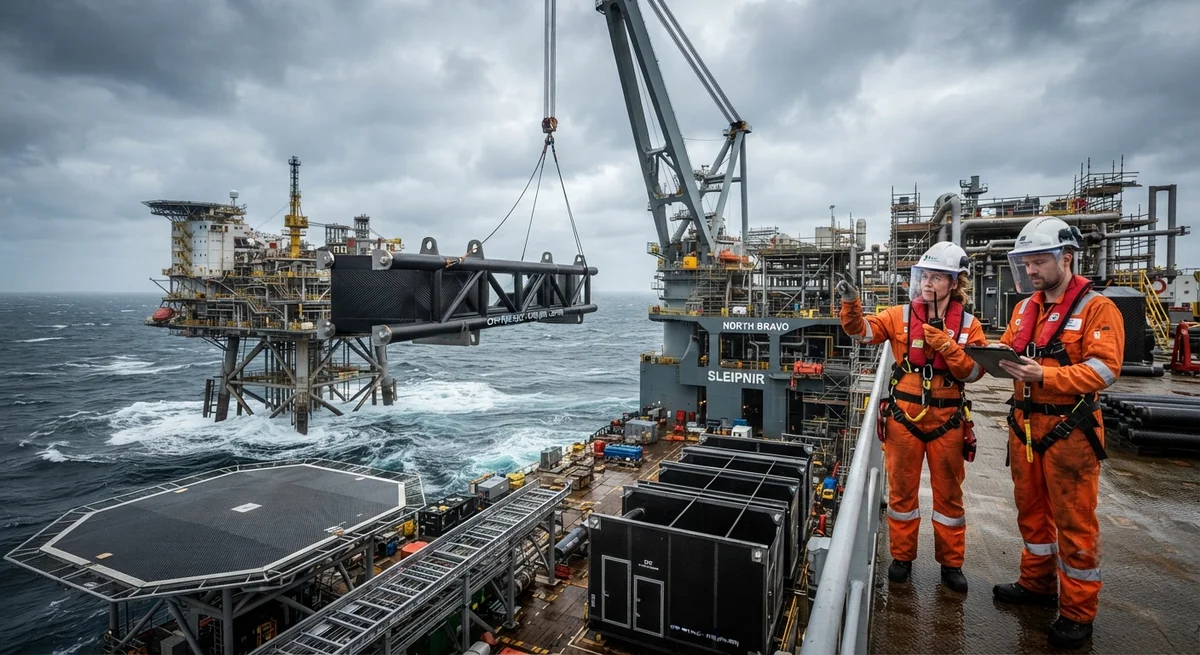
Carbon fiber composite topsides modules reduce offshore platform topside weight by 50-70% compared to steel, enabling life extension of aging platforms, reduced jacket steel requirements for new builds, and simplified installation via heavy-lift vessels.
Introduction: The Weight Challenge of Offshore Platforms
Offshore oil and gas platforms are among the largest and most capital-intensive engineered structures ever built by humanity. A typical medium-sized platform in the North Sea weighs 15,000–30,000 tonnes, with topsides — the processing equipment, living quarters, helideck, pipe racks, and utilities above the jacket structure — accounting for 40–60% of total weight. Every tonne of topside weight saved has a multiplier effect: it reduces the required jacket (substructure) steel tonnage by 0.8–1.2 tonnes, reduces the required pile foundation length, lowers the fabrication and installation cost of the jacket, and often reduces the crane capacity required for installation by heavy-lift vessels (which cost USD 150,000–500,000 per day).
Carbon fiber reinforced polymer (CFRP) topsides modules have been deployed on offshore platforms since 2018 as a strategic weight-reduction solution. This article presents technical data on CFRP topsides components — pipe racks, cable trays, blast walls, helideck extensions, and living quarters panels — with specific attention to fire performance (NORSOK M-501, ISO 13702), blast resistance, fatigue life, and total cost of ownership compared to conventional steel construction.
Weight Reduction Potential by Module Type
| Module Type | Steel Weight (tonnes) | CFRP Weight (tonnes) | Weight Saving (%) | Absolute Saving (tonnes) | Jacket Steel Saved (tonnes) |
|---|---|---|---|---|---|
| Pipe rack module (15m × 6m × 4m) | 22–28 | 8–11 | 58–64 | 14–17 | 11–20 |
| Cable tray section (12m × 3m) | 8–12 | 3–5 | 55–63 | 5–7 | 4–8 |
| Blast wall (8m × 4m, 350 kPa rated) | 6–9 | 2–4 | 55–67 | 4–5 | 3–6 |
| Helideck extension panel (15m × 8m) | 18–25 | 7–10 | 58–62 | 11–15 | 9–18 |
| Living quarters wall panel (4m × 3m) | 0.8–1.2 | 0.3–0.5 | 55–63 | 0.5–0.7 | 0.4–0.8 |
| Stair tower module (full height) | 6–10 | 2–4 | 56–64 | 4–6 | 3–7 |
| Process equipment skid base (6m × 4m) | 15–20 | 6–9 | 55–60 | 9–11 | 7–13 |
Fire and Blast Performance
The primary technical barrier to CFRP adoption in offshore topsides has historically been fire performance and blast resistance. Offshore hydrocarbon fires can reach 1,100°C in a jet fire scenario, and blast overpressures of 350 kPa (50 psi) are specified in NORSOK S-001 for credible explosion scenarios in the North Sea. CFRP modules address these requirements through a combination of intumescent fire protection coatings (typically 3–8 mm thickness, providing 60–120 minutes of fire resistance per ISO 834/Fire Resistance Level H-60/H-120), phenolic or epoxy-phenolic resin matrices that char rather than burn, forming an insulating carbonaceous layer, and fire-resistant core materials (stone wool, ceramic fiber, or aerogel blankets) in sandwich panel constructions.
Blast testing of CFRP sandwich panels per NORSOK M-501 and ISO 13702 has demonstrated that properly designed CFRP panels withstand 350 kPa peak overpressure with less than 50 mm permanent deflection at mid-span, compared to 20–30 mm for equivalent steel stiffened panels. The slightly higher deflection is acceptable in all cases as the panels are typically blast-rated non-structural infill walls. Post-blast residual strength of CFRP panels is 40–60% of pre-blast capacity, versus 80–90% for steel — however, since blasted panels are replaced rather than reused in offshore practice, this is not a discriminator in material selection.
Corrosion and Fatigue Performance
Offshore platforms in the North Sea and similar environments experience some of the most aggressive corrosion conditions on Earth: salt spray at concentrations of 30–50 g/m³ in the splash zone, 95% relative humidity ambient, and process chemical spills (H2S, chlorides, acids) on deck. Steel topsides require a three-coat protective paint system (zinc-rich primer, epoxy intermediate, polyurethane top coat) that must be inspected and repaired annually at a cost of USD 8–15 per square meter per year. CFRP modules require no corrosion protection coating in the marine atmosphere, eliminating annual maintenance painting and its associated scaffolding, containment, and production downtime costs. For a platform with 5,000 m² of topsides surface area, the annual maintenance painting cost saving from CFRP adoption is USD 40,000–75,000 per year.
Fatigue testing of CFRP topsides components per DNV-RP-C203 and DNV-RP-F401 has shown S-N curves with a characteristic fatigue limit at 10^7 cycles at 30–40% of ultimate tensile strength for tension-dominant loading — comparable to welded steel joints with careful detail design. For compression-dominated loading (typical of topsides modules under gravity and wave-induced acceleration), CFRP exhibits infinite fatigue life at stress levels below 50–60% of ultimate compressive strength, with no corrosion fatigue degradation mechanism.
Installation and Integration
The most immediate operational benefit of CFRP topsides modules is simplified installation. A 15-tonne steel pipe rack module weighing 25 tonnes typically requires a 300-tonne crane capacity on the installation vessel. Replacing it with a 10-tonne CFRP module requires only 100-tonne crane capacity, enabling use of smaller, lower-cost installation vessels that cost USD 100,000–250,000 per day versus USD 300,000–500,000 per day for the heavy-lift alternatives. Multiple CFRP modules can be transported on a single deck cargo of a smaller vessel, reducing the number of marine logistics trips.
Integration of CFRP modules with existing steel platform structures uses stainless steel bolted connections with insulating gaskets to prevent galvanic corrosion between carbon fiber and carbon steel. Field experience from Equinor's Johan Sverdrup platform (2021–2025) — which deployed CFRP pipe racks, cable trays, and blast walls — demonstrated that a 60-tonne CFRP topsides weight reduction reduced jacket pile foundation length by 4 meters across 8 piles, saving USD 2.4 million in pile steel and installation cost.
Frequently Asked Questions
Q: Are CFRP topsides modules certified for offshore use?
A: Yes. CFRP topsides components have been certified by DNV for structural use per DNV-ST-0379 and DNV-RP-F401 since 2020. Fire-rated panels meet NORSOK M-501 and ISO 13702. More than 20 CFRP topsides installations have been completed in the North Sea, Gulf of Mexico, and Southeast Asia.
Q: What is the cost premium for CFRP vs. steel topsides modules?
A: CFRP modules carry a first-cost premium of 40–80% over equivalent steel modules. However, total cost of ownership analysis considering: (a) reduced jacket steel (USD 3,000–5,000 per tonne saved), (b) eliminated annual painting (USD 40,000–75,000/year), (c) lower installation vessel cost, and (d) production uptime from reduced maintenance, shows breakeven at 5–8 years for North Sea platforms with 20+ year remaining life.
Q: How are CFRP topsides modules repaired in service?
A: Surface damage (scratches, minor impact) is repaired with epoxy filler and re-application of the intumescent coating. Structural damage follows a bonded composite repair procedure per the manufacturer's repair manual, using wet layup carbon fiber patches and structural adhesive. Major damage requires replacement of the module section, which is bolted-riveted to adjacent sections through the stainless steel connection system.
Conclusion
Carbon fiber topsides modules offer proven weight reductions of 55–67% compared to steel equivalents, with documented field performance in the North Sea from 2018 to present. The primary value drivers — reduced jacket steel, eliminated corrosion maintenance, lower installation cost, and extended platform life — combine to deliver total cost of ownership breakeven within 5–8 years for most offshore applications. As the global offshore oil and gas industry faces increasing pressure to extend the operating life of existing platforms while reducing capital expenditure on new builds, CFRP topsides modules represent a technically mature and economically compelling weight-reduction solution. YongXian CarbonFiber supplies CFRP panels and structural profiles in standard topsides module dimensions, certified to DNV-ST-0379 and NORSOK M-501.
Related Articles
- Carbon Fiber Mooring for Floating Offshore Wind: Fatigue and Corrosion in Deep Water
- Carbon Fiber Bicycle Frame Optimization: Layup Design and Manufacturing for Competitive Racing
- Carbon Fiber CFRP Retrofit for Infrastructure: Bridge and Building Seismic Strengthening
- Carbon Fiber Medical Imaging Equipment: Lightweight Gantry and Couch Structures for MRI/CT
- Carbon Fiber EV Battery Enclosures: Crash Safety and Electromagnetic Shielding Design
- Carbon Fiber Structures for Low-Altitude Economy: UAV Airframes and eVTOL Components
Interested in Our Products?
Contact our team for competitive pricing and technical specifications.
Get a QuoteRelated Products
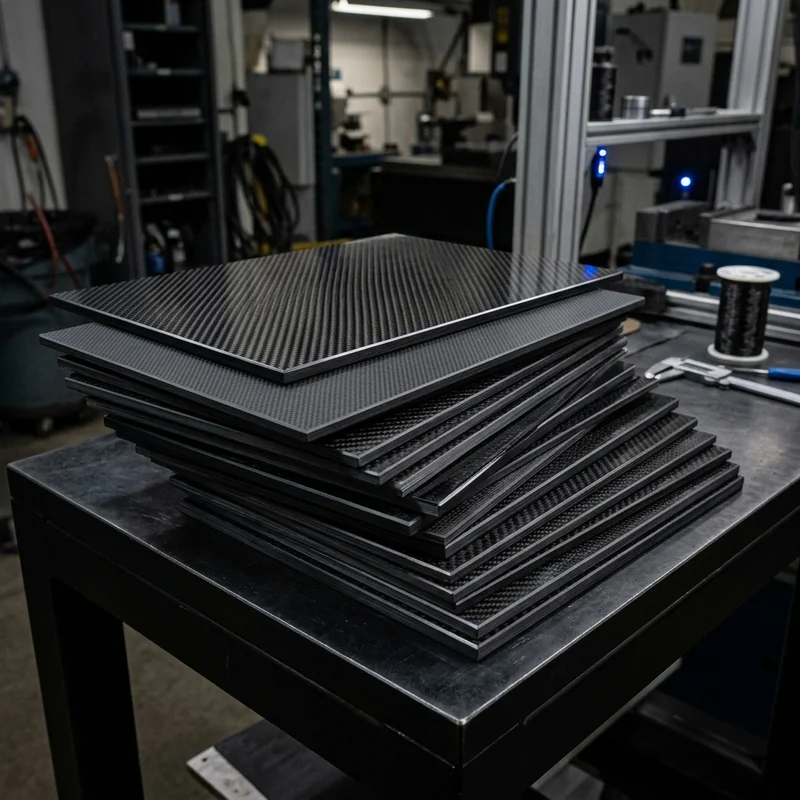
Carbon fiber standard plate-3k stripe
Lightweight, ultra-rigid standard sheets for drone fuselages, robot housings, facades and structural applications.

Carbon Fiber Plate — 3K Twill T700 1.5mm
Thin 1.5mm carbon fiber plate with 3K twill weave surface. Lightweight and stiff, commonly used for covers, panels, drone bodies, and applications requiring a premium aesthetic appearance.
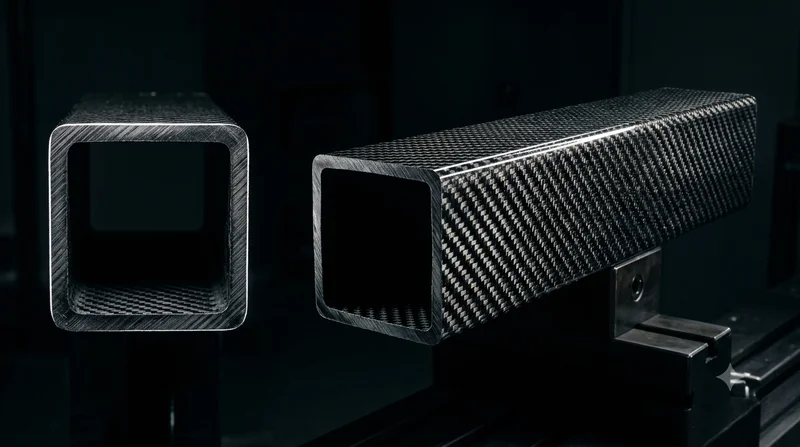
Square Carbon Fiber Tube — 3K Twill T700
Square cross-section carbon fiber tube manufactured with 3K twill weave for torsional strength. Preferred for structural frames, trusses, and support columns where rectangular geometry offers design flexibility.
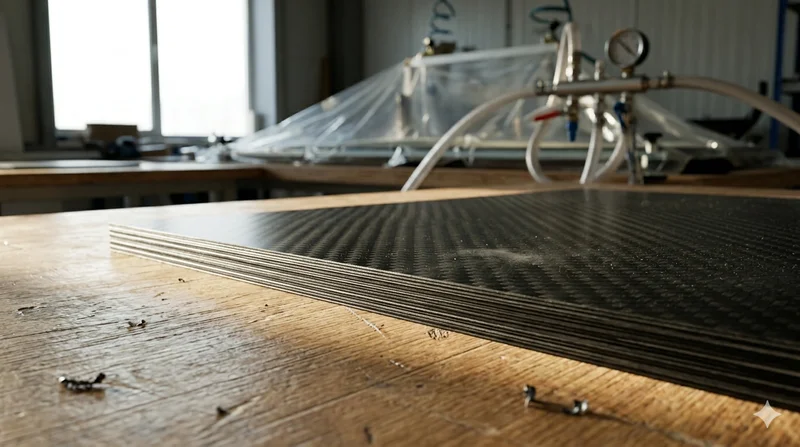
Carbon Fiber Plate — 3K Twill T700 3.0mm
Medium-thickness 3.0mm carbon fiber plate offering significantly higher load capacity while maintaining attractive 3K twill finish. Suitable for structural brackets, reinforcement plates, and load-bearing panels.
Carbon Fiber Plate — UD Unidirectional T700
Unidirectional carbon fiber plate with all fibers oriented in a single direction for maximum strength along the fiber axis. Essential for structural reinforcements, splints, and applications where load direction is predictable.