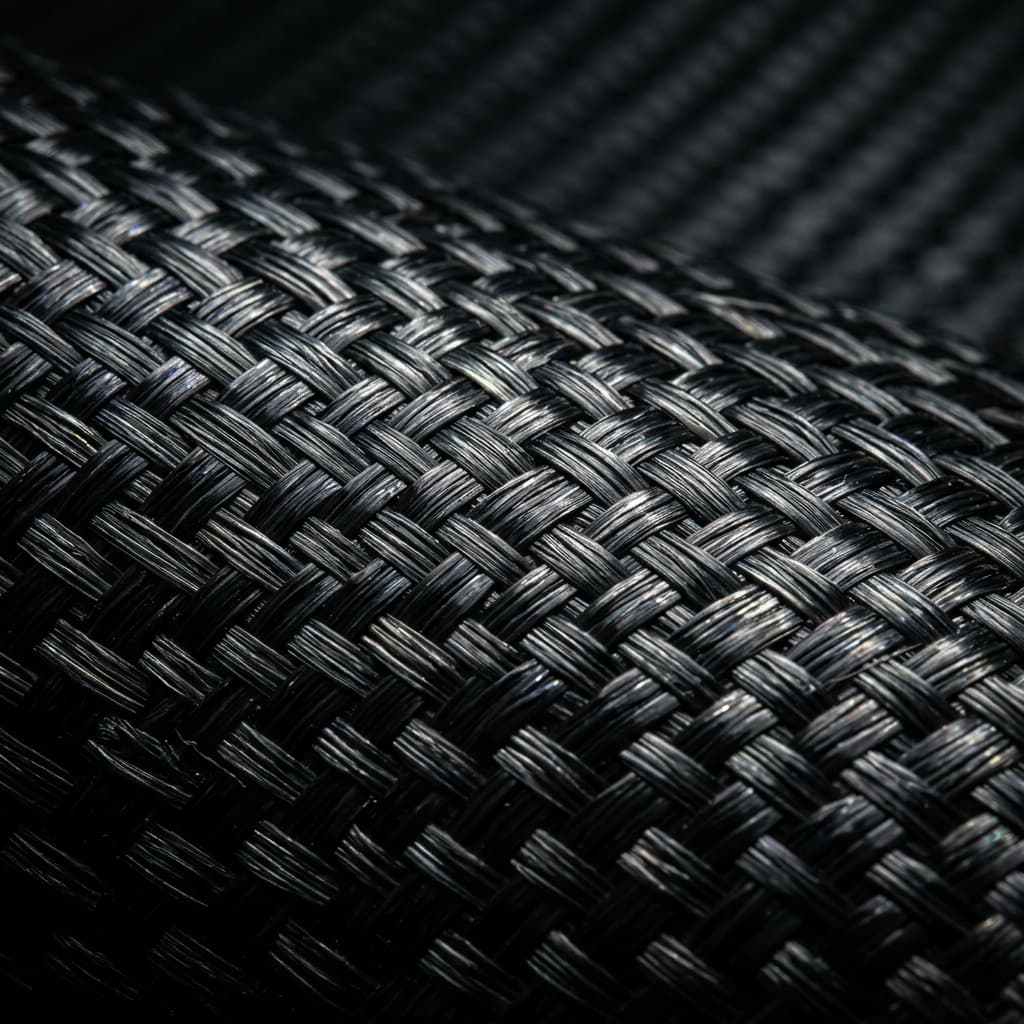
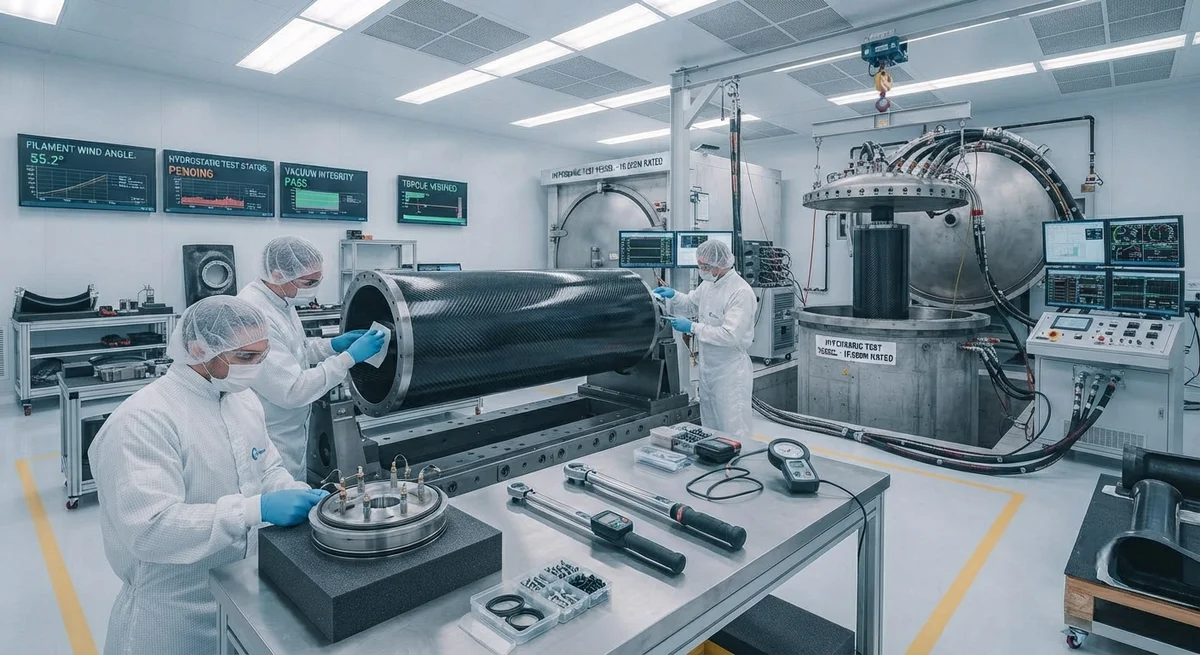
Deep-sea instrument housings require materials that withstand extreme pressure, corrosion, and long deployment cycles. This article compares carbon fiber composite housings with traditional titanium and aluminum alternatives using real engineering data.
Introduction: The Deep-Sea Material Challenge
Oceanographic instruments deployed below 1,000 meters face one of the most demanding material environments on Earth. Every square centimeter of a deep-sea housing must withstand hydrostatic pressures exceeding 10 MPa (1,450 psi) per kilometer of depth, sustained exposure to chlorides at concentrations of 3.5% salinity, biofouling colonization, and temperature gradients from 2°C at the abyssal plain to 80°C at hydrothermal vent sites. Traditional housing materials — titanium alloys (Ti-6Al-4V), aluminum 6061-T6, and stainless steel 316L — each carry significant trade-offs between corrosion resistance, weight, cost, and manufacturability. Carbon fiber reinforced polymer (CFRP) housings have emerged as a compelling alternative, offering corrosion-free operation at 60-70% weight reduction compared to titanium, with documented service records at depths exceeding 6,000 meters.
The global oceanographic instrument market was valued at approximately USD 5.8 billion in 2025, with subsea housing components accounting for an estimated 12-15% of system cost. As autonomous underwater vehicles (AUVs), remotely operated vehicles (ROVs), and seafloor observatory networks expand — driven by offshore energy exploration, climate research, and defense applications — the demand for reliable, lightweight, and corrosion-resistant deep-sea housings is projected to grow at 8-12% CAGR through 2030.
Material Comparison: Deep-Sea Housing Performance
| Parameter | Titanium Ti-6Al-4V | Aluminum 6061-T6 | Stainless Steel 316L | CFRP (Epoxy/IM7) |
|---|---|---|---|---|
| Density (g/cm³) | 4.43 | 2.70 | 8.00 | 1.55–1.60 |
| Tensile strength (MPa) | 950 | 310 | 485 | 600–750 (quasi-isotropic) |
| Specific strength (MPa/(g/cm³)) | 214 | 115 | 61 | 390–480 |
| Compressive strength (MPa) | 970 | 276 | 210 | 420–550 |
| Max operating depth (m, spherical housing) | 11,000+ | 3,000–4,500 | 4,000–6,000 | 6,000–9,000 |
| Corrosion resistance (seawater) | Excellent | Moderate (pitting risk) | Good (crevice risk) | Excellent (no galvanic path) |
| Weight per 10L housing (kg) | 18.5–22.0 | 11.0–13.5 | 33.0–40.0 | 6.5–8.0 |
| Material cost per kg (USD) | $85–$150 | $8–$15 | $12–$25 | $60–$120 |
| Manufacturing cycle (weeks) | 8–16 | 4–8 | 6–12 | 6–10 |
| Thermal conductivity (W/m·K) | 6.7 | 167 | 16.2 | 0.5–1.5 |
The specific strength advantage of CFRP — approximately 1.8× that of titanium and 3.8× that of aluminum — is the primary driver for deep-sea application. A 10-liter instrument housing fabricated from quasi-isotropic CFRP laminate (55% fiber volume fraction) weighs 6.5–8.0 kg compared to 18.5–22.0 kg for titanium. For an AUV carrying six instrument housings, this weight saving translates directly to increased payload capacity, extended endurance, or reduced ballast requirements.
Hydrostatic Pressure Performance
Deep-sea housings are typically designed as thick-walled cylinders with hemispherical or flat end caps. The critical design parameter is the buckling pressure, calculated using the classical buckling equation for cylindrical shells under external pressure:
- Buckling pressure (elastic): For a CFRP cylinder of radius R and wall thickness t, the critical buckling pressure P_cr = 0.807 × (E_t × E_a² × t⁵)¹ᐟ⁴ / (R² × L × (1 — ν²)³ᐟ⁴), where E_t and E_a are the tangential and axial moduli respectively.
- Safety factor: Deep-sea instrument housings are typically designed with a buckling safety factor of 1.5–2.0 over the maximum operational depth. For a 6,000 m rating (60 MPa external pressure), the housing must survive 90–120 MPa before collapse.
- Test validation: CFRP housings are pressure-cycled per ASTM D1598: 100 cycles from 0 to 110% of rated pressure at 1 cycle/hour, followed by a sustained hold at 125% rated pressure for 24 hours.
- Failure mode: Unlike metallic housings which exhibit ductile collapse, CFRP housings fail by micro-buckling of the 0° fibers on the compressive side, followed by interply delamination and sudden loss of integrity.
Corrosion and Biofouling Resistance
| Environmental Factor | Titanium Ti-6Al-4V | Aluminum 6061-T6 | CFRP (Epoxy Matrix) |
|---|---|---|---|
| Seawater immersion (ASTM D1141, 12 months) | No measurable corrosion | Pitting depth: 50–200 µm; requires anodizing | No measurable degradation; surface gloss retention >95% |
| Galvanic coupling to steel | Low risk (0.15 V potential difference) | High risk (0.75 V); requires insulation | Moderate risk (0.5 V); glass scrim isolation required |
| Biofouling accumulation (6-month tropical deployment) | Moderate — 2–5 kg/m²; requires copper-based antifouling coating | Heavy — 5–10 kg/m²; frequent cleaning needed | Low — 1–3 kg/m²; hydrophobic surface reduces adhesion |
| UV degradation (1-year surface exposure) | None | Surface oxidation; cosmetic only | Epoxy gloss loss 15–25%; UV-stable clear coat recommended for surface applications |
| Hydrogen embrittlement risk | Yes (cathodic protection scenarios) | No | No |
| Crevice corrosion susceptibility | Low (above 80°C only) | Moderate | None |
CFRP's inherent corrosion resistance is particularly valuable for long-duration seafloor observatory deployments. Where titanium housings require periodic inspection for hydrogen embrittlement (especially when cathodic protection is used on adjacent steel structures), and aluminum housings demand re-anodizing every 3–5 years, CFRP housings can remain deployed for 10+ years with minimal maintenance — limited primarily by seawater absorption into the epoxy matrix (typically 0.5–1.5% weight gain over 12 months, which stabilizes after the first year).
Manufacturing Approaches for Deep-Sea Housings
| Manufacturing Process | Typical Housing Type | FVF (%) | Void Content (%) | Tooling Cost (USD) | Production Rate |
|---|---|---|---|---|---|
| Filament winding (wet) | Cylindrical tubes, pressure vessels | 55–62 | 1.5–3.0 | $8,000–$25,000 | 2–5 housings/day |
| Prepreg layup + autoclave | Spherical housings, complex end caps | 58–65 | <0.5 | $20,000–$60,000 | 1–2 housings/day |
| Filament winding (towpreg) | High-performance cylindrical housings | 60–67 | 0.5–1.5 | $15,000–$40,000 | 3–6 housings/day |
| Resin transfer molding (RTM) | Small instrument enclosures (<5L) | 50–55 | 1.0–2.0 | $30,000–$80,000 | 10–30 housings/day |
For most oceanographic instrument housings, filament winding with wet epoxy provides the optimal balance of performance and cost. The winding angle is typically optimized to ±55° relative to the cylinder axis — the optimal angle for pressure vessel loading, providing near-isotropic strength in the hoop and axial directions. For end caps (hemispherical or flat), compression molding or prepreg layup with autoclave cure is standard.
Sealing and Penetrator Design
The housing-material interface — specifically the end-cap seal and electrical penetrators — is historically the weakest link in deep-sea CFRP housings. Three sealing strategies are commonly employed:
- O-ring face seal: A dovetail groove machined into a bonded metal insert (titanium or 316L) at the cylinder end. The CFRP tube is wound over the metal insert or bonded with structural adhesive (e.g., 3M DP420). Rated to 10,000 m when properly designed. The metal-to-CFRP bond requires careful surface preparation: grit-blast CFRP surface + solvent clean + primer application.
- Self-energizing lip seal: Pressure-activated lip seal integrated into a composite end cap. No metal insert required, reducing galvanic corrosion risk. Rated to 6,000 m. Suitable for applications where the end cap is a consumable or frequently swapped.
- Wet-mate connector flange: Molded CFRP flange with threaded metal inserts (titanium) over-molded into the composite structure. Used for ROV/AUV applications requiring frequent connector mating underwater. Insert pull-out strength exceeds 15 kN for M10 threaded inserts in a 12 mm laminate.
Case Study: 6,000 m Rated CFRP Housing for Seabed CTD Profiler
A European oceanographic instrument manufacturer developed a CFRP housing for a conductivity-temperature-depth (CTD) profiler rated to 6,000 m. The housing dimensions: 150 mm outer diameter × 800 mm length × 8 mm wall thickness, fabricated by wet filament winding with Toray T700SC fiber and a bisphenol-A epoxy system. Key results after 18 months of field deployment (12 deployments, average depth 4,500 m):
- Total weight: 4.2 kg (vs 12.8 kg for equivalent titanium housing — 67% reduction)
- Burst pressure: 105 MPa (15,230 psi) — safety factor of 1.75 at rated 60 MPa
- Leak rate: <1.0 × 10⁻⁹ mbar·L/s after 200 pressure cycles (He mass spectrometry)
- Seawater absorption: 0.85% weight gain after 12 months continuous immersion, stabilizing at 0.92% at 18 months
- Interlaminar shear strength retention: 92% after 18 months (ILSS test per ASTM D2344)
- Maintenance: Zero corrosion-related interventions; O-ring replacement only (scheduled every 50 cycles)
Cost Analysis: Total Cost of Ownership
| Cost Category | Titanium Ti-6Al-4V | Aluminum 6061-T6 | CFRP (Filament Wound) |
|---|---|---|---|
| Initial housing cost (10L) | $6,800–$9,500 | $1,200–$2,000 | $4,500–$7,500 |
| Annual maintenance (10-year average) | $400–$800 (inspection + re-coat) | $600–$1,200 (re-anodize + repair) | $150–$300 (O-ring replacement + inspection) |
| Deployment handling cost (per deployment) | $120–$180 (heavier = more ship time) | $80–$120 | $40–$70 (lightest = fastest handling) |
| 10-year total cost of ownership | $22,000–$32,000 | $14,000–$22,000 | $12,500–$20,000 |
| Weight penalty over 1,000 deployments (fuel) | $3,500–$5,000 | $2,000–$3,000 | $900–$1,500 |
The total cost of ownership for CFRP deep-sea housings, factoring in the initial procurement cost, maintenance savings, handling efficiency, and fuel savings from reduced weight on deployment vessels, is typically 15–40% lower than titanium over a 10-year service life.
Frequently Asked Questions
Q: What is the maximum operating depth for carbon fiber instrument housings?
A: Current production CFRP housings are rated to 9,000 m (90 MPa external pressure) for cylindrical geometries with optimized winding angles. Spherical housings — which distribute pressure more efficiently — have been demonstrated to 11,000 m in laboratory settings (Challenger Deep equivalent). The practical limit is currently set by seal technology rather than composite strength: at pressures exceeding 100 MPa, O-ring extrusion becomes the limiting failure mode. Proprietary self-energizing metal seal designs have extended CFRP housing capability to 12,000 m in prototype testing.
Q: How does the fatigue life of CFRP deep-sea housings compare to titanium?
A: For pressure-cycle-dominated loading (surface-to-depth-to-surface), CFRP housings exhibit excellent fatigue performance. S-N curve testing of filament-wound ±55° CFRP tubes at R = 0.1 (where R = minimum/maximum stress) shows fatigue life exceeding 10⁶ cycles at 60% of ultimate burst pressure — comparable to titanium Ti-6Al-4V at 10⁷ cycles. The fatigue failure mode differs: titanium shows progressive crack initiation and propagation (detectable via acoustic emission), while CFRP shows gradual stiffness degradation (detectable via modal analysis or strain monitoring). CFRP's fatigue advantage is greatest in corrosion-fatigue scenarios — titanium's fatigue limit drops by 30–50% in seawater due to hydrogen-assisted cracking, while CFRP shows no seawater fatigue degradation.
Q: Can existing titanium instrument housings be replaced by CFRP without redesigning the instrument payload?
A: Yes, with three accommodation requirements. First, the internal mounting geometry (brackets, rail mounts, threaded inserts) must be adapted — CFRP housings use bonded-in titanium threaded inserts rather than machined-through holes (drilling through a CFRP pressure vessel creates stress concentrations that reduce burst pressure by 25–40%). Second, thermal management may need attention: CFRP's low thermal conductivity (0.5–1.5 W/m·K vs 6.7 W/m·K for titanium) reduces heat dissipation from internal electronics — a 15–25% reduction in passive cooling capacity must be factored into the thermal design. Third, electromagnetic compatibility (EMC): CFRP does not provide the same electromagnetic shielding as metal — a copper or aluminum mesh grounding layer (0.2 mm thick) co-cured into the laminate is required to maintain equivalent shielding effectiveness (60–80 dB attenuation at 1 GHz).
Q: What certifications and standards apply to CFRP deep-sea housings?
A: CFRP deep-sea housings fall under several regulatory frameworks depending on application and jurisdiction. Key standards include: DNV-ST-E273 (Subsea Composite Components — structural design, manufacturing, and testing requirements); ASTM D1598 (Standard Test Method for Time-to-Failure of Plastic Pipe Under Constant Internal Pressure — adapted for external pressure by reversing the loading direction); ISO 13628-5 (Subsea Production Control Systems — material qualification for subsea control module housings); and Lloyd's Register Type Approval for composite subsea enclosures. For defense and research applications, MIL-DTL-24227 (Submarine Composite Housings) applies. Most commercial AUV/ROV manufacturers maintain their own internal qualification protocols based on these standards, typically requiring 100 pressure cycles followed by a 24-hour sustained pressure hold at 125% of rated depth.
Q: How does the buoyancy of CFRP compare to other housing materials?
A: CFRP (density 1.55–1.60 g/cm³) is positively buoyant in seawater (density 1.025 g/cm³) — a net buoyancy of approximately +0.53–0.58 g/cm³. Titanium (4.43 g/cm³) is net negative by 3.40 g/cm³, and aluminum (2.70 g/cm³) is net negative by 1.68 g/cm³. For a 10L housing, this means a CFRP housing contributes approximately +5.3–5.8 kg of buoyancy to the system, while titanium subtracts 34 kg and aluminum subtracts 16.8 kg. AUV designers can use CFRP housing buoyancy to offset the weight of dense payload components (batteries, sonar arrays, core samplers), reducing or eliminating syntactic foam buoyancy modules and improving the vehicle's drag profile.
Conclusion
Carbon fiber composites represent a mature and increasingly cost-effective solution for deep-sea instrument housings. The combination of 60–70% weight reduction versus titanium, complete corrosion immunity in seawater, excellent fatigue performance in pressure-cycled service, and positive buoyancy creates a compelling value proposition for oceanographic instrument manufacturers, AUV/ROV operators, and seafloor observatory developers. Key specification considerations for B2B buyers include: fiber type (IM7 or T700S class intermediate modulus for burst-critical designs; T300 class standard modulus for cost-sensitive applications), resin system (toughened epoxy for deep-rated housings; standard epoxy for <3,000 m), winding angle optimization (±55° for cylindrical pressure vessels), seal interface design (bonded metal insert vs composite end cap), and certification to DNV-ST-E273 or equivalent. As deep-sea instrumentation networks expand and the ocean economy grows, CFRP housing adoption is expected to increase from approximately 12% of new subsea housing procurement in 2025 to 30–35% by 2030.
Related Articles
- Carbon Fiber Mooring for Floating Offshore Wind: Fatigue and Corrosion in Deep Water
- Carbon Fiber Bicycle Frame Optimization: Layup Design and Manufacturing for Competitive Racing
- Carbon Fiber CFRP Retrofit for Infrastructure: Bridge and Building Seismic Strengthening
- Carbon Fiber Medical Imaging Equipment: Lightweight Gantry and Couch Structures for MRI/CT
- Carbon Fiber EV Battery Enclosures: Crash Safety and Electromagnetic Shielding Design
- Carbon Fiber Structures for Low-Altitude Economy: UAV Airframes and eVTOL Components
Interested in Our Products?
Contact our team for competitive pricing and technical specifications.
Get a QuoteRelated Products
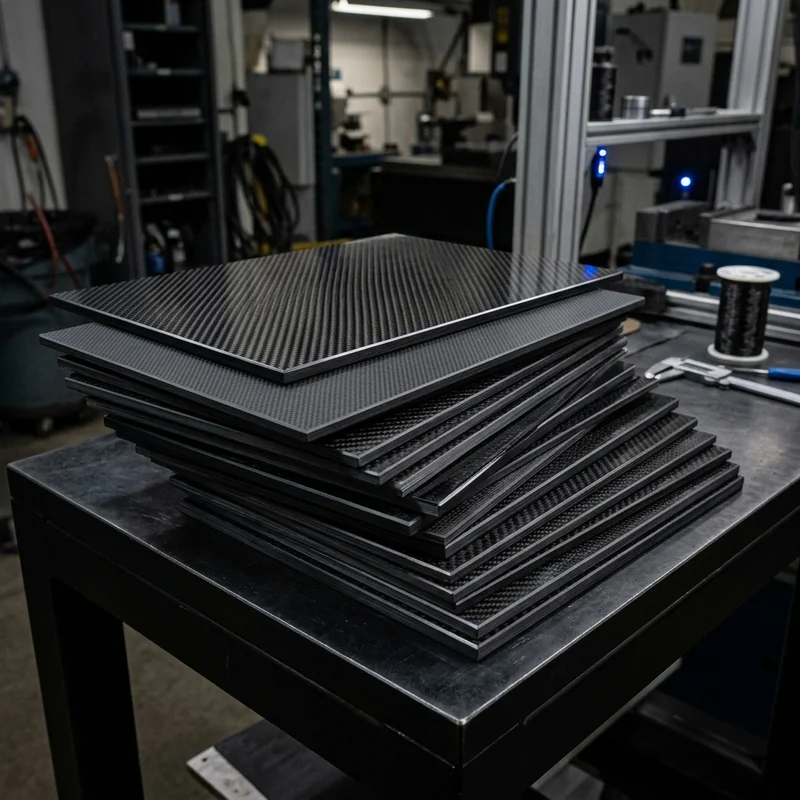
Carbon fiber standard plate-3k stripe
Lightweight, ultra-rigid standard sheets for drone fuselages, robot housings, facades and structural applications.
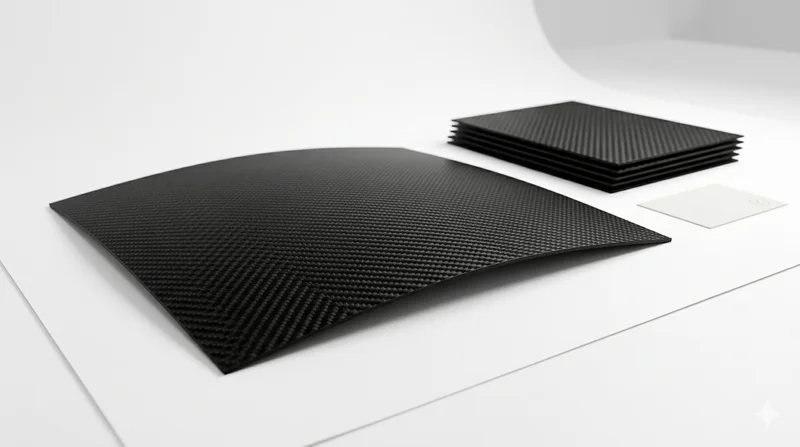
Carbon Fiber Plate — 3K Twill T700 1.5mm
Thin 1.5mm carbon fiber plate with 3K twill weave surface. Lightweight and stiff, commonly used for covers, panels, drone bodies, and applications requiring a premium aesthetic appearance.
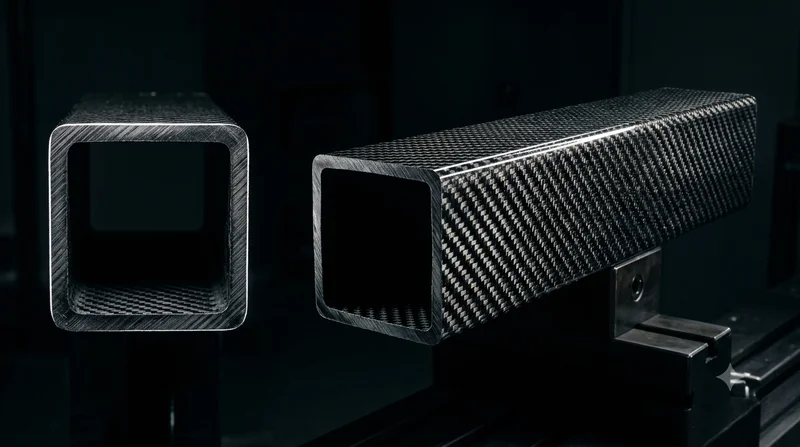
Square Carbon Fiber Tube — 3K Twill T700
Square cross-section carbon fiber tube manufactured with 3K twill weave for torsional strength. Preferred for structural frames, trusses, and support columns where rectangular geometry offers design flexibility.
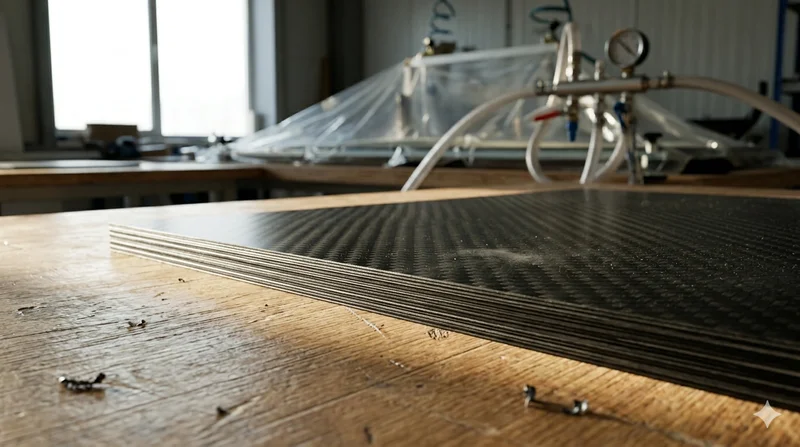
Carbon Fiber Plate — 3K Twill T700 3.0mm
Medium-thickness 3.0mm carbon fiber plate offering significantly higher load capacity while maintaining attractive 3K twill finish. Suitable for structural brackets, reinforcement plates, and load-bearing panels.
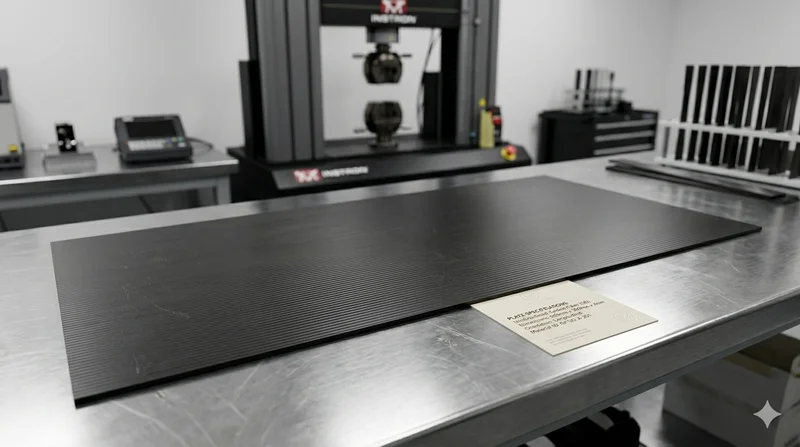
Carbon Fiber Plate — UD Unidirectional T700
Unidirectional carbon fiber plate with all fibers oriented in a single direction for maximum strength along the fiber axis. Essential for structural reinforcements, splints, and applications where load direction is predictable.