
Nickel is not the first input that comes to mind when a wind turbine blade is being planned. The blade itself is mostly carbon fiber, glass fiber and resin; the raw material conversation usually revolves around fiber supply, epoxy prices and pultruded plate capacity. Yet the sharpest co
Introduction
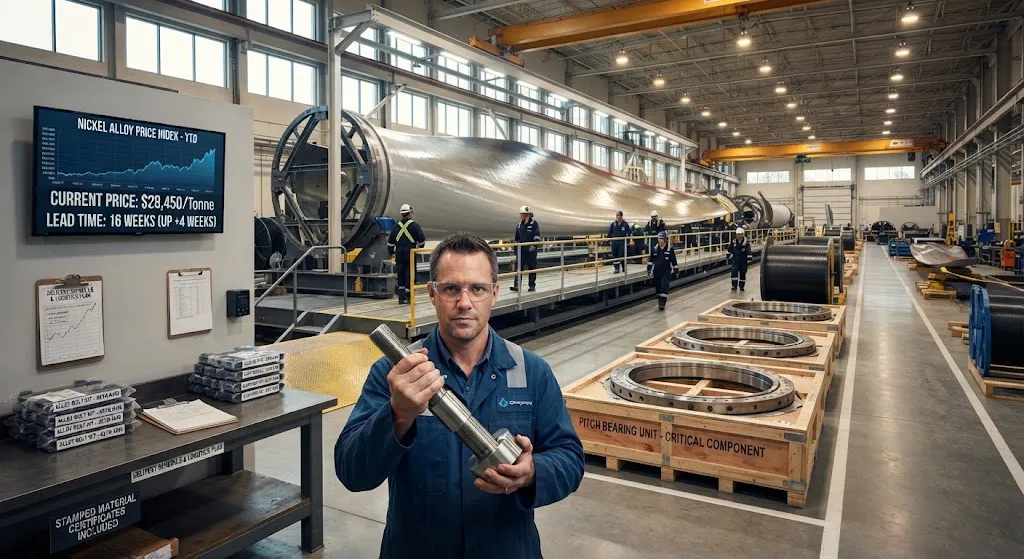
Nickel is not the first input that comes to mind when a wind turbine blade is being planned. The blade itself is mostly carbon fiber, glass fiber and resin; the raw material conversation usually revolves around fiber supply, epoxy prices and pultruded plate capacity. Yet the sharpest commodity signal of the second quarter of 2026 came from a metal that barely appears in the blade's own bill of materials — and it is now one of the dominant constraints on blade delivery dates across the export market.
The mechanism is indirect but powerful. Nickel alloy steels sit inside every turbine in the parts that surround the blades: the pitch bearings that rotate them, the high-strength fasteners and T-bolts that connect them to the hub, the mold frames and workholding in the factories that build them, and the heavy-haul equipment that moves them. When nickel jumps, alloy surcharges follow, suppliers reshuffle their order books, and the margin for prioritizing fresh export contracts shrinks. The result is visible in the market now: Chinese component and blade exporters quoting around 20 weeks of delivery lead time, and European and US OEMs quietly launching second-source reviews outside China. This article explains how a metal price spike travels through the blade supply chain, and what buyers should do about it.
The Nickel Price Trajectory
The current episode started in April 2026, when Indonesia — which supplies roughly half of the world's mined nickel — tightened export quotas on ore and nickel pig iron. European buyers of class-1 electrolytic nickel, the grade used in alloy and battery applications, simultaneously flagged a warning-level drawdown in warehouse stocks, and the LME three-month contract responded by climbing through June into July. On 11 July 2026 it settled at USD 22,840 per tonne, the highest reading since October 2025. The table below summarizes the four signals that define the current market:
| Signal | Period | Reading | Market Interpretation |
|---|---|---|---|
| LME three-month nickel | 2026-07-11 | USD 22,840 per tonne | Highest since October 2025 |
| Indonesia export quota | Q2 2026 | Tighter ore and NPI quota | Less primary supply reaching world markets |
| European electrolytic inventory | Q2 2026 | Warning-level drawdown | Regional premium pressure on class-1 grade |
| Alloy component export lead time | Q3 2026 | Up to 20 weeks | Export allocation constrained |
None of these signals is dramatic on its own; nickel has traded higher in past cycles. What makes this episode different for wind energy is the timing: it lands at a moment when turbine OEMs are already managing tight tower and blade capacity, when alloy-bearing components had not yet fully recovered from the previous lead-time inflation, and when freight premiums are adding to every imported tonne. A price spike that would once have been absorbed quietly as a cost line is now being passed through openly in tender prices and quoted delivery dates.
Why Nickel Matters in the Blade Supply Chain
The blade itself is polymer and carbon fiber, but everything that holds, moves and tests it depends on nickel-bearing alloys. The touchpoints concentrate in four areas:
- Pitch and main bearings: the ring bearings that rotate each blade are forged from nickel-bearing carburizing steel, and their heat-treatment and finishing cycles are already a 9-14 month lead-time item. Alloy surcharges move these prices directly, and bearing suppliers pass them through with minimal delay.
- Fasteners and T-bolts: blade-to-hub connections use high-strength alloy steel bolts with nickel-chromium plating for corrosion resistance. They are small-ticket items, but they ship on tight quality schedules, and fastener mills reallocate capacity toward higher-priced alloy work when nickel spikes.
- Mold frames and tooling: blade molds are composite-faced but steel-framed, and the frames, tilting mechanisms and precision rails that position mold halves rely on nickel alloy structural steel. New mold capacity is one of the longest lead items in blade industrialization.
- Heavy-haul and installation equipment: blade trailers, hub handling frames and offshore installation tooling depend on alloy steel weldments; alloy price increases flow into equipment builders' quotes and slow down fleet expansion just when transport is already constrained.
None of these components is manufactured by the blade factory itself, which is exactly the problem: the factory is a hostage to four separate alloy-consuming supply chains, each with its own order book and surcharge formula.
The 20-Week Delivery Signal
The most concrete evidence of the squeeze is delivery duration. Export-oriented suppliers in China, which host the largest concentration of blade and component capacity, moved their quoted lead times for alloy-bearing components and finished subassemblies from a pre-spike range of 6-10 weeks to roughly 20 weeks during Q3 2026. The extension has three structural causes:
- Order re-prioritization: domestic turbine and grid projects, which negotiate annual volume frames, absorb the most attractive alloy allocations first, leaving export buyers to queue behind them.
- Margin protection: exporters facing alloy surcharge uncertainty quote longer delivery windows to avoid being caught mid-cycle on a fixed-price order when steel prices reset.
- Quality documentation: nickel-bearing alloy steel requires material certificates and heat-treatment traceability; the certification queue lengthens in lockstep with alloy price volatility as mills run more small changeover batches.
A 20-week quoted lead time on critical path items is not a cancellation-level event for most programs, but it is the threshold at which OEM project teams start treating delivery risk as a schedule risk rather than a procurement footnote.
Cost Pass-Through and Contract Mechanics
Nickel cost pass-through is rarely a single surcharge line; it arrives through three channels that buyers will see in the next round of supplier quotes. First, steel mills apply published alloy surcharges on bearing and fastener grades, reset monthly, and blade suppliers pass these through with the same indexation clauses used for resin and fiber. Second, machining and forging houses add a volatility margin to their quotation validity — offers now expire in 7-14 days instead of 30, forcing buyers to commit earlier. Third, freight and insurance on alloy shipments have widened as well, so the landed cost of a bearing or fastener set can move by 10-15 percent within a single quarter. For a turbine bill of materials, the blade-related alloy content is a single-digit percentage of cost, but the lead-time and validity effects change procurement behavior far more than the cost line itself.
Non-China Resourcing Reviews
The strategic response is already underway. European and US turbine OEMs, prompted by the coincidence of nickel-driven lead times and wider supply-chain de-risking, have opened formal reviews of non-China second sources for alloy-bearing blade components. The reviews concentrate on the same four categories as the cost analysis:
- Bearing double-sourcing: qualifying a European or Korean pitch bearing line against the incumbent Chinese supply, with parallel fatigue testing and QA documentation.
- Fastener localization: moving T-bolt, stud and nut production to regional forging mills with existing alloy steel qualifications.
- Tooling co-investment: co-funding mold frame and workholding capacity with suppliers in Europe and North America to shorten the longest lead item.
- Inventory buffers: holding 6-8 weeks of alloy-bearing critical components in regional warehouses instead of relying on ship-ready timing from the export hub.
The reviews are structural, not cyclical: even if nickel normalizes, the qualification data created during these programs will outlast the price episode, and second-source capacity that is approved now will remain an option for future spikes.
What Buyers Should Do Now
For project teams procuring blades and components, the practical playbook has four steps. Lock prices early: with quote validity shortened to days, frame annual or multi-program contracts with the alloy surcharge formula made explicit rather than hidden in the base price. Re-sequence critical-path orders: fasteners and bearings should be released now, before the 20-week queue lengthens further, and scheduled around the longest item rather than the longest-lead item currently being tracked. Require delivery-risk clauses: insist on liquidated-damages and a documented production slot in the supplier's capacity plan, so the quoted 20 weeks is a commitment rather than a forecast. And run the second-source qualification in parallel, treating the qualification cost as insurance premium against the next commodity episode.
Frequently Asked Questions
Why does a nickel price rise affect carbon blade lead times?
Nickel is not a blade material, but the alloy steels around the blade are nickel-bearing: pitch bearings, high-strength fasteners, T-bolts, mold frames and heavy-haul equipment. When nickel prices spike, alloy surcharges rise, mills and forging houses reallocate capacity toward higher-priced work, and export suppliers extend quoted lead times to protect margin against surcharge uncertainty. The blade factory depends on these separate alloy-consuming supply chains, so a metal it does not buy controls delivery dates it must meet.
How long will the 20-week delivery situation last?
The duration depends on the same three factors that created it: Indonesia's export quota policy, European electrolytic nickel inventory rebuilding, and downstream inventory behavior. Historical episodes suggest that alloy-component lead times normalize 2-4 quarters after the price peaks, because surcharge pass-through stabilizes quotations and capacity reallocation reverses. However, the qualification programs launched during this episode will remain in place regardless of price, so buyers should expect permanent changes to sourcing architecture even after lead times recover.
What should OEMs do about second-source reviews?
OEMs should treat the review as a permanent insurance program rather than a response to this spike. The four practical measures are: qualifying a non-China bearing line with parallel fatigue testing, localizing fastener production at regional forging mills, co-investing in mold frame and workholding capacity outside the export hub, and holding 6-8 weeks of alloy-bearing critical components in regional inventory. The qualification data produced now retains value even if nickel normalizes, and approved second sources become standing options for future episodes.
Conclusion
The LME nickel price at USD 22,840 per tonne is not a headline about turbine technology; it is a signal about delivery reliability. Through alloy bearings, fasteners, tooling and equipment, a metal outside the blade's own bill of materials has stretched export component lead times to around 20 weeks, tightened quotation validity to days, and pushed European and US OEMs into structural second-source qualification. Buyers who lock contract terms early, sequence critical-path releases, and treat second-source qualification as insurance will absorb this episode with minimal schedule impact; those who wait will pay with delivery dates.
For blade programs evaluating material partners under tightened supply conditions, review our carbon fiber and pultruded plate product range, or contact our engineering team to discuss supply commitments, qualification documentation and lead-time planning for your next blade build.
Part of topic
Related Articles
- Recycled Carbon Fiber Market Forecast 2030: Technology Maturity and Commercialization Path
- South Korea Carbon Fiber Market 2026: Hydrogen Economy and Shipbuilding Innovation
- Wind Turbine Blade Leading Edge Protection 2026: Polyurethane, Tape, and Metallic Shield Solutions
- China Carbon Fiber Overcapacity 2026: Price War Impact and Industry Consolidation
- India Carbon Fiber Market 2026: Wind Energy, Aerospace, and Defense Expansion
- PAN Precursor Market 2026: Acrylonitrile Supply and Carbon Fiber Cost Structure
Interested in Our Products?
Contact our team for competitive pricing and technical specifications.
Get a QuoteRelated Products
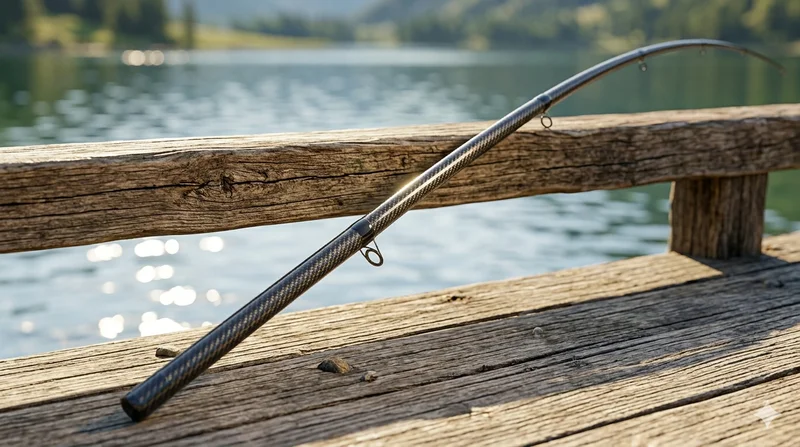
Carbon Fiber Fishing Rod Blank
High-quality carbon fiber fishing rod blank manufactured from multiple grades of Toray carbon fiber cloth. Available in a wide range of lengths, powers, and actions for freshwater and saltwater applications. Suitable for OEM rod building.

Carbon Fiber Plate — 3K Twill T700 3.0mm
Medium-thickness 3.0mm carbon fiber plate offering significantly higher load capacity while maintaining attractive 3K twill finish. Suitable for structural brackets, reinforcement plates, and load-bearing panels.

Carbon Fiber Plate — 3K Twill T700 1.5mm
Thin 1.5mm carbon fiber plate with 3K twill weave surface. Lightweight and stiff, commonly used for covers, panels, drone bodies, and applications requiring a premium aesthetic appearance.

Square Carbon Fiber Tube — 3K Twill T700
Square cross-section carbon fiber tube manufactured with 3K twill weave for torsional strength. Preferred for structural frames, trusses, and support columns where rectangular geometry offers design flexibility.

Carbon Fiber Pickleball Paddle
High-performance pickleball paddle with Toray T700 carbon fiber face and polypropylene honeycomb core. Delivers excellent power-to-weight ratio, spin generation, and vibration dampening for competitive play.