
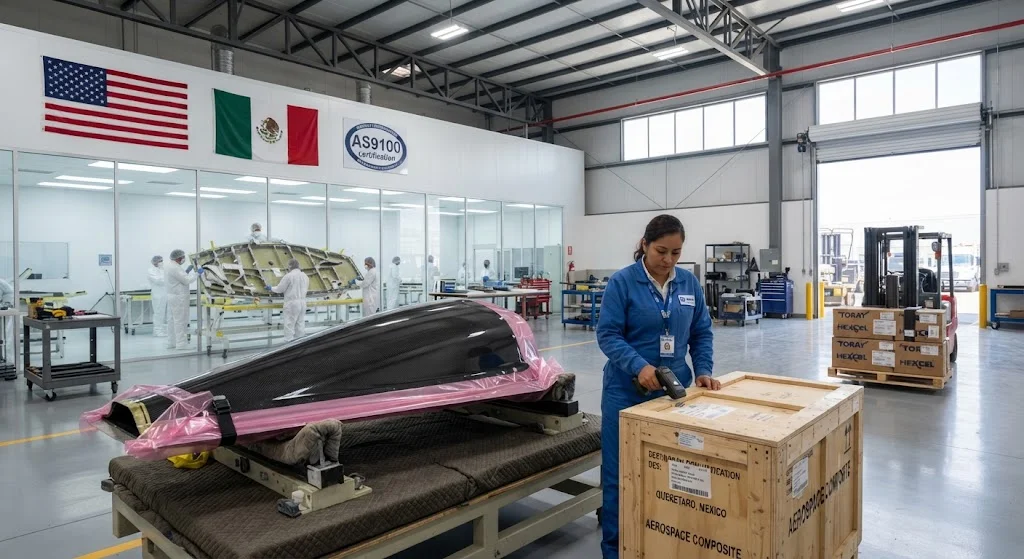
Mexico has emerged as one of the most dynamic carbon fiber markets in the Americas, driven by three converging forces: the acceleration of aerospace nearshoring from Asia to North America, the trade advantages created by the United States-Mexico-Canada Agreement (USMCA), and the expansion of electri
Introduction
Mexico has emerged as one of the most dynamic carbon fiber markets in the Americas, driven by three converging forces: the acceleration of aerospace nearshoring from Asia to North America, the trade advantages created by the United States-Mexico-Canada Agreement (USMCA), and the expansion of electric vehicle manufacturing in northern Mexico. The country's aerospace sector has grown at a compound annual rate of 12-15% over the past five years, with composite-intensive aircraft components representing an increasingly large share of production. For carbon fiber suppliers, Mexico offers a unique combination of proximity to the US market, competitive labor costs, and preferential trade treatment that makes it an attractive alternative to direct US or European supply chain investment.
Understanding Mexico's carbon fiber market requires analyzing not just current demand but the structural changes reshaping North American manufacturing. The shift from global to regional supply chains — accelerated by pandemic-era disruptions, geopolitical tensions, and US trade policy — has positioned Mexico as the nearshoring destination of choice for aerospace Tier 1 and Tier 2 suppliers. This article provides a comprehensive analysis of Mexico's carbon fiber demand landscape, the policy framework driving nearshoring, the supply chain infrastructure supporting composite manufacturing, and practical market entry strategies for international carbon fiber producers.
Aerospace Nearshoring: The Primary Demand Driver
Mexico's aerospace industry has evolved from basic metal machining to increasingly sophisticated composite manufacturing, with carbon fiber emerging as a critical growth material:
- Aircraft structural components: Mexican manufacturers are producing carbon fiber fairings, access panels, interior structures, and secondary structural components for Boeing, Airbus, and Embraer supply chains. The shift from aluminum to CFRP in these applications is driving direct carbon fiber demand growth of 18-22% annually.
- Engine components: Several Mexican Tier 2 suppliers have qualified to produce carbon fiber composite fan blades and nacelle components for next-generation turbofan engines, requiring aerospace-grade carbon fiber with full AS9100 traceability.
- UAV and defense structures: Mexico's growing defense industry, supported by government procurement and US collaboration, is creating demand for carbon fiber structures in unmanned aerial vehicles and lightweight tactical equipment.
- MRO and repair: The expansion of Mexican Maintenance, Repair, and Overhaul (MRO) facilities for composite aircraft structures is generating demand for carbon fiber repair materials, including prepreg patches, bonding adhesives, and structural repair compounds.
The nearshoring trend is structural, not cyclical. US aerospace OEMs are actively diversifying their supply chains away from Asian concentration, and Mexico's geographic proximity — with major aerospace clusters in Sonora (Hermosillo), Queretaro, Baja California (Tijuana/Mexicali), and Chihuahua — enables just-in-time delivery that Asian suppliers cannot match. The USMCA rules of origin require that 75% of aircraft content be manufactured within North America to qualify for zero tariffs, creating strong incentives for composite suppliers to establish Mexican production or distribution capabilities.
USMCA Trade Policy and Carbon Fiber Implications
The USMCA trade agreement, which replaced NAFTA in 2020, has significantly reshaped the economics of carbon fiber trade in North America:
| USMCA Provision | Impact on Carbon Fiber | Benefit for Mexico-Based Supply |
|---|---|---|
| Rules of origin (75% regional value) | Aircraft components must contain 75% North American content for zero tariff | Mexico-assembled composites qualify; Asian-sourced CFRP does not |
| Tariff elimination (Chapter 4) | Carbon fiber (HS 6815/6814) enters Mexico duty-free from US/Canada | Enables competitive Mexico-based finishing and assembly |
| De minimis rule (10%) | Non-originating content below 10% of transaction value allowed | Allows use of small amounts of non-regional carbon fiber additives |
| Automotive provisions (75% regional) | Vehicle components require 75% North American content | Carbon fiber automotive parts benefit from same nearshoring incentive |
| Digital trade chapter | Electronic certificates of origin accepted | Streamlines customs clearance for high-volume carbon fiber shipments |
The practical effect of USMCA on carbon fiber supply chains is significant. A carbon fiber prepreg roll manufactured in Japan and shipped to Mexico for aircraft component production faces a 3-8% import duty on the raw material, while the same roll shipped from a US or Canadian production facility enters duty-free. For high-value aerospace applications where carbon fiber material cost represents 30-50% of component cost, this duty differential translates into meaningful competitive advantages for North American carbon fiber suppliers with Mexican distribution capabilities.
Supply Chain Infrastructure and Manufacturing Ecosystem
Mexico's carbon fiber supply chain infrastructure has matured significantly, with several key developments supporting expanded composite manufacturing:
- Prepreg distribution centers: Major prepreg distributors (including Hexcel, Toray, and Solvay) have established Mexican warehousing and technical support centers in Queretaro and Hermosillo, enabling just-in-time delivery to local manufacturers and reducing the inventory burden on small-to-medium composite shops.
- Autoclave and OOA processing: Mexico now has over 40 industrial autoclaves capable of aerospace-grade composite curing, with additional vacuum infusion and out-of-autoclave (OOA) capabilities expanding rapidly. Queretaro and Chihuahua lead in autoclave capacity.
- NDT and quality lab services: Ultrasonic inspection, thermography, and materials testing laboratories have expanded to support aerospace composite qualification, with several labs holding Nadcap accreditation for composite NDT.
- Workforce development: Technical universities in Sonora and Queretaro offer composite materials engineering programs, producing 500-800 graduates annually with hands-on experience in layup, curing, and inspection.
- Logistics corridors: The cross-border logistics infrastructure between Mexican aerospace clusters and US OEM facilities has become highly efficient, with dedicated customs lanes for aerospace materials and same-day delivery capability to Texas and California manufacturing sites.
The manufacturing ecosystem is not limited to traditional aerospace. Mexico's automotive sector — the world's seventh-largest vehicle producer — is increasingly incorporating carbon fiber components in premium vehicles, electric vehicle battery structures, and lightweight body panels. German, Japanese, and Korean automotive OEMs with Mexican production facilities are creating additional carbon fiber demand beyond aerospace applications.
Market Entry Strategies for International Suppliers
International carbon fiber suppliers seeking to enter or expand in the Mexican market face several strategic options, each with distinct risk-reward profiles:
- Direct distribution model: Establish a Mexican subsidiary or partnership with a local distributor to sell carbon fiber materials directly to manufacturers. This model offers maximum market control but requires significant investment in technical sales, warehousing, and customer qualification support. Suitable for large-volume producers with existing North American operations.
- Technical partnership model: Partner with established Mexican composite manufacturers to co-develop applications and gain market access through their customer relationships. This model reduces market entry risk but requires sharing technical know-how and may limit long-term market independence.
- US-Mexico integrated model: Leverage existing US production or distribution capabilities to serve the Mexican market from across the border, taking advantage of USMCA duty-free treatment. This model offers lower capital investment but may face logistics and responsiveness limitations compared to local presence.
- Joint venture model: Form a joint venture with a Mexican industrial group to establish local production, blending international technical expertise with local market knowledge and manufacturing infrastructure. This model offers the strongest long-term positioning but requires careful partner selection and cultural integration.
The recommended approach for most international suppliers is a phased strategy: begin with the US-Mexico integrated model to serve initial demand, then transition to a direct distribution model as volume justifies local warehousing, and ultimately consider local production or joint venture arrangements as the market matures. Key success factors include Spanish-language technical support, understanding of Mexican quality certification requirements (which follow aerospace industry norms but may differ in documentation practices), and relationships with the cluster organizations that coordinate aerospace supply chain development in each region.
Frequently Asked Questions
What are the main aerospace manufacturing clusters in Mexico?
Mexico's aerospace industry is concentrated in four primary clusters: Sonora (Hermosillo, Ciudad Obregon) — the largest cluster with over 80 aerospace companies and strong focus on structural components and MRO; Queretaro — home to major Tier 1 suppliers including Safran and Bombardier, with growing composite manufacturing capability; Baja California (Tijuana, Mexicali) — focused on precision machining and electronics for aerospace, with emerging composite repair capability; and Chihuahua — growing rapidly with several new composite manufacturing facilities and proximity to Texas logistics corridors. Each cluster has established technical training programs, industry associations, and government support mechanisms that facilitate new entrant integration.
How do USMCA rules of origin affect carbon fiber component pricing?
USMCA rules of origin create a significant pricing differential between North American and Asian-sourced carbon fiber components. Aircraft components manufactured in Mexico with 75% North American content enter the US market duty-free, while equivalent components with significant Asian content face 3-8% import duties depending on the specific carbon fiber HS classification. For a typical aerospace composite component valued at $10,000, this duty differential represents $300-800 per unit — a meaningful margin impact in the cost-sensitive aerospace supply chain. Additionally, USMCA's de minimis rule allows up to 10% non-originating content, giving manufacturers flexibility to use specialty carbon fibers from non-USMCA sources without losing preferential treatment.
What quality certifications are required for aerospace composite suppliers in Mexico?
Aerospace composite suppliers in Mexico must hold AS9100 quality management system certification, which is internationally recognized and required by all major aerospace OEMs. Many Tier 1 customers also require Nadcap accreditation for special processes such as composite layup, cure, and NDT inspection. Mexico's aviation authority (AFAC) follows FAA and EASA standards for component approval, so suppliers producing flight-critical structures must demonstrate compliance with the applicable airworthiness regulations. Environmental certifications (ISO 14001) and occupational health and safety standards (ISO 45001) are increasingly required by larger customers. The certification process typically takes 12-18 months for a new facility and requires ongoing surveillance audits.
Conclusion
Mexico's carbon fiber market represents a compelling growth opportunity driven by structural nearshoring trends, favorable trade policy under USMCA, and a maturing manufacturing ecosystem. The aerospace sector remains the primary demand driver, but automotive and defense applications are creating diversified growth across multiple carbon fiber grades and formats. For international suppliers, the Mexican market offers proximity to North American OEM customers, competitive operating costs, and preferential trade treatment that collectively make nearshoring to Mexico a strategically sound investment.
Success in the Mexican carbon fiber market requires understanding both the technical requirements of aerospace composite manufacturing and the practical realities of operating in Mexico — including logistics infrastructure, workforce capabilities, and the cultural dimensions of business relationships in the region. Explore our carbon fiber market intelligence or contact our regional team to discuss market entry strategies for the Mexican composites market.
Part of topic
Related Articles
- Japan Carbon Fiber Market 2026: Toray, Teijin, and Mitsubishi Chemical Global Strategy
- Europe Carbon Fiber Market Share 2026: Aerospace Leadership and Wind Energy Transition
- Türkiye Carbon Fiber Market 2026: Defense Aviation and KAAN Fighter Program
- Saudi Arabia Carbon Fiber Market 2026: Vision 2030 Diversification and Mega-Projects
- Recycled Carbon Fiber Market Forecast 2030: Technology Maturity and Commercialization Path
- South Korea Carbon Fiber Market 2026: Hydrogen Economy and Shipbuilding Innovation
Interested in Our Products?
Contact our team for competitive pricing and technical specifications.
Get a QuoteRelated Products

Carbon Fiber Fishing Rod Blank
High-quality carbon fiber fishing rod blank manufactured from multiple grades of Toray carbon fiber cloth. Available in a wide range of lengths, powers, and actions for freshwater and saltwater applications. Suitable for OEM rod building.
Carbon Fiber Plate — 3K Twill T700 1.5mm
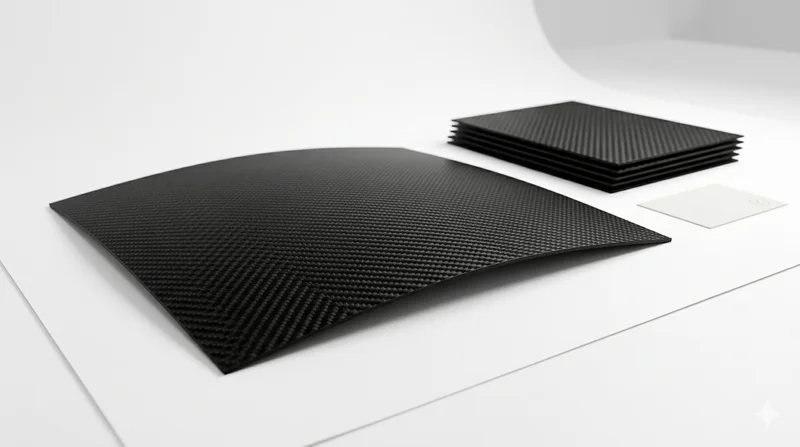
Thin 1.5mm carbon fiber plate with 3K twill weave surface. Lightweight and stiff, commonly used for covers, panels, drone bodies, and applications requiring a premium aesthetic appearance.
Carbon Fiber Plate — 3K Twill T700 3.0mm
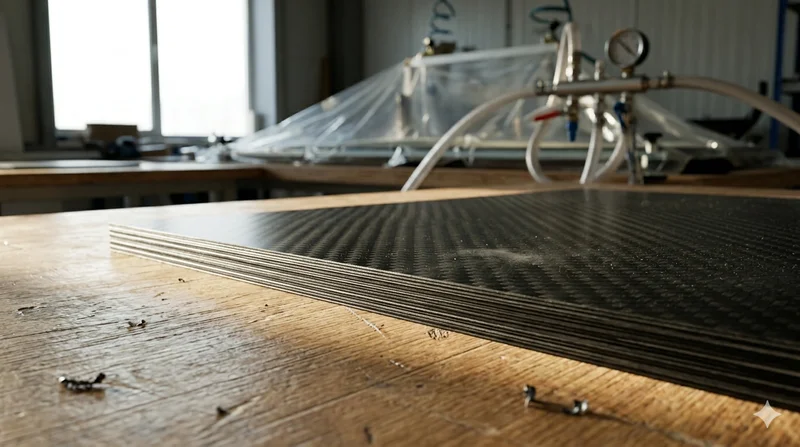
Medium-thickness 3.0mm carbon fiber plate offering significantly higher load capacity while maintaining attractive 3K twill finish. Suitable for structural brackets, reinforcement plates, and load-bearing panels.

Carbon Fiber Trekking Pole
Lightweight carbon fiber trekking pole manufactured from high-grade carbon fiber tube. Weighs only 160g per pole while providing superior shock absorption and durability for hiking, trail running, and backpacking.
Square Carbon Fiber Tube — 3K Twill T700
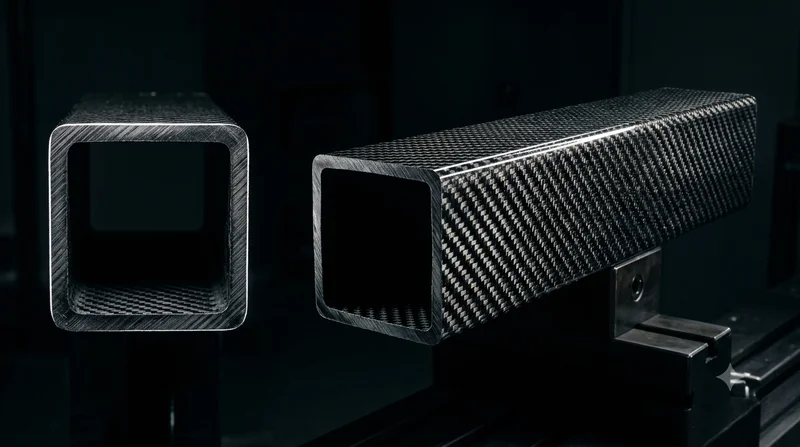
Square cross-section carbon fiber tube manufactured with 3K twill weave for torsional strength. Preferred for structural frames, trusses, and support columns where rectangular geometry offers design flexibility.