
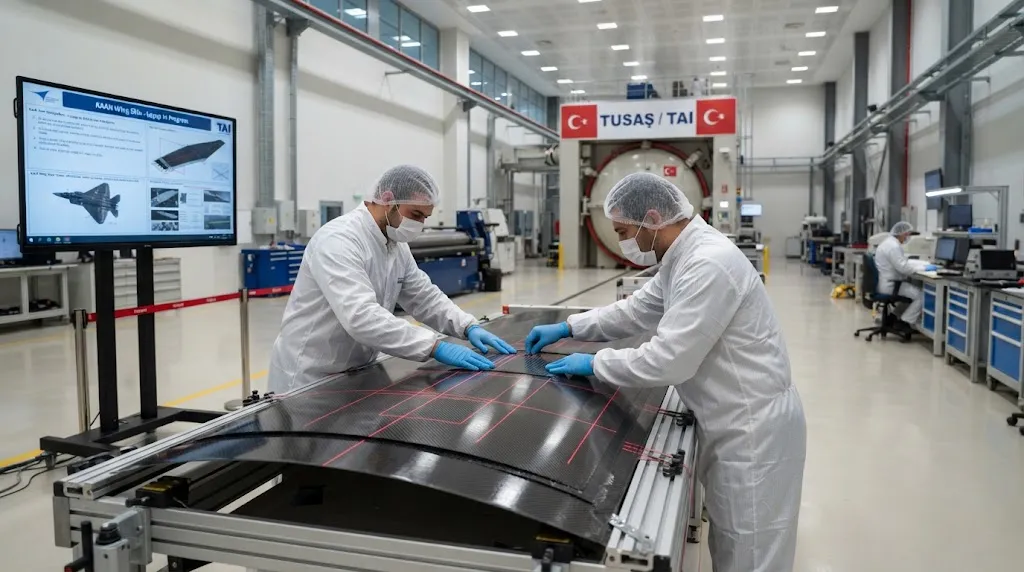
Türkiye's carbon fiber market in 2026 is experiencing a structural transformation driven by the country's ambitious defense aviation programs and the broader industrialization strategy outlined in Vision 2030. The centerpiece of this transformation is the KAAN fifth-generation fighter jet — Türkiye'
Introduction
Türkiye's carbon fiber market in 2026 is experiencing a structural transformation driven by the country's ambitious defense aviation programs and the broader industrialization strategy outlined in Vision 2030. The centerpiece of this transformation is the KAAN fifth-generation fighter jet — Türkiye's first indigenous combat aircraft — which relies heavily on carbon fiber reinforced polymer (CFRP) composites for its airframe, control surfaces, and stealth structures. Beyond KAAN, Turkish defense manufacturers are producing some of the world's most advanced unmanned aerial vehicles (UAVs), including the Bayraktar TB2, Akıncı, and Kızılelma, all of which incorporate significant carbon fiber content in their wing structures, fuselage panels, and payload systems.
For carbon fiber producers and composite material suppliers, Türkiye represents a rapidly growing B2B market where defense procurement timelines create predictable, multi-year demand curves. This article examines the defense aviation programs driving Turkish carbon fiber consumption, evaluates domestic production capabilities, and identifies the supply chain gaps that international suppliers can fill.
The KAAN Fighter Program: Türkiye's Largest Composite Consumer
The KAAN (formerly known as TF-X) fifth-generation fighter program, led by Turkish Aerospace Industries (TAI), represents the single largest driver of carbon fiber demand in Türkiye. The aircraft is designed to replace Türkiye's F-16 fleet and compete in the international fighter market alongside the F-35, Eurofighter, and Rafale. Carbon fiber composites are specified for approximately 25-30% of the airframe structural weight — comparable to the F-35's composite content — covering:
- Wing skins and control surfaces: Carbon fiber/epoxy laminates for wing leading and trailing edge skins, ailerons, flaperons, and horizontal stabilizers, requiring radar-absorbent structural design for low observability.
- Fuselage panels and bulkheads: Large-scale CFRP panels for the central fuselage section, designed for electromagnetic stealth characteristics and structural load paths.
- Engine nacelle and intake duct: Carbon fiber composite structures for the stealth-optimized S-shaped intake duct and engine bay doors, operating under thermal and acoustic loading.
- Landing gear doors and weapons bay: CFRP panels for internal weapons bay doors and landing gear bay covers, requiring high stiffness-to-weight ratios for rapid cycling.
TAI has stated that the KAAN program will consume approximately 8-12 tonnes of carbon fiber material per aircraft, with an initial production target of 20 aircraft by 2028 and a total program requirement of 300+ aircraft over 20 years. This implies a steady-state annual consumption of 160-240 tonnes of carbon fiber for KAAN alone — representing a significant portion of Türkiye's total carbon fiber imports.
Turkish UAV Manufacturing: The Global Export Success Story
Türkiye's unmanned aerial vehicle industry has emerged as one of the country's most successful defense exports, with Baykar's TB2, Akıncı, and Kızılelma platforms deployed by over 30 countries. The UAV sector creates substantial carbon fiber demand through lightweight structural components that maximize endurance and payload capacity:
| Platform | MTOW (kg) | Wingspan (m) | Est. CF Content (kg) | Primary CF Applications |
|---|---|---|---|---|
| Bayraktar TB2 | 650 | 12 | 35-50 | Wing skins, tail boom, control surfaces |
| Bayraktar Akıncı | 5,500 | 20 | 180-250 | Full wing structure, fuselage panels, engine nacelles |
| Bayraktar Kızılelma | 6,000 | 9.8 | 200-300 | Stealth airframe, wing-body fairing, intake ducts |
| TAI Anka-3 | 7,500 | 24 | 250-350 | Flying wing structure, payload bays, landing gear doors |
| STM Kargu-2 (loitering) | 6.5 | 1.2 | 1.5-2.5 | Fuselage tube, warhead section, fins |
Türkiye exported approximately $4.4 billion in defense and aerospace products in 2025, with UAVs accounting for roughly 35% of total defense exports. The export success of Turkish UAVs creates a secondary carbon fiber demand stream — each exported platform requires spare parts, replacement wings, and structural repair materials that sustain ongoing composite consumption.
Domestic Carbon Fiber Production Capabilities
Türkiye's domestic carbon fiber production remains limited but is expanding under government incentives. Current capabilities include:
- Hexcel Ankara facility: Hexcel operates a prepreg and honeycomb manufacturing plant in Ankara, serving primarily the Turkish defense and aerospace sector. The facility produces carbon fiber prepreg for TAI's aircraft programs but relies on imported carbon fiber precursor and tow.
- Türk Tech Metal: A smaller domestic producer of chopped and milled carbon fiber for compound molding applications, serving automotive and industrial markets rather than aerospace.
- Emerging precursor research: TÜBITAK (Scientific and Technological Research Council of Türkiye) has funded research programs for PAN precursor development, with pilot-scale results expected by 2027-2028. Full commercial-scale carbon fiber production from domestic precursor remains 5-7 years away.
The gap between domestic demand and domestic production creates a significant import opportunity. Türkiye currently imports 85-90% of its carbon fiber requirements — primarily from Japan (Toray, Teijin), the United States (Hexcel), and South Korea (Hyosung) — with import duties of 0-5% under the EU-Türkiye Customs Union framework for aerospace materials.
Supply Chain Structure and Procurement Channels
Turkish aerospace and defense procurement follows a structured qualification process, but several pathways exist for international carbon fiber suppliers:
- Direct OEM supply: TAI, Baykar, and Roketsan maintain approved supplier lists for carbon fiber materials. Qualification typically requires 12-18 months of testing, including mechanical property validation, processability assessment, and first-article inspection.
- Tier 1 subcontractor channel: Turkish composites manufacturers such as Alp Aviation, Kale Composite, and Havelsan produce secondary structures and components for defense programs. These Tier 1 suppliers often have more flexible procurement processes and can serve as intermediaries for material qualification.
- NATO and allied procurement frameworks: Türkiye's NATO membership provides access to standardized procurement channels and interoperability requirements that simplify material qualification for allied suppliers.
The procurement timeline for KAAN production materials is particularly favorable for suppliers who can establish qualification by 2026-2027, positioning them for 15-20 years of steady production demand.
Frequently Asked Questions
What grade of carbon fiber does the KAAN fighter program specify?
The KAAN program is understood to specify intermediate-modulus carbon fiber (comparable to Toray T800 or T1000 class) for primary structural applications, with high-modulus fiber (M40J class) selected for stabilizer and antenna window structures requiring extreme dimensional stability. The exact specifications are classified, but industry analysis based on TAI's published material requirements and the structural performance targets for a fifth-generation fighter suggest a mixed-modulus approach that balances specific strength, stiffness, and radar-absorbent structural design requirements.
Can Turkish UAV manufacturers source carbon fiber domestically?
Currently, domestic supply covers less than 15% of Turkish UAV manufacturers' carbon fiber requirements. Baykar and TAI import the majority of their carbon fiber from Toray (Japan), Hexcel (USA), and Hyosung (South Korea), with some specialty grades sourced from Mitsubishi and SGL Carbon. The domestic prepreg facility (Hexcel Ankara) provides conversion capability but not raw fiber production. For suppliers entering the Turkish market, the immediate opportunity lies in supplying standard aerospace-grade carbon fiber tow and prepreg that complements rather than competes with the limited domestic conversion base.
How does Türkiye's defense export growth affect carbon fiber demand?
Türkiye's defense export growth directly multiplies carbon fiber demand beyond domestic consumption. Each exported UAV platform generates ongoing demand for spare structural components, replacement wing panels, and repair materials. With 30+ countries operating Turkish UAVs and annual defense exports exceeding $4 billion, the export-related carbon fiber consumption adds an estimated 20-30% to the domestic demand base. Additionally, Türkiye's ambition to become a net exporter of combat aircraft through the KAAN program could create an entirely new demand stream of 100-200 tonnes per year of carbon fiber for international KAAN customers, depending on export success.
Conclusion
Türkiye's carbon fiber market in 2026 sits at an inflection point where the KAAN fighter program, world-class UAV manufacturing, and defense industrialization are creating sustained, predictable demand for high-performance composite materials. With domestic production covering less than 15% of requirements, the import opportunity is substantial — estimated at 500-700 tonnes annually and growing at 15-20% per year through 2030. For carbon fiber suppliers seeking to establish a position in a fast-growing market with defense-grade quality requirements and long-term production commitments, Türkiye offers one of the most compelling B2B opportunities in the global composites landscape.
To explore carbon fiber supply opportunities for Turkish defense and aerospace applications, browse our carbon fiber product range or contact our sales team for qualification support and volume pricing for the Turkish market.
Part of topic
Related Articles
- Europe Carbon Fiber Market Share 2026: Aerospace Leadership and Wind Energy Transition
- Saudi Arabia Carbon Fiber Market 2026: Vision 2030 Diversification and Mega-Projects
- Recycled Carbon Fiber Market Forecast 2030: Technology Maturity and Commercialization Path
- South Korea Carbon Fiber Market 2026: Hydrogen Economy and Shipbuilding Innovation
- Wind Turbine Blade Leading Edge Protection 2026: Polyurethane, Tape, and Metallic Shield Solutions
- China Carbon Fiber Overcapacity 2026: Price War Impact and Industry Consolidation
Interested in Our Products?
Contact our team for competitive pricing and technical specifications.
Get a QuoteRelated Products
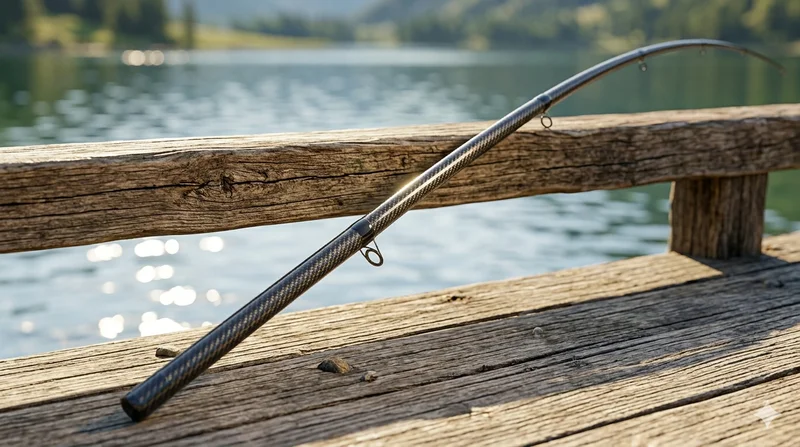
Carbon Fiber Fishing Rod Blank
High-quality carbon fiber fishing rod blank manufactured from multiple grades of Toray carbon fiber cloth. Available in a wide range of lengths, powers, and actions for freshwater and saltwater applications. Suitable for OEM rod building.

Carbon Fiber Plate — 3K Twill T700 1.5mm
Thin 1.5mm carbon fiber plate with 3K twill weave surface. Lightweight and stiff, commonly used for covers, panels, drone bodies, and applications requiring a premium aesthetic appearance.

Carbon Fiber Plate — 3K Twill T700 3.0mm
Medium-thickness 3.0mm carbon fiber plate offering significantly higher load capacity while maintaining attractive 3K twill finish. Suitable for structural brackets, reinforcement plates, and load-bearing panels.
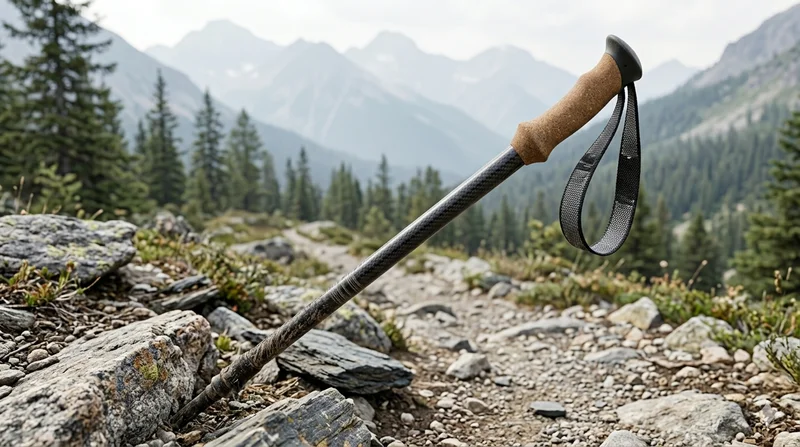
Carbon Fiber Trekking Pole
Lightweight carbon fiber trekking pole manufactured from high-grade carbon fiber tube. Weighs only 160g per pole while providing superior shock absorption and durability for hiking, trail running, and backpacking.

Square Carbon Fiber Tube — 3K Twill T700
Square cross-section carbon fiber tube manufactured with 3K twill weave for torsional strength. Preferred for structural frames, trusses, and support columns where rectangular geometry offers design flexibility.