
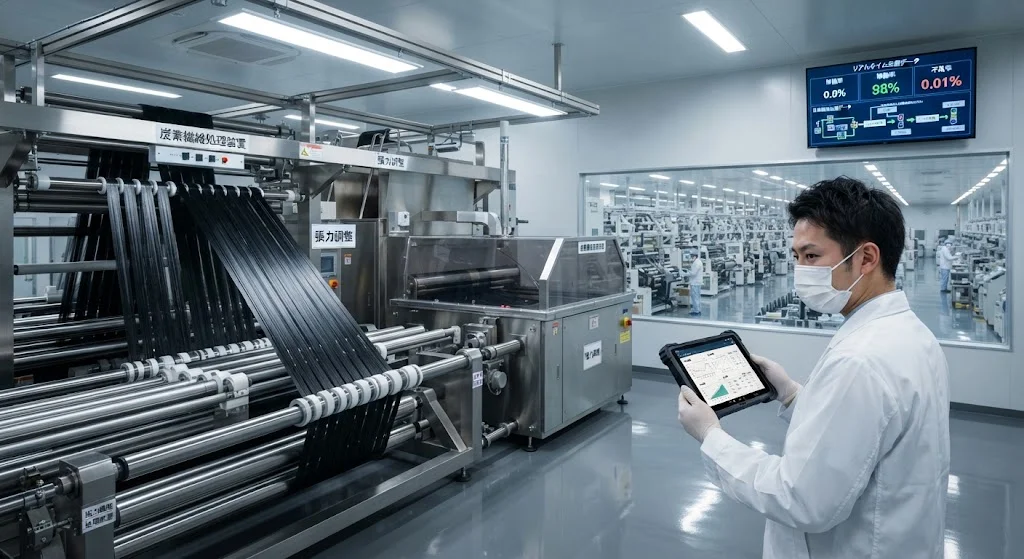
Japan's carbon fiber industry represents the most concentrated hub of advanced materials expertise in the world. Three Japanese companies — Toray Industries, Teijin Limited, and Mitsubishi Chemical Group — produce more than half of the world's carbon fiber, supplying aerospace, automotive, wind ener
Introduction
Japan's carbon fiber industry represents the most concentrated hub of advanced materials expertise in the world. Three Japanese companies — Toray Industries, Teijin Limited, and Mitsubishi Chemical Group — produce more than half of the world's carbon fiber, supplying aerospace, automotive, wind energy, and industrial applications across every continent. Japan's dominance is not accidental; it is the result of decades of government-supported research, corporate investment, and a vertically integrated supply chain that stretches from precursor chemistry to finished composite products.
In 2026, the Japan carbon fiber market faces a complex landscape. Global demand is growing at 8-12% annually, driven by aerospace recovery, wind energy expansion, and hydrogen infrastructure. At the same time, Chinese producers are rapidly scaling capacity, putting pressure on pricing and market share. This article examines how Toray, Teijin, and Mitsubishi Chemical are responding — through capacity expansion, technology differentiation, and strategic partnerships — to maintain Japan's leadership in the global carbon fiber market.
Japan Carbon Fiber Market Overview
Japan's position in the global carbon fiber market is built on three pillars: production capacity, technology leadership, and customer relationships. The table below summarizes Japan's current market position:
| Metric | Japan Total | Global Total | Japan Share |
|---|---|---|---|
| PAN-based carbon fiber capacity | ~54,000 tonnes/year | ~105,000 tonnes/year | ~51% |
| Carbon fiber revenue | ~$4.2 billion | ~$7.8 billion | ~54% |
| Aerospace-grade fiber supply | ~70% of global aerospace | 100% | ~70% |
| Toray market share | ~22% global | N/A | ~43% of Japan total |
| Teijin market share | ~14% global | N/A | ~27% of Japan total |
| Mitsubishi market share | ~10% global | N/A | ~19% of Japan total |
Japan's carbon fiber industry benefits from strong government support through the Ministry of Economy, Trade and Industry (METI), which funds research programs and provides incentives for advanced materials development. The industry also benefits from deep relationships with Japanese aerospace manufacturers — particularly Mitsubishi Heavy Industries (MHI), which is a key partner in the Boeing 787 program, the largest single application of carbon fiber composites in commercial aviation.
Toray Industries: Global Scale and Aerospace Dominance
Toray is the world's largest carbon fiber manufacturer, with production capacity of approximately 27,000 tonnes per year across Japan, the United States, France, and China. Toray's strategy centers on three pillars:
- Aerospace leadership: Toray is the primary carbon fiber supplier for the Boeing 787 Dreamliner, providing Torayca T800S and T1100G fibers that form the backbone of the aircraft's composite structure. The company's aerospace revenue exceeds $2 billion annually, with long-term supply agreements extending through 2035.
- Capacity expansion: Toray is investing $1.2 billion to expand carbon fiber capacity by 30% by 2028, with new production lines in South Carolina (USA), Ehime (Japan), and Todos Santos (Mexico). The expansion targets both aerospace and industrial applications.
- Technology differentiation: Toray's latest fiber, T1100G, delivers 30% higher tensile strength than T800S while maintaining comparable modulus — a breakthrough that enables lighter, stronger composite structures for next-generation aircraft.
Toray's competitive advantage lies in its vertical integration: the company produces its own precursor (PAN), carbon fiber, prepreg, and composite materials, giving it control over the entire value chain. This integration also enables rapid technology transfer from laboratory to production scale — a critical advantage in an industry where material qualification cycles span years.
Teijin Limited: Thermoplastic Composites and Automotive Focus
Teijin is the world's second-largest carbon fiber manufacturer, with capacity of approximately 15,000 tonnes per year. Teijin's strategy differentiates from Toray through its focus on thermoplastic composites and automotive applications:
- Thermoplastic carbon fiber: Teijin's Tenax thermoplastic tape and organosheet products enable rapid forming and welding — processes that are significantly faster than thermoset cure cycles. This positions Teijin for high-volume automotive production where cycle time is the primary constraint.
- Automotive partnerships: Teijin has established joint ventures with SABIC and partnerships with European automakers to develop carbon fiber interior structures, battery enclosures for electric vehicles, and structural reinforcements. The company targets 50,000+ tonnes of automotive carbon fiber demand by 2028.
- Recycling leadership: Teijin's carbon fiber recycling technology recovers fibers from production waste and end-of-life composites, producing recycled carbon fiber products that meet automotive quality standards at 30-40% lower cost than virgin fiber.
Teijin's approach reflects a deliberate bet that the next wave of carbon fiber growth will come from automotive electrification, not just aerospace. By mastering thermoplastic processing and building recycling capabilities, Teijin positions itself for a market where cost and production speed matter as much as mechanical performance.
Mitsubishi Chemical Group: Diversified Industrial Applications
Mitsubishi Chemical is Japan's third-largest carbon fiber producer, with capacity of approximately 11,000 tonnes per year. Mitsubishi's strategy emphasizes diversified industrial applications and specialty products:
- Industrial carbon fiber: Mitsubishi's Pyrofil carbon fiber targets industrial applications — pressure vessels, wind turbine blades, construction reinforcement, and sports equipment — where high-volume, cost-competitive production is essential.
- Hydrogen infrastructure: Mitsubishi is a leading supplier of carbon fiber for Type IV hydrogen storage tanks, capitalizing on Japan's national hydrogen strategy. The company has secured supply agreements with Toyota, Nissan, and several European hydrogen infrastructure developers.
- CFRTP and compound materials: Mitsubishi's "Pyrofil CFRTP" continuous fiber thermoplastic composites enable injection molding and press forming of carbon fiber parts at production speeds suitable for automotive and consumer electronics applications.
Mitsubishi's diversified approach provides resilience against market cyclicality. While aerospace demand can be volatile — as demonstrated during the COVID-19 pandemic — industrial applications in hydrogen, construction, and energy provide a stable demand base. Mitsubishi's Japan carbon fiber market position benefits from this balanced portfolio.
Competitive Dynamics: Japan vs China
The most significant competitive challenge to Japan's carbon fiber dominance comes from Chinese producers, who have rapidly scaled capacity over the past five years. The comparison highlights both the threat and Japan's defensive advantages:
| Factor | Japan (Toray/Teijin/Mitsubishi) | China (CFCCARBON/Jilin/Jiangsu) |
|---|---|---|
| Capacity (2026) | ~54,000 tonnes/year | ~38,000 tonnes/year |
| Capacity growth rate | 8-10% annually | 25-30% annually |
| Cost per kg | $25-45 (varies by grade) | $15-25 (standard grades) |
| Aerospace qualification | Boeing/Airbus primary structure | Limited to secondary structure |
| Precursor control | Vertically integrated | Partially dependent on imports |
| Technology generation | T1100G-class (latest) | T700/T800 equivalent |
| Customer base | Global aerospace OEMs | Dominant in China domestic |
Japan's defensive advantages are significant: aerospace qualification, precursor control, and technology leadership in high-performance fibers. However, Chinese capacity growth is real and accelerating — China is expected to surpass Japan in total carbon fiber capacity by 2028. For the Japan carbon fiber market, the strategic response is not to compete on cost in commodity grades, but to push further into specialty applications where performance, qualification, and reliability command premium pricing.
Strategic Outlook for Japan Carbon Fiber Market
Japan's carbon fiber industry is entering a period of strategic transformation. The three dominant companies are pursuing distinct but complementary strategies:
- Toray is doubling down on aerospace scale, investing in next-generation fibers and production capacity to maintain its position as Boeing and Airbus's primary carbon fiber supplier.
- Teijin is pivoting toward automotive thermoplastics and recycling, betting that the electric vehicle revolution will create demand for high-volume, low-cost carbon fiber products.
- Mitsubishi is building a diversified industrial portfolio, leveraging hydrogen infrastructure and specialty applications to create stable demand outside aerospace.
For B2B buyers and procurement managers, the Japan carbon fiber market offers deep expertise, proven quality, and long-term supply security — but at a price premium that reflects decades of investment and qualification. The strategic choice is between Japan's performance leadership and China's cost advantage, a tradeoff that will define the global carbon fiber industry for the next decade.
Frequently Asked Questions
Why does Japan dominate the global carbon fiber market?
Japan's dominance stems from decades of government-supported research, corporate investment in precursor chemistry and production technology, and deep integration with aerospace OEMs. Toray, Teijin, and Mitsubishi Chemical control the entire value chain from precursor to finished composite, enabling technology leadership and quality consistency that newer competitors cannot replicate quickly. Japan also benefits from METI funding programs and strategic partnerships with Boeing and Airbus.
How is China challenging Japan's carbon fiber market position?
Chinese producers are scaling capacity at 25-30% annually — roughly three times Japan's growth rate — driven by government subsidies and domestic demand. Chinese carbon fiber costs 30-50% less than Japanese equivalents, making it competitive for industrial applications. However, Chinese producers have limited aerospace qualification and depend partly on imported precursor, leaving Japan's high-performance segment largely unchallenged for now.
What is the outlook for Japan's carbon fiber industry in 2026-2030?
Japan's carbon fiber market will continue to grow at 8-12% annually, driven by aerospace recovery, hydrogen infrastructure, and wind energy expansion. The key strategic challenge is defending market share against Chinese capacity growth while maintaining premium pricing through technology differentiation. Toray's T1100G fiber, Teijin's thermoplastic composites, and Mitsubishi's hydrogen tank applications represent Japan's next competitive advantages.
Conclusion
Japan's carbon fiber market remains the global benchmark for technology leadership, quality, and aerospace qualification. Toray, Teijin, and Mitsubishi Chemical are pursuing distinct strategies — aerospace scale, automotive thermoplastics, and diversified industrial applications — that collectively maintain Japan's competitive position despite rising Chinese capacity. For B2B buyers in aerospace, automotive, and industrial applications, Japan offers unmatched expertise and supply security, backed by decades of investment in precursor chemistry and production technology.
YongXian supplies carbon fiber fabrics and materials sourced from leading Japanese and international producers. Explore our carbon fiber product range or contact our engineering team to discuss Japanese carbon fiber material systems for your applications.
Part of topic
Related Articles
- Mexico Carbon Fiber Market 2026: Aerospace Nearshoring and USMCA Benefits
- Europe Carbon Fiber Market Share 2026: Aerospace Leadership and Wind Energy Transition
- Türkiye Carbon Fiber Market 2026: Defense Aviation and KAAN Fighter Program
- Saudi Arabia Carbon Fiber Market 2026: Vision 2030 Diversification and Mega-Projects
- Recycled Carbon Fiber Market Forecast 2030: Technology Maturity and Commercialization Path
- South Korea Carbon Fiber Market 2026: Hydrogen Economy and Shipbuilding Innovation
Interested in Our Products?
Contact our team for competitive pricing and technical specifications.
Get a QuoteRelated Products
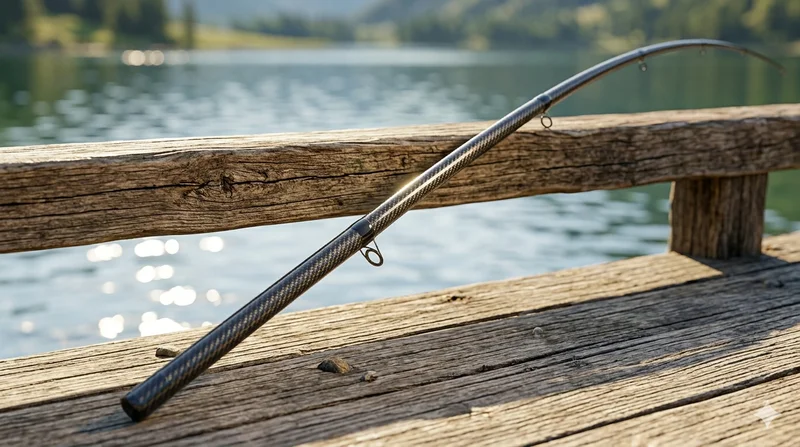
Carbon Fiber Fishing Rod Blank
High-quality carbon fiber fishing rod blank manufactured from multiple grades of Toray carbon fiber cloth. Available in a wide range of lengths, powers, and actions for freshwater and saltwater applications. Suitable for OEM rod building.

Carbon Fiber Plate — 3K Twill T700 1.5mm
Thin 1.5mm carbon fiber plate with 3K twill weave surface. Lightweight and stiff, commonly used for covers, panels, drone bodies, and applications requiring a premium aesthetic appearance.

Carbon Fiber Plate — 3K Twill T700 3.0mm
Medium-thickness 3.0mm carbon fiber plate offering significantly higher load capacity while maintaining attractive 3K twill finish. Suitable for structural brackets, reinforcement plates, and load-bearing panels.
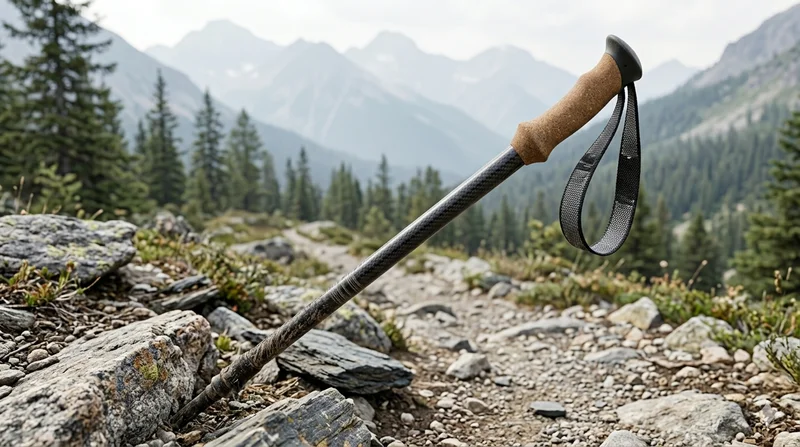
Carbon Fiber Trekking Pole
Lightweight carbon fiber trekking pole manufactured from high-grade carbon fiber tube. Weighs only 160g per pole while providing superior shock absorption and durability for hiking, trail running, and backpacking.

Square Carbon Fiber Tube — 3K Twill T700
Square cross-section carbon fiber tube manufactured with 3K twill weave for torsional strength. Preferred for structural frames, trusses, and support columns where rectangular geometry offers design flexibility.