
Europe represents the second-largest carbon fiber market globally after Asia-Pacific, accounting for approximately 32% of worldwide carbon fiber composite revenue in 2026 — estimated at $3.2 billion of a $10 billion global market. The European market is distinguished by its concentration in high-val
Introduction
Europe represents the second-largest carbon fiber market globally after Asia-Pacific, accounting for approximately 32% of worldwide carbon fiber composite revenue in 2026 — estimated at $3.2 billion of a $10 billion global market. The European market is distinguished by its concentration in high-value applications: aerospace and defense consume approximately 45% of European carbon fiber volume, while wind energy accounts for 30%, creating a demand profile that is fundamentally different from Asia-Pacific's electronics and automotive-dominated consumption.
This article provides a comprehensive analysis of Europe's carbon fiber market share by country, application sector, and supplier, reviews the aerospace and wind energy demand drivers that dominate European consumption, examines the policy landscape shaping European carbon fiber demand, and identifies the growth segments that will define the market through the end of the decade.
European Carbon Fiber Market by Country
Carbon fiber demand in Europe is concentrated in a handful of industrialized nations with established aerospace, wind energy, and automotive manufacturing bases:
| Country | Share of European CFRP Demand | Primary Applications | Key Drivers |
|---|---|---|---|
| Germany | 28% | Automotive, wind energy, aerospace | BMW/Mercedes CFRP programs, Enercon wind turbines, Airbus supply chain |
| France | 22% | Aerospace, defense | Airbus final assembly, Safran engine components, Dassault defense |
| United Kingdom | 15% | Aerospace R&D, defense, wind energy | NCC composite center, BAE Systems, offshore wind |
| Italy | 10% | Racing, marine, luxury | Dallara racing, Ferretti yachts, Leonardo defense |
| Scandinavia (NO/SE/DK/FI) | 12% | Wind energy, maritime, defense | Vestas/Ørsted supply chain, Kongsberg maritime |
| Spain | 6% | Wind energy, automotive | Gamesa wind blades, GM Spain automotive |
| Rest of Europe | 7% | Industrial, construction | Swiss precision, Austrian hydro, Dutch marine |
Germany leads European carbon fiber consumption by volume, driven by its dual strength in automotive lightweighting and wind energy manufacturing. France ranks second by revenue due to the high-value aerospace applications concentrated in the Airbus and Safran supply chains.
Aerospace: The Dominant European Demand Driver
Aerospace and defense account for approximately 45% of European carbon fiber consumption by value, making it the single largest application sector. The demand is driven by several factors:
- Airbus production rate ramp: Airbus is increasing A320neo family production to 75 aircraft per month by 2027, each consuming approximately 1,500-2,000 kg of carbon fiber composite material. The A350 XWB, with 53% composite content by weight, represents the highest CFRP intensity in commercial aviation at approximately 23,000 kg per aircraft.
- Defense procurement surge: European NATO members are increasing defense spending in response to geopolitical tensions, with composite-intensive programs including fighter aircraft (Eurofighter Typhoon, Rafale, FCAS/GCAP), unmanned systems, and naval vessels. The European defense composite market is growing at 8-12% annually.
- Helicopter and urban air mobility: Airbus Helicopters and emerging eVTOL manufacturers (Lilium, Volocopter, Vertical Aerospace) are driving demand for carbon fiber rotor blades, fuselage structures, and airframe components.
- Engine components: CFM International (LEAP engine) and Rolls-Royce (UltraFan) are increasing composite content in fan blades, fan cases, and acoustic panels, consuming aerospace-grade carbon fiber at increasing rates.
Wind Energy: The Growth Engine
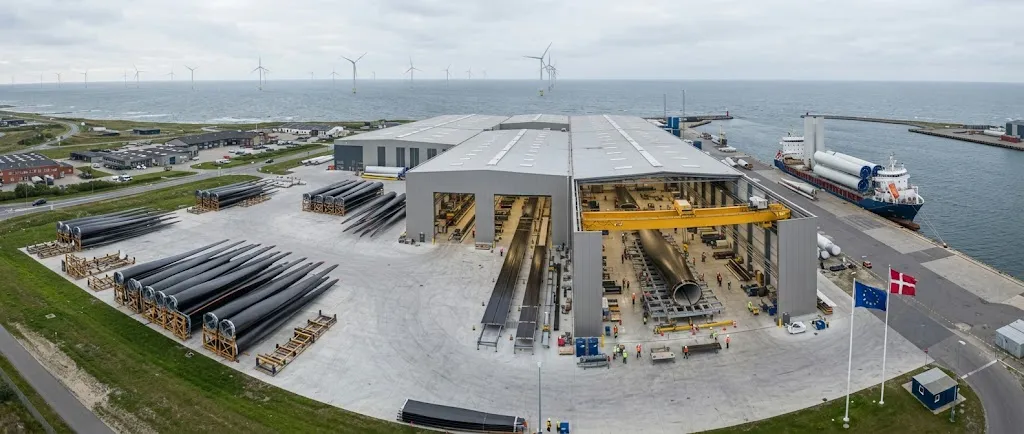
Wind energy is the fastest-growing European carbon fiber application sector, consuming approximately 30% of European CFRP volume and growing at 15-20% annually. The key dynamic is the transition from glass fiber to carbon fiber in wind turbine blade spar caps:
- Blade length growth: Modern offshore wind turbines (15-20 MW class) require blade lengths of 100-120 meters. At these lengths, glass fiber spar caps become too heavy, and carbon fiber provides the 30-40% weight reduction needed to keep blade root bending moments within manageable limits.
- Vestas and Siemens Gamesa: Vestas has committed to carbon fiber spar caps for all blades exceeding 80 meters, while Siemens Gamesa's RecyclableBlade program uses carbon fiber in its largest offshore designs. Combined, these two manufacturers consume an estimated 15,000-20,000 tonnes of carbon fiber annually for blade production.
- Offshore wind scale-up: The European Offshore Renewable Energy Strategy targets 300 GW of offshore wind capacity by 2050, requiring approximately 25,000 wind turbines with composite blades. This represents a sustained multi-decade demand driver for carbon fiber in the wind sector.
- Pultruded carbon fiber planks: The wind energy supply chain is shifting from prepreg to pultruded carbon fiber planks for spar cap production, reducing material cost by 20-30% while maintaining the stiffness targets needed for longer blades.
European Carbon Fiber Suppliers and Import Dependency
Europe's carbon fiber supply landscape is characterized by a mix of domestic production and heavy import dependency:
| Supplier | Location | Capacity (tonnes/year) | Primary Market |
|---|---|---|---|
| SGL Carbon | Germany (Meitingen, Wackersdorf) | 15,000 | Automotive (BMW i-series), wind energy |
| Solvay (ex-Toho Tenax) | Belgium (Zwijndrecht) | 5,000 | Aerospace (Airbus primary supplier) |
| Mitsubishi Chemical (Europe) | Germany (Groditz) | 2,000 | Industrial, sports |
| DowAksa (JV) | Turkiye (Istanbul) | 15,000 | Wind energy, industrial |
| Hexcel (Europe) | France (Rochesante) | 3,000 | Aerospace (Airbus, defense) |
European domestic production capacity totals approximately 40,000-45,000 tonnes per year, while European consumption is estimated at 65,000-75,000 tonnes, creating an import dependency of 35-45%. The primary import sources are Japan (Toray, Teijin, Mitsubishi) and increasingly China, which has expanded export capacity to 30,000+ tonnes per year at competitive pricing.
Policy Drivers Shaping European Demand
European carbon fiber demand is influenced by several policy frameworks:
- EU Green Deal and Fit for 55: The European climate framework drives electrification of transport and expansion of renewable energy, both of which increase carbon fiber demand through lightweight EV structures and wind turbine blades.
- EU Carbon Border Adjustment Mechanism (CBAM): CBAM, entering full implementation in 2027, will impose carbon costs on imported carbon fiber, potentially shifting some demand toward domestic production and incentivizing low-carbon manufacturing processes.
- Defense spending commitments: NATO's 2% GDP defense spending target, increasingly adopted by European members, drives procurement of composite-intensive military platforms.
- Circular economy regulations: EU End-of-Life Vehicle Directive and proposed Composite Recycling Regulation are driving development of carbon fiber recycling technologies (pyrolysis, solvolysis) that could create secondary material supply streams.
Market Outlook Through 2030
Europe's carbon fiber market is projected to grow at a compound annual growth rate (CAGR) of 8-10% through 2030, reaching $5.5-6.5 billion in revenue. The growth is expected to be led by:
- Wind energy (15-20% CAGR): Offshore wind blade production is the fastest-growing segment, with carbon fiber spar cap adoption increasing from approximately 30% of new installations to over 60% by 2030.
- Aerospace recovery (10-12% CAGR): Airbus production rate increases and new defense programs drive sustained aerospace demand growth.
- Hydrogen infrastructure (20-25% CAGR): Carbon fiber Type IV pressure vessels for hydrogen storage and transport represent an emerging but fast-growing application, driven by the European Hydrogen Strategy.
- Electric vehicle lightweighting (8-12% CAGR): Premium EV manufacturers (BMW, Mercedes, Porsche) are increasing CFRP content in body structures, battery enclosures, and suspension components.
Frequently Asked Questions
How does Europe's carbon fiber market share compare to Asia-Pacific and North America?
By revenue, Europe accounts for approximately 32% of the global carbon fiber market, compared to 48% for Asia-Pacific and 16% for North America. However, by volume, Europe's share is lower (approximately 25%) because European demand is concentrated in high-value aerospace-grade carbon fiber ($80-200/kg) rather than the lower-cost industrial-grade fiber ($15-30/kg) that dominates Asian consumption. Asia-Pacific leads in absolute volume due to Chinese production capacity expansion and Japanese domestic consumption.
What is Europe's biggest vulnerability in the carbon fiber supply chain?
Europe's primary vulnerability is import dependency — approximately 35-45% of consumed carbon fiber is imported, primarily from Japan and increasingly from China. This dependency creates supply security risks, particularly for defense applications subject to export controls. The EU is addressing this through the European Chips Act model applied to strategic materials, but domestic capacity expansion requires 3-5 years of lead time and significant capital investment.
Will Chinese carbon fiber exports disrupt the European market?
Chinese carbon fiber exports to Europe are growing at 25-30% annually, driven by competitive pricing (30-50% below Japanese grades) and improving quality. Chinese T700-grade carbon fiber is increasingly accepted for wind energy and industrial applications, while aerospace qualification is progressing but not yet complete. The CBAM carbon border mechanism may partially offset the price advantage, but Chinese exports will continue to pressure European suppliers to reduce costs and improve efficiency.
Conclusion
Europe's carbon fiber market in 2026 is defined by its concentration in high-value aerospace and wind energy applications, creating a demand profile that favors premium-grade materials and long-term supply relationships. The 32% global revenue share reflects Europe's position as the aerospace manufacturing center of the world (Airbus, Safran, Rolls-Royce) and the global leader in offshore wind deployment. The import dependency of 35-45% represents both a vulnerability and an opportunity for domestic capacity expansion and diversification of supply sources.
For carbon fiber suppliers and buyers evaluating the European market, the growth vectors are clear: wind energy spar caps, Airbus production rate increases, defense procurement, and hydrogen infrastructure. Understanding the country-level demand distribution, supplier landscape, and policy drivers is essential for market entry strategy and supply chain planning. Explore our carbon fiber product range, or contact our team to discuss supply solutions for the European market.
Part of topic
Related Articles
- Türkiye Carbon Fiber Market 2026: Defense Aviation and KAAN Fighter Program
- Saudi Arabia Carbon Fiber Market 2026: Vision 2030 Diversification and Mega-Projects
- Recycled Carbon Fiber Market Forecast 2030: Technology Maturity and Commercialization Path
- South Korea Carbon Fiber Market 2026: Hydrogen Economy and Shipbuilding Innovation
- Wind Turbine Blade Leading Edge Protection 2026: Polyurethane, Tape, and Metallic Shield Solutions
- China Carbon Fiber Overcapacity 2026: Price War Impact and Industry Consolidation
Interested in Our Products?
Contact our team for competitive pricing and technical specifications.
Get a QuoteRelated Products

Carbon Fiber Fishing Rod Blank
High-quality carbon fiber fishing rod blank manufactured from multiple grades of Toray carbon fiber cloth. Available in a wide range of lengths, powers, and actions for freshwater and saltwater applications. Suitable for OEM rod building.

Carbon Fiber Plate — 3K Twill T700 1.5mm
Thin 1.5mm carbon fiber plate with 3K twill weave surface. Lightweight and stiff, commonly used for covers, panels, drone bodies, and applications requiring a premium aesthetic appearance.

Carbon Fiber Plate — 3K Twill T700 3.0mm
Medium-thickness 3.0mm carbon fiber plate offering significantly higher load capacity while maintaining attractive 3K twill finish. Suitable for structural brackets, reinforcement plates, and load-bearing panels.
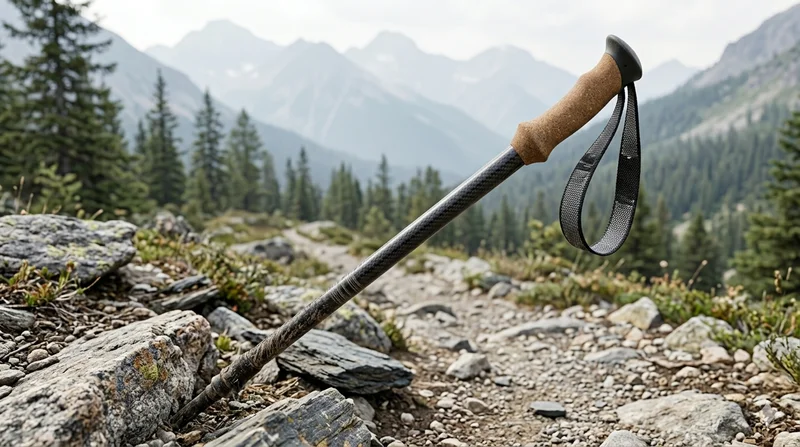
Carbon Fiber Trekking Pole
Lightweight carbon fiber trekking pole manufactured from high-grade carbon fiber tube. Weighs only 160g per pole while providing superior shock absorption and durability for hiking, trail running, and backpacking.

Square Carbon Fiber Tube — 3K Twill T700
Square cross-section carbon fiber tube manufactured with 3K twill weave for torsional strength. Preferred for structural frames, trusses, and support columns where rectangular geometry offers design flexibility.