
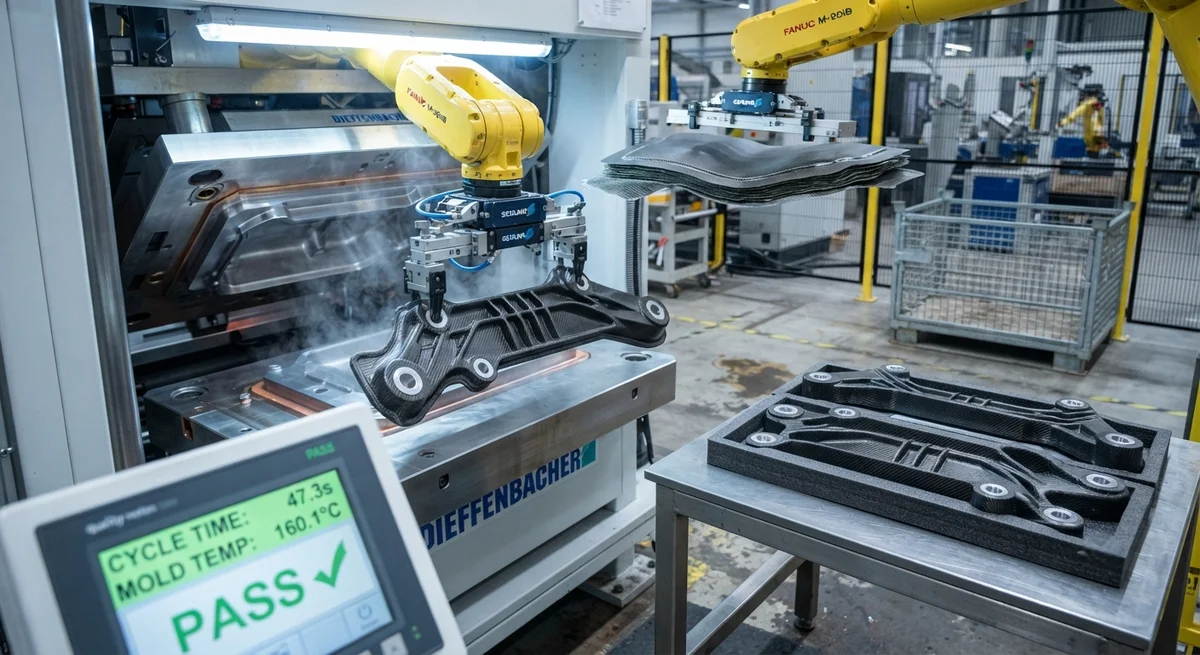
As automotive OEMs pursue aggressive weight reduction targets, carbon fiber reinforced polymer (CFRP) brackets are increasingly replacing traditional steel and aluminum stampings in structural, semi-structural, and mounting applications. This article examines the engineering justification, cost anal
The Case for Composite Brackets in Modern Vehicle Design
The average passenger vehicle contains 150–250 individual brackets, ranging from small sensor mounts weighing under 30 grams to structural seat frame brackets exceeding 1.5 kilograms. Historically, these parts have been produced as stamped steel (DP600, DP780 grades) or stamped/cast aluminum (A356, 6061-T6). As battery electric vehicles (BEVs) push curb weight lower to extend range — with every 10 kg reduction yielding approximately 1.5 km of additional WLTP range — the substitution of metal brackets with carbon fiber alternatives has become a high-ROI engineering intervention.
CFRP brackets offer 45–65% weight reduction versus steel equivalents and 25–40% versus aluminum, depending on geometry, load profile, and fiber architecture. Unlike body panels or closure assemblies, brackets typically function in confined packaging spaces where their small footprint minimizes raw material cost per part. This makes them among the most economically attractive candidates for composite substitution in vehicle engineering.
Comparative Analysis: Steel, Aluminum, and Carbon Fiber Brackets
The following table compares three bracket material systems across key design and manufacturing parameters, based on a representative seat belt retractor bracket (2.0 mm equivalent thickness, 80 kN ultimate load requirement):
| Parameter | Steel (DP780) | Aluminum (6061-T6) | CFRP (T700 / PA6) |
|---|---|---|---|
| Part weight (g) | 185 | 105 | 72 |
| Weight vs. steel | — | −43% | −61% |
| Tensile modulus (GPa) | 210 | 69 | 125 (0° orientation) |
| Yield / ultimate strength (MPa) | 550 / 780 | 240 / 310 | — / 850 (0° direction) |
| Fatigue endurance limit (MPa @ 10⁷ cycles) | 280 | 95 | 310 (stress-ratio dependent) |
| Tooling investment (typical) | $45,000–$80,000 | $55,000–$95,000 | $35,000–$65,000 (compression mold) |
| Cycle time per part | 6–12 seconds (progressive die) | 12–20 seconds (progressive die) | 60–180 seconds (CM) / 30–60 seconds (IM) |
| Corrosion resistance | Requires e-coating / galvanizing | Anodizing typically required | Inherent (galvanic isolation needed at joints) |
| Dimensional stability (CTE, ppm/°C) | 11 | 23 | −0.5 to 2.0 (tailorable) |
The data illustrates that CFRP brackets not only reduce weight substantially but also improve fatigue performance relative to both steel and aluminum — a critical advantage for brackets attached to powertrain, suspension, and battery systems where cyclic loading dominates the failure mode.
Production Methods for CFRP Automotive Brackets
Three production routes have been qualified for automotive-series CFRP brackets, each matched to specific volume and performance requirements:
- Compression molding of sheet molding compound (SMC): Chopped carbon fiber SMC (25–50 mm fiber length, 40–55% fiber volume fraction) is molded in matched metal dies at 140–160°C with cycle times of 60–180 seconds. Ideal for volumes of 20,000–150,000 parts per year. Part mechanical properties are quasi-isotropic with tensile modulus of 35–55 GPa. Primary applications: engine cover brackets, battery tray mounts, radiator support brackets.
- Injection molding of long-fiber thermoplastic (LFT/CFT): Glass or carbon fiber-reinforced polyamide 6 or 6,6 (PA6, PA66) with 30–50 wt% fiber content is injection molded in 30–60 second cycles. Fiber length retention of 5–15 mm after molding provides intermediate mechanical properties. Preferred for high-volume (100,000–1,000,000+ parts/year) applications such as seat belt retractor brackets, pedal mounting brackets, and interior trim attachment points.
- Rapid-cure prepreg compression molding: Pre-impregnated unidirectional or woven carbon fiber fabric (2–4 plies) is compression molded in heated tooling at 150–180°C for 5–15 minute cycles. Delivers the highest mechanical properties (tensile modulus 100–140 GPa) and lowest weight. Used for safety-critical and structural brackets where load paths are well-defined and volumes are 5,000–30,000 parts per year.
Design Considerations for Bracket Substitution
Replacing a metal stamping with a CFRP equivalent is not a direct form-fit-function substitution. Several engineering considerations must be addressed:
- Load path redesign: CFRP is orthotropic — fiber orientation must align with principal stress vectors. A one-to-one geometry copy of an isotropic metal bracket will fail prematurely. FEA-driven ply book optimization is essential.
- Galvanic isolation: Carbon fiber is cathodic relative to aluminum and steel. Direct contact with aluminum brackets, subframes, or fasteners accelerates corrosion. Isolation measures include glass scrim interlayers, zinc-plated or stainless steel fasteners, and compliant adhesive bond lines.
- Fastener boss design: Unlike ductile metals, CFRP does not yield locally under fastener clamp loads. Over-torque causes delamination around bolt holes. Solutions include molded-in metal inserts, co-cured titanium bushings, or thickened composite boss features with controlled fiber architecture.
- Temperature exposure: Brackets near exhaust systems, powertrain components, or brake assemblies may see sustained temperatures of 120–200°C. Epoxy-based CFRP brackets are typically limited to 120–150°C continuous service; thermoplastic matrices (PEEK, PAEK) extend the range to 200–250°C at higher material cost.
- Crash compatibility: Brackets that contribute to the vehicle's crash load path must demonstrate progressive crush behavior rather than catastrophic fracture. Chopped fiber SMC and thermoplastic CFRP absorb energy by micro-cracking and fiber pull-out; continuous fiber parts require tailored trigger features for controlled collapse.
Cost Analysis: Total System Cost Comparison
While per-kg material cost for CFRP is 5–12× that of steel, the total system cost picture is more nuanced. For a representative front-end module bracket set (6 brackets, total steel weight 1.2 kg):
- Steel stamping baseline: $0.95/kg material, $0.12 part cost (progressive die, 150,000/year), total assembly cost with e-coating and welding: $3.85 per vehicle
- CFRP SMC replacement: $8.50/kg material, $0.85 part cost (compression mold, 150,000/year), no coating required, reduced fastener count (integrated clip features), total assembly cost: $4.90 per vehicle — 27% cost premium for 61% weight reduction
- CFRP LFT injection molding: $6.20/kg material, $0.55 part cost (injection mold, 500,000/year), no coating, reduced logistics (single-piece vs. multi-piece assembly), total assembly cost: $3.95 per vehicle — within 3% of steel baseline for 55% weight reduction
At $15–$20 per kg of vehicle weight saved (the typical OEM cost target for lightweighting), CFRP brackets converted via LFT injection molding already meet the economic threshold for mass-market adoption.
FAQ: Carbon Fiber Brackets in Automotive
Can CFRP brackets be recycled at end of vehicle life?
Yes, but the method depends on the matrix. Thermoplastic CFRP brackets (PA6, PA66, PEEK) can be mechanically granulated and re-molded into lower-grade components such as interior trim clips and non-structural covers. Thermoset CFRP brackets (epoxy SMC) require pyrolysis or solvolysis for fiber recovery. Recycled carbon fiber reclaimed from brackets retains 80–95% of original tensile modulus and is suitable for non-structural compression-molded parts.
What joining methods are recommended for CFRP-to-metal bracket assemblies?
Hybrid bonding-mechanical joining is the industry standard. Structural adhesive (epoxy or acrylic) combined with self-piercing rivets (SPR) or flow-drill screws (FDS) provides both load transfer and fail-safe redundancy. Clinching and conventional resistance spot welding are not applicable to CFRP. For serviceable joints, stainless steel or zinc-aluminum coated fasteners with captured washers are preferred over standard electro-galvanized hardware.
How do CFRP brackets perform in salt spray and thermal cycling tests?
Thermoset CFRP brackets have demonstrated 1,000+ hours of neutral salt spray exposure (ASTM B117) with no substrate degradation — significantly outperforming steel (which requires coating) and matching aluminum performance. In thermal cycling (−40°C to +120°C, 500 cycles), CFRP brackets retain 90%+ of initial stiffness. The critical failure mode is not the composite itself but rather galvanic corrosion at metallic fastener interfaces. Proper isolation measures (washers, bushings, sealants) ensure 10+ year service life in C3/C4 corrosion environments.
Part of topic
Related Articles
- Carbon Fiber Mooring for Floating Offshore Wind: Fatigue and Corrosion in Deep Water
- Carbon Fiber Bicycle Frame Optimization: Layup Design and Manufacturing for Competitive Racing
- Carbon Fiber CFRP Retrofit for Infrastructure: Bridge and Building Seismic Strengthening
- Carbon Fiber Medical Imaging Equipment: Lightweight Gantry and Couch Structures for MRI/CT
- Carbon Fiber EV Battery Enclosures: Crash Safety and Electromagnetic Shielding Design
- Carbon Fiber Structures for Low-Altitude Economy: UAV Airframes and eVTOL Components
Interested in Our Products?
Contact our team for competitive pricing and technical specifications.
Get a QuoteRelated Products
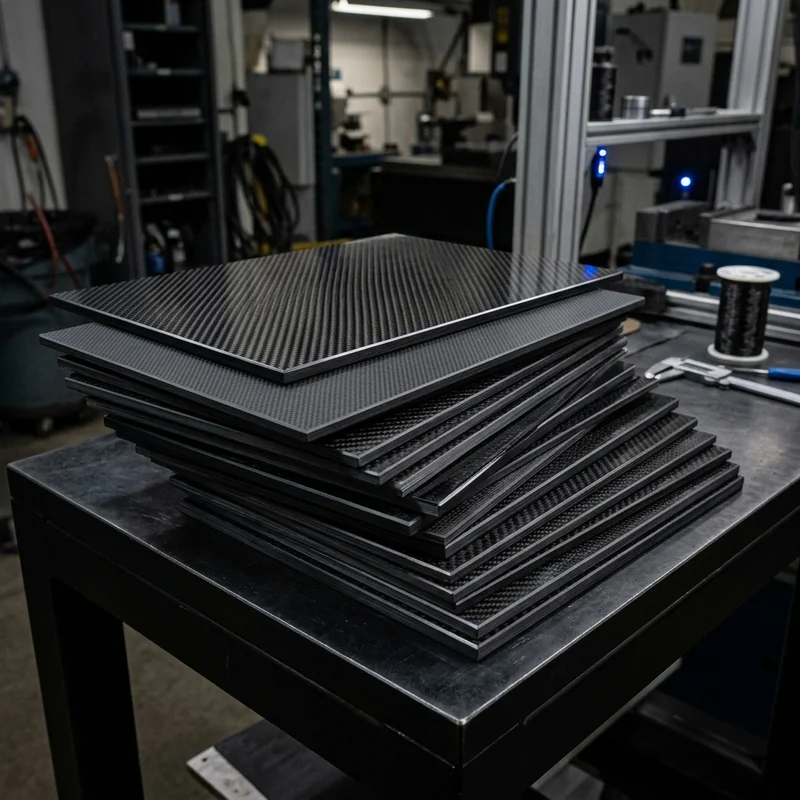
Carbon fiber standard plate-3k stripe
Lightweight, ultra-rigid standard sheets for drone fuselages, robot housings, facades and structural applications.

Carbon Fiber Plate — 3K Twill T700 1.5mm
Thin 1.5mm carbon fiber plate with 3K twill weave surface. Lightweight and stiff, commonly used for covers, panels, drone bodies, and applications requiring a premium aesthetic appearance.

Square Carbon Fiber Tube — 3K Twill T700
Square cross-section carbon fiber tube manufactured with 3K twill weave for torsional strength. Preferred for structural frames, trusses, and support columns where rectangular geometry offers design flexibility.

Carbon Fiber Plate — 3K Twill T700 3.0mm
Medium-thickness 3.0mm carbon fiber plate offering significantly higher load capacity while maintaining attractive 3K twill finish. Suitable for structural brackets, reinforcement plates, and load-bearing panels.
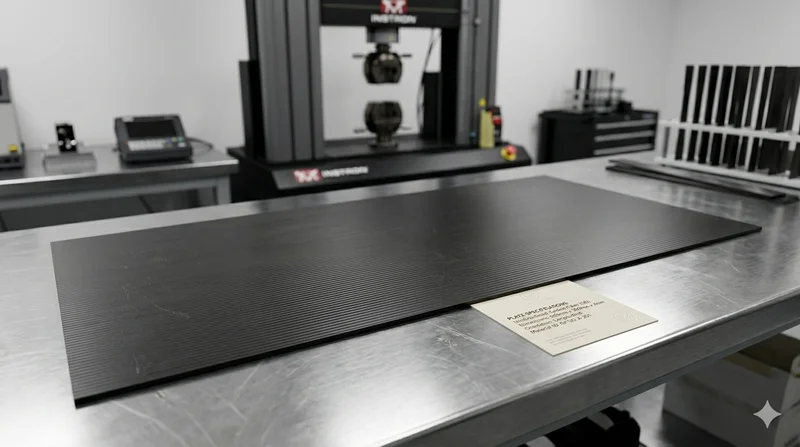
Carbon Fiber Plate — UD Unidirectional T700
Unidirectional carbon fiber plate with all fibers oriented in a single direction for maximum strength along the fiber axis. Essential for structural reinforcements, splints, and applications where load direction is predictable.