
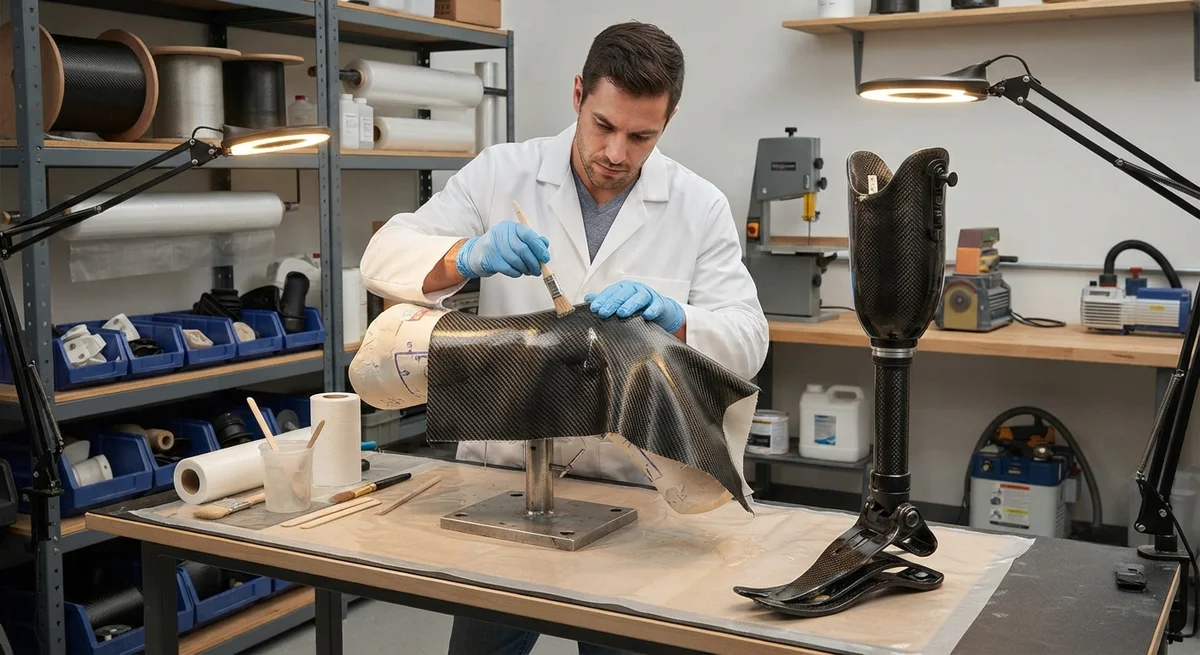
Carbon fiber composites have transformed modern prosthetics by enabling lightweight, high-strength components that improve patient mobility and comfort. This B2B guide examines carbon fiber prosthetic sockets, pylons, and dynamic foot components — covering materials, manufacturing processes, and performance specifications.
The Role of Carbon Fiber in Modern Prosthetics
Carbon fiber composites have fundamentally changed prosthetic limb design and performance. Unlike traditional materials such as aluminum, stainless steel, and thermoplastics, carbon fiber offers a unique combination of high specific stiffness, exceptional fatigue life, and the ability to be engineered with anisotropic properties that mimic the directional load response of natural bone and muscle tissue. For the estimated 65 million people worldwide living with limb loss or limb difference — a number projected to double by 2050 due to aging populations and the rise of diabetes-related amputations — carbon fiber components translate directly to improved quality of life through reduced metabolic energy expenditure, more natural gait patterns, and greater durability of the prosthetic device.
The global prosthetics market was valued at approximately USD 11.2 billion in 2025, with carbon fiber composite components accounting for an estimated 32% of the upper-extremity and 28% of the lower-extremity prosthetic device value. Carbon fiber is now the material of choice for three critical prosthetic subsystems: the socket (the interface between the residual limb and the prosthesis), the pylon (the structural tube connecting the socket to the foot), and the foot component (the energy-storing dynamic response foot). Each of these components exploits different properties of carbon fiber composites, requiring distinct material grades, fiber architectures, and manufacturing techniques.
Carbon Fiber Prosthetic Sockets
The prosthetic socket is arguably the most critical component of any prosthetic limb — it must transfer loads from the residual limb to the prosthesis while providing comfort, stability, and suspension without causing tissue damage. Carbon fiber sockets offer several advantages over conventional thermoplastic (polypropylene, copolymer) sockets: they are 40-60% lighter for equivalent strength, they can be engineered with variable stiffness zones (rigid in load-bearing areas, semi-rigid in pressure-sensitive zones), and they exhibit superior fatigue resistance over the 3-5 year typical service life of a prosthetic socket. Modern carbon fiber sockets are manufactured using a combination of techniques. The traditional laminated socket uses 2-4 layers of carbon fiber fabric (typically 200-400 g/m² plain or twill weave) vacuum-bagged and wet-laminated with medical-grade epoxy or acrylic resin over a plaster or digital positive model of the residual limb. More advanced prefabricated socket systems use pre-impregnated carbon fiber (prepreg) cured in matched metal molds under heat and pressure, producing a socket with precisely controlled wall thickness (typically 2-4 mm) and consistent mechanical properties.
| Property | Carbon Fiber Socket | Polypropylene Socket | Copolymer Socket |
|---|---|---|---|
| Weight (trans-tibial socket) | 120 - 180 g | 280 - 350 g | 250 - 320 g |
| Tensile strength (MPa) | 450 - 700 | 28 - 36 | 32 - 40 |
| Flexural modulus (GPa) | 45 - 65 | 1.2 - 1.6 | 1.5 - 2.0 |
| Fatigue life (cycles at 80% load) | >10⁷ | 2×10⁵ - 5×10⁵ | 3×10⁵ - 8×10⁵ |
| Thermal conductivity | Low (cooler in summer, warmer in winter) | Moderate | Moderate |
| Cost per socket (USD) | $180 - $450 | $50 - $120 | $70 - $150 |
Carbon Fiber Pylons
The pylon is the structural backbone of the lower-limb prosthesis, connecting the socket to the foot and transmitting the full body weight load during stance phase. Early pylons were simple aluminum or stainless steel tubes; today, carbon fiber composite pylons have become the standard for active patients. A carbon fiber pylon weighs approximately 80-120 grams for a trans-tibial length (30-35 cm), compared to 180-250 grams for an equivalent aluminum tube and 350-500 grams for stainless steel. More importantly, carbon fiber pylons can be designed with specific bending stiffness profiles — stiffer in the anteroposterior (AP) direction to provide stability during push-off, while allowing controlled mediolateral (ML) flexibility for shock absorption and terrain adaptation. High-performance carbon fiber pylons use unidirectional prepreg tape (T700-class or IM-7 fiber, 60-65% fiber volume fraction) laid up on a mandrel at 0° orientation (±3° tolerance) and cured in a compression molding or bladder molding process.
- Weight Advantage: A complete carbon fiber pylon saves 100-400 grams compared to metal alternatives — significant when the patient lifts the limb 10,000+ times per day
- Vibration Damping: Carbon fiber composites exhibit 5-10× higher internal damping than aluminum, reducing the transmission of impact forces from the foot to the socket by up to 40%
- Fatigue Performance: Modern carbon fiber pylons exceed 10 million load cycles without failure when tested per ISO 10328 (prosthetic structural testing standard), far exceeding the typical 1-2 million cycles required for 3 years of active use
- Custom Stiffness Tuning: The AP/ML stiffness ratio can be tailored from 1.5:1 to 5:1 by modifying the laminate layup sequence — a degree of customization impossible with metal tubes
- Thermal Comfort: Carbon fiber's low thermal conductivity reduces the sensation of cold metal in winter and hot metal in summer against the patient's residual limb
Dynamic Carbon Fiber Foot Components
The prosthetic foot is where carbon fiber's energy-storing capability is most dramatically demonstrated. Modern dynamic response (ESR) feet use a carbon fiber keel — a leaf-spring-like structure that stores elastic energy during the stance phase (as the patient's weight compresses the foot) and releases it during push-off, providing forward propulsion and a more natural, springy gait. The most advanced multi-axial carbon fiber feet use three or more separately molded carbon fiber springs (heel, arch, and toe), each with individually tuned stiffness and geometry, connected through a lightweight thermoplastic or aluminum adapter. The heel spring typically uses a unidirectional carbon fiber prepreg layup with 45-55 GPa flexural modulus for energy absorption at initial contact, while the toe spring uses a higher-modulus layup (60-70 GPa) for efficient energy return during terminal stance.
Clinical studies have demonstrated that carbon fiber dynamic feet reduce the metabolic cost of walking by 8-15% compared to conventional SACH (Solid Ankle, Cushioned Heel) feet and by 3-7% compared to earlier composite feet with simpler geometries. For a trans-tibial amputee walking 5,000 steps per day, this translates to a reduction in metabolic energy expenditure equivalent to approximately 250-400 calories per day — a meaningful difference that significantly influences patient community ambulation outcomes and long-term cardiovascular health. Leading prosthetic foot manufacturers including Össur, Ottobock, and Blatchford continue to push carbon fiber foot technology with blades designed for running, jumping, and even high-impact sports like basketball and sprinting.
Material Specifications & Manufacturing
B2B buyers sourcing carbon fiber materials for prosthetic applications must understand the specific requirements that distinguish medical-grade composite materials from industrial-grade counterparts. The primary material grades used in prosthetic components are: standard-modulus carbon fiber (230-240 GPa tensile modulus, 12K-24K tow, T300/T700-class) for socket laminations and standard foot springs, intermediate-modulus fiber (280-300 GPa, 12K tow, IM-7/T800-class) for high-performance pylons and running blades, and high-modulus fiber (350-440 GPa, 6K-12K tow, M40/M55-class) for specialized applications requiring maximum stiffness with minimal weight. The resin systems are equally critical: medical-grade epoxy resins must demonstrate biocompatibility per ISO 10993 (cytotoxicity, sensitization, irritation), while also offering sufficient toughness (G₁c > 200 J/m²) to prevent microcracking under cyclic loading. Vacuum-assisted resin infusion and prepreg compression molding are the dominant manufacturing processes, with 3D-printed and automated fiber placement (AFP) technologies emerging for production-volume socket manufacturing.
Regulatory Considerations for B2B Suppliers
Carbon fiber materials destined for prosthetic applications must comply with medical device regulations in their target markets. In the United States, prosthetic components are Class I medical devices (general controls) with exempt status from 510(k) premarket notification, though many B2B customers require raw material suppliers to provide ISO 10993 biocompatibility data and ISO 13485 quality management system certification. In the European Union, prosthetic components are Class I medical devices under the EU MDR (Medical Device Regulation 2017/745), requiring CE marking with technical documentation including material characterization, mechanical test data per ISO 10328, and clinical evaluation. B2B suppliers of carbon fiber materials for prosthetics should be prepared to provide full material lot traceability, mechanical property certificates (tensile modulus, compressive strength, ILSS per applicable ASTM standards), and biocompatibility declarations as a routine qualification requirement for working with prosthetic manufacturers.
FAQ
Why is carbon fiber preferred over metal for prosthetic components?
Carbon fiber offers three decisive advantages over metal in prosthetics: (1) Weight — carbon fiber components are 40-70% lighter than aluminum or stainless steel equivalents, directly reducing the metabolic energy the patient must expend to move the limb. Since amputees already expend 15-30% more energy walking than non-amputees, every gram saved matters. (2) Fatigue resistance — carbon fiber composites endure over 10 million load cycles without failure, compared to 200,000-800,000 cycles for thermoplastics. (3) Anisotropic design — carbon fiber can be engineered to be stiff in one direction and flexible in another within the same component, enabling prosthetic feet and sockets that respond to loading direction rather than being uniformly rigid like metal parts.
What carbon fiber grades are used in prosthetic sockets vs. feet vs. pylons?
Each prosthetic subsystem uses different carbon fiber grades optimized for its specific loading requirements. Prosthetic sockets primarily use standard-modulus carbon fiber (230-240 GPa, T300/T700-class) in 200-400 g/m² woven fabric form (plain or twill weave), laminated with medical-grade epoxy resin. The fabric architecture provides balanced in-plane properties and excellent conformability to the socket's complex geometry. Prosthetic pylons use unidirectional intermediate-modulus fiber (280-300 GPa, IM-7/T800-class, 12K tow) in prepreg tape form, laid up at 0° orientation for maximum axial stiffness. Prosthetic foot keels and springs use a combination: standard-modulus fiber for heel springs (energy absorption) and intermediate or high-modulus fiber (up to 440 GPa) for toe springs (efficient energy return). The most advanced running blades use aerospace-grade IM-7 fiber in unidirectional prepreg with specific modulus grading along the blade length.
What certifications do carbon fiber materials need for prosthetic manufacturing?
Carbon fiber materials for prosthetic manufacturing should meet several certification and documentation requirements: (1) ISO 10993 biocompatibility testing — at minimum cytotoxicity, sensitization, and irritation tests for any material contacting the patient's skin (socket laminates) or that may be in prolonged contact (liners, interfaces). (2) Mechanical property certification per applicable standards — ISO 10328 for structural components (pylons, foot keels), ASTM D3039 for tensile properties, ASTM D6641 for compressive properties, and ASTM D2344 for short-beam shear. (3) Material lot traceability — full chain-of-custody documentation from fiber production through fabric/resin conversion to finished component. (4) ISO 13485 quality management system certification for the material supplier is increasingly expected by major prosthetic manufacturers as a prerequisite for vendor qualification, though it is not a regulatory requirement for raw material suppliers in most jurisdictions.
Conclusion
Carbon fiber composites have established themselves as the definitive material class for modern prosthetic limb components, offering an unmatched combination of lightweight construction, mechanical performance, fatigue durability, and design versatility. From the patient-contacting socket that must distribute loads without causing tissue damage, to the load-bearing pylon that must withstand millions of cycles, to the dynamic foot that stores and releases energy with every step — carbon fiber enables levels of prosthetic function and patient mobility that would be impossible with conventional materials. For B2B suppliers seeking to enter the prosthetic component supply chain, understanding the specific material requirements, manufacturing processes, and regulatory framework of this specialized medical market segment is essential. As the global amputee population continues to grow and patient expectations for prosthetic performance rise, the demand for high-quality medical-grade carbon fiber materials will only accelerate.
Part of topic
Related Articles
- Carbon Fiber Mooring for Floating Offshore Wind: Fatigue and Corrosion in Deep Water
- Carbon Fiber Bicycle Frame Optimization: Layup Design and Manufacturing for Competitive Racing
- Carbon Fiber CFRP Retrofit for Infrastructure: Bridge and Building Seismic Strengthening
- Carbon Fiber Medical Imaging Equipment: Lightweight Gantry and Couch Structures for MRI/CT
- Carbon Fiber EV Battery Enclosures: Crash Safety and Electromagnetic Shielding Design
- Carbon Fiber Structures for Low-Altitude Economy: UAV Airframes and eVTOL Components
Interested in Our Products?
Contact our team for competitive pricing and technical specifications.
Get a QuoteRelated Products

Carbon Fiber Plate — 3K Twill T700 1.5mm
Thin 1.5mm carbon fiber plate with 3K twill weave surface. Lightweight and stiff, commonly used for covers, panels, drone bodies, and applications requiring a premium aesthetic appearance.
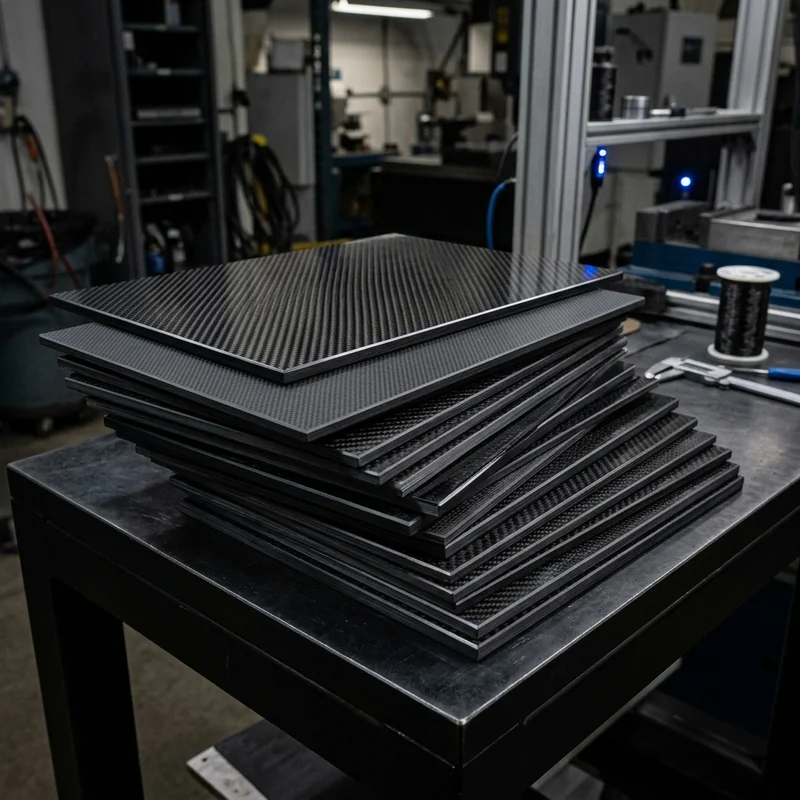
Carbon fiber standard plate-3k stripe
Lightweight, ultra-rigid standard sheets for drone fuselages, robot housings, facades and structural applications.

Square Carbon Fiber Tube — 3K Twill T700
Square cross-section carbon fiber tube manufactured with 3K twill weave for torsional strength. Preferred for structural frames, trusses, and support columns where rectangular geometry offers design flexibility.

Carbon Fiber Plate — 3K Twill T700 3.0mm
Medium-thickness 3.0mm carbon fiber plate offering significantly higher load capacity while maintaining attractive 3K twill finish. Suitable for structural brackets, reinforcement plates, and load-bearing panels.
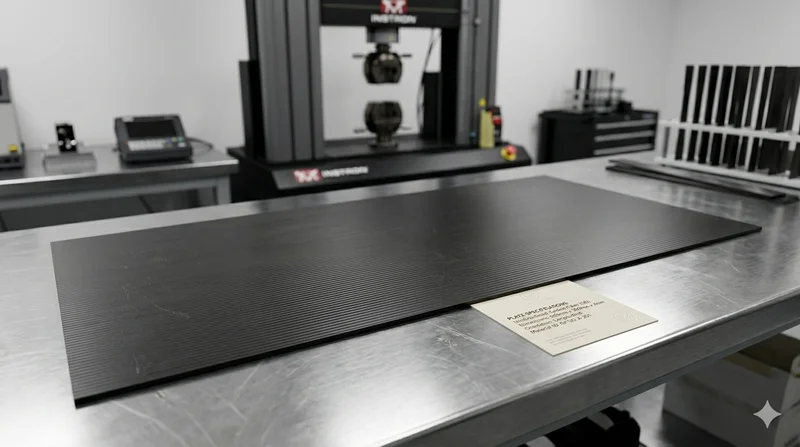
Carbon Fiber Plate — UD Unidirectional T700
Unidirectional carbon fiber plate with all fibers oriented in a single direction for maximum strength along the fiber axis. Essential for structural reinforcements, splints, and applications where load direction is predictable.