
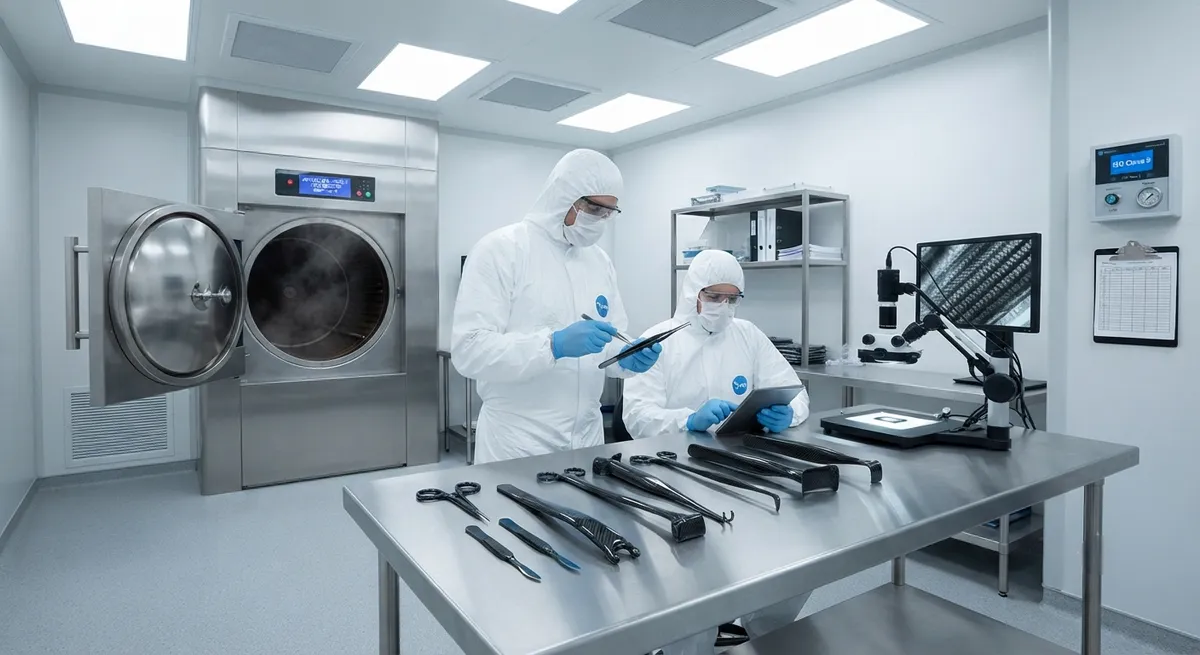
Carbon fiber surgical instruments offer radiolucency, 80% weight reduction vs steel, and thermal stability for image-guided and robotic surgeries. This article examines autoclave cycling performance, surface degradation resistance technologies, and regulatory qualification requirements for medical-grade CFRP instruments.
Carbon Fiber in Surgical Instrument Design
The adoption of carbon fiber reinforced polymer (CFRP) composites in surgical instrument manufacturing has accelerated significantly over the past decade. Unlike traditional stainless steel or titanium alloys, carbon fiber offers a unique combination of radiolucency, high specific stiffness, and thermal stability that makes it particularly attractive for instruments used in image-guided surgeries and robotic-assisted procedures.
Medical-grade carbon fiber composites are manufactured using high-purity PAN-based precursor fibers with specialized epoxy resin systems formulated for biocompatibility. These materials undergo rigorous ISO 10993 biological evaluation testing before receiving regulatory clearance for repeated-use surgical instruments. The fiber volume fraction typically ranges from 55% to 65%, yielding tensile moduli between 120 GPa and 180 GPa depending on the layup design.
| Property | Carbon Fiber (CFRP) | Stainless Steel (316L) | Titanium (Ti-6Al-4V) |
|---|---|---|---|
| Density (g/cm³) | 1.5–1.6 | 8.0 | 4.4 |
| Tensile Modulus (GPa) | 120–180 | 193 | 114 |
| Thermal Conductivity (W/m·K) | 0.8–1.2 | 16.3 | 7.2 |
| Radiolucency | Transparent | Opaque | Opaque |
| Weight Reduction vs Steel | — | Baseline | −45% |
| Weight Reduction vs Steel | −80% | Baseline | — |
| Autoclave Cycles (before surface degradation) | >500 | >2000 | >2000 |
Autoclave Cycling Performance
Surgical instruments must withstand repeated steam sterilization cycles at 134°C with pressures reaching 2.1 bar. The standard cycle duration is approximately 30 minutes, including a drying phase. Over the lifetime of a surgical instrument, it may undergo 500 to 2,000 autoclave cycles depending on utilization frequency and hospital reprocessing protocols.
Carbon fiber composites face unique degradation mechanisms under repeated autoclave exposure. The primary failure modes include:
- Matrix microcracking: Differential thermal expansion between carbon fibers (CTE ≈ −0.5 × 10⁻⁶/K) and epoxy resin (CTE ≈ 50 × 10⁻⁶/K) generates internal stresses during rapid heating and cooling cycles.
- Hydrolytic degradation: Steam penetrates the resin matrix at elevated temperatures, causing hydrolysis of ester bonds in epoxy systems. Moisture absorption can reach 1.5–2.0% by weight after 100 cycles.
- Surface pitting and fiber exposure: Repeated condensation and evaporation cycles on the instrument surface can erode the resin layer, exposing carbon fibers which may create contamination risks.
- Interlaminar shear strength reduction: Studies show ILSS can decrease by 15–25% after 500 autoclave cycles if the resin system is not specifically formulated for steam exposure.
Manufacturers have addressed these challenges through advanced surface protection strategies. Medical-grade polyurethane coatings with thicknesses of 20–50 μm applied via dip-coating or electrostatic spray provide a barrier against moisture ingress while maintaining the instrument's tactile properties. Modified epoxy resin systems incorporating nano-silica particles (2–5 wt%) have demonstrated a 40% reduction in microcrack density compared to unmodified resin systems after accelerated aging tests.
Surface Degradation Resistance Technologies
Three principal protection approaches have emerged in the medical carbon fiber market:
| Protection Method | Mechanism | Autoclave Cycles | Cost Premium |
|---|---|---|---|
| Parylene C Coating (15–25 μm) | Vapor-deposited conformal barrier | 800+ | +15–20% |
| Nano-silica Modified Epoxy | Enhanced matrix toughness & reduced permeability | 600+ | +10–12% |
| PTFE-impregnated Surface Layer | Hydrophobic barrier with lubricious surface | 500+ | +8–10% |
| Multi-layer Hybrid (Parylene + Silica-Epoxy) | Combined barrier + bulk protection | 1000+ | +25–30% |
Each approach presents trade-offs between protection durability, manufacturing complexity, and instrument feel. The multi-layer hybrid system currently offers the best performance for high-utilization instruments in central sterile processing departments, while Parylene C coating remains popular for delicate instruments where dimensional tolerance preservation is critical.
Regulatory and Qualification Requirements
Medical carbon fiber instruments must demonstrate compliance with several international standards before market entry. The qualification process typically spans 12–18 months and includes:
- ISO 10993-1: Biological evaluation of medical devices (cytotoxicity, sensitization, irritation)
- ISO 11135: Ethylene oxide sterilization validation (for low-temperature instruments)
- ISO 17664: Processing of medical devices — information for reprocessing
- ASTM F2100: Standard specification for surgical instrument materials
- USP Class VI: Plastic material biocompatibility classification
For steam sterilization specifically, manufacturers must demonstrate that instruments maintain dimensional stability within ±0.5% after 500 cycles and that surface roughness (Ra) does not exceed 0.8 μm—the threshold above which bacterial biofilm formation risk increases significantly. Microbiological testing with Geobacillus stearothermophilus biological indicators confirms sterilization efficacy on composite surfaces after each major design revision.
Clinical Applications and Market Growth
The global market for carbon fiber surgical instruments was valued at approximately $280 million in 2025 and is projected to reach $520 million by 2030, driven by increasing adoption of robotic surgery systems and the demand for lighter instruments that reduce surgeon fatigue during lengthy procedures. Major application areas include:
- Spinal surgery retractors and distractors (radiolucent, enabling direct fluoroscopic visualization)
- Orthopedic drill guides and alignment jigs (weight reduction of 60–70% vs titanium equivalents)
- Laparoscopic instrument shafts (improved tactile feedback through reduced thermal bridging)
- Cranial fixation systems (CT and MRI compatible without artifact generation)
- Robotic surgery end-effector components (stiffness-to-weight ratio critical for precision)
Frequently Asked Questions
How many autoclave cycles can carbon fiber surgical instruments withstand?
With advanced protective coatings, medical-grade carbon fiber instruments typically withstand 500–1,000 autoclave cycles before measurable surface degradation occurs. Multi-layer hybrid protection systems have demonstrated survival beyond 1,000 cycles in accelerated aging tests. For comparison, stainless steel instruments routinely exceed 2,000 cycles, so carbon fiber instruments are best suited for applications where their specific advantages (radiolucency, weight reduction, thermal insulation) justify a shorter service life.
Are carbon fiber instruments safe for use in sterile surgical fields?
Yes, when manufactured with medical-grade resin systems and appropriate surface coatings, carbon fiber instruments meet all ISO 10993 biocompatibility requirements. The hydrophobic nature of properly coated carbon fiber surfaces actually reduces bacterial adhesion compared to stainless steel, and the smooth surface finish (Ra < 0.4 μm achievable with medical-grade coatings) prevents biofilm formation. Regular inspection for coating integrity during reprocessing is recommended as part of standard instrument management protocols.
What is the cost comparison between carbon fiber and traditional metal surgical instruments?
Carbon fiber surgical instruments carry a 30–60% cost premium over equivalent stainless steel instruments at initial purchase. However, the total cost of ownership can be comparable when accounting for reduced surgeon fatigue (potentially shorter procedure times), lower sterilization energy requirements (faster thermal equilibration), and the elimination of image artifacts that would require repeat imaging. For robotic surgery applications where precision directly impacts patient outcomes, the premium is generally considered justified by most hospital procurement departments.
Part of topic
Related Articles
- Carbon Fiber Mooring for Floating Offshore Wind: Fatigue and Corrosion in Deep Water
- Carbon Fiber Bicycle Frame Optimization: Layup Design and Manufacturing for Competitive Racing
- Carbon Fiber CFRP Retrofit for Infrastructure: Bridge and Building Seismic Strengthening
- Carbon Fiber Medical Imaging Equipment: Lightweight Gantry and Couch Structures for MRI/CT
- Carbon Fiber EV Battery Enclosures: Crash Safety and Electromagnetic Shielding Design
- Carbon Fiber Structures for Low-Altitude Economy: UAV Airframes and eVTOL Components
Interested in Our Products?
Contact our team for competitive pricing and technical specifications.
Get a QuoteRelated Products
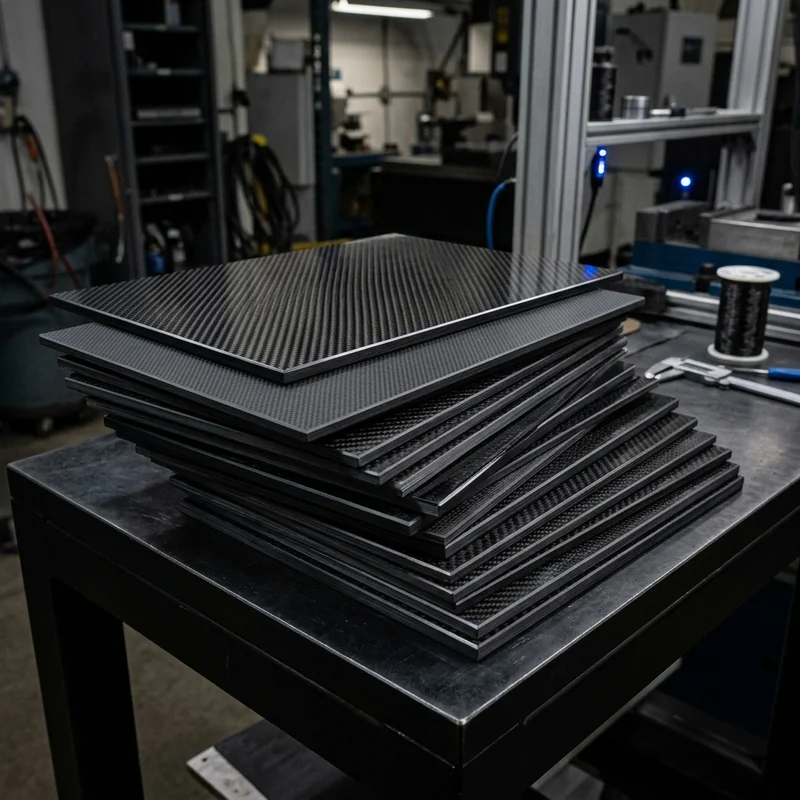
Carbon fiber standard plate-3k stripe
Lightweight, ultra-rigid standard sheets for drone fuselages, robot housings, facades and structural applications.

Carbon Fiber Plate — 3K Twill T700 3.0mm
Medium-thickness 3.0mm carbon fiber plate offering significantly higher load capacity while maintaining attractive 3K twill finish. Suitable for structural brackets, reinforcement plates, and load-bearing panels.

Carbon Fiber Plate — 3K Twill T700 1.5mm
Thin 1.5mm carbon fiber plate with 3K twill weave surface. Lightweight and stiff, commonly used for covers, panels, drone bodies, and applications requiring a premium aesthetic appearance.

Square Carbon Fiber Tube — 3K Twill T700
Square cross-section carbon fiber tube manufactured with 3K twill weave for torsional strength. Preferred for structural frames, trusses, and support columns where rectangular geometry offers design flexibility.
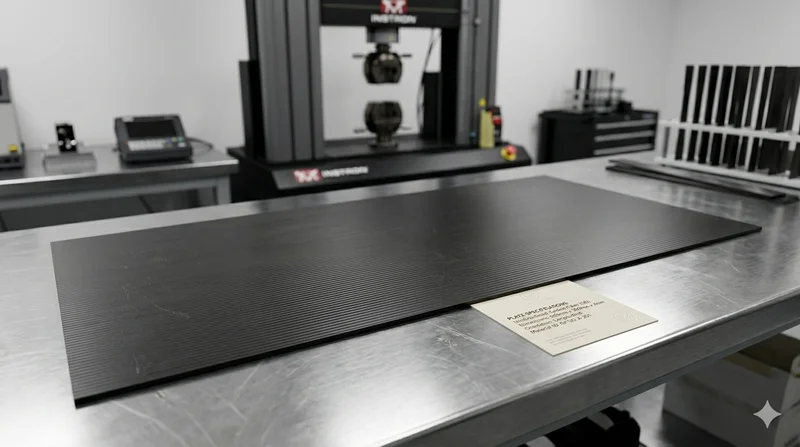
Carbon Fiber Plate — UD Unidirectional T700
Unidirectional carbon fiber plate with all fibers oriented in a single direction for maximum strength along the fiber axis. Essential for structural reinforcements, splints, and applications where load direction is predictable.