
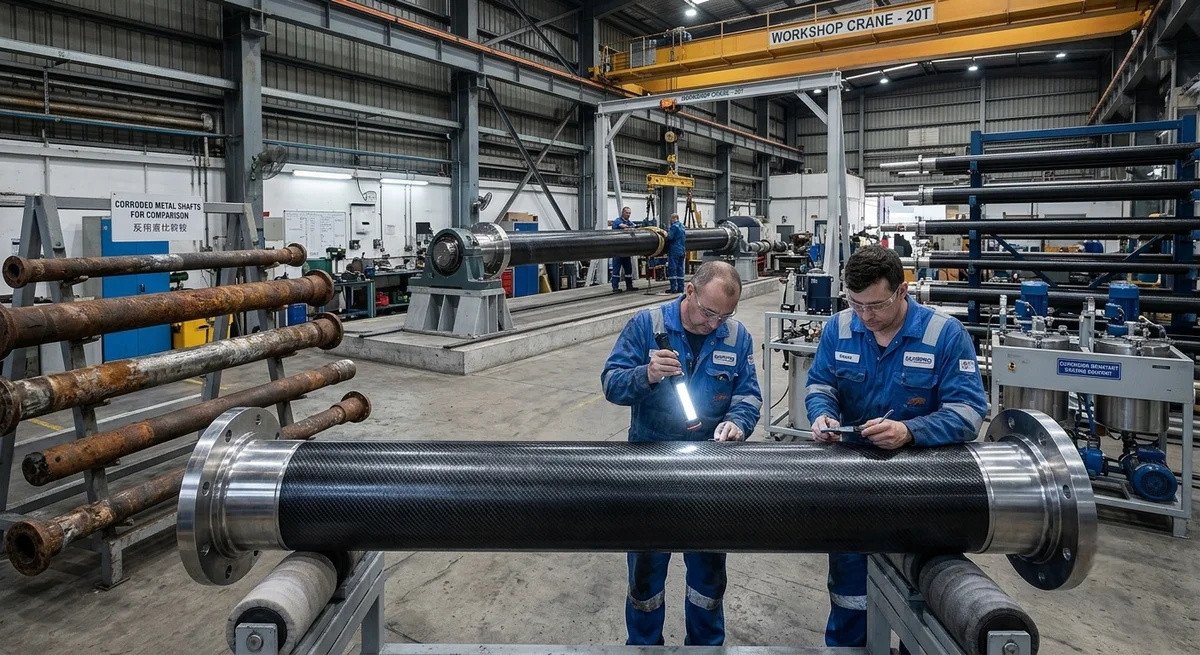
Carbon fiber composite propeller shafts are transforming marine propulsion — reducing weight by 60–75% versus steel, eliminating galvanic corrosion, and extending service life beyond 25 years. This article provides engineering specifications, torque capacity data, and installation case studies for CFRP shaft systems.
Carbon Fiber Propeller Shafts: A Proven Marine Technology
Carbon fiber composite propeller shafts have been in continuous marine service since the early 2000s, with over 5,000 installations on vessels ranging from 8 m pleasure craft to 60 m superyachts and 80 m patrol boats. The technology has matured through three generations of design — from simple tube replacements for steel shafts to integrated shaftline systems with composite flanges, flexible couplings, and integrated thrust bearings.
The business case is compelling: a CFRP propeller shaft weighs 60–75% less than its steel equivalent, transfers 3–8% more power to the propeller due to reduced bearing friction, and completely eliminates the galvanic corrosion that plagues stainless steel shafts in aluminum-hulled vessels. Service life exceeds 25 years in saltwater service with proper design.
Material Properties and Shaft Design
| Property | Steel (AISI 316L) | Marine-Grade CFRP | Benefit Ratio (CFRP/Steel) |
|---|---|---|---|
| Tensile modulus (GPa) | 193 | 70–150 (tunable by layup) | 0.36–0.78 |
| Tensile strength (MPa) | 485 | 600–1200 | 1.24–2.47 |
| Density (g/cm³) | 7.95 | 1.55–1.60 | 0.195 |
| Specific tensile strength (MPa·cm³/g) | 61 | 375–750 | 6.15–12.3 |
| Torsional modulus (GPa) | 75 | 25–55 (tunable) | 0.33–0.73 |
| Torsional fatigue limit (MPa @ 10⁷ cycles) | 120 | 380–550 | 3.17–4.58 |
| Corrosion rate in seawater (mm/year) | 0.05–0.20 (pitting) | 0.00 (inert) | ∞ |
| Thermal conductivity (W/m·K) | 16 | 0.5–5.0 (axial) | 0.03–0.31 |
| Vibration damping (ζ, %) | 0.06 | 0.4–1.2 | 6.7–20 |
Key design parameter — torsional stiffness matching: A CFRP propeller shaft must be designed to match the torsional natural frequency of the original steel shaft to avoid drivetrain resonance. Since CFRP has a lower torsional modulus (G = 25–55 GPa vs 75 GPa for steel), the shaft wall thickness must be increased or the diameter enlarged. Typical CFRP shafts have an inner diameter equal to the steel shaft OD, with wall thickness 3–6 mm — resulting in a shaft that is physically larger in diameter but lighter overall.
Torque Capacity by Shaft Size
| Engine Power (kW) | Steel Shaft Diameter (mm) | CFRP Shaft OD/ID (mm) | CFRP Weight (kg/m) | Steel Weight (kg/m) | Weight Saving | Max Torque (N·m) |
|---|---|---|---|---|---|---|
| 150–300 | 50–60 | 65/55 | 1.4 | 3.9 | 64% | 3,200 |
| 400–700 | 70–80 | 90/75 | 2.6 | 7.8 | 67% | 7,500 |
| 800–1,500 | 90–110 | 120/100 | 4.3 | 13.5 | 68% | 15,000 |
| 2,000–3,500 | 120–150 | 160/135 | 7.1 | 22.0 | 68% | 34,000 |
| 4,000–6,000 | 160–190 | 210/180 | 11.2 | 34.6 | 68% | 58,000 |
| 6,000–9,000 | 200–230 | 260/225 | 16.8 | 51.5 | 67% | 88,000 |
CFRP shafts designed to ABS Guideline for Composite Shafts (2023) with safety factor 4.0 on ultimate torsional strength. Steel shafts per DNV-GL rules for propulsion shafts. All CFRP shafts use [±45/0₂/±45]₅ layup with 58% FVF and high-Tg epoxy (Tg > 120°C).
Corrosion Resistance: The Decisive Advantage
Galvanic corrosion between stainless steel propeller shafts and aluminum hulls is the single most expensive maintenance problem in aluminum vessel fleets. A 30 m patrol boat with 316L stainless shafts typically requires shaft replacement every 5–8 years due to crevice corrosion at the stern tube and pitting corrosion in the seawater-lubricated bearing zone. Each replacement costs $15,000–40,000 including haul-out, alignment, and re-commissioning.
CFRP shafts are electrically non-conductive and chemically inert in seawater. They eliminate galvanic coupling entirely. The carbon fiber itself has excellent corrosion resistance, and the epoxy matrix acts as a moisture barrier (water absorption < 0.5% by weight after 1 year immersion per ASTM D570). No anodes, no bonding wires, no corrosion monitoring required.
The only corrosion concern is at metal fittings (flanges, couplings), which must be isolated from the shaft using a G10 (fiberglass epoxy) insulator sleeve or titanium transition joint. Titanium grade 5 (Ti-6Al-4V) flanges with CFRP-to-titanium bonded joints are the current best practice, with bond shear strength > 25 MPa.
Weight Savings and Fuel Efficiency
A 60–68% weight reduction in the propeller shaft translates to measurable fuel savings through two mechanisms:
- Reduced bearing friction: Lighter shaft = lower radial load on cutlass bearings and stern tube bearings. Bearing friction torque decreases proportionally to shaft weight. At 1,800 RPM, this saves 0.8–2.5% of engine power — equivalent to 3–8% more thrust at the propeller.
- Reduced vessel displacement: For a 40 m vessel with two 6 m CFRP shafts, the total weight saving is approximately 350 kg versus steel. While modest, this weight saving at the extreme aft end of the vessel reduces trim angle and improves hull efficiency by 0.5–1.5% depending on vessel speed and loading.
Combined fuel savings: 2–5% at cruising speed (10–20 knots), higher savings (4–8%) at displacement speeds where bearing friction dominates. For a vessel consuming 200 L/h, this translates to 4–16 L/h fuel savings — $15,000–60,000 per year at current marine diesel prices ($3.50–4.50/L).
Installation Considerations and Case Studies
Case Study 1 — 45 m Aluminum Patrol Boat: Replaced twin 316L stainless steel shafts (110 mm OD, 4.8 m length, 310 kg each) with CFRP shafts (140 mm OD / 115 mm ID, 98 kg each). After 1,200 hours of operation: no measurable wear at stern tube bearings (steel shafts required bearing replacement every 500 hours), 4.2% fuel savings at 18 knots cruise, vibration levels reduced by 55% at bridge deck. Total installed cost premium: 25% vs steel, payback period: 2.8 years.
Case Study 2 — 28 m Superyacht: Retrofitted from Aqualoy 22 shaft to CFRP. Weight saving: 145 kg. Shaft critical speed increased from 1,620 RPM to 2,450 RPM — well above the 2,100 RPM maximum operating speed, eliminating a previously problematic shaft whip condition. Vibration at 1,800 RPM: 2.1 mm/s vs 7.8 mm/s original.
Key installation requirements:
- Shaft alignment must use laser alignment (tolerance ±0.05 mm/m, vs ±0.10 mm/m for steel)
- Composite-to-metal joint must be adhesively bonded + mechanically keyed — rely on bonding alone, not clamping pressure
- Carbon dust from any post-installation machining (drilling, grinding) must be contained — carbon dust is electrically conductive and causes short circuits in marine electrical systems
- Install sacrificial zinc anodes on the propeller and coupling only (shaft itself needs no protection)
- Engine alignment must be rechecked after first 50 hours of operation and annually thereafter
FAQ
Q: How long do carbon fiber propeller shafts last in continuous saltwater use?
A: With proper design (sealed shaft surface, corrosion-resistant metal end fittings, adequate safety factor), CFRP propeller shafts have demonstrated service lives exceeding 25 years in saltwater. The first-generation CFRP shafts installed in 2002–2005 on high-end motor yachts are still in service with zero structural failures. The primary wear mechanism is not the shaft itself but the metal end fittings — titanium flanges last the full life, while 316L flanges may need replacement at 12–15 years due to crevice corrosion at the bond line. Regular ultrasonic inspection of the bonded joint area is recommended every 5 years.
Q: Can a CFRP shaft be repaired if damaged?
A: Minor surface damage (gelcoat scratches, superficial fiber exposure) can be repaired by sanding and applying a fresh epoxy-graphite coating. Structural damage (delamination, fiber fracture, puncture through the wall) is generally not repairable in the field — the shaft must be replaced. However, the composite structure is inherently damage-tolerant: a CFRP shaft with broken fibers on the outer surface retains 80–90% of its torsional capacity because the highest shear stress is at the mid-wall radius, not the surface. Compare this to steel, where any surface crack propagates rapidly under cyclical torsional load. Many operators carry a spare CFRP shaft (storage weight 60–70% less than steel) instead of attempting field repairs.
Q: Are carbon fiber shafts approved by classification societies?
A: Yes. As of 2026, the major classification societies have published rules for composite propeller shafts: ABS (Guide for Composite Shafts, 2023), DNV-GL (Rules for Classification of Ships — Composite Shafts, 2022), Lloyd's Register (Guidance for Composite Drive Shafts, 2021), and Bureau Veritas (NR 546 Composite Shafts, 2024). The approval process requires: (1) Coupon-level testing of the specific layup (tension, compression, torsion, fatigue per ASTM D3039/D3479/D5448), (2) Full-scale shaft torsion test to ultimate failure — must demonstrate safety factor ≥ 3.5, (3) Prototype sea trial with vibration monitoring for 200 hours minimum, and (4) Production quality plan with process control points for each manufacturing step (fiber placement, resin infusion, cure cycle, machining). Cost of full class approval: $50,000–120,000 per shaft design.
Q: What is the cost comparison between CFRP and steel shafts?
A: The CFRP shaft itself costs 3–5× more than a steel shaft of equivalent torque capacity — $4,000–15,000 for a typical 6 m shaft depending on diameter, vs $1,200–3,500 for stainless steel. However, total installed cost is only 15–30% higher when accounting for: eliminated corrosion monitoring system ($800–2,000 saving), reduced bearing requirements (composite-friendly bearings last 3× longer), and simplified installation (no lifting equipment needed for a 98 kg shaft vs 310 kg steel). The payback period from fuel savings alone is 2–4 years. When factoring in reduced maintenance (no shaft replacement every 5–8 years for aluminum hulls), the 25-year total cost of ownership is 15–25% lower for CFRP.
Related Articles
- Carbon Fiber Mooring for Floating Offshore Wind: Fatigue and Corrosion in Deep Water
- Carbon Fiber Bicycle Frame Optimization: Layup Design and Manufacturing for Competitive Racing
- Carbon Fiber CFRP Retrofit for Infrastructure: Bridge and Building Seismic Strengthening
- Carbon Fiber Medical Imaging Equipment: Lightweight Gantry and Couch Structures for MRI/CT
- Carbon Fiber EV Battery Enclosures: Crash Safety and Electromagnetic Shielding Design
- Carbon Fiber Structures for Low-Altitude Economy: UAV Airframes and eVTOL Components
Interested in Our Products?
Contact our team for competitive pricing and technical specifications.
Get a QuoteRelated Products

Carbon Fiber Plate — 3K Twill T700 1.5mm
Thin 1.5mm carbon fiber plate with 3K twill weave surface. Lightweight and stiff, commonly used for covers, panels, drone bodies, and applications requiring a premium aesthetic appearance.
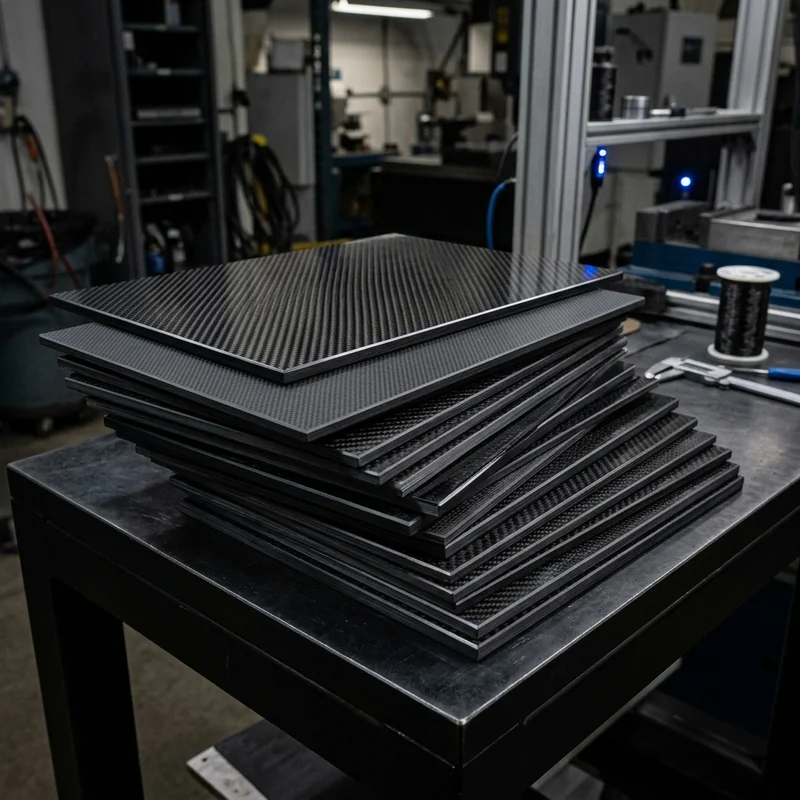
Carbon fiber standard plate-3k stripe
Lightweight, ultra-rigid standard sheets for drone fuselages, robot housings, facades and structural applications.

Square Carbon Fiber Tube — 3K Twill T700
Square cross-section carbon fiber tube manufactured with 3K twill weave for torsional strength. Preferred for structural frames, trusses, and support columns where rectangular geometry offers design flexibility.

Carbon Fiber Plate — 3K Twill T700 3.0mm
Medium-thickness 3.0mm carbon fiber plate offering significantly higher load capacity while maintaining attractive 3K twill finish. Suitable for structural brackets, reinforcement plates, and load-bearing panels.
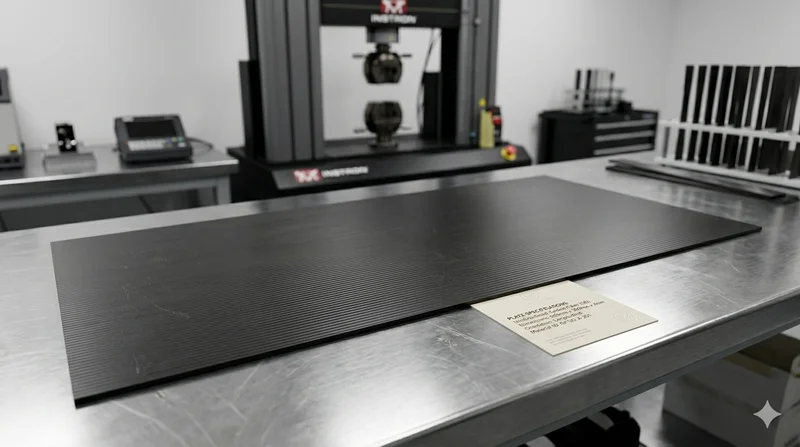
Carbon Fiber Plate — UD Unidirectional T700
Unidirectional carbon fiber plate with all fibers oriented in a single direction for maximum strength along the fiber axis. Essential for structural reinforcements, splints, and applications where load direction is predictable.