
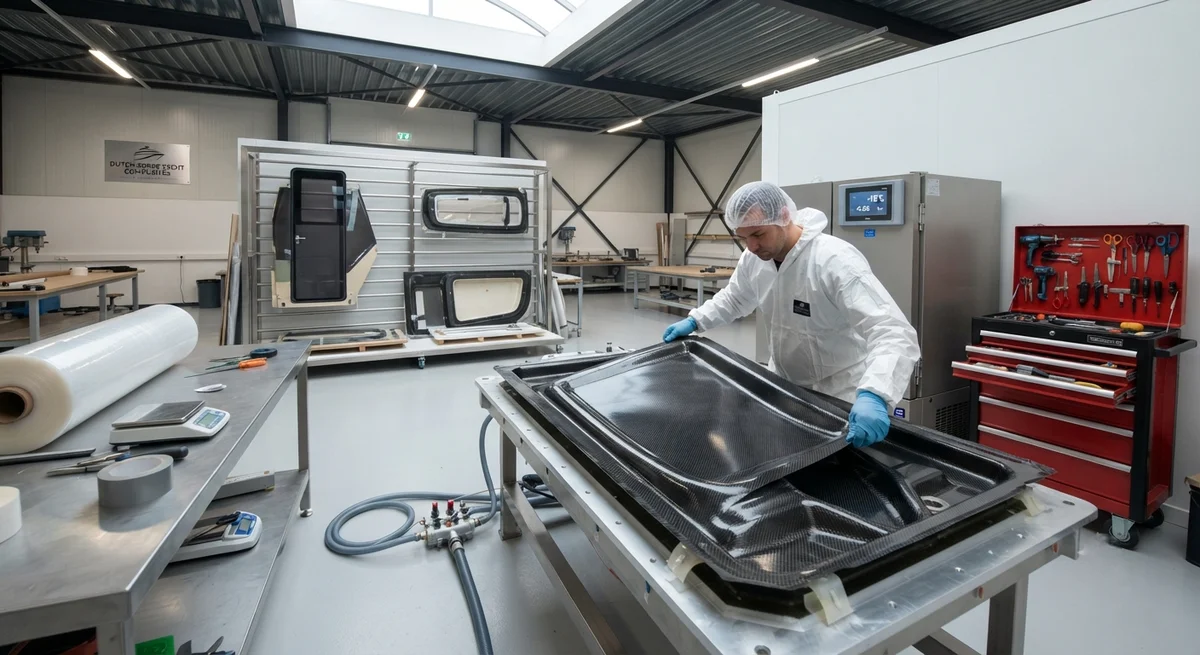
A comprehensive technical and economic analysis of carbon fiber applications in superyacht construction, covering structural hatches, flush deck doors, bulwarks, and lightweight deck components with weight reduction data, cost comparison, and installation guidelines for B2B marine buyers.
Carbon Fiber in Superyacht Construction: Engineering the Next Generation of Luxury Vessels
The global superyacht market, valued at approximately $9.3 billion in 2025 and projected to reach $14.7 billion by 2032, is undergoing a significant materials transformation. Owners and shipyards alike are increasingly turning to carbon fiber composites to address three converging demands: weight reduction for improved fuel efficiency and speed, corrosion resistance for long-term durability in marine environments, and design flexibility for bespoke architectural features. While carbon fiber has been used in superyacht masts, spars, and racing hulls for decades, its application in deck hardware — hatches, doors, bulwarks, and deck boxes — represents a rapidly expanding segment driven by advancements in out-of-autoclave processing, marine-grade resin systems, and through-life cost modeling.
For B2B buyers — including superyacht naval architects, shipyard procurement managers, and marine outfitters — understanding the material properties, manufacturing processes, and total cost implications of carbon fiber deck components is essential to making informed specification decisions. This article provides a comprehensive analysis of carbon fiber hatches, doors, and deck components in superyacht construction, with a focus on structural performance, weight savings, corrosion resistance, and economic viability.
Why Carbon Fiber for Superyacht Deck Components?
The primary driver for adopting carbon fiber in superyacht deck hardware is weight reduction. Every kilogram saved above the waterline improves stability, reduces fuel consumption, and increases payload capacity for tenders, jet skis, and guest amenities. A typical 50-meter superyacht carries 15–25 deck hatches, 8–12 flush deck doors, 30–40 metres of bulwark capping, and numerous deck boxes and lockers — representing a total dry weight of 1,500–2,500 kg when constructed in marine-grade aluminum. Converting these components to carbon fiber prepreg construction yields weight savings of 35–55%, reducing the total deck hardware weight to 675–1,625 kg. For a vessel burning approximately 400 litres of diesel per hour at cruising speed, this translates to fuel savings of 3–5% across the operating envelope, representing $12,000–$25,000 per year in fuel savings at current marine diesel prices.
Beyond weight, carbon fiber offers superior corrosion resistance compared to aluminum in marine environments. Aluminum components, even when hard-coat anodized and painted, are susceptible to galvanic corrosion when in contact with stainless steel fasteners, as well as pitting corrosion in chloride-rich spray zones. Carbon fiber composites, when manufactured with marine-grade epoxy resin systems and UV-resistant gel coats, exhibit no galvanic corrosion mechanisms and require substantially less maintenance. Industry data from the Dutch superyacht sector indicates that aluminum deck hatches and doors require replacement or major refurbishment every 8–12 years due to corrosion damage, whereas properly specified carbon fiber components have a service life exceeding 20 years — the typical design life of the vessel itself.
Material Systems for Marine-Grade Carbon Fiber Components
Not all carbon fiber composites are suitable for marine deck applications. The specific requirements include resistance to UV radiation, cyclic thermal and mechanical loading, saltwater immersion, impact from deck equipment, and exposure to hydraulic fluids and cleaning chemicals. Three material systems have emerged as industry standards:
- Epoxy Prepreg Systems (180°C cure): These offer the highest mechanical properties and lowest void content (<1%). Typical layups use 2×2 twill weave 3K or 6K carbon fiber with epoxy resin formulated for marine environments. Cured ply thickness ranges from 0.20 mm to 0.35 mm. This is the preferred system for structural hatches rated for crew walk-on loads (5 kN/m² minimum) and watertight integrity requirements (hydrostatic head of 3 metres minimum).
- Out-of-Autoclave (OOA) Epoxy Prepregs: Systems such as Hexcel HexPly® M56 and Gurit SE 85 achieve aerospace-grade properties using only vacuum bag pressure (0.95 bar). OOA processing enables larger components — such as full-beam bulwark panels up to 12 metres in length — without the capital cost of an autoclave. Mechanical properties reach 92–97% of autoclave-cured equivalents, with void content below 2%.
- Infusion-Grade Systems with Vinyl Ester Resin: For non-structural applications — decorative deck boxes, locker doors, and aesthetic fairings — vacuum infusion with vinyl ester resin offers a cost-effective alternative. Vinyl ester provides good water resistance at substantially lower material cost (approximately 40% less than epoxy prepreg), but mechanical properties are typically 30–50% lower, limiting its use to secondary structures.
| Property | Aluminum 5083-H321 | Epoxy Prepreg CF (2×2 Twill, 6K) | OOA Epoxy CF | Infused Vinyl Ester CF |
|---|---|---|---|---|
| Tensile Strength (MPa) | 290 | 780 | 710 | 420 |
| Tensile Modulus (GPa) | 71 | 68 | 64 | 45 |
| Density (g/cm³) | 2.66 | 1.55 | 1.56 | 1.48 |
| Weight Saving vs Aluminum (%) | — | 42% | 41% | 44% |
| UV Resistance (ASTM G154, 2000h) | Good (coated) | Excellent (with gel coat) | Excellent (with gel coat) | Good (with gel coat) |
| Corrosion Rate (mm/year, salt spray) | 0.025–0.050 | Negligible | Negligible | Negligible |
| Max Service Temp (°C) | 150 | 120 | 100 | 80 |
| Relative Material Cost (per kg) | 1.0× (baseline) | 6–8× | 5–6× | 3–4× |
| Tooling Cost | Low (CNC) | Moderate (composite mould) | Moderate (composite mould) | High (matched metal) |
| Typical Lead Time (2×2 m hatch) | 6–8 weeks | 10–14 weeks | 10–14 weeks | 12–16 weeks |
Structural Hatch Design and Performance
Superyacht deck hatches serve functions ranging from crew access to equipment handling and emergency egress. The most demanding application is the watertight flush deck hatch, which must withstand foot traffic, tender and jet ski loading, green water loading on the foredeck, and maintain watertight integrity under positive and negative pressure differentials. Carbon fiber hatches designed to Lloyds Register or DNV classification standards must pass rigorous testing including: static load testing at 2× design load, cyclic fatigue testing (100,000 cycles at 50% design load), and hydrostatic pressure testing to 1.5× design head.
Carbon fiber hatch design optimizes the layup sequence to manage the specific loading regime. The skin-facing outer ply uses a 2×2 twill weave for impact resistance and visual appearance, while the inner structural plies employ unidirectional (UD) reinforcement oriented to resist the bending moments imposed by deck loads. Most production carbon fiber hatches incorporate a foam or honeycomb core in the hatch thickness, creating a sandwich structure that increases bending stiffness by 400–600% compared to a solid laminate of equivalent weight. Core materials for marine hatches typically include cross-linked PVC foam (Airex® C70 or equivalent) or SAN foam (Corecell™), both of which provide good compression strength and resistance to water ingress.
Flush Deck Doors and Access Panels
Flush deck doors are a signature design element of modern superyachts, providing seamless transitions between interior and exterior deck spaces. Carbon fiber doors offer several advantages over aluminum equivalents: they can be moulded to complex compound curves that align perfectly with the deck crown and sheer lines, significantly reducing fairing and finishing labour during outfitting. Shipyard case studies indicate that carbon fiber doors reduce installation hours by 40–60% compared to aluminum doors, as they require no welding, no corrosion protection treatment, and minimal shimming for alignment.
The structural design of a carbon fiber flush deck door must meet both load-bearing and watertight requirements. Typical specifications call for a core thickness of 20–30 mm with 2.0–3.0 mm face sheets each side, achieving a panel stiffness equivalent to a 12 mm aluminum plate at 55% lower weight. Door systems incorporate integrated hinge reinforcements, latch pocket inserts, and peripheral gasket sealing surfaces — all co-cured in a single manufacturing operation. This one-piece construction eliminates the fastener joints and seal interfaces that are common failure points in metal door assemblies.
Deck Boxes, Lockers, and Bulwark Components
Beyond hatches and doors, carbon fiber is increasingly specified for deck boxes (stowage for lines, fenders, and deck gear), swim platform lockers, and bulwark cappings. These components benefit from the same weight reduction and corrosion resistance advantages while offering the design flexibility to match the vessel's aesthetic language. Bulwark cappings — the structural or semi-structural elements that cap the top edge of the bulwark plating along the main deck — can be produced as continuous carbon fiber extrusions or moulded sections up to 10 metres in length, eliminating the joint lines and weld marks that mar aluminum fabrications.
For deck boxes that serve as seating or sun lounger bases, carbon fiber sandwich construction provides the stiffness required for point loads (a person standing) and distributed loads (lounge chair legs) while maintaining the low profile demanded by modern yacht styling. Load testing data shows that a carbon fiber sandwich deck box with a 15 mm core and 1.5 mm face sheets can support a 250 kg point load with less than 2 mm of deflection — equivalent structural performance to a 3 mm aluminum box at 40% of the weight.
Economic Analysis: Total Cost of Ownership
The material purchase cost of carbon fiber deck components is 3–6× higher than marine-grade aluminum equivalents. However, a total cost of ownership (TCO) analysis over a 20-year vessel life reveals a more nuanced picture. Key cost factors include:
- Fuel Savings: At $1,500–$2,000 per tonne of fuel and 2,000 operating hours per year, the weight reduction from carbon fiber deck components saves $12,000–$25,000 annually in fuel costs, totaling $240,000–$500,000 over 20 years.
- Maintenance Reduction: Aluminum deck hardware requires repainting and corrosion treatment every 3–5 years at a cost of $15,000–$30,000 per cycle. Carbon fiber components eliminate this recurring expense, saving $60,000–$180,000 over 20 years.
- Installation Savings: Reduced fit-and-finish labour saves $5,000–$15,000 per vessel at initial build.
- Residual Value: Superyachts fitted with carbon fiber deck components command a 2–5% premium at resale according to market data from Burgess and Camper & Nicholsons brokerage reports.
When these factors are considered, the TCO breakeven point for carbon fiber deck components versus aluminum occurs at 4–7 years of service, with net savings of $150,000–$400,000 over a 20-year vessel life depending on specification level and operating profile.
Frequently Asked Questions for B2B Marine Buyers
Q: What classification society requirements apply to carbon fiber deck hatches on superyachts?
A: Lloyds Register's Rules for Special Service Craft (Part 7, Chapter 3) and DNV's Rules for Classification of Yachts (Part 3, Chapter 4) both provide specific guidance for composite deck components. Key requirements include: fire resistance meeting SOLAS FTP Code Part 2 (for hatches providing emergency egress), structural strength at 1.5× operating load, watertight integrity testing at 1.5× design pressure head, and UV and salt spray resistance per their respective environmental test protocols. Class approvals typically require a Production Quality Plan (PQP) and prototype testing for first-of-type components.
Q: How do carbon fiber deck components perform regarding fire resistance and smoke emission?
A: Epoxy-based carbon fiber composites inherently meet many of the fire performance requirements for superyacht deck components when the correct resin formulations are specified. Marine-grade epoxy systems with brominated or phosphorus-based fire-retardant additives achieve Class 1 (BS 476 Part 7) or Class A (ASTM E84) flame spread ratings with smoke emission within IMO FTP Code limits. For hatches and doors serving as emergency egress routes, ceramic fibre core inserts or intumescent coatings can be specified to provide 30-minute or 60-minute fire resistance integrity. This is standard practice for MCA (Maritime and Coastguard Agency) coded vessels and LY3-compliant superyachts.
Q: What is the typical lead time and minimum order quantity for custom carbon fiber superyacht components?
A: For bespoke carbon fiber hatches and doors tailored to a specific vessel's deck geometry, typical lead times from approved composite fabricators are 10–14 weeks from mould fabrication to delivery for the first article, with subsequent parts in the same production run at 4–6 weeks. Minimum order quantities vary significantly — some fabricators accept single custom units for one-off refit projects, while production efficiency improves substantially at batch sizes of 10+ units. Tooling (mould) costs for a typical 1.2 m × 0.8 m flush hatch range from $8,000–$15,000 depending on surface finish requirements and whether gel coat is applied in the mould.
Q: Can existing aluminum or stainless steel deck hardware be retrofitted with carbon fiber replacements?
A: Yes, retrofit is increasingly common during superyacht refit cycles. The key consideration is the interface between the composite component and the existing deck structure. Carbon fiber hatches and doors can be manufactured to match existing cutout dimensions and hinge patterns using 3D scanning of the existing openings. However, the reduced weight of the carbon fiber component may require recalibration of gas spring dampers, and the coefficient of thermal expansion (CTE) difference between carbon fiber (~0.1 ppm/°C, near-zero) and aluminum decking (~23 ppm/°C) must be accommodated through the gasket or seal design. Several European composite fabricators — including Composite Marine Solutions (Netherlands), Yacht Composite Solutions (UK), and Nordic Marine Composites (Sweden) — specialize in retrofit carbon fiber deck hardware for existing vessels.
Part of topic
Related Articles
- Carbon Fiber Mooring for Floating Offshore Wind: Fatigue and Corrosion in Deep Water
- Carbon Fiber Bicycle Frame Optimization: Layup Design and Manufacturing for Competitive Racing
- Carbon Fiber CFRP Retrofit for Infrastructure: Bridge and Building Seismic Strengthening
- Carbon Fiber Medical Imaging Equipment: Lightweight Gantry and Couch Structures for MRI/CT
- Carbon Fiber EV Battery Enclosures: Crash Safety and Electromagnetic Shielding Design
- Carbon Fiber Structures for Low-Altitude Economy: UAV Airframes and eVTOL Components
Interested in Our Products?
Contact our team for competitive pricing and technical specifications.
Get a QuoteRelated Products
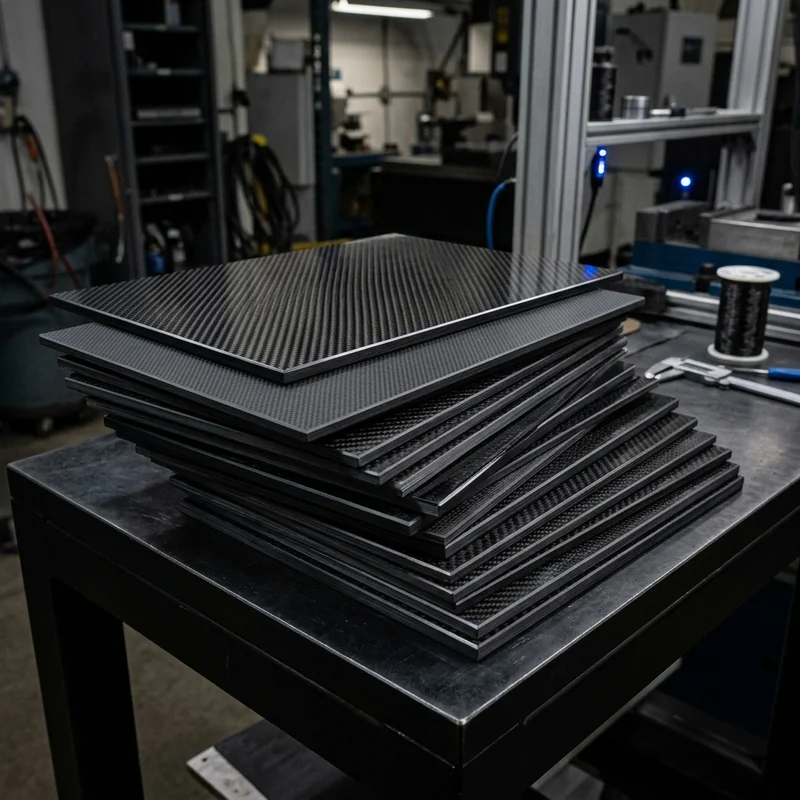
Carbon fiber standard plate-3k stripe
Lightweight, ultra-rigid standard sheets for drone fuselages, robot housings, facades and structural applications.

Carbon Fiber Plate — 3K Twill T700 1.5mm
Thin 1.5mm carbon fiber plate with 3K twill weave surface. Lightweight and stiff, commonly used for covers, panels, drone bodies, and applications requiring a premium aesthetic appearance.

Square Carbon Fiber Tube — 3K Twill T700
Square cross-section carbon fiber tube manufactured with 3K twill weave for torsional strength. Preferred for structural frames, trusses, and support columns where rectangular geometry offers design flexibility.

Carbon Fiber Plate — 3K Twill T700 3.0mm
Medium-thickness 3.0mm carbon fiber plate offering significantly higher load capacity while maintaining attractive 3K twill finish. Suitable for structural brackets, reinforcement plates, and load-bearing panels.
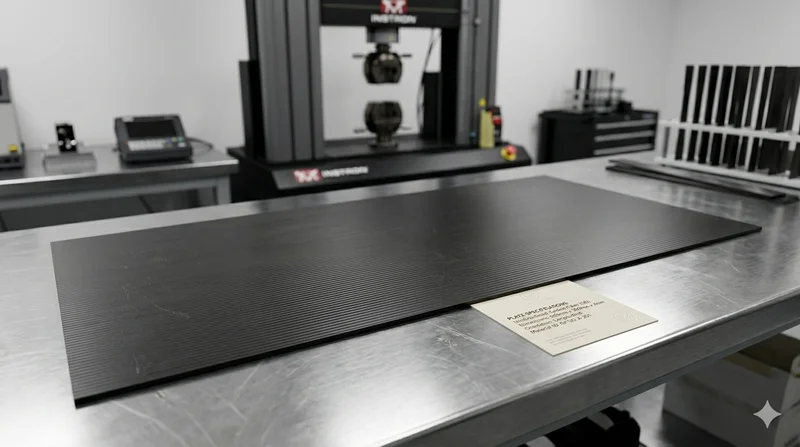
Carbon Fiber Plate — UD Unidirectional T700
Unidirectional carbon fiber plate with all fibers oriented in a single direction for maximum strength along the fiber axis. Essential for structural reinforcements, splints, and applications where load direction is predictable.