
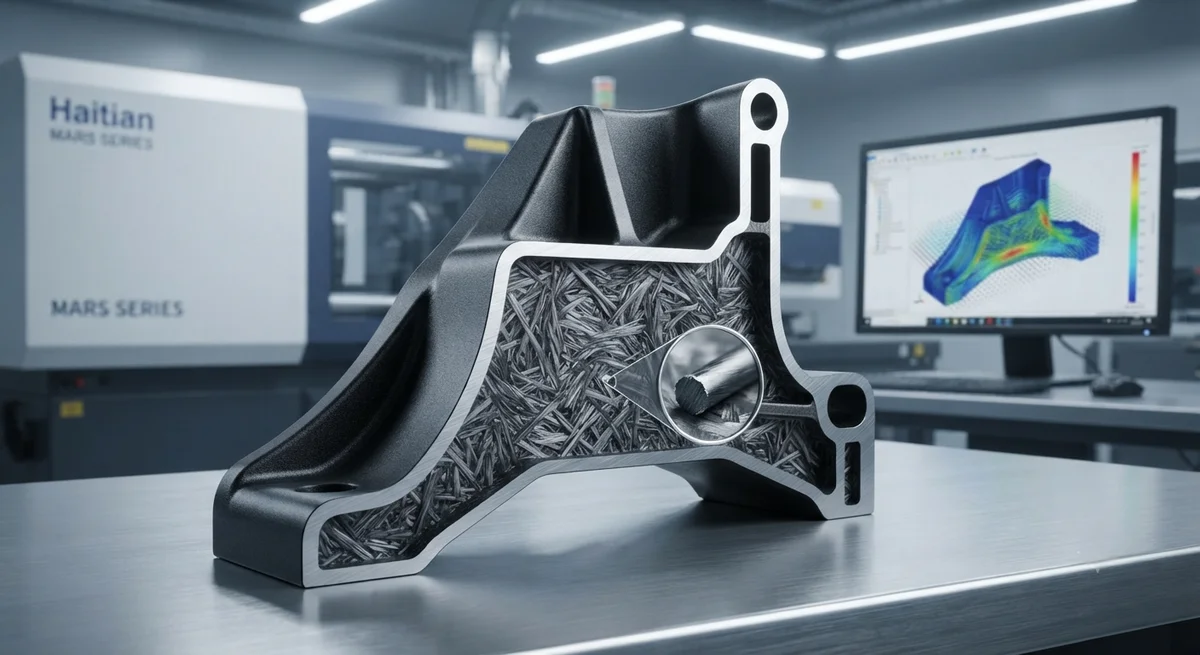
Short carbon fiber injection molding represents a mature, high-volume manufacturing process that brings the benefits of carbon fiber reinforcement to automotive interior components at a fraction of the cost of continuous-fiber composites. This technical analysis examines material properties, processing parameters, cost structures, and design considerations for B2B automotive procurement professionals evaluating short-fiber CFRP for instrument panels, door trims, center consoles, and seat structures.
Introduction to Short Carbon Fiber Injection Molding
Injection molding of short carbon fiber-reinforced polymers (CFRP) is one of the most cost-effective methods for producing automotive interior components with enhanced mechanical properties. Unlike continuous-fiber composites that require labor-intensive hand layup or expensive autoclave processing, short-fiber compounds can be processed on standard injection molding equipment at cycle times of 30–90 seconds per part.
This manufacturing approach uses carbon fiber filaments typically 3–6 mm in length, compounded into a thermoplastic or thermoset matrix at fiber loadings ranging from 10% to 40% by weight. The result is a material that offers substantially improved stiffness, strength, and dimensional stability compared to unreinforced plastics, while maintaining the design freedom and production economics of injection molding.
Material Properties and Performance Characteristics
Short carbon fiber-reinforced compounds deliver a distinctive set of mechanical properties that make them attractive for automotive interior applications:
| Property | Unreinforced PA66 | 30% Glass Fiber PA66 | 30% Carbon Fiber PA66 | 40% Carbon Fiber PA66 |
|---|---|---|---|---|
| Tensile Strength (MPa) | 85 | 190 | 275 | 310 |
| Tensile Modulus (GPa) | 3.1 | 10.0 | 21.0 | 28.0 |
| Flexural Modulus (GPa) | 2.8 | 9.5 | 19.0 | 25.0 |
| Density (g/cm³) | 1.14 | 1.35 | 1.22 | 1.28 |
| HDT at 1.82 MPa (°C) | 75 | 255 | 260 | 262 |
| Izod Impact (kJ/m²) | 6.0 | 9.0 | 7.5 | 8.0 |
As the table demonstrates, carbon fiber-reinforced PA66 offers a 25–45% improvement in tensile strength and a 90–180% improvement in tensile modulus compared to equivalent glass fiber-reinforced grades, while maintaining a 5–10% lower density — a critical advantage for automotive lightweighting initiatives.
Processing Considerations
Successful injection molding of short carbon fiber compounds requires attention to several key processing parameters:
- Drying: Carbon fiber compounds, particularly those with polyamide (PA) or polycarbonate (PC) matrices, are hygroscopic and must be dried to moisture content below 0.02% before processing. Insufficient drying leads to surface defects, reduced mechanical properties, and process instability.
- Screw design: A general-purpose screw with a compression ratio of 2.5:1 to 3:1 is recommended. Low-compression screws minimize fiber breakage during plastication, preserving fiber length distribution and mechanical performance.
- Mold temperature: Higher mold temperatures (80–120°C for PA-based compounds) promote better surface finish and improved fiber-matrix adhesion at the part surface. This is particularly important for visible interior components where aesthetics matter.
- Injection speed: Moderate to high injection speeds (50–150 mm/s) reduce the formation of weld lines and improve fiber orientation in the flow direction. However, excessively high speeds can cause fiber breakage at the gate.
- Gate design: Fan gates or tab gates with generous cross-sections reduce shear stress on the fibers and help maintain fiber length. Restrictive gates (pin gates, submarine gates) should be avoided where possible.
Cost-Benefit Analysis for Automotive Interior Applications
When evaluating short carbon fiber compounds for automotive interior parts, procurement professionals must weigh material costs against performance benefits and system-level savings:
- Material cost: Short carbon fiber compounds typically cost $8–15/kg, compared to $3–5/kg for glass fiber compounds and $1.50–2.50/kg for unreinforced thermoplastics. The premium is significant but narrowing as carbon fiber production scales up.
- Weight reduction: Replacing a glass fiber-reinforced component with a carbon fiber equivalent typically yields 15–25% weight savings. For a mid-size vehicle using 8–12 kg of short-fiber compounds, this translates to 1.5–3 kg of total weight reduction.
- Part consolidation: The higher stiffness of carbon fiber compounds often allows thin-wall molding, reducing part thickness from 3.0 mm (glass fiber) to 2.0–2.5 mm (carbon fiber). This can offset up to 30% of the material cost premium.
- Tooling: Standard injection mold tooling — no autoclave, no specialized equipment — keeps capital investment comparable to conventional injection molding projects.
- Cycle time: With proper mold cooling design, cycle times for carbon fiber compounds are similar to glass fiber compounds (30–90 seconds depending on part geometry), unlike continuous-fiber processes that require minutes to hours per part.
Key Automotive Interior Applications
The following interior applications represent the highest-volume opportunities for short carbon fiber injection molded compounds:
- Instrument panel (IP) substrates: Carbon fiber-reinforced IP substrates offer 40–60% higher stiffness than glass-reinforced alternatives, reducing vibration and NVH (noise, vibration, harshness) while enabling thinner cross-sections for improved packaging space.
- Door trim panels: The combination of low warpage and high dimensional stability makes short-fiber CFRP ideal for large, thin-walled door trim panels. Parts maintain their shape across temperature extremes from -30°C to +85°C.
- Center console structures: Carbon fiber compounds provide the stiffness needed for integrated structural features (phone chargers, cup holders, storage bins) in a single molded part, reducing assembly complexity.
- Seat back panels: Class-A surface finish can be achieved with properly formulated carbon fiber compounds and optimized mold design, enabling visible seat back panels that combine structural performance with aesthetic appeal.
- Steering column surrounds and knee bolsters: These safety-critical components benefit from the high energy absorption and predictable crush behavior of carbon fiber-reinforced materials.
Design Guidelines for Short-Fiber CFRP Components
To maximize the benefits of short carbon fiber injection molding, designers should follow these guidelines:
- Maintain uniform wall thickness (2.0–3.0 mm recommended) to minimize warpage and differential shrinkage. Abrupt thickness transitions create internal stresses and knit lines.
- Design ribs at 50–60% of the nominal wall thickness to provide stiffness without creating sink marks. Rib spacing should be 2–3 times the rib height.
- Place the gate in the thickest section and orient it to align fiber orientation with primary load paths. Flow simulation should be used to predict fiber orientation distribution.
- Avoid sharp internal corners — use fillet radii of at least 0.5–1.0 mm to reduce stress concentrations that can initiate failure at the fiber-matrix interface.
- Specify draft angles of 1–3° for textured surfaces and 0.5–1° for polished surfaces to ensure clean ejection without damaging the part.
Frequently Asked Questions
How does the surface finish of short carbon fiber injection molded parts compare to glass fiber parts?
Short carbon fiber compounds generally produce a more consistent surface finish than equivalent glass fiber compounds because carbon fibers are smaller in diameter (7–10 µm vs 10–20 µm for glass fibers) and more uniformly dispersed. However, achieving a true Class-A surface for painted exterior parts requires additional measures: using fine-grit mold surfaces (SPI A-1 finish), fiber loadings below 30% by weight, and processing at the highest recommended mold temperature. For interior trim parts that are grain-textured or covered, standard processing conditions typically produce acceptable surface quality without additional finishing operations.
What is the maximum practical fiber loading for injection molding?
The practical upper limit for short carbon fiber loading in injection molding compounds is approximately 40–50% by weight, depending on the matrix polymer and fiber aspect ratio. Beyond 50%, the melt flow index becomes too low for complete cavity filling in complex geometries, and fiber-fiber interactions cause significant breakage during compounding and injection. For most automotive interior applications, 20–35% carbon fiber loading provides the optimal balance of mechanical performance, processability, and cost-effectiveness. Higher loadings (35–45%) are used for structural components where maximum stiffness is required and flow length is limited.
Can short carbon fiber compounds be recycled or reprocessed?
Yes, short carbon fiber-reinforced thermoplastics can be mechanically recycled through grinding and re-compounding, although the recycled material exhibits reduced mechanical properties due to fiber length attrition during the recycling process. Typically, recycled short carbon fiber compounds retain 70–85% of the tensile modulus and 60–75% of the tensile strength of virgin material after one recycling cycle. The automotive industry is increasingly specifying recycled carbon fiber compounds for non-structural interior components — a trend that reduces both material cost and environmental footprint. BMW, for example, uses recycled short carbon fiber in interior parts for its i-series vehicles, demonstrating that recycled grades can meet production requirements when properly formulated.
Part of topic
Related Articles
- Carbon Fiber Mooring for Floating Offshore Wind: Fatigue and Corrosion in Deep Water
- Carbon Fiber Bicycle Frame Optimization: Layup Design and Manufacturing for Competitive Racing
- Carbon Fiber CFRP Retrofit for Infrastructure: Bridge and Building Seismic Strengthening
- Carbon Fiber Medical Imaging Equipment: Lightweight Gantry and Couch Structures for MRI/CT
- Carbon Fiber EV Battery Enclosures: Crash Safety and Electromagnetic Shielding Design
- Carbon Fiber Structures for Low-Altitude Economy: UAV Airframes and eVTOL Components
Interested in Our Products?
Contact our team for competitive pricing and technical specifications.
Get a QuoteRelated Products
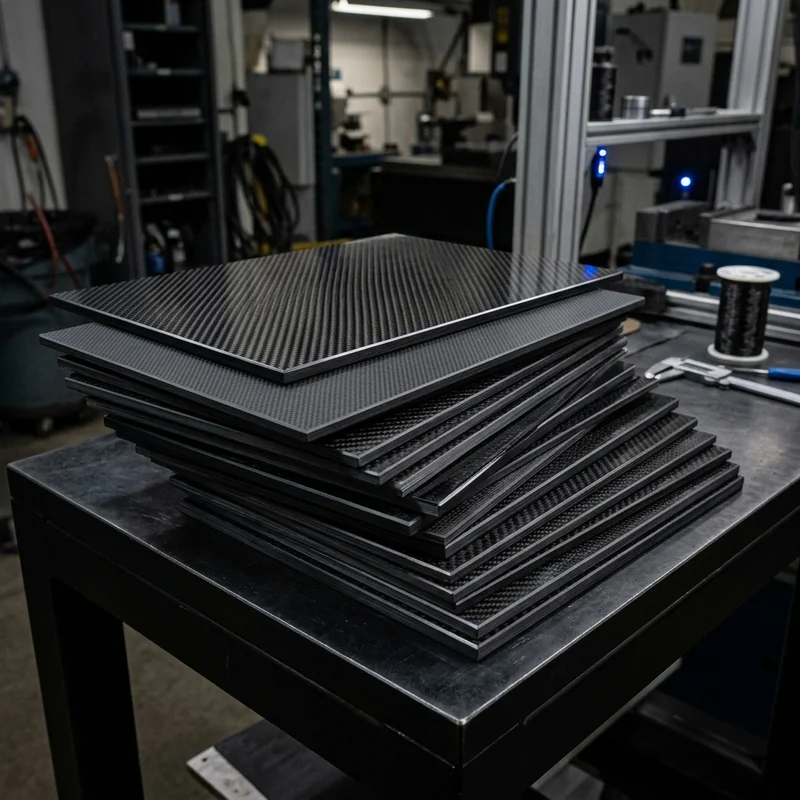
Carbon fiber standard plate-3k stripe
Lightweight, ultra-rigid standard sheets for drone fuselages, robot housings, facades and structural applications.
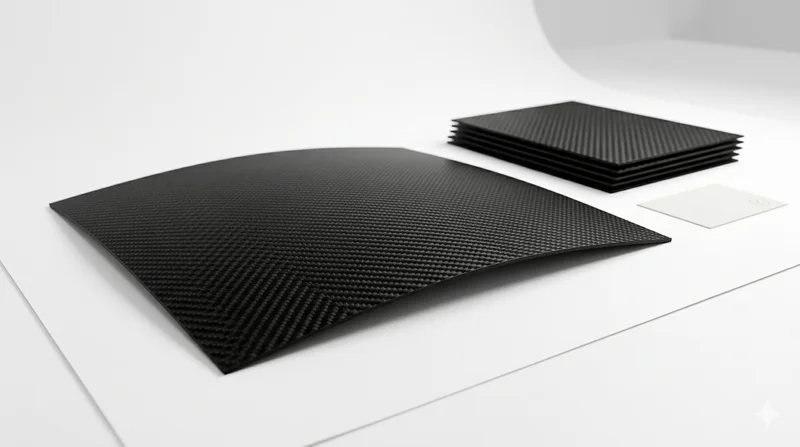
Carbon Fiber Plate — 3K Twill T700 1.5mm
Thin 1.5mm carbon fiber plate with 3K twill weave surface. Lightweight and stiff, commonly used for covers, panels, drone bodies, and applications requiring a premium aesthetic appearance.
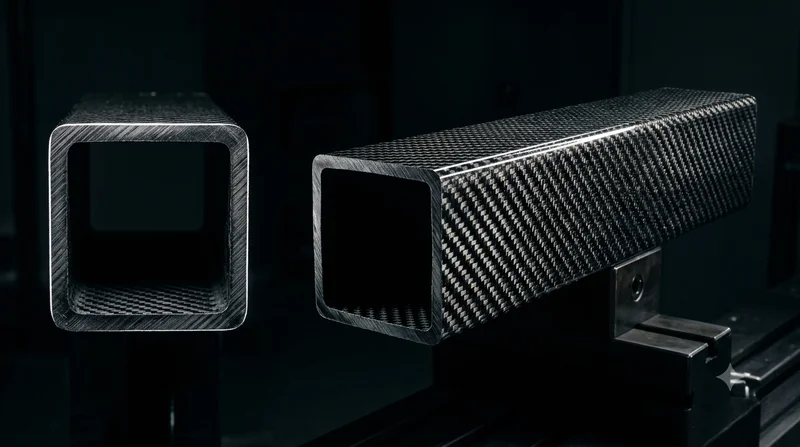
Square Carbon Fiber Tube — 3K Twill T700
Square cross-section carbon fiber tube manufactured with 3K twill weave for torsional strength. Preferred for structural frames, trusses, and support columns where rectangular geometry offers design flexibility.
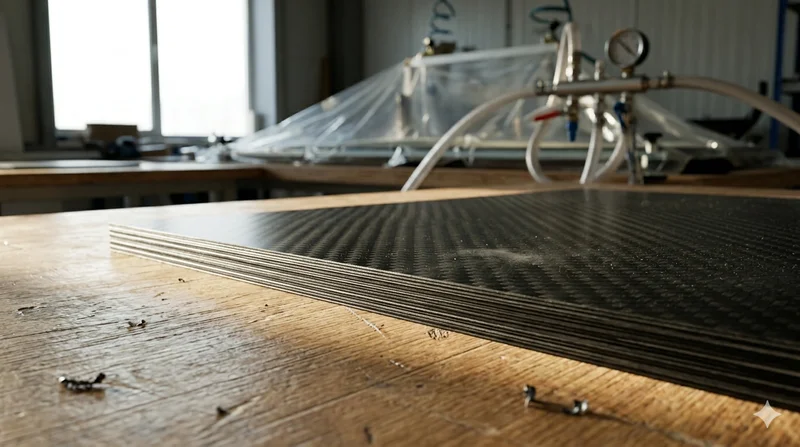
Carbon Fiber Plate — 3K Twill T700 3.0mm
Medium-thickness 3.0mm carbon fiber plate offering significantly higher load capacity while maintaining attractive 3K twill finish. Suitable for structural brackets, reinforcement plates, and load-bearing panels.
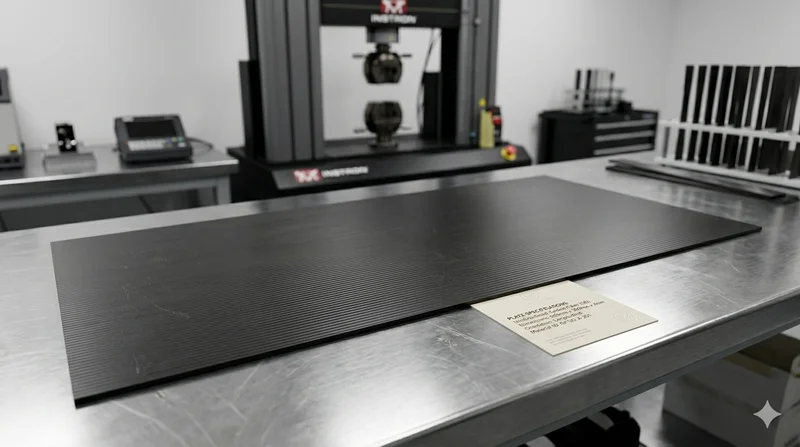
Carbon Fiber Plate — UD Unidirectional T700
Unidirectional carbon fiber plate with all fibers oriented in a single direction for maximum strength along the fiber axis. Essential for structural reinforcements, splints, and applications where load direction is predictable.