
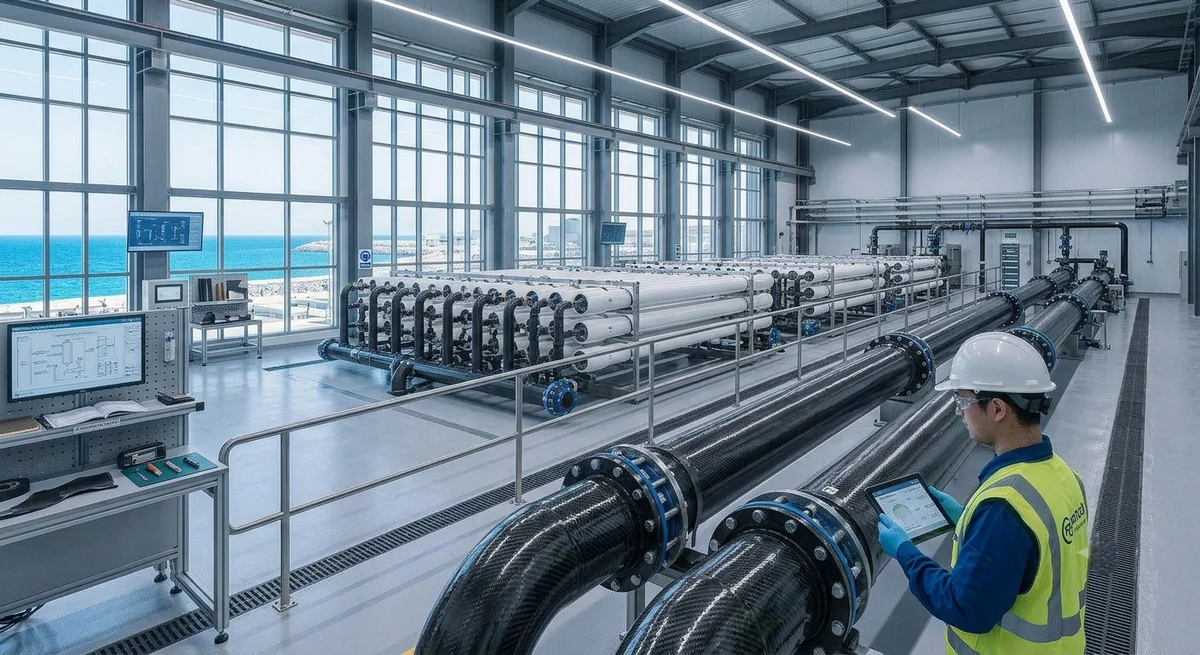
Carbon fiber composites are emerging as a transformative material solution for seawater desalination infrastructure, particularly in reverse osmosis (RO) plants where corrosion resistance, dimensional stability, and weight reduction are critical operational requirements. This article provides a technical overview of carbon fiber applications in desalination—from high-pressure vessel housings to piping systems and structural components—with comparative performance data against traditional materials such as stainless steel, duplex alloys, and fiberglass.
Introduction
Global freshwater scarcity is driving unprecedented investment in seawater desalination capacity. As of 2026, the world operates over 21,000 desalination plants with a combined capacity exceeding 110 million m³/day, with reverse osmosis accounting for approximately 70% of this capacity. These facilities operate in some of the most corrosive environments in industrial infrastructure: high-salinity seawater at elevated pressures (up to 80 bar in RO processes), combined with chlorinated feedwater, temperature fluctuations, and ultraviolet exposure.
Traditional materials face significant challenges in this environment. Stainless steels (316L, 904L) suffer from pitting and crevice corrosion despite their high alloy content. Duplex stainless steels (2205, 2507) offer improved resistance but at high material costs ($12-20/kg) and fabrication complexity. Fiberglass reinforced plastic (FRP) provides corrosion resistance but lacks the stiffness, dimensional stability, and fatigue life required for high-pressure applications.
Carbon fiber composites address these limitations through a unique combination of properties: complete immunity to electrochemical corrosion, specific stiffness 3-5 times higher than steel, excellent fatigue resistance (10⁷+ cycles without degradation), and the ability to be tailored for specific load paths through fiber orientation optimization.
Carbon Fiber Applications in RO Desalination Plants
High-Pressure Vessel Housings
RO membrane vessels must withstand continuous operating pressures of 55-83 bar (800-1,200 psi) in seawater desalination, with cyclic pressure variations during startup, shutdown, and cleaning operations.
| Parameter | Steel Vessel (filament-wound steel liner) | FRP Vessel (E-glass/epoxy) | Carbon Fiber Vessel (CF/epoxy) |
|---|---|---|---|
| Operating Pressure | 83 bar max | 69 bar max | 83 bar max |
| Burst Pressure | 250 bar | 138 bar | 248 bar |
| Weight (8-inch vessel, 7m length) | 450 kg | 95 kg | 68 kg |
| Corrosion Allowance | 3 mm required | None needed | None needed |
| Fatigue Life (0-83 bar cycles) | 10⁵ cycles | 10⁴ cycles | 10⁶ cycles |
| Thermal Conductivity | 16 W/m·K | 0.3 W/m·K | 0.5 W/m·K |
| Service Life | 10-15 years | 15-20 years | 20-30 years |
Key advantage: Carbon fiber vessels weigh 85% less than steel equivalents, dramatically reducing structural support requirements and installation costs. The weight reduction also simplifies periodic membrane replacement—a vessel section that required a crane for steel can be handled by two technicians with carbon fiber.
High-Pressure Piping Systems
RO plants use extensive high-pressure piping networks (typically 6-24 inch diameter) to distribute feedwater at 55-80 bar and convey permeate and brine streams:
Carbon fiber composite piping advantages:
- Corrosion resistance: Zero degradation in seawater with up to 20 ppm residual chlorine
- Internal surface finish: Ra 0.4-0.8 μm, reducing biofouling by 40-60% compared to stainless steel (Ra 1.6-3.2 μm)
- Pressure rating: 100 bar working pressure with 4:1 safety factor for 12-inch pipe
- Weight: 4.5 kg/m for 12-inch carbon fiber pipe vs. 65 kg/m for sch 40S stainless steel
- Installation cost: 50-65% lower due to reduced support structure requirements and simplified handling
Comparative pipe material data:
| Property | Carbon Fiber Composite | Stainless Steel 316L | Duplex 2205 | FRP (E-glass) |
|---|---|---|---|---|
| Density (g/cm³) | 1.55-1.65 | 7.98 | 7.80 | 1.80-2.00 |
| Tensile Strength (MPa) | 400-800 (hoop) | 485 | 620 | 150-300 |
| Hoop Modulus (GPa) | 60-120 | 193 | 190 | 15-25 |
| Max Operating Temp (°C) | 120 | 400 | 300 | 90-110 |
| Coefficient of Thermal Exp. (×10⁻⁶/K) | 0.5-2.0 (axial) | 16-17 | 13-14 | 10-12 |
| Cost per meter (12-inch, USD) | $180-350 | $400-600 | $550-900 | $120-250 |
Structural Components
Carbon fiber is increasingly used for non-piping structural elements:
- Membrane cartridge interconnectors: Carbon fiber tubes connecting pressure vessel stages, reducing pressure drop by 15-20% compared to stainless due to smoother internal surfaces
- Platform walkways and grating: Carbon fiber pultruded profiles for inspection platforms, providing slip-resistant surfaces with 70% weight reduction vs. steel grating
- Pipe support brackets: Carbon fiber supports eliminate galvanic corrosion concerns and withstand UV exposure when coated with UV-resistant gel coat
- Storage tank roofs and covers: Large-span carbon fiber sandwich panels for brine and permeate tanks
Energy Recovery Device Components
Energy Recovery Devices (ERDs) are critical for RO plant efficiency, recovering 50-60% of the energy from the high-pressure brine stream:
- Piston sleeves: Carbon fiber composite sleeves in isobaric ERDs show 5× longer wear life than stainless steel sleeves due to lower friction coefficient (0.08-0.12 vs. 0.3-0.5 for steel-on-steel)
- Pressure exchanger rotors: Carbon fiber rotors weighing 70% less than alloy alternatives, reducing bearing loads and startup torque
- Seal faces: Carbon-carbon composite mechanical seal faces operating at 6,000 rpm with zero product leakage for pump lifecycles exceeding 25,000 hours
Material Selection Guidelines
Recommended Carbon Fiber Grades for Desalination Components
| Application | Fiber Type | Resin System | Fiber Volume (%) | Key Property |
|---|---|---|---|---|
| Pressure vessels | High-strength (T700-class) | Epoxy (amine-cured) | 60-65 | Hoop tensile strength |
| Piping systems | Intermediate modulus (T800-class) | Vinyl ester or epoxy | 55-60 | Corrosion resistance + strength |
| Structural components | Standard modulus (T300-class) | Isophthalic polyester | 50-55 | Cost-effective stiffness |
| ERD rotors | High modulus (M40-class) | Epoxy (high Tg) | 55-60 | Dimensional stability |
| Seal faces | Carbon-carbon composite | — | — | Self-lubricating wear surface |
Joining and Connection Methods
Carbon fiber components in desalination plants require special attention to joining:
- Adhesive bonding: Two-part epoxy adhesives (structural, 25-35 MPa lap shear) for pipe joints and vessel connections
- Flanged connections: Carbon fiber-reinforced flanges with PTFE or EPDM gaskets, torqued to 50-70% of steel flange bolt torque to prevent over-compression
- Bell-and-spigot: Tapered interference fit joints for pressure vessel sections, sealed with O-rings
- Hybrid bonding + bolting: Backup bolted connections on critical high-pressure joints, combined with primary adhesive bond
Economic Analysis
Installed Cost Comparison: 12-Inch Piping (per linear meter)
| Cost Component | Carbon Fiber | Stainless 316L | Duplex 2205 | FRP |
|---|---|---|---|---|
| Material | $250 | $500 | $725 | $185 |
| Supports | $35 | $220 | $220 | $40 |
| Installation labor | $80 | $300 | $350 | $95 |
| Testing/inspection | $25 | $60 | $75 | $25 |
| Total installed | $390 | $1,080 | $1,370 | $345 |
| Lifecycle (20-year, NPV) | $520 | $1,650 | $1,890 | $580 |
Carbon fiber's total installed cost is 64% lower than stainless steel 316L and 72% lower than duplex 2205. Over a 20-year lifecycle with no corrosion maintenance, carbon fiber offers the lowest total cost of ownership among all metallic options.
FAQ
Q: How does carbon fiber perform under continuous UV exposure in outdoor desalination plants?
Carbon fiber itself is UV resistant, but the epoxy matrix can degrade under prolonged UV exposure. For outdoor applications in desalination plants, carbon fiber components should be protected with UV-resistant gel coat (500-1,000 μm thickness, aliphatic polyurethane or acrylic-based), UV-stable paint systems, or a protective laminate layer of UV-stabilized glass fiber. Without protection, surface erosion of the epoxy matrix may occur at a rate of 15-25 μm per year in tropical climates. With proper UV protection, carbon fiber components maintain full mechanical properties for 25+ years of outdoor service.
Q: Can carbon fiber pipes withstand the cleaning chemicals used in RO plant membrane cleaning?
Carbon fiber composite pipes show excellent chemical resistance to the standard RO cleaning agents:
- Acidic cleaners (citric acid, HCl at pH 2-3): No degradation at 40°C for 8-hour cleaning cycles
- Alkaline cleaners (NaOH at pH 11-12, 0.1% Na-EDTA): Slight surface softening at >50°C, but fully reversible upon rinsing
- Biocides (chlorine at 5-20 ppm, chlorine dioxide): Excellent resistance—carbon fiber outperforms both 316L and FRP
- Detergents (non-ionic surfactants): No detectable effect Note: Epoxy-based pipes are not recommended for continuous exposure to strong oxidizing acids (e.g., concentrated nitric or sulfuric) or ketone solvents (MEK, acetone).
Q: What is the maximum operating temperature for carbon fiber desalination components?
The maximum continuous operating temperature depends on the resin system:
- Standard epoxy (Tg 120-150°C): 80-100°C continuous for pressure vessels and piping
- High-temperature epoxy (Tg 180-200°C): 120-150°C for specialized brine handling
- Vinyl ester: 90-110°C, better chemical resistance than epoxy for aggressive brine streams
- Bismaleimide (BMI, Tg >250°C): 200-220°C for thermal recovery applications
Conclusion
Carbon fiber composites offer a compelling value proposition for seawater desalination infrastructure. With immunity to chloride-induced corrosion, specific stiffness 3-5 times that of steel, and total installed costs 64-72% lower than stainless steel alternatives, carbon fiber enables longer plant life, reduced maintenance, and lower lifecycle costs. Key applications—high-pressure vessels, piping systems, structural components, and energy recovery devices—stand to benefit from the material's unique property set.
As carbon fiber manufacturing costs continue to decline (projected 5-8% annual reduction through 2030) and as the desalination industry seeks more durable, energy-efficient solutions, carbon fiber composites will play an increasingly central role in addressing global water scarcity through sustainable infrastructure.
Part of topic
Related Articles
- Carbon Fiber Mooring for Floating Offshore Wind: Fatigue and Corrosion in Deep Water
- Carbon Fiber Bicycle Frame Optimization: Layup Design and Manufacturing for Competitive Racing
- Carbon Fiber CFRP Retrofit for Infrastructure: Bridge and Building Seismic Strengthening
- Carbon Fiber Medical Imaging Equipment: Lightweight Gantry and Couch Structures for MRI/CT
- Carbon Fiber EV Battery Enclosures: Crash Safety and Electromagnetic Shielding Design
- Carbon Fiber Structures for Low-Altitude Economy: UAV Airframes and eVTOL Components
Interested in Our Products?
Contact our team for competitive pricing and technical specifications.
Get a QuoteRelated Products
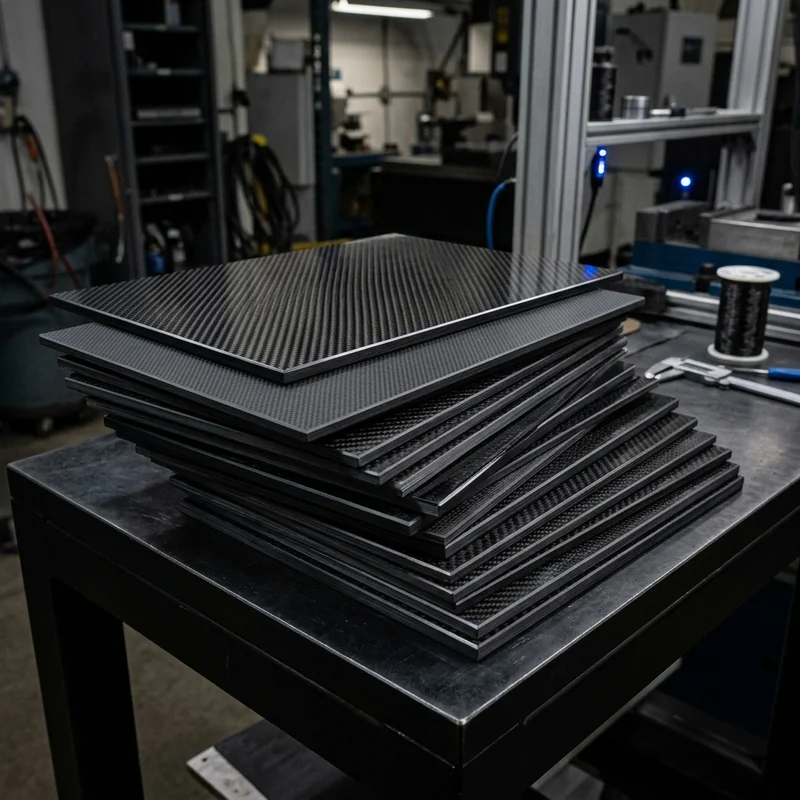
Carbon fiber standard plate-3k stripe
Lightweight, ultra-rigid standard sheets for drone fuselages, robot housings, facades and structural applications.
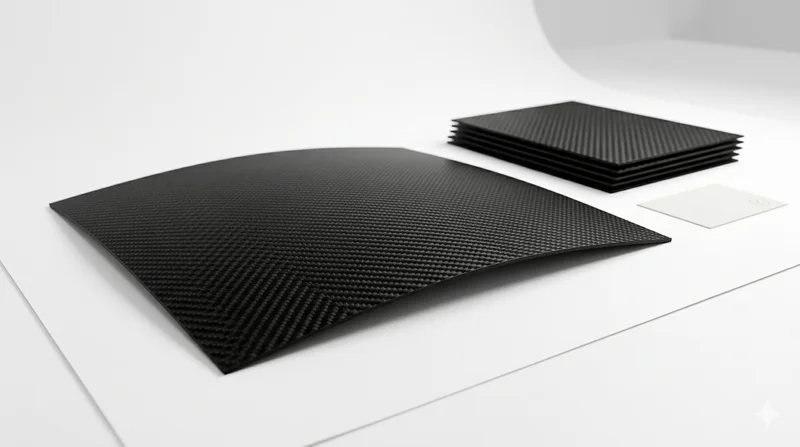
Carbon Fiber Plate — 3K Twill T700 1.5mm
Thin 1.5mm carbon fiber plate with 3K twill weave surface. Lightweight and stiff, commonly used for covers, panels, drone bodies, and applications requiring a premium aesthetic appearance.
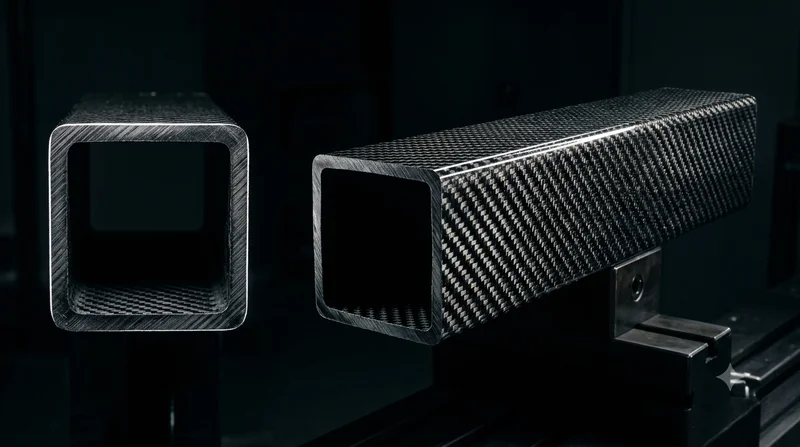
Square Carbon Fiber Tube — 3K Twill T700
Square cross-section carbon fiber tube manufactured with 3K twill weave for torsional strength. Preferred for structural frames, trusses, and support columns where rectangular geometry offers design flexibility.
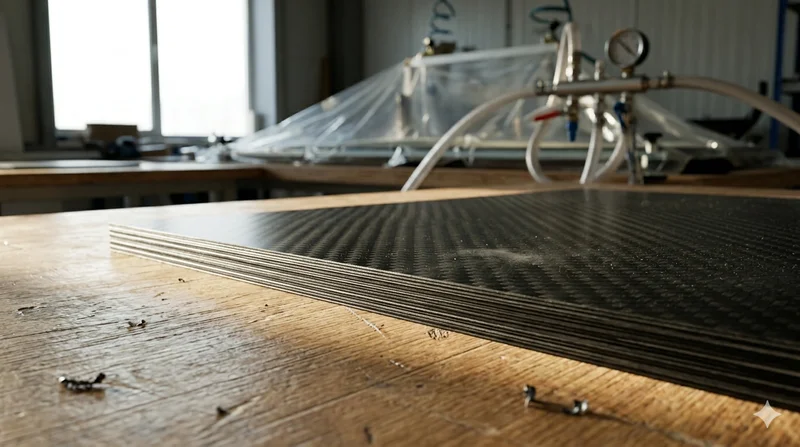
Carbon Fiber Plate — 3K Twill T700 3.0mm
Medium-thickness 3.0mm carbon fiber plate offering significantly higher load capacity while maintaining attractive 3K twill finish. Suitable for structural brackets, reinforcement plates, and load-bearing panels.
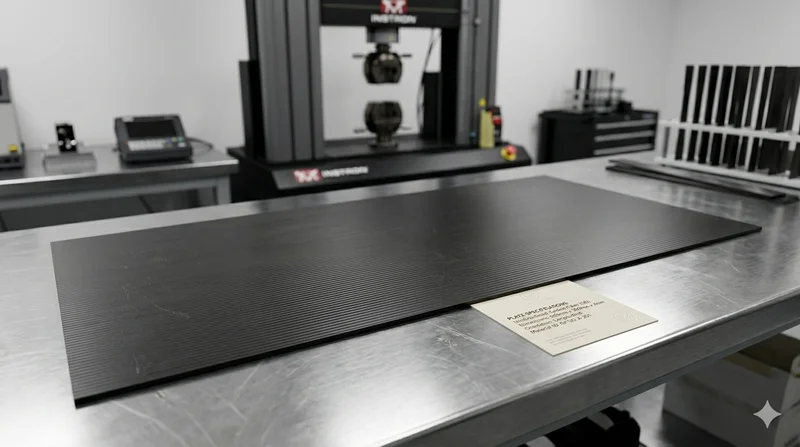
Carbon Fiber Plate — UD Unidirectional T700
Unidirectional carbon fiber plate with all fibers oriented in a single direction for maximum strength along the fiber axis. Essential for structural reinforcements, splints, and applications where load direction is predictable.