
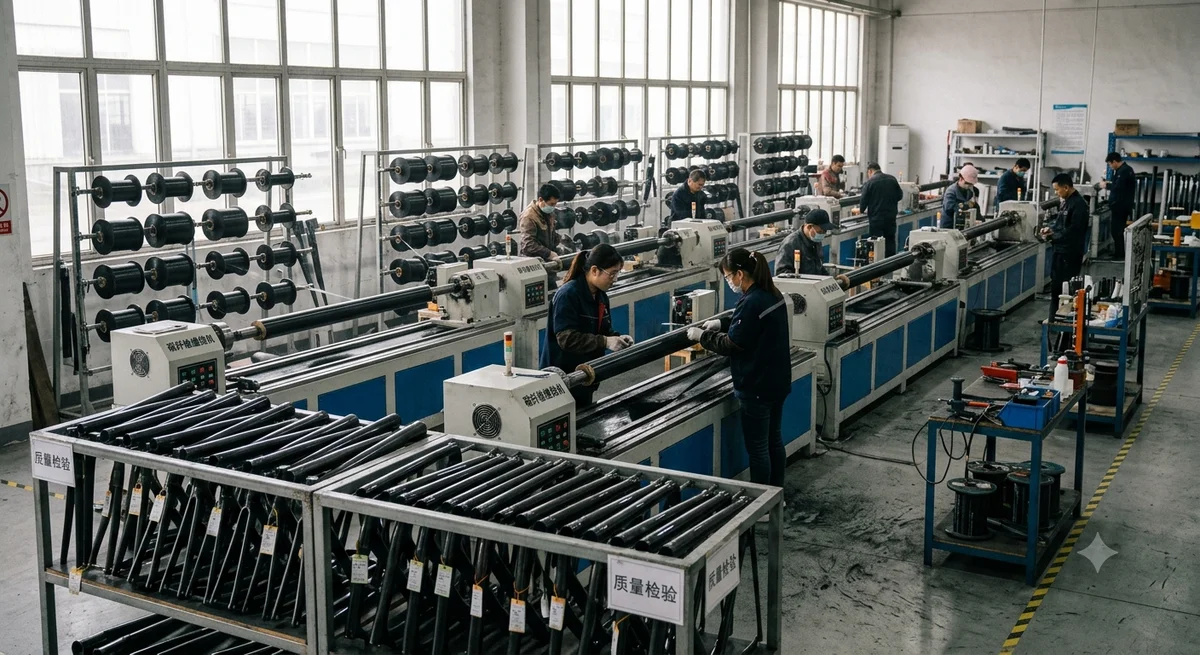
Comprehensive B2B overview of carbon fiber in sporting goods — market size, key product segments, material specifications, and supply chain insights for OEM manufacturers.
Introduction
The sporting goods industry represents one of the most consistent and diversified markets for carbon fiber composite materials. From bicycle frames and tennis rackets to fishing rods, golf shafts, pickleball paddles, and hockey sticks, carbon fiber's unique combination of high stiffness, low weight, and fatigue resistance makes it the material of choice for premium performance equipment. In 2026, the global sporting goods carbon fiber market is estimated at $1.8 billion, growing at 6.2% CAGR. This article provides B2B OEM suppliers and manufacturers with a data-driven overview of market segments, material specifications, and sourcing considerations.
Sporting Goods Market Segments
| Segment | 2026 Market Size | Annual CF Volume | Key Material Form | Growth Rate |
|---|---|---|---|---|
| Bicycle frames & wheels | $520M | 3,800 tons | Prepreg, woven fabric | 5.8% |
| Golf shafts | $320M | 2,100 tons | Prepreg (unidirectional) | 3.2% |
| Racket sports (tennis, badminton, pickleball) | $280M | 1,600 tons | Woven prepreg, braided sleeve | 7.5% |
| Fishing rods | $240M | 1,400 tons | Prepreg (tapered unidirectional) | 4.1% |
| Hockey & lacrosse sticks | $180M | 950 tons | Braided preform + resin infusion | 5.0% |
| Winter sports (skis, snowboards, poles) | $160M | 850 tons | Woven prepreg, sandwich panels | 3.8% |
| Other (archery, paddles, helmets) | $100M | 500 tons | Various | 6.0% |
Material Specifications by Sport
Different sporting goods applications impose different material requirements. Understanding these nuances helps B2B suppliers specify the right carbon fiber form and grade for each OEM customer:
- Bicycle frames — Require high-modulus (M40J or higher) prepreg for framesets to achieve stiffness-to-weight targets. Common layup uses a mix of T700 (standard modulus) for impact resistance and M40J for stiffness in the down tube, top tube, and chainstays. Frame weight targets for mid-range road bikes: 850–1,050 g (frame only).
- Golf shafts — Demand ultra-high modulus fibers (M55J, 450–500 GPa) to create low-torque, lightweight shafts. The industry standard is 60–70% high-modulus fiber in the tip section and 30–40% intermediate-modulus in the butt section for optimal flex profile.
- Pickleball paddles — A rapidly growing segment in 2026. Paddles use 2x2 twill weave prepreg with T700 fibers, combined with a foam or honeycomb core. Surface finish is critical — paddles must be smooth, without pinholes or tacky residue. Typical weight: 200–250 g.
- Fishing rods — Require high-strain fibers (1.8–2.0% elongation) for durability during casting stress. T700S and T800H are the most popular choices. Rod blank construction uses a combination of unidirectional prepreg for backbone strength and woven prepreg for hoop strength.
Supply Chain and Sourcing Considerations
For B2B buyers sourcing carbon fiber for sporting goods manufacturing, the following factors are critical:
- Minimum order quantities — Prepreg manufacturers typically require MOQs of 500–1,000 m² per grade per order. Smaller OEMs should consider consolidating orders through trading companies or co-op purchasing arrangements.
- Color matching — Unlike industrial applications where surface cosmetics are secondary, sporting goods often demand a specific weave pattern and visible carbon fiber aesthetic. Consistent tow spread and uniform resin content are essential for visual quality. Matte vs gloss finish options should be confirmed with the prepreg supplier.
- Lead times — Standard prepreg lead times range from 6–10 weeks for standard grades to 14–18 weeks for specialty high-modulus grades. OEMs should maintain 8–12 weeks of safety stock for critical production lines.
- Testing requirements — Sporting goods OEMs typically test incoming prepreg for resin content (±2%), gel time, and tack level. Finished product testing includes flexural modulus (ASTM D790), impact resistance (ISO 6272), and fatigue cycling (specific to each sport's governing body standards).
Frequently Asked Questions
What is the typical cost breakdown for a carbon fiber sporting goods component?
Raw material (prepreg) accounts for 25–35% of total component cost. Manufacturing (layup, bagging, curing, finishing) accounts for 40–50%. Quality control, packaging, and logistics account for 15–25%. For bicycle frames, the total manufacturing cost for a mid-range carbon frame is $60–120, with retail price typically 3–5x that amount.
How does carbon fiber sporting goods recycling work?
Post-consumer recycling of carbon fiber sporting goods is limited but growing. Several European recyclers (e.g., ELG Carbon Fibre, CFK Valley) accept end-of-life bicycle frames, skis, and rackets for mechanical recycling. The recovered short fibers are used in non-structural applications such as automotive underbody shields and electronic housings. OEMs can improve recyclability by designing frames with separable joints (bonded vs co-cured) and avoiding mixed-material inserts.
What quality certifications should a sporting goods CF supplier hold?
At minimum, ISO 9001:2024 for quality management systems. For bicycle components supplying EU markets, EN 14782 (road bikes) and EN 14764 (city bikes) are relevant. Golf shaft suppliers should comply with USGA/R&A rules on torque and deflection. Many OEMs also require ASTM D3039 (tensile) and ASTM D3410 (compression) testing data for material qualification.
Conclusion
The sporting goods carbon fiber market offers stable, diversified demand for B2B composite suppliers. By understanding the material specifications, cost structures, and supply chain requirements of each sport segment, OEM suppliers can position themselves as value-added partners rather than commodity material vendors. YongXian CarbonFiber supplies prepreg, tubes, and custom-molded components for sporting goods OEMs worldwide. Visit www.yongxian.co to discuss your next sporting goods project.
Part of topic
Related Articles
- Carbon Fiber Mooring for Floating Offshore Wind: Fatigue and Corrosion in Deep Water
- Carbon Fiber Bicycle Frame Optimization: Layup Design and Manufacturing for Competitive Racing
- Carbon Fiber CFRP Retrofit for Infrastructure: Bridge and Building Seismic Strengthening
- Carbon Fiber Medical Imaging Equipment: Lightweight Gantry and Couch Structures for MRI/CT
- Carbon Fiber EV Battery Enclosures: Crash Safety and Electromagnetic Shielding Design
- Carbon Fiber Structures for Low-Altitude Economy: UAV Airframes and eVTOL Components
Interested in Our Products?
Contact our team for competitive pricing and technical specifications.
Get a QuoteRelated Products
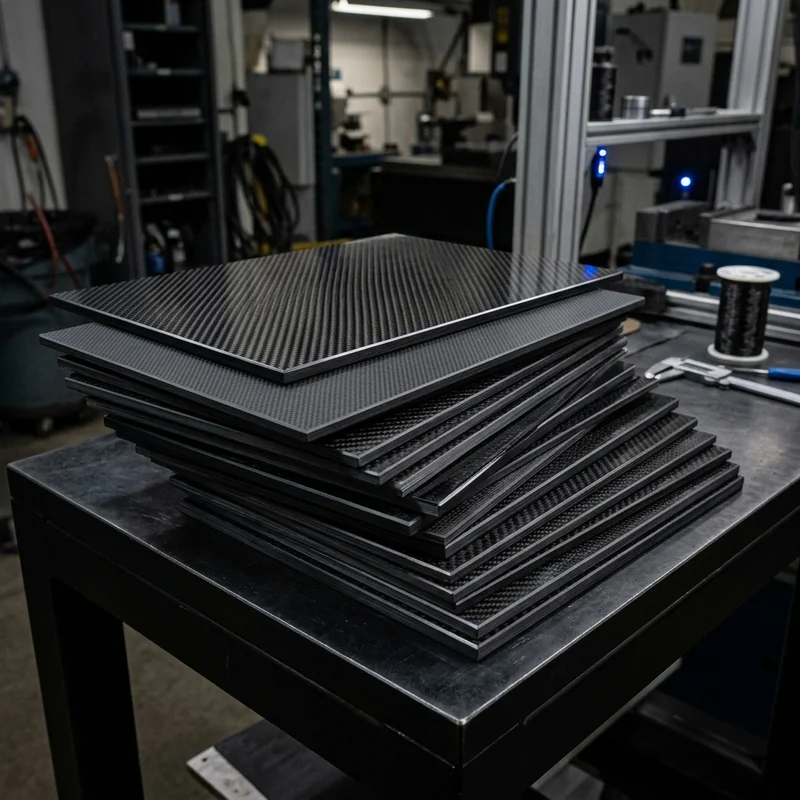
Carbon fiber standard plate-3k stripe
Lightweight, ultra-rigid standard sheets for drone fuselages, robot housings, facades and structural applications.

Carbon Fiber Plate — 3K Twill T700 1.5mm
Thin 1.5mm carbon fiber plate with 3K twill weave surface. Lightweight and stiff, commonly used for covers, panels, drone bodies, and applications requiring a premium aesthetic appearance.

Square Carbon Fiber Tube — 3K Twill T700
Square cross-section carbon fiber tube manufactured with 3K twill weave for torsional strength. Preferred for structural frames, trusses, and support columns where rectangular geometry offers design flexibility.
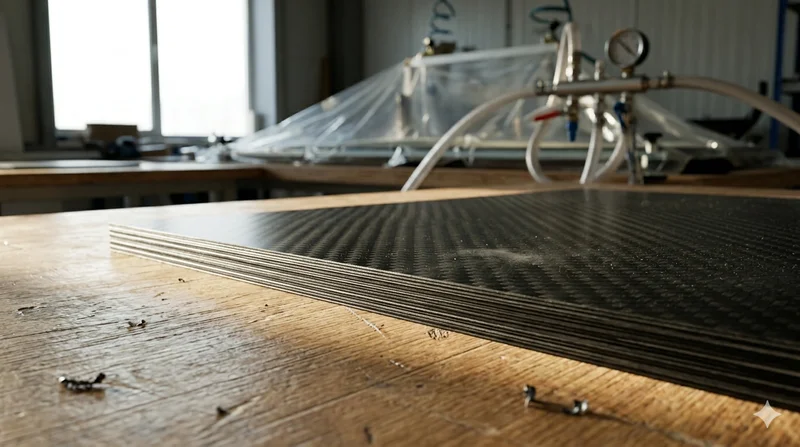
Carbon Fiber Plate — 3K Twill T700 3.0mm
Medium-thickness 3.0mm carbon fiber plate offering significantly higher load capacity while maintaining attractive 3K twill finish. Suitable for structural brackets, reinforcement plates, and load-bearing panels.
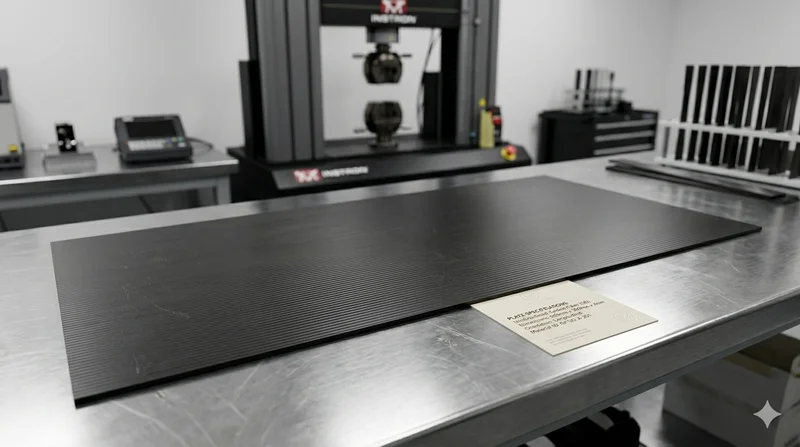
Carbon Fiber Plate — UD Unidirectional T700
Unidirectional carbon fiber plate with all fibers oriented in a single direction for maximum strength along the fiber axis. Essential for structural reinforcements, splints, and applications where load direction is predictable.