
Carbon fiber composites now account for 60–80% of the structural mass of modern satellites. From high-modulus M55J booms to deployable mesh reflector ribs, this article examines the specific material grades, qualification requirements, and manufacturing processes for space-grade CFRP components.
Carbon Fiber in Space Applications: Engineering for the Ultimate Environment
The space industry consumed an estimated 1,800 tonnes of carbon fiber in 2025, with projections of 2,400 tonnes by 2028 — driven by LEO mega-constellations, national security satellite programs, and deep-space exploration.
Material Grades Used in Space Applications
| Grade | Tensile Modulus | CTE (axial) | Primary Application |
|---|---|---|---|
| M55J | 540 GPa | −1.1 ppm/K | Reflector ribs, truss struts |
| M40J | 390 GPa | −0.8 ppm/K | Solar array substrates |
| T800 | 294 GPa | −0.4 ppm/K | Bus structure, launch vehicle |
| K13D | 790–935 GPa | −1.5 ppm/K | Optical bench structures |
Critical Material Properties for Space
CTE: Carbon fiber's negative axial CTE (−0.4 to −1.5 ppm/K) enables net-zero CTE structures — critical for optical instruments at geostationary orbits (ΔT ±120°C per orbit). Outgassing: Must meet ASTM E595 (<1.0% TML, <0.1% CVCM). UV/AO resistance: Protective coatings (5–25 μm) standard on all space-facing surfaces.
| Property | Acceptance Criteria |
|---|---|
| TML | <1.0% |
| CVCM | <0.1% |
| CTE (−150°C to +150°C) | ±0.5 ppm/K |
| Microcrack resistance (100 cycles) | Zero cracks |
Qualification and Testing
Space-grade CFRP qualification: $500,000–$2,000,000 per part family. Includes thermal vacuum cycling (−150°C to +120°C, 10⁻⁵ Torr, 100+ cycles), random vibration (14.1 Grms), acoustic testing (143 dB), and radiation testing (50–200 krad).
FAQ
Q: Why is high-modulus fiber preferred for satellite structures?
A: (1) Higher specific stiffness — M55J provides 35% higher natural frequency than T800. (2) Lower CTE — critical for antenna pointing accuracy (<0.01°). (3) Superior radiation resistance due to more graphitized crystal structure.
Q: What manufacturing processes are used?
A: Autoclave curing (80% of primary structure), filament winding (pressure vessels), and robotic fiber placement (reflector ribs). Out-of-autoclave is rarely used for flight hardware.
Q: How is contamination controlled?
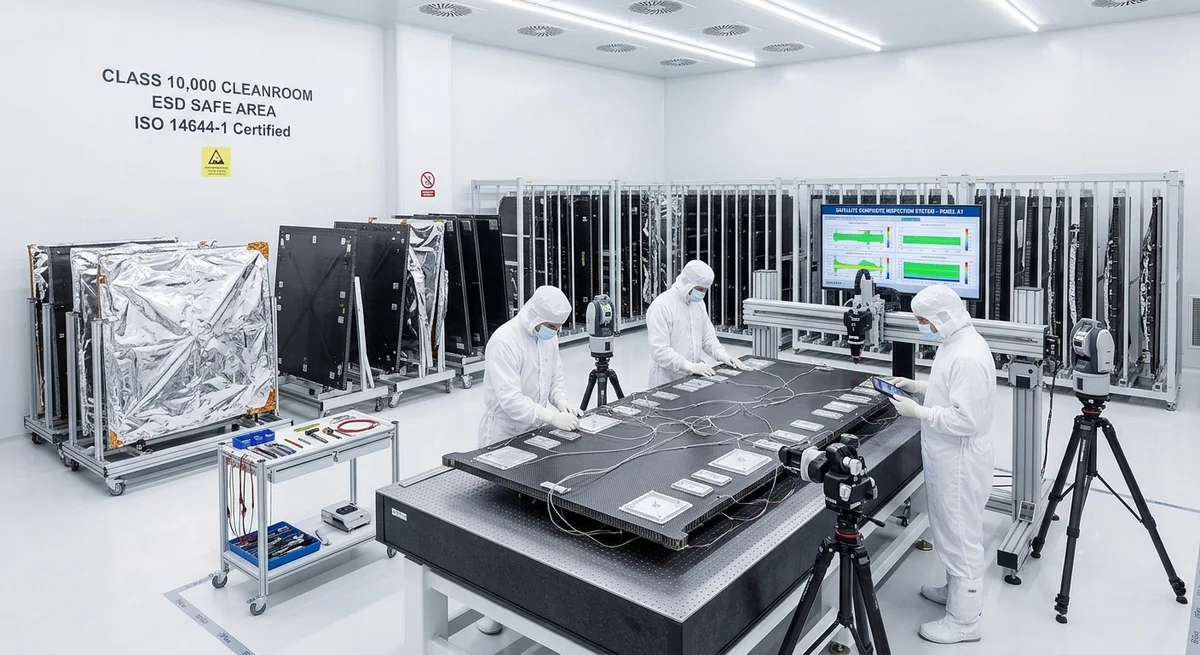
A: Class 10,000 (ISO 7) cleanrooms, no silicone mold releases, ultrasonic cleaning, 24-hour vacuum bakeout at 80°C, particle count ≤50/cm² >5 μm per MIL-STD-1246 Level 200.
Part of topic
Related Articles
- Carbon Fiber Mooring for Floating Offshore Wind: Fatigue and Corrosion in Deep Water
- Carbon Fiber Bicycle Frame Optimization: Layup Design and Manufacturing for Competitive Racing
- Carbon Fiber CFRP Retrofit for Infrastructure: Bridge and Building Seismic Strengthening
- Carbon Fiber Medical Imaging Equipment: Lightweight Gantry and Couch Structures for MRI/CT
- Carbon Fiber EV Battery Enclosures: Crash Safety and Electromagnetic Shielding Design
- Carbon Fiber Structures for Low-Altitude Economy: UAV Airframes and eVTOL Components
Interested in Our Products?
Contact our team for competitive pricing and technical specifications.
Get a QuoteRelated Products
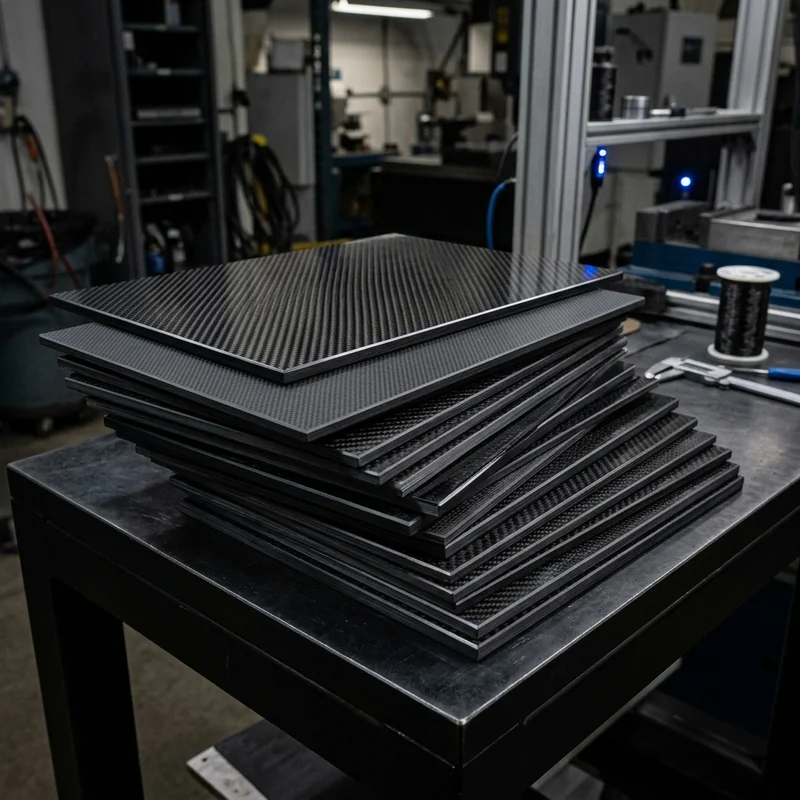
Carbon fiber standard plate-3k stripe
Lightweight, ultra-rigid standard sheets for drone fuselages, robot housings, facades and structural applications.

Carbon Fiber Plate — 3K Twill T700 1.5mm
Thin 1.5mm carbon fiber plate with 3K twill weave surface. Lightweight and stiff, commonly used for covers, panels, drone bodies, and applications requiring a premium aesthetic appearance.

Square Carbon Fiber Tube — 3K Twill T700
Square cross-section carbon fiber tube manufactured with 3K twill weave for torsional strength. Preferred for structural frames, trusses, and support columns where rectangular geometry offers design flexibility.

Carbon Fiber Plate — 3K Twill T700 3.0mm
Medium-thickness 3.0mm carbon fiber plate offering significantly higher load capacity while maintaining attractive 3K twill finish. Suitable for structural brackets, reinforcement plates, and load-bearing panels.
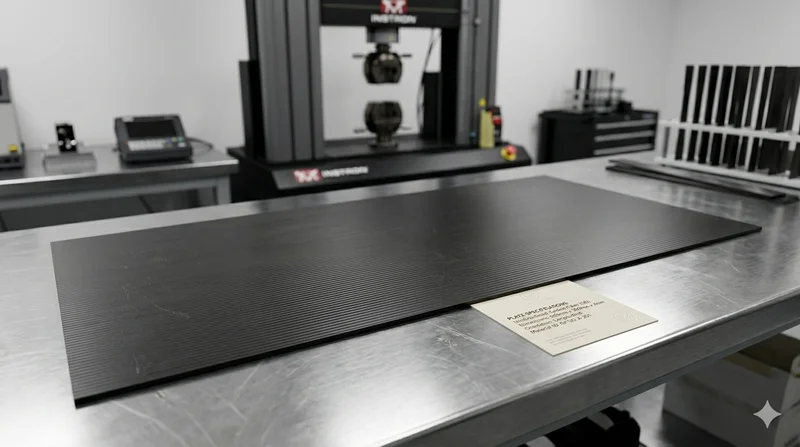
Carbon Fiber Plate — UD Unidirectional T700
Unidirectional carbon fiber plate with all fibers oriented in a single direction for maximum strength along the fiber axis. Essential for structural reinforcements, splints, and applications where load direction is predictable.