
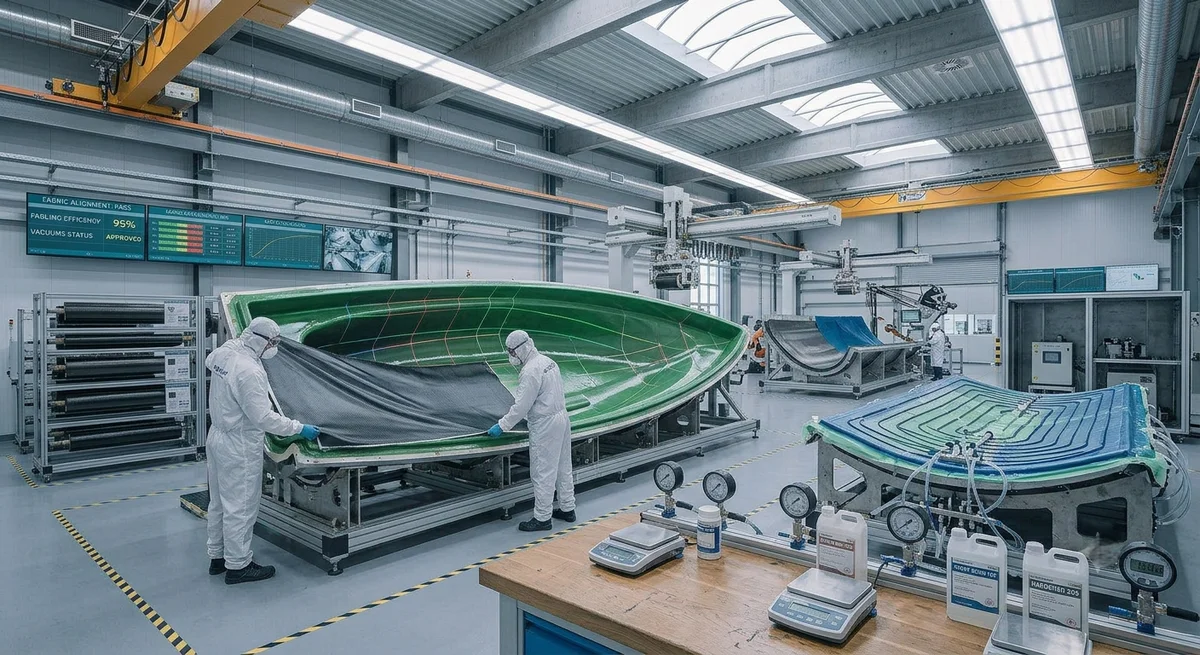
A technical comparison of hand lay-up and vacuum infusion processes for carbon fiber marine hull construction — cycle times, fiber volume fractions, mechanical properties, and cost-per-hull analysis for performance boat manufacturers.
Introduction: The Manufacturing Crossroads for Carbon Fiber Marine Hulls
The performance boat industry has undergone a fundamental shift over the past decade as carbon fiber reinforced polymer (CFRP) has moved from exotic racing yachts to mainstream production powerboats, fishing vessels, and RIBs. A 2025 market analysis by CompositesWorld shows that carbon fiber usage in marine applications grew 14.2% year-over-year, with hull structures representing the largest volume segment at 42% of marine CFRP consumption. For boat builders evaluating carbon fiber hull production, the choice between hand lay-up and vacuum infusion is the single most consequential manufacturing decision — it determines cycle time, laminate quality, tooling investment, and ultimately the structural performance of the finished hull.
Hand lay-up, the traditional open-molding process, has been the backbone of composite boat building for over five decades. It offers low tooling cost, proven workmanship, and the flexibility to produce complex geometry. Vacuum infusion (also called resin infusion or VARTM) is a closed-mold process where dry fabric is placed in the mold, sealed under a vacuum bag, and resin is drawn through the reinforcement by atmospheric pressure. This article provides a data-driven comparison of both processes specifically for carbon fiber marine hull production, covering fiber volume fraction, void content, mechanical property retention, cycle economics, and quality assurance parameters.
Process Fundamentals: Hand Lay-Up vs Vacuum Infusion
| Parameter | Hand Lay-Up (Open Mold) | Vacuum Infusion (Closed Mold) |
|---|---|---|
| Tooling cost (40 ft hull mold) | $18,000–35,000 | $25,000–50,000 (includes bagging systems) |
| Labor hours per hull (40 ft) | 80–120 hours | 45–65 hours |
| Cycle time per hull (cure included) | 24–48 hours | 8–16 hours |
| Fiber volume fraction (Vf) | 35–45% | 50–62% |
| Void content | 2–5% | 0.5–1.5% |
| Resin-to-fiber ratio (typical) | 55:45 resin-rich | 38:62 fiber-rich |
| Operator skill requirement | High (3–5 year apprenticeship) | Moderate (1–2 year training) |
| Consistency between hulls | ±15% thickness variation | ±3% thickness variation |
| Maximum single-skin thickness | Unlimited (incremental layers) | Limited by permeability (typically <8 mm) |
| VOC emissions per hull | 3.5–6.0 kg (open styrene) | 0.3–0.8 kg (sealed system) |
| Initial investment (40 ft tooling) | $18,000–35,000 | $35,000–65,000 |
| Scrap resin per hull | 10–15% | 3–5% |
Mechanical Property Comparison of Finished Laminates
The closed-mold nature of vacuum infusion consistently produces higher quality laminates. The key differentiator is fiber volume fraction (Vf): hand lay-up typically achieves 35–45% Vf because the laminator manually rolls out resin and cannot fully compress the fiber bed, while vacuum infusion uses full atmospheric pressure (~101 kPa) to compact the dry reinforcement before and during resin infiltration, achieving 50–62% Vf. This difference cascades into every mechanical property.
| Property | Hand Lay-Up Laminate | Infusion Laminate | Improvement |
|---|---|---|---|
| Fiber volume fraction (Vf) | 38% (typical) | 55% (typical) | +45% |
| Flexural strength (MPa) | 520–680 | 780–950 | +40–50% |
| Flexural modulus (GPa) | 38–48 | 58–72 | +45–53% |
| Interlaminar shear strength (MPa) | 25–35 | 45–58 | +65–80% |
| Compression strength (MPa) | 280–380 | 420–550 | +45–50% |
| Impact energy absorption (kJ/m²) | 85–120 | 110–155 | +25–30% |
| Water absorption (24h, %) | 0.35–0.50 | 0.12–0.20 | −55–65% |
| Density (g/cm³) | 1.42–1.52 | 1.55–1.65 | +7–9% |
| Fatigue life (10⁷ cycles at 30% UTS) | 65–78% retention | 82–92% retention | +18–26% |
Cost Analysis per Hull (40 ft Performance Boat)
For a standardized 40-foot performance boat hull weighing approximately 280 kg finished laminate, the per-hull cost comparison reveals a surprising result: despite higher tooling investment, vacuum infusion produces a lower per-hull cost at moderate production volumes.
| Cost Category | Hand Lay-Up | Vacuum Infusion | Delta |
|---|---|---|---|
| Carbon fiber fabric (800 gsm, 185 m²) | $5,180 | $4,440 (15% less waste) | −$740 |
| Epoxy resin system (40 kg vs 28 kg) | $1,200 | $840 | −$360 |
| Core materials (PVC foam, 12 mm) | $1,850 | $1,850 | $0 |
| Consumables (rollers, brushes, peel ply, bagging) | $320 | $580 | +$260 |
| Direct labor (50–80 hours × $45/hr) | $3,600 | $2,700 | −$900 |
| Quality testing (ultrasonic C-scan, coupon testing) | $450 | $250 | −$200 |
| Rework allowance (5% vs 1.5%) | $640 | $170 | −$470 |
| Total direct cost per hull | $13,240 | $10,830 | −$2,410 (−18%) |
| Tooling amortization (50 hulls) | $460 | $900 | +$440 |
| Total amortized cost | $13,700 | $11,730 | −$1,970 (−14%) |
The material savings in infusion come primarily from reduced resin consumption (28 kg vs 40 kg — a 30% reduction), lower fabric waste (5% vs 15%), and dramatically less rework. Labor savings are achieved because infusion requires fewer layers — the higher Vf means 55% fiber volume laminates achieve equivalent stiffness with 20–25% fewer plies compared to 38% Vf hand lay-up laminates.
Quality Assurance and Defect Comparison
- Dry spots and delamination: Hand lay-up has a 4–8% rework rate for dry spot repair vs 1–2% for infusion. Vacuum infusion's uniform resin flow through the entire preform eliminates the manual roller-induced resin-rich and resin-starved zones.
- Thickness uniformity: In hand lay-up, thickness variation of ±0.8 mm over a 4 mm laminate is common (±20%). Vacuum infusion achieves ±0.12 mm (±3%), critical for hull weight prediction.
- Fiber waviness: Hand lay-up introduces 3–5° fiber misalignment in complex curvature areas. Infusion's pressure-driven consolidation reduces misalignment to <1°.
- Void content and water ingress: At 3.5% void content (hand lay-up), water absorption over 12 months in seawater reaches 1.8–2.5% by weight. At 1.0% void content (infusion), absorption drops to 0.6–0.9% — a 60–70% reduction.
- Cure consistency: Infusion can incorporate post-infusion oven cure for uniform degree-of-cure above 95%, versus 80–90% in ambient-cured hand lay-up laminates.
Production Volume Decision Framework
- Prototype and custom builds (1–5 hulls/year): Hand lay-up remains cost-effective with low tooling investment ($18,000–35,000) and flexibility for mold modifications.
- Small series (6–25 hulls/year): Infusion becomes competitive around hull #8–12. The 30% reduction in cycle time doubles effective production capacity.
- Medium production (26–100 hulls/year): Vacuum infusion is the clear winner. The 18% reduction in per-hull cost at 50 hulls yields $98,500 in savings.
- High-volume production (100+ hulls/year): Evaluate RTM or prepreg compression molding for 30–60 minute cycles.
FAQ: Carbon Fiber Marine Hull Manufacturing
Q: Can vacuum infusion produce thick hull sections (>10 mm) like hand lay-up can?
A: Yes, but with design considerations. Single infusion of sections thicker than 8 mm requires high-permeability reinforcements and careful flow modeling. Common strategies include sequential infusion, using high-permeability flow media, or co-infusing with a second injection port. For very thick sections (>15 mm), prepreg materials are often preferred. Many builders use a hybrid approach: infuse the outer skin and core sandwich in one shot, then add inner skin reinforcement via hand lay-up.
Q: How does the marine environment affect the choice between hand lay-up and infusion for carbon fiber?
A: The marine environment strongly favors infusion. First, lower void content (0.5–1.5% vs 2–5%) dramatically reduces water absorption and osmotic blistering — a leading cause of warranty claims. Second, higher Vf (55% vs 38%) means less resin and fewer hydrolysis-susceptible zones. Third, uniform cure and reduced residual stress minimize microcracking from thermal cycling, especially in dark-colored carbon fiber decks exposed to tropical sunlight.
Q: What is the realistic learning curve for switching from hand lay-up to vacuum infusion?
A: Based on data from 18 boat builders (2020–2025), the typical learning curve is 3–6 months to achieve consistent first-time infusion success above 90%. The first 10–15 hulls have an 8–12% rework rate. By hull #20, rework rates stabilize at 2–3%. Key failure modes: vacuum leaks at bagging seals (50% of early failures), incorrect flow media selection (25%), and resin gel time mismatch (15%).
Q: Does the carbon fiber type (3K, 6K, 12K, 50K tow) affect process selection?
A: Yes. For hand lay-up, 3K and 6K woven fabrics are preferred for conformability but cost $45–65/m². For infusion, 12K and 50K tow fabrics are ideal due to higher permeability (40–60% higher than 3K) and lower cost ($18–30/m²). For marine hulls specifically, 12K PAN-based standard modulus carbon is the most widely used tow size in infusion production today.
Q: How do the two processes compare for core material integration (PVC foam, balsa, honeycomb)?
A: This is one of the strongest advantages of vacuum infusion. In hand lay-up, core materials require a secondary adhesive layer. In infusion, the same resin saturates the outer skin and flows into the core-to-skin interface, creating a continuous monolithic bond. Infused foam core sandwich panels achieve peel strengths of 8–12 N/mm versus 4–7 N/mm for hand lay-up bonded cores.
Part of topic
Related Articles
- Carbon Fiber Mooring for Floating Offshore Wind: Fatigue and Corrosion in Deep Water
- Carbon Fiber Bicycle Frame Optimization: Layup Design and Manufacturing for Competitive Racing
- Carbon Fiber CFRP Retrofit for Infrastructure: Bridge and Building Seismic Strengthening
- Carbon Fiber Medical Imaging Equipment: Lightweight Gantry and Couch Structures for MRI/CT
- Carbon Fiber EV Battery Enclosures: Crash Safety and Electromagnetic Shielding Design
- Carbon Fiber Structures for Low-Altitude Economy: UAV Airframes and eVTOL Components
Interested in Our Products?
Contact our team for competitive pricing and technical specifications.
Get a QuoteRelated Products
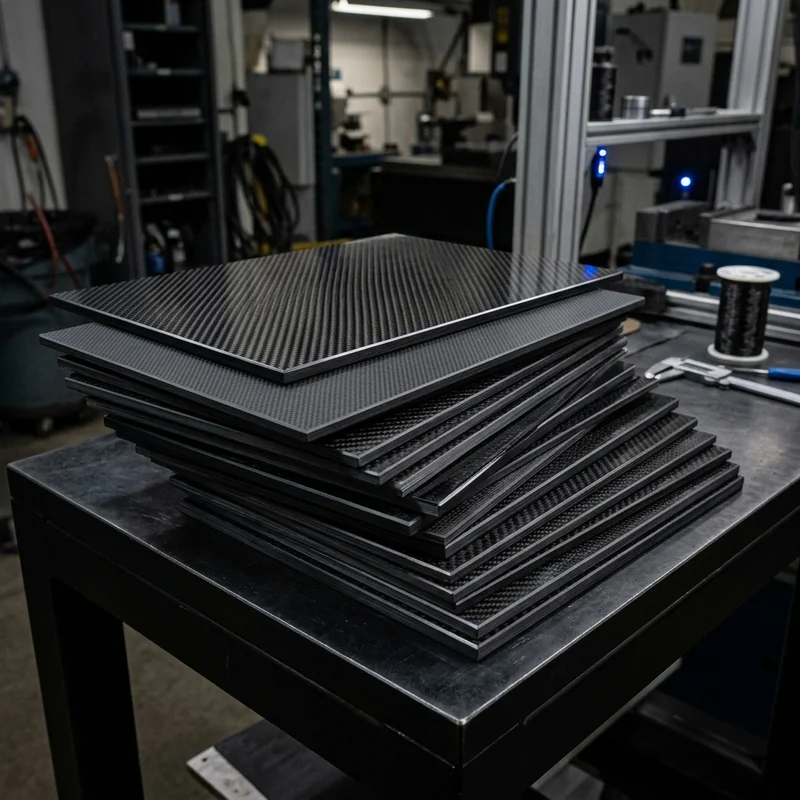
Carbon fiber standard plate-3k stripe
Lightweight, ultra-rigid standard sheets for drone fuselages, robot housings, facades and structural applications.
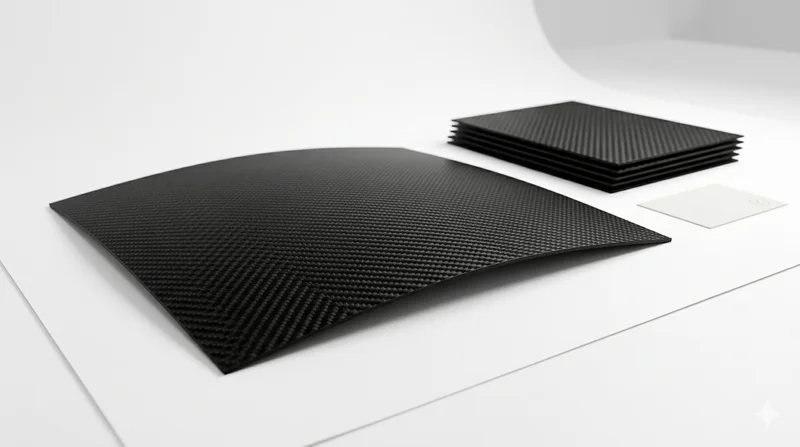
Carbon Fiber Plate — 3K Twill T700 1.5mm
Thin 1.5mm carbon fiber plate with 3K twill weave surface. Lightweight and stiff, commonly used for covers, panels, drone bodies, and applications requiring a premium aesthetic appearance.
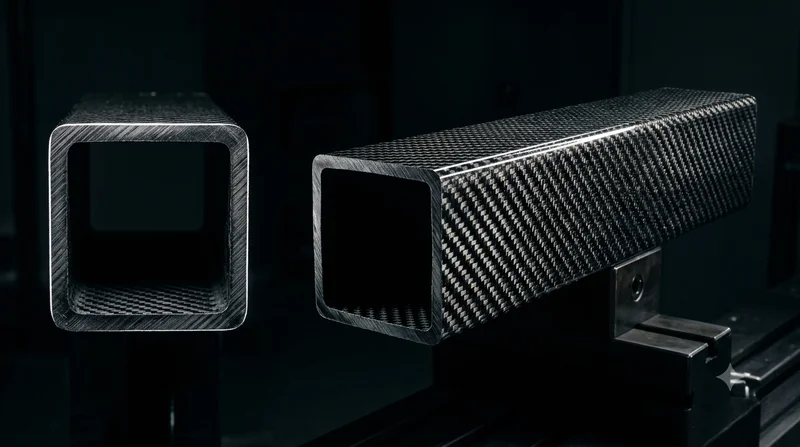
Square Carbon Fiber Tube — 3K Twill T700
Square cross-section carbon fiber tube manufactured with 3K twill weave for torsional strength. Preferred for structural frames, trusses, and support columns where rectangular geometry offers design flexibility.
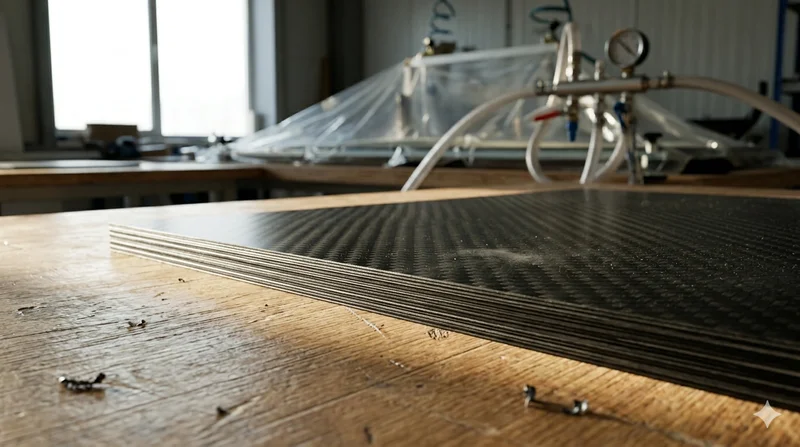
Carbon Fiber Plate — 3K Twill T700 3.0mm
Medium-thickness 3.0mm carbon fiber plate offering significantly higher load capacity while maintaining attractive 3K twill finish. Suitable for structural brackets, reinforcement plates, and load-bearing panels.
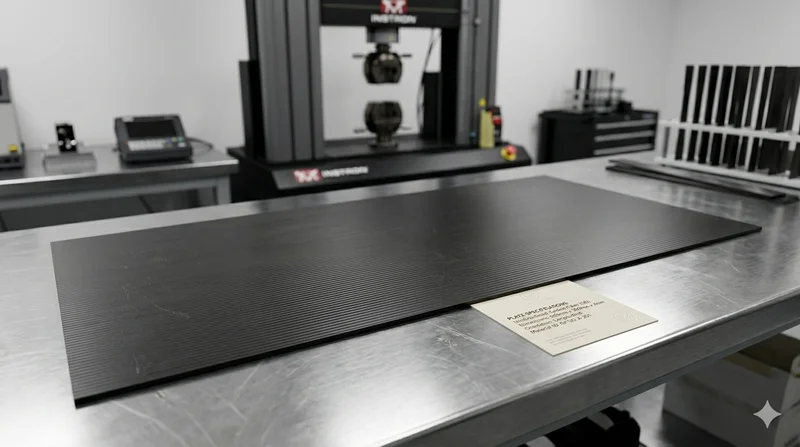
Carbon Fiber Plate — UD Unidirectional T700
Unidirectional carbon fiber plate with all fibers oriented in a single direction for maximum strength along the fiber axis. Essential for structural reinforcements, splints, and applications where load direction is predictable.